









Adolescence is often misunderstood as a period of poor judgment, emotional outbursts, and impulsive behavior. But neuroscience tells a very different story.
The teenage brain is not “broken”—it is under active construction. During this stage, young people are learning how to balance instinct, emotion, and logic in ways that will shape their decisions for the rest of their lives.
Educators, parents, and even teenagers themselves often notice a pattern: a teen may understand the right choice but still act differently in the moment. This is not simply defiance—it reflects how the brain develops.
Understanding this process, through both research and real-life observation, helps explain why adolescence is one of the most important stages of cognitive and emotional growth.
The Adolescent Brain: A System Still Under Construction
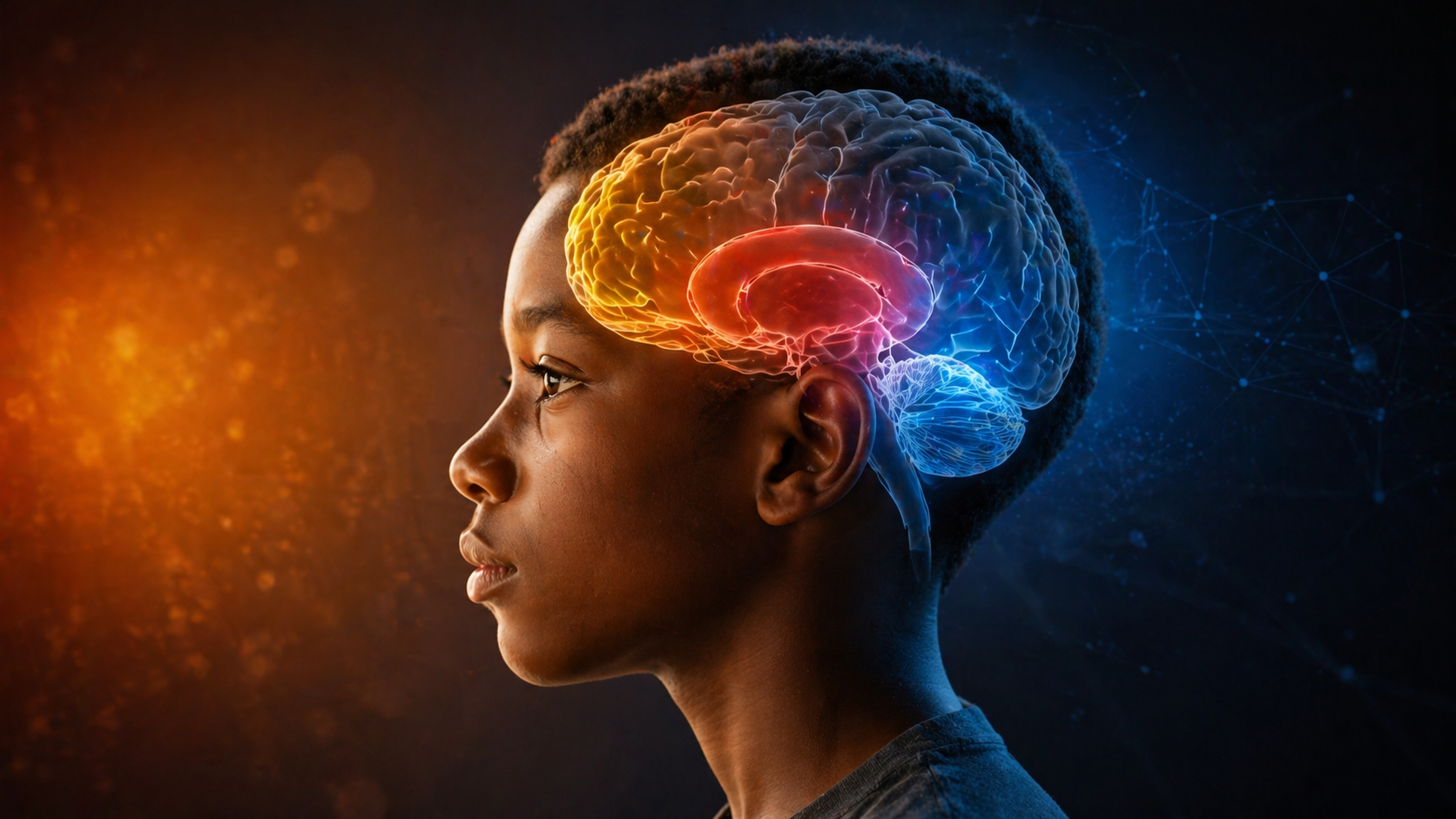
From a neuroscience perspective, the teenage brain develops unevenly. Two major systems are involved:
- The limbic system (emotion and reward)
- The prefrontal cortex (reasoning and control)
According to research from the National Institute of Mental Health, the limbic system becomes highly active during early adolescence, making teenagers more sensitive to rewards, excitement, and social feedback.
At the same time, the prefrontal cortex—which governs planning, impulse control, and decision-making—continues developing into the mid-20s.
This imbalance is explained by the dual systems model in Developmental Neuroscience, which shows that emotional drives often outpace logical control during adolescence.
Real-world insight:
Many teachers observe that students can explain the consequences of risky behavior in class discussions, yet still act impulsively in social settings. This gap reflects biology—not ignorance.
From Gut Reactions to Logical Thinking
Children rely heavily on instinct and immediate emotional responses. As they enter adolescence, they begin developing the ability to think more abstractly and analytically.
1. Growing Reasoning Ability
Teenagers gradually learn to:
- Weigh pros and cons
- Consider long-term outcomes
- Think about hypothetical situations
However, these abilities are still stabilizing. Research from the American Psychological Association indicates that logical reasoning improves steadily during adolescence but is less reliable under emotional pressure.
2. Learning Through Experience
Experience plays a critical role in shaping decision-making.
Studies in developmental psychology show that the brain strengthens connections through feedback and repetition—a process known as synaptic reinforcement.
Real-world example:
A teenager who faces consequences for missing deadlines often becomes more organized over time—not because of lectures, but because experience reshapes behavior.
This aligns with findings in Developmental Psychology, which emphasize that trial-and-error learning is essential for cognitive growth.
Why Emotions Often Override Logic
Even when teenagers “know better,” emotions can take control. This is a biological reality—not simply a lack of discipline.
Heightened Reward Sensitivity
Teenagers are more responsive to:
- Social approval
- Novel experiences
- Risk-taking opportunities
According to the National Institute on Drug Abuse, adolescent brains show increased activity in reward-related regions, making exciting experiences feel more compelling.
The Influence of Peers
Peer presence significantly alters decision-making.
Research shows that teenagers are more likely to take risks when peers are watching, due to increased activation in reward systems.
Observed behavior:
A teenager who acts cautiously alone may behave differently in a group—not solely due to peer pressure, but because the brain processes rewards differently in social contexts.
Still-Developing Self-Control
The prefrontal cortex is responsible for:
- Impulse regulation
- Planning
- Emotional control
Because it is still maturing, teenagers may:
- Struggle with consistency
- React more intensely
- Make decisions quickly without full evaluation
How the Brain Learns: Trial, Error, and Adaptation
One of the most powerful features of the adolescent brain is its ability to adapt.
Trial and Error as a Learning Mechanism
Neuroscience research shows that learning is strongest when individuals:
- Make decisions
- Experience outcomes
- Adjust behavior
This is why over-controlling environments can sometimes slow development—teenagers need opportunities to practice decision-making.
Strengthening Neural Connections
During adolescence, the brain undergoes:
- Synaptic pruning (removal of unused connections)
- Myelination (strengthening of frequently used pathways)
These processes make thinking more efficient over time.
In simple terms:
The more a teenager practices thoughtful decision-making, the more their brain becomes wired for it.
How Logic Gradually Gains Control
The shift from instinct-driven reactions to balanced thinking happens gradually.
Prefrontal Cortex Development
As the prefrontal cortex matures, teenagers improve in:
- Planning ahead
- Delaying gratification
- Evaluating consequences
According to the Harvard University Center on the Developing Child, this development continues into early adulthood.
Integrating Emotion and Reason
Healthy decision-making is not about eliminating emotion—it’s about managing it.
Teenagers learn to:
- Recognize emotional triggers
- Pause before reacting
- Apply reasoning
This integration is a key milestone in cognitive maturity.
Practical, Evidence-Based Ways to Support Teen Development
Understanding the teenage brain is most useful when applied in real life.
1. Encourage Reflective Conversations
Instead of reacting immediately to mistakes, ask:
- “What do you think led to that outcome?”
- “What would you do differently next time?”
This activates the prefrontal cortex and strengthens reasoning skills.
2. Allow Safe Mistakes
Research consistently shows that learning from consequences is more effective than lectures.
What helps:
- Discussing outcomes calmly
- Focusing on lessons, not punishment
What to avoid:
- Over-controlling decisions
- Solving every problem for them
3. Teach Decision-Making Frameworks
Help teenagers slow down their thinking:
- Identify the situation
- List possible choices
- Evaluate outcomes
This builds structured reasoning habits over time.
4. Understand Emotional Timing
Important conversations are more effective when emotions are calm.
Example:
A teenager is more receptive to guidance after an emotional situation has passed—not during it.
Why This Stage Matters So Much
Adolescence lays the foundation for:
- Long-term decision-making
- Emotional regulation
- Risk assessment
- Personal responsibility
The skills developed during this period directly influence adulthood outcomes.
Conclusion
The teenage brain is not a problem to fix—it is a system learning how to function at a higher level.
What may look like impulsive or inconsistent behavior is actually part of a critical developmental process, where instinct and emotion are gradually brought under the guidance of logic.
With time, experience, and the right support, teenagers develop the ability to make thoughtful, balanced decisions.
Recognizing this process allows parents, educators, and young people themselves to approach adolescence with greater patience, understanding, and confidence.
References (Recommended for Credibility)
- National Institute of Mental Health – Brain Development Research
- American Psychological Association – Adolescent Behavior Studies
- National Institute on Drug Abuse – Teen Brain & Reward System
- Harvard University – Center on the Developing Child