









Every child experiences anger. A toddler may scream after being told “no,” a school-age child may lash out after losing a game, and a teenager may react strongly when feeling misunderstood. While these moments can feel overwhelming for parents and caregivers, child-development experts explain that anger itself is a normal human emotion. What matters most is helping children learn safe and healthy ways to express it.
Many parents discover that reacting with shouting or harsh punishment often makes emotional outbursts worse instead of better. In many homes, children tend to calm down more quickly when adults respond with patience, clear boundaries, and emotional support. Over time, these consistent responses can help children build emotional regulation, communication skills, and self-control.
According to the American Academy of Pediatrics (AAP), children learn emotional regulation gradually as their brains continue developing throughout childhood. Young children especially may struggle to manage frustration because the areas of the brain connected to impulse control and emotional regulation are still developing.
This article explores practical, research-informed ways parents and caregivers can help children manage anger calmly and safely while strengthening emotional development at home.
Why Children Struggle With Anger
Children are still learning how to understand emotions, communicate needs, and manage disappointment. Unlike adults, they often lack the emotional vocabulary and self-control needed to explain how they feel during stressful situations.
As a result, frustration may appear as:
- Crying
- Yelling
- Hitting
- Throwing objects
- Tantrums
- Withdrawal or silence
Several common factors can contribute to angry behavior in children:
- Hunger or lack of sleep
- Feeling ignored or misunderstood
- Difficulty sharing or waiting
- Changes in routine
- Stressful environments
- Sensory overstimulation
- Limited communication skills
Child psychologists note that emotional outbursts are often signs that a child feels overwhelmed rather than intentionally “bad.” Understanding the root cause can help adults respond more effectively and compassionately.
Recognize That Anger Is a Normal Emotion
One of the healthiest lessons children can learn is that anger itself is not wrong. Everyone experiences frustration, disappointment, and irritation sometimes.
According to child mental-health professionals, children benefit when adults separate emotions from behavior. A child should understand:
- It is okay to feel angry.
- It is not okay to hurt people or damage property.
When adults immediately shame or dismiss emotions, children may begin hiding feelings instead of learning how to manage them.
Calm responses such as:
- “I can see that you’re upset.”
- “You seem frustrated right now.”
- “It’s okay to feel angry.”
can help children feel emotionally safe and understood.
Many parents notice that children often calm down faster when they feel heard instead of criticized immediately.
Teach Children to Express Feelings With Words
Many emotional outbursts happen because children do not yet know how to explain what they feel.
Teaching emotional vocabulary can help reduce frustration over time. Experts in child development encourage parents to regularly name emotions during everyday conversations, not only during conflicts.
Helpful emotion words include:
- Angry
- Frustrated
- Disappointed
- Embarrassed
- Nervous
- Lonely
- Worried
- Sad
Some families find that emotion charts, storybooks, or feeling cards make it easier for younger children to recognize emotions.
Parents and caregivers can also model calm communication by saying:
- “Tell me what happened.”
- “Use your words so I can understand.”
- “What made you feel upset?”
- “Let’s solve this together.”
Over time, children gradually learn to replace aggressive reactions with communication skills.
Stay Calm During Emotional Outbursts
Children often look to adults for emotional cues. If adults respond with yelling, threats, or panic, children may become even more distressed.
Remaining calm does not mean ignoring poor behavior. It means responding thoughtfully instead of reacting emotionally.
Many caregivers notice that lowering their voice instead of raising it can help reduce tension during a meltdown.
Helpful calming techniques for adults include:
- Taking slow breaths before responding
- Speaking in a calm tone
- Pausing before reacting
- Focusing on safety first
- Avoiding long lectures during emotional moments
The Centers for Disease Control and Prevention (CDC) emphasizes that supportive and consistent adult responses help children feel secure while learning emotional regulation skills.
Create a Calm-Down Space Instead of a Punishment Corner
Busy or loud environments can sometimes increase emotional overwhelm. A calm-down space can give children an opportunity to settle emotions safely.
Unlike punishment-based “time-outs,” a calm-down area should feel supportive rather than isolating.
Some parents create calming spaces using:
- Pillows or bean bags
- Soft toys or sensory objects
- Coloring books
- Storybooks
- Calm music
- Stress balls
- Breathing cards
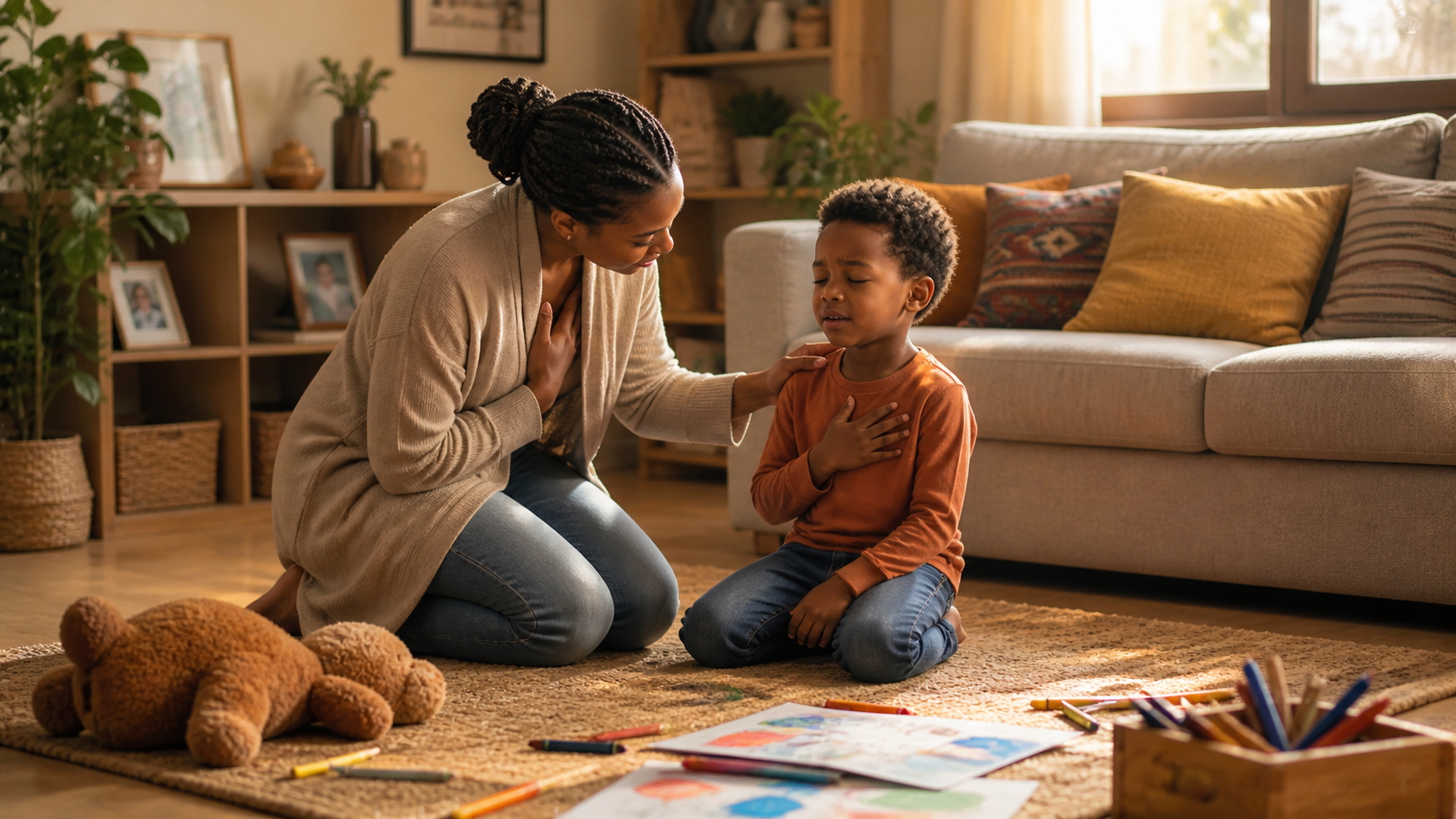
For younger children, caregivers may sit nearby and guide calming exercises together.
The goal is not to punish emotions but to teach self-regulation skills children can eventually use independently.
Set Clear and Consistent Boundaries
While emotions should be accepted, aggressive behavior still requires limits.
Children need clear and consistent reminders that behaviors such as hitting, biting, throwing objects, or insulting others are not acceptable ways to handle anger.
Instead of harsh punishment, experts recommend calm and firm guidance.
Helpful responses include:
- “It’s okay to feel angry, but it’s not okay to hit.”
- “We do not throw things when we’re upset.”
- “Let’s find a safer way to express your feelings.”
Consistency is important. When rules frequently change, children may become confused about expectations.
Many child therapists explain that children feel safer when boundaries are predictable and calmly enforced.
Teach Healthy Coping Skills
Children benefit from learning practical tools that help them calm themselves safely during stressful moments.
Research in child psychology suggests that coping strategies are more effective when practiced regularly, not only during emotional crises.
Physical Activities
Movement may help some children release emotional tension and stress.
Helpful activities include:
- Walking
- Dancing
- Running outdoors
- Jumping rope
- Stretching
- Playing sports
Many parents notice that children often become calmer after physical activity, especially when they have been indoors for long periods.
Creative Expression
Creative activities can help children process emotions safely and nonverbally.
Examples include:
- Drawing
- Painting
- Journaling
- Building with blocks
- Playing music
Some children express difficult emotions more comfortably through art than through conversation.
Relaxation Techniques
Simple calming exercises can help children regain emotional control.
Child therapists often recommend:
- Deep breathing exercises
- Counting slowly to ten
- Progressive muscle relaxation
- Listening to calming sounds
- Guided imagery
Practicing these skills regularly makes them easier for children to use during stressful situations.
Avoid Shaming or Humiliating Children
Criticizing or embarrassing children during emotional moments can damage trust and self-esteem.
Statements such as:
- “Stop acting like a baby.”
- “What’s wrong with you?”
- “You’re being bad.”
may increase shame and frustration instead of teaching emotional control.
The American Psychological Association notes that supportive correction is generally more effective than humiliation or fear-based discipline.
Children usually respond better when adults correct behavior while still showing respect and empathy.
Model Healthy Emotional Behavior
Children learn a great deal by observing adults.
If caregivers frequently respond to stress with shouting, insults, or aggression, children may copy those behaviors. On the other hand, children also learn from watching adults apologize, calm themselves, and solve problems respectfully.
Parents can model healthy emotional habits by:
- Apologizing after overreacting
- Taking breaks when overwhelmed
- Speaking calmly during disagreements
- Managing stress in healthy ways
- Talking openly about emotions
For example, saying:
“I’m frustrated right now, so I’m going to take a few deep breaths before we continue talking.”
shows children what healthy emotional regulation looks like in real life.
Many experts believe modeling behavior is one of the most powerful ways children learn emotional skills.
What To Do During an Anger Outburst
During intense emotional moments, many parents struggle to know what to do first. Child-development specialists often recommend focusing on safety and calmness before trying to teach lessons.
A simple step-by-step approach may help:
1. Stay Calm
Lower your voice and avoid reacting emotionally.
2. Ensure Safety
Move dangerous objects away and prevent hitting or harmful behavior.
3. Acknowledge Feelings
Use calm phrases like:
- “I can see you’re upset.”
- “You’re having a hard moment.”
4. Wait Before Lecturing
Children usually cannot process long explanations while overwhelmed.
5. Discuss the Situation Later
After the child calms down, talk about better coping strategies for next time.
This approach helps children feel supported while still learning accountability.
Helping Children by Age Group
Different ages require different approaches to anger management.
Toddlers (Ages 2–4)
Young children often struggle with communication and impulse control.
Helpful strategies include:
- Simple language
- Distraction
- Comfort and reassurance
- Short calming activities
School-Age Children (Ages 5–10)
Children at this age can begin learning:
- Emotional vocabulary
- Problem-solving skills
- Deep breathing
- Conflict resolution
Visual tools like emotion charts may be helpful.
Teenagers
Teenagers often experience stronger emotions due to social pressures, academic stress, and hormonal changes.
Helpful approaches include:
- Respectful conversations
- Active listening
- Encouraging healthy independence
- Teaching stress-management skills
Avoid dismissing teenage emotions as “dramatic,” as this may reduce communication and trust.
Understand When Professional Support May Be Needed
Occasional emotional outbursts are a normal part of development, especially in younger children. However, persistent or severe anger may sometimes indicate underlying emotional or developmental challenges.
Consider speaking with a pediatrician, child psychologist, therapist, or school counselor if a child:
- Frequently becomes aggressive
- Cannot calm down for long periods
- Experiences anger that disrupts school or friendships
- Shows sudden behavior changes
- Appears anxious, withdrawn, or emotionally distressed
- Talks about hopelessness or harming others
In some cases, intense anger may be linked to anxiety, ADHD, trauma, sensory difficulties, or other emotional concerns that benefit from professional support.
Early intervention can help children develop healthier coping skills and improve emotional well-being over time.
Building Emotional Intelligence at Home
Helping children manage anger is not about eliminating emotions. It is about teaching children how to recognize feelings, communicate safely, and respond in healthier ways.
Parents and caregivers can encourage emotional growth by:
- Listening without judgment
- Staying patient during difficult moments
- Maintaining predictable routines
- Encouraging open conversations
- Teaching problem-solving skills
- Praising healthy emotional expression
Over time, these habits can help children become more emotionally aware, resilient, and confident.
Conclusion
Anger is a natural emotion, and learning how to manage it is an important part of childhood development. Children need patience, guidance, and emotional support as they learn to handle strong feelings safely.
By staying calm, teaching communication skills, setting consistent boundaries, and modeling healthy emotional behavior, parents and caregivers can help children develop lifelong emotional-regulation skills.
Every emotional moment is an opportunity to teach children that feelings are normal, communication matters, and difficult emotions can be handled in healthy and respectful ways.