







Artificial intelligence is rapidly becoming part of everyday life. From search engines and recommendation systems to virtual assistants and automated learning tools, AI is changing how people learn, work, and communicate. According to the World Economic Forum’s Future of Jobs Report, AI and automation are expected to reshape millions of jobs globally over the next decade, increasing the importance of digital and technology-related skills in education.
As this technology continues to grow, schools face an important question: how should students be taught about artificial intelligence?
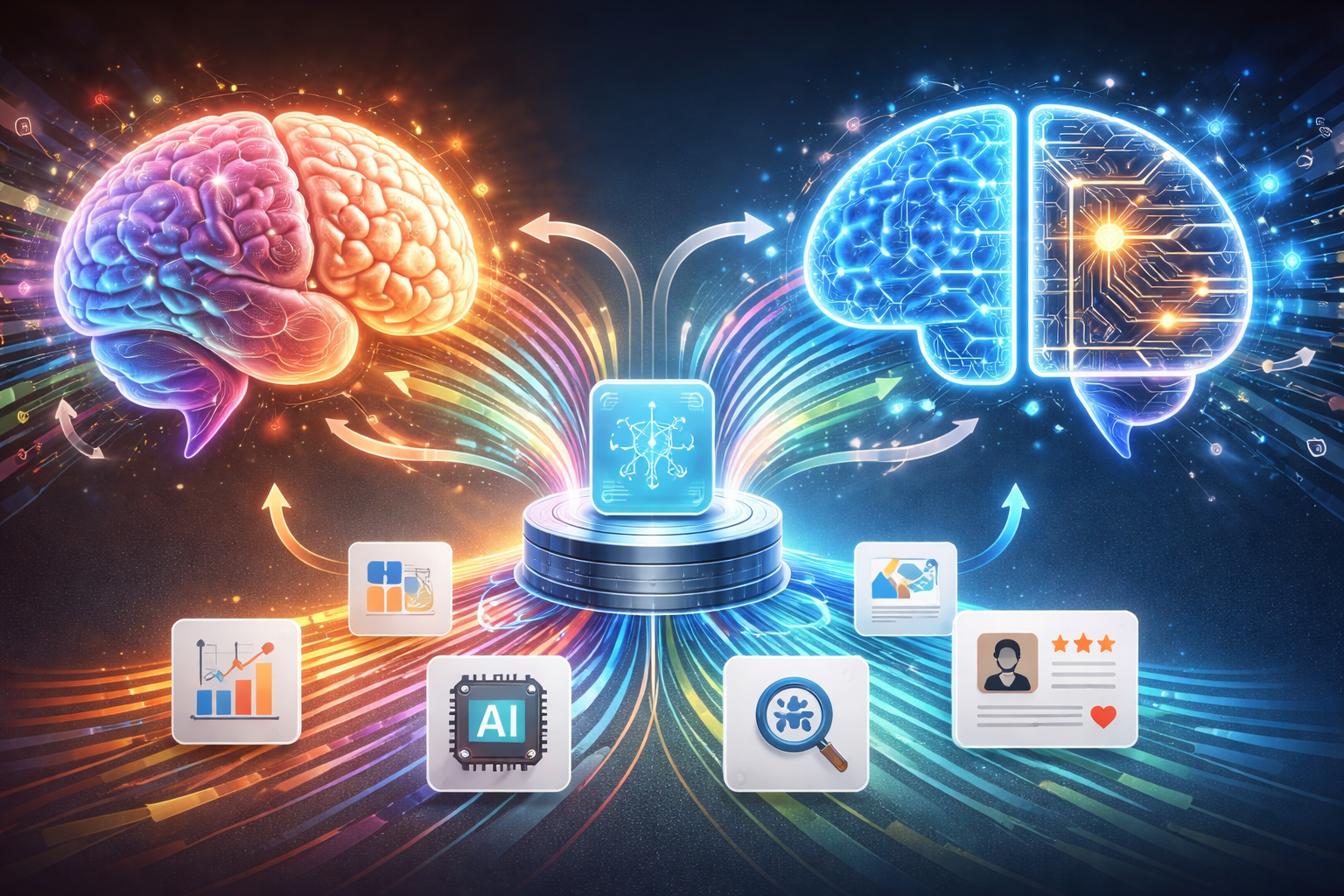
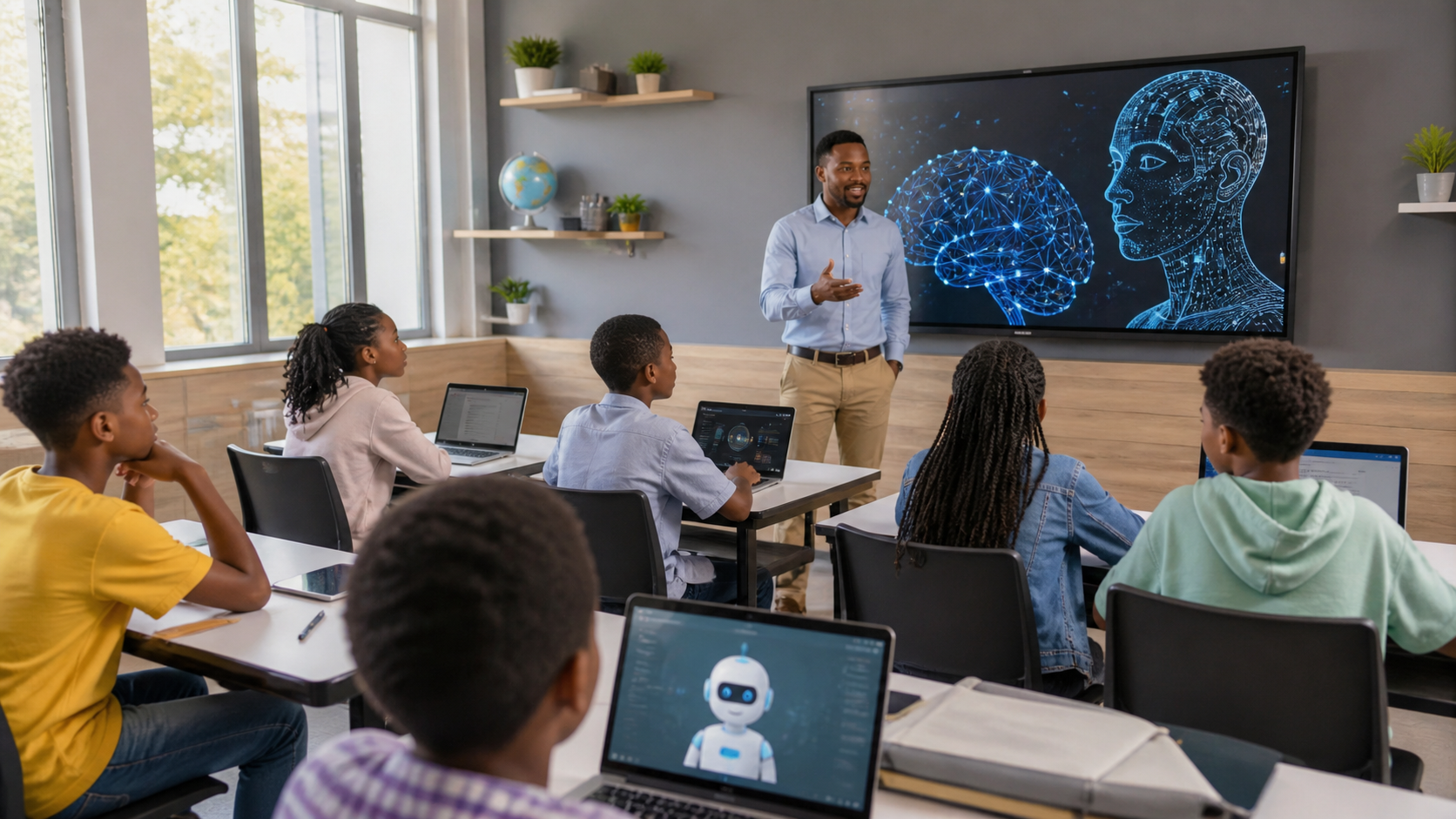
Education systems around the world are beginning to introduce AI-related lessons into classrooms, but experts continue to debate the best approach. Some educators believe students should learn how AI systems work technically, while others argue that schools should focus more heavily on responsible AI use, ethics, media literacy, and critical thinking.
The challenge is not simply about adding another subject to the curriculum. It is about preparing young people for a future where AI will influence careers, decision-making, creativity, communication, and society itself.
Schools that have already experimented with AI learning programs often report a similar pattern: students are highly curious about AI tools, but many struggle to distinguish between reliable AI-generated information and inaccurate or misleading content. Teachers have also noted that students sometimes trust AI-generated answers too quickly without verifying facts independently.
This article explores effective ways schools can teach artificial intelligence, the skills students need, and how educators can create balanced learning experiences that prepare students for the modern world.
Why AI Education Matters in Today’s Schools
Artificial intelligence is no longer limited to technology companies or research labs. Students already interact with AI every day through:
- Social media algorithms
- Chatbots and virtual assistants
- Streaming recommendations
- Translation tools
- Online learning platforms
- AI writing assistants
According to UNESCO’s 2023 guidance on generative AI in education, schools should help students develop not only technical knowledge, but also ethical awareness, critical thinking, and responsible digital behavior.
Because AI increasingly influences how information is created and distributed, students need more than basic digital skills. They must understand:
- How AI systems work
- Their benefits and limitations
- How algorithms shape online experiences
- The risks of misinformation
- Privacy and data concerns
- Ethical issues surrounding automation
Teaching AI in schools can help students:
- Develop problem-solving abilities
- Improve digital literacy
- Understand emerging technologies
- Prepare for future careers
- Strengthen critical thinking skills
- Become more responsible digital citizens
Without proper education, students may rely heavily on AI tools without understanding important issues such as algorithmic bias, hallucinated information, privacy risks, or overdependence on automation.
Different Ways Schools Can Teach Artificial Intelligence
There is no single method for teaching AI effectively. Educational experts generally support multiple approaches depending on students’ ages, learning goals, and available resources.
1. Teaching AI as a Technical Subject
One common approach focuses on the technical foundations of artificial intelligence. In this model, students learn how AI systems are created, trained, and improved.
Topics may include:
- Machine learning basics
- Data analysis
- Coding and programming
- Algorithms
- Robotics and automation
- Pattern recognition
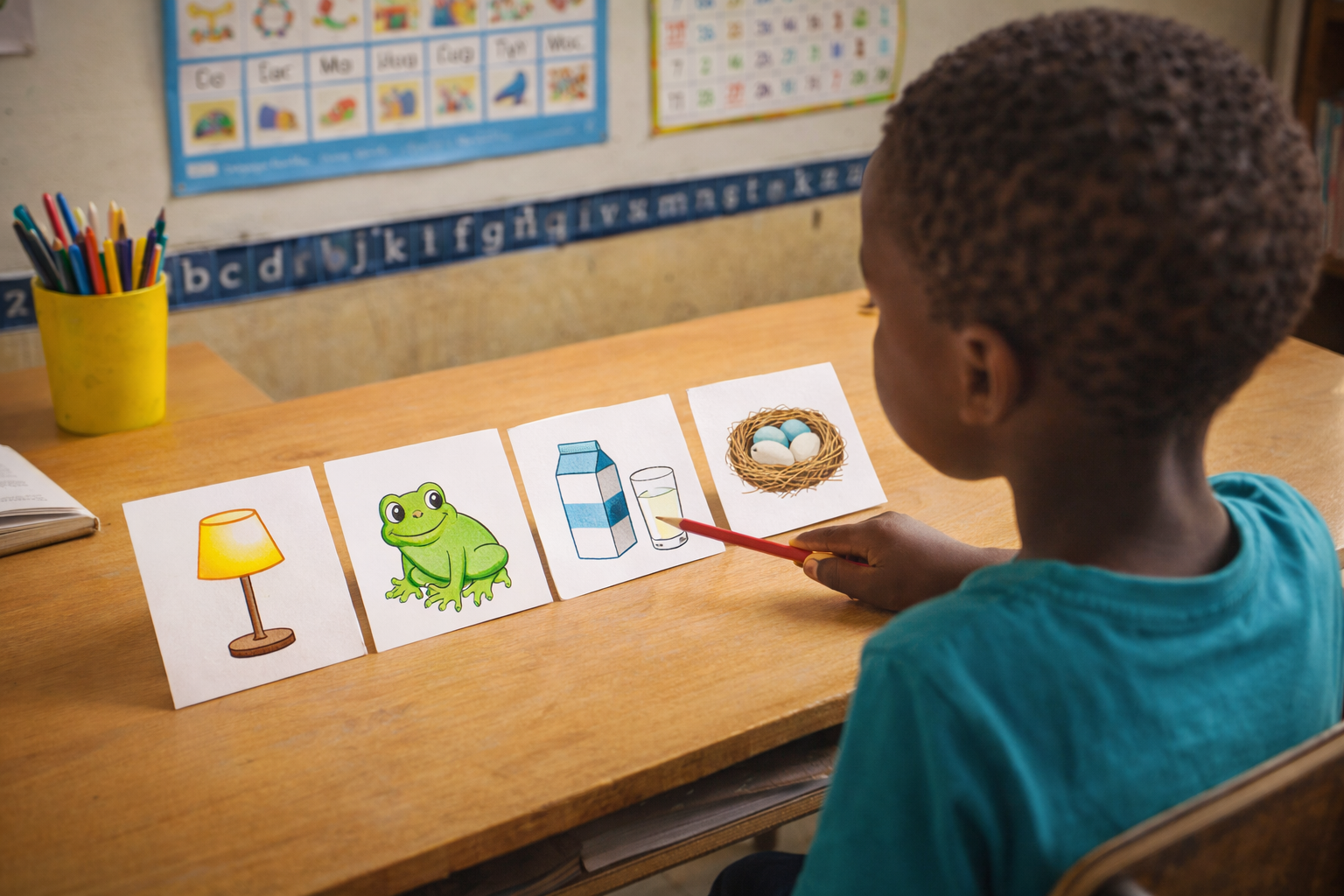
For younger students, teachers may introduce AI through simple activities such as identifying patterns or training basic image-recognition models using educational tools. Older students can progress into supervised learning concepts, neural networks, and Python-based machine learning projects.
This approach is especially valuable for students interested in science, technology, engineering, and mathematics (STEM) careers.
Benefits of the Technical Approach
- Builds practical digital skills
- Encourages innovation and creativity
- Prepares students for technology careers
- Improves computational thinking
- Helps students understand how AI decisions are made
Research from organizations such as the OECD has highlighted computational thinking as an increasingly important skill for future education systems.
Challenges
However, teaching technical AI concepts can be difficult in schools with:
- Limited technology resources
- Insufficient teacher training
- Inconsistent internet access
- Overcrowded classrooms
Teachers who have experimented with beginner AI lessons often report that students quickly engage with interactive AI tools but may become frustrated when concepts are introduced too quickly without foundational digital literacy skills.
Because of this, many education experts believe technical instruction should be balanced with broader learning goals and age-appropriate teaching methods.
2. Teaching Students How to Use AI Responsibly
Another important approach focuses less on coding and more on helping students understand how to use AI tools responsibly and critically.
This model emphasizes:
- Evaluating AI-generated information
- Identifying misinformation
- Understanding privacy concerns
- Recognizing algorithmic bias
- Practicing academic honesty
- Using AI ethically in schoolwork
As generative AI tools become more common in classrooms, educators are increasingly concerned about students submitting AI-generated assignments without understanding the content themselves.
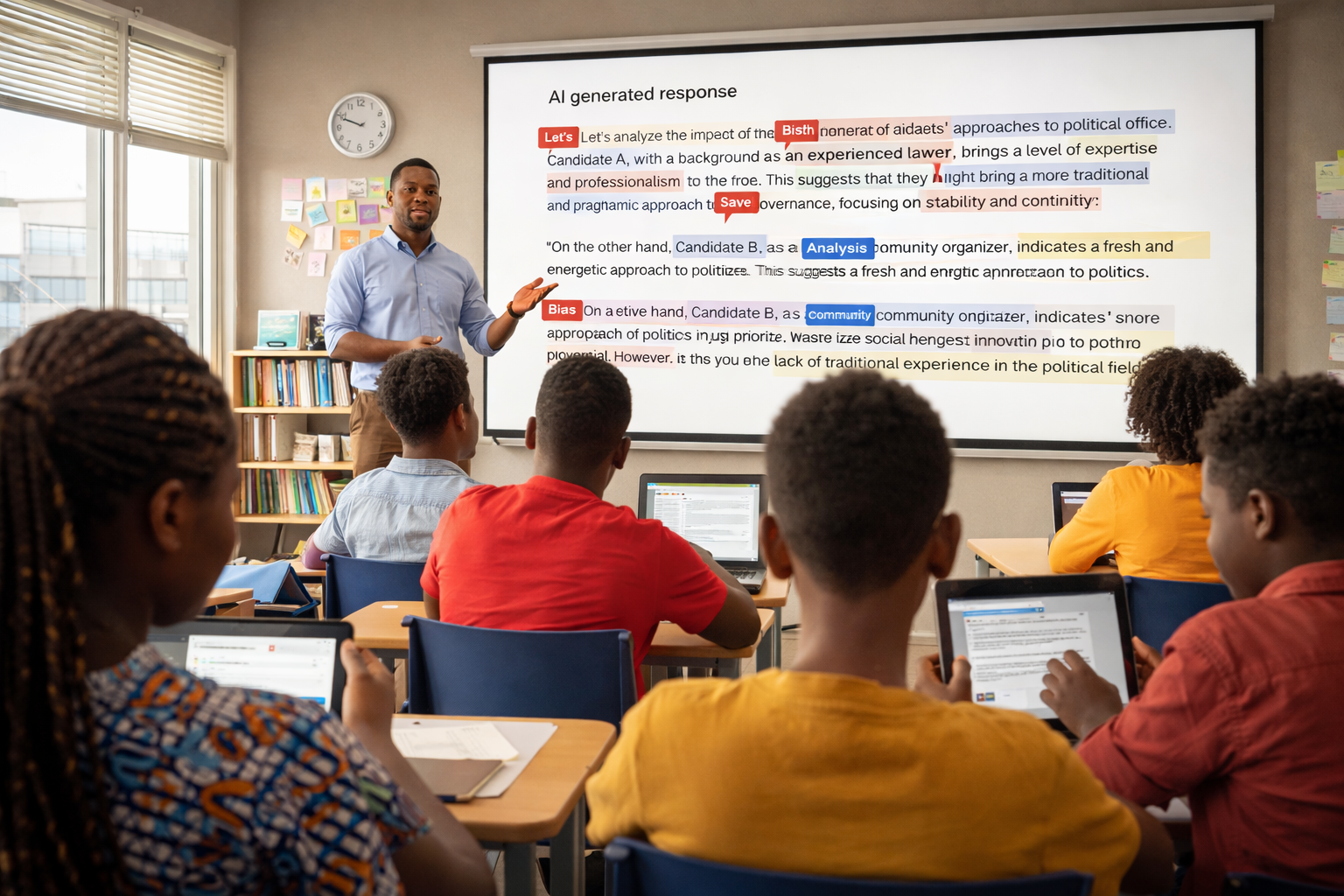
In schools that have introduced AI-assisted writing exercises, some teachers report that students initially accept AI responses as fully accurate. However, classroom fact-checking activities often reveal factual mistakes, fabricated references, or biased outputs. These exercises help students understand that AI tools should support learning rather than replace independent thinking.
Why Responsible AI Use Matters
Teaching responsible AI use helps students become informed digital citizens rather than passive technology consumers.
Students learn to:
- Question online information
- Verify sources independently
- Protect personal data
- Recognize manipulation and bias
- Use technology ethically
- Balance AI assistance with original thinking
UNESCO’s AI competency framework also emphasizes digital citizenship, ethical reasoning, and human-centered technology use as essential components of modern education.
Importantly, this approach can be introduced across multiple subjects without requiring advanced computer science expertise.
Integrating AI Across Different Subjects
Some schools are beginning to integrate AI discussions into multiple subjects instead of treating AI as a separate standalone course.
This cross-curricular approach helps students understand that AI affects many aspects of modern society.
In Language and Literature Classes
Students may:
- Compare AI-generated writing with human writing
- Analyze tone, creativity, and originality
- Discuss the impact of automation on communication
A practical classroom activity could involve students identifying weaknesses or inaccuracies in AI-generated essays before rewriting them using their own ideas.
In Science and Mathematics
Teachers can introduce:
- Data analysis
- Pattern recognition
- Machine learning concepts
- Predictive modeling
Students may also explore how AI is used in healthcare, climate research, and scientific discovery.
In Social Studies
Students can examine:
- The impact of AI on employment
- Privacy and surveillance concerns
- AI in politics and media
- Ethical regulation of technology
These discussions help students understand how technology shapes societies and economies.
In Art and Media Studies
Learners may discuss:
- AI-generated art
- Copyright and ownership
- Creative authenticity
- Deepfakes and manipulated media
These lessons are becoming increasingly important as AI-generated images and videos spread online.
The Role of Critical Thinking in AI Education
One of the most valuable skills schools can teach is critical thinking.
AI systems can generate fast answers, but students still need the ability to:
- Analyze information carefully
- Compare multiple sources
- Detect inaccuracies
- Ask thoughtful questions
- Make informed decisions
Research from Stanford University’s Human-Centered Artificial Intelligence (HAI) initiative has emphasized the growing need for AI literacy and critical evaluation skills in education.
If students become overly dependent on automated tools, they may struggle to develop independent reasoning abilities.
Effective AI education should therefore encourage active learning rather than passive acceptance.
Practical Critical Thinking Activities
Teachers can strengthen critical thinking by asking students to:
- Verify AI-generated claims using trusted sources
- Compare AI answers with textbooks or academic materials
- Identify misinformation in AI-generated content
- Debate ethical AI questions
- Solve problems manually before using automation
- Reflect on how algorithms shape opinions and online behavior
These activities help students use AI as a tool rather than allowing technology to replace human judgment.
Ethical Questions Schools Should Address
Artificial intelligence raises important ethical concerns that schools should not ignore.
Bias and Fairness
AI systems are trained on data created by humans, which means they can sometimes reflect social biases or unfair assumptions.
Research from MIT and other institutions has shown that biased training data can affect facial recognition systems, hiring algorithms, and recommendation systems.
Students should understand:
- How bias appears in algorithms
- Why fairness matters in technology
- The consequences of inaccurate systems
- How ethical design can reduce harm
Privacy and Data Protection
Many AI-powered platforms collect large amounts of user information.
Students need awareness of:
- Online privacy risks
- Data collection practices
- Tracking technologies
- Safe digital behavior
Schools should also teach students how to evaluate terms of service and understand how personal data may be stored or used.
Academic Integrity
With AI-powered writing tools becoming more accessible, schools must discuss:
- Responsible research practices
- Citation standards
- Original thinking
- Ethical AI assistance
Many educators now encourage transparency when students use AI tools for brainstorming or research support.
Challenges Schools Face When Teaching AI
Despite growing interest in AI education, many schools face practical difficulties.
Limited Resources
Some schools still lack:
- Reliable internet access
- Modern computer equipment
- Educational software
- Technology funding
This can create unequal learning opportunities between schools and regions.
Teacher Training
Many educators have not received formal AI training.
In workshops and pilot AI education programs, teachers frequently report feeling uncertain about explaining concepts such as machine learning, AI bias, or generative AI ethics.
Professional development programs are therefore essential for helping teachers feel confident integrating AI discussions into classrooms.
Rapid Technological Change
AI evolves quickly, making it difficult for curriculums to remain current.
Educational experts increasingly recommend focusing on adaptable skills such as:
- Critical thinking
- Digital literacy
- Ethical reasoning
- Problem-solving
rather than teaching only temporary software trends.
How Schools Can Build Effective AI Learning Programs
To teach AI successfully, schools can adopt a balanced and practical strategy.
Start with Digital Literacy First
Before introducing advanced AI concepts, students should understand:
- Online safety
- Information evaluation
- Source verification
- Responsible technology use
These foundational skills reduce the risk of misinformation and overreliance on AI-generated content.
Use Age-Appropriate Lessons
Primary School
Students can:
- Identify AI in daily life
- Learn basic online safety
- Discuss simple ethical questions
Middle School
Students may:
- Evaluate AI-generated information
- Explore beginner coding activities
- Study algorithmic recommendations
High School
Older students can:
- Build simple machine learning projects
- Analyze AI ethics
- Study automation and employment trends
- Explore data science concepts
Encourage Hands-On Learning
Interactive learning often improves student engagement and understanding.
Schools can use:
- Simple coding exercises
- AI-powered educational tools
- Classroom debates
- Real-world problem-solving projects
- AI fact-checking activities
Teachers who incorporate hands-on projects frequently report that students better understand both the strengths and limitations of AI systems.
Focus on Human Skills
As automation becomes more common, uniquely human abilities remain extremely valuable, including:
- Creativity
- Communication
- Emotional intelligence
- Collaboration
- Ethical reasoning
- Leadership
Experts increasingly argue that future education should strengthen these human-centered skills alongside technological literacy.
Preparing Students for an AI-Driven Future
Artificial intelligence is expected to influence nearly every industry, including healthcare, finance, transportation, education, entertainment, and manufacturing.
According to the World Economic Forum and McKinsey research, future workers will increasingly need both technological literacy and adaptable human skills.
Schools therefore have an important responsibility not only to teach students how AI works, but also to help them understand its wider social impact.
A strong AI education combines:
- Technical understanding
- Ethical awareness
- Critical thinking
- Digital citizenship
- Responsible technology use
This balanced approach prepares students to adapt confidently in a rapidly changing world.
Conclusion
Teaching artificial intelligence in schools is becoming increasingly important as technology continues to shape modern life. However, effective AI education is not simply about teaching coding or introducing digital tools. It also involves helping students understand how intelligent systems influence society, communication, information, and decision-making.
Schools can approach AI education in several ways, including technical instruction, ethical discussions, cross-curricular learning, and critical thinking activities. The most effective programs combine practical digital skills with human-centered values and responsible technology use.
By introducing thoughtful and balanced AI education today, schools can help students become informed, adaptable, ethical, and responsible participants in the future digital world.