










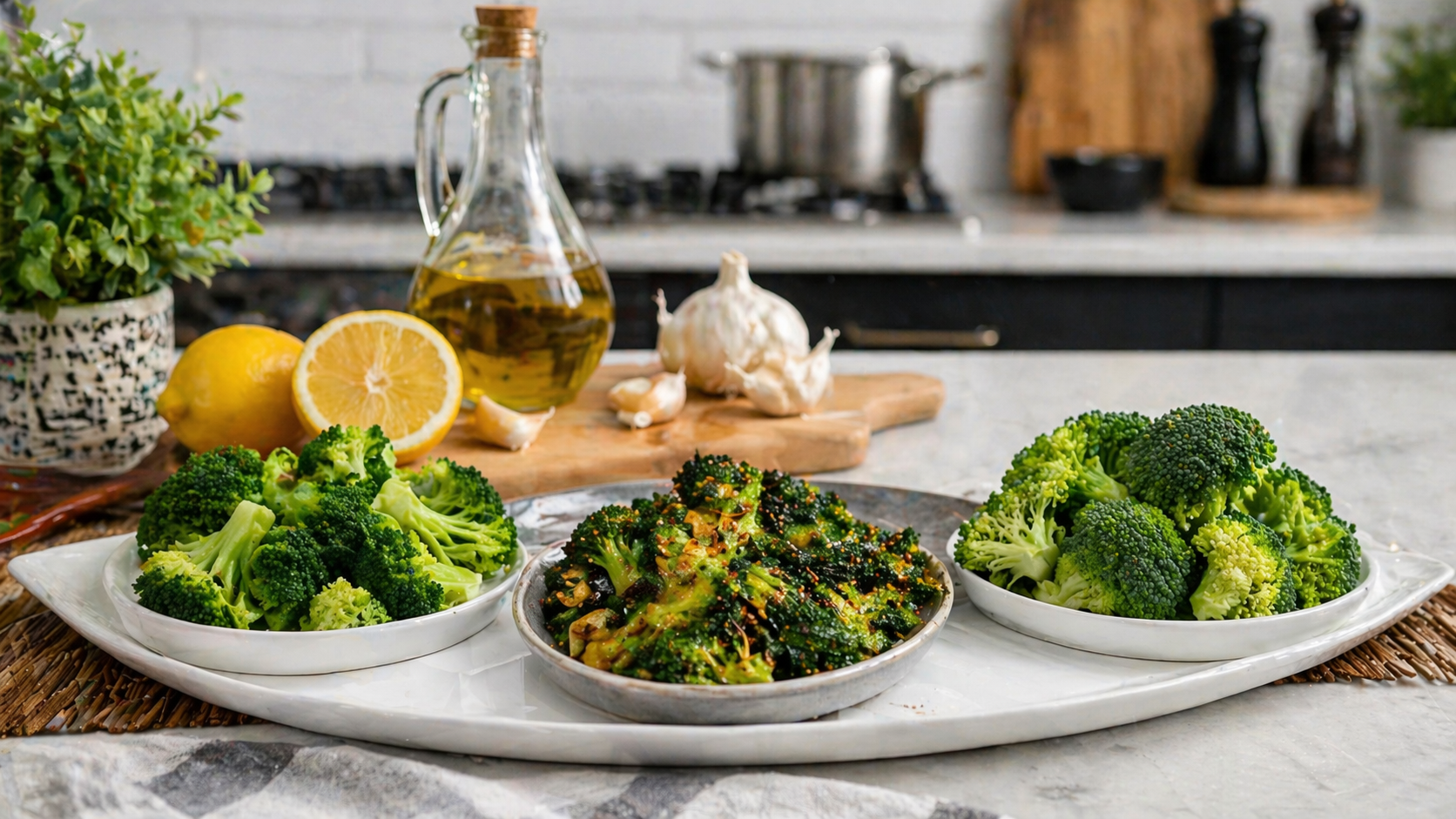
Broccoli is widely recognized as one of the most nutrient-dense vegetables you can eat. It’s rich in vitamin C, vitamin K, fiber, and powerful plant compounds like sulforaphane—linked to antioxidant and protective health benefits.
However, one key factor is often overlooked: how you cook broccoli can significantly influence its nutritional value.
After testing different cooking methods in everyday meal preparation, one thing becomes clear—the difference between overcooked and properly cooked broccoli isn’t just taste, it’s nutrition.
This guide breaks down the best ways to cook broccoli based on scientific evidence and practical kitchen experience.
Why Cooking Method Matters
Broccoli contains several sensitive nutrients, including:
- Vitamin C (water-soluble and heat-sensitive)
- Folate
- Fiber
- Antioxidants like sulforaphane
Sulforaphane forms when broccoli is chopped or chewed, thanks to an enzyme called myrosinase. However, both excessive heat and water exposure can reduce its formation.
According to research from institutions like Harvard T.H. Chan School of Public Health, cooking methods that use less water and shorter cooking times help preserve more nutrients.
Raw Broccoli: Maximum Nutrients, But Not Always Practical
Eating broccoli raw preserves nearly all of its nutrients, including heat-sensitive compounds and enzymes.
Benefits
- Highest retention of vitamin C and sulforaphane
- No nutrient loss from heat
- Crisp texture
Limitations
From personal experience, raw broccoli isn’t always ideal:
- It can be harder to digest for some people
- The taste can be quite bitter
- Nutrient absorption may be lower for certain compounds compared to lightly cooked broccoli
Research published by National Institutes of Health suggests that light cooking can sometimes improve the bioavailability of certain nutrients, making them easier for the body to absorb.
Boiling Broccoli: Convenient but Nutrient-Loss Heavy
Boiling is common, but it’s one of the least effective methods for preserving nutrients.
What Happens During Boiling?
- Water-soluble vitamins (like vitamin C) leach into the water
- Heat degrades delicate compounds
- Up to significant nutrient loss can occur depending on duration
Studies referenced by Journal of Food Science show that boiling vegetables can cause notable reductions in antioxidant levels compared to other methods.
When It’s Acceptable
If you must boil:
- Keep it under 2–3 minutes
- Use minimal water
- Reuse the water in soups to retain lost nutrients
Even with these adjustments, boiling is generally less effective than steaming or stir-frying.
Steaming: The Best Balance of Nutrition and Taste
Steaming is consistently ranked as one of the healthiest cooking methods for broccoli.
Why It Works
- Minimal contact with water reduces nutrient loss
- Preserves vitamin C and antioxidants
- Maintains texture and color
In practice, steaming broccoli for about 4 minutes keeps it bright green, slightly firm, and flavorful—without the nutrient loss seen in boiling.
Research highlights that steaming helps retain more glucosinolates (compounds linked to sulforaphane production) compared to boiling.
Tips for Best Results
- Steam for 3–5 minutes
- Avoid overcooking (dull green = nutrient loss)
- Season after cooking
Stir-Frying: Nutrient-Friendly and Flavorful
Stir-frying combines short cooking time with healthy fats, making it both nutritious and enjoyable.
Benefits
- Quick cooking reduces nutrient breakdown
- Healthy oils improve absorption of fat-soluble nutrients
- Enhances flavor significantly
According to nutrition research, adding small amounts of fat (like olive oil) helps the body absorb certain beneficial compounds more effectively.
Best Practices
- Use medium heat
- Cook for 3–5 minutes
- Use 1–2 teaspoons of healthy oil
From a practical standpoint, stir-frying is one of the easiest ways to make broccoli taste good without sacrificing nutrition.
Light Cooking: The Nutritional “Sweet Spot”
Interestingly, broccoli is often most beneficial when lightly cooked—not raw and not overcooked.
Why This Works
- Softens fiber, improving digestion
- Enhances bioavailability of some nutrients
- Preserves most vitamins and antioxidants
This aligns with findings from World Health Organization, which supports cooking methods that retain nutrients while improving digestibility.
The Science Behind Sulforaphane and Enzymes
Broccoli contains myrosinase, the enzyme responsible for producing sulforaphane.
Key Insight
- High heat can deactivate this enzyme
- Without it, sulforaphane production drops
Practical Tip (Highly Effective)
After testing this method, it makes a noticeable difference:
- Chop broccoli
- Let it sit for 5–10 minutes before cooking
This allows sulforaphane to begin forming before heat exposure, preserving more of its benefits.
Practical Tips to Maximize Nutrition
Preparation
- Chop into smaller pieces for even cooking
- Let sit before cooking to activate enzymes
Cooking
- Prefer steaming or stir-frying
- Keep cooking time short
- Avoid prolonged high heat
Serving
- Add healthy fats (e.g., olive oil, nuts)
- Combine with other vegetables
- Use herbs instead of heavy sauces
Common Mistakes to Avoid
Overcooking
Leads to:
- Loss of vitamins
- Reduced antioxidants
- Mushy texture
Too Much Water
Especially during boiling, this causes nutrient loss.
Skipping Preparation Steps
Not letting broccoli rest after chopping reduces beneficial compound formation.
Best Cooking Method Comparison
| Method | Nutrient Retention | Taste | Recommendation |
|---|---|---|---|
| Raw | Very High | Bitter | Optional |
| Boiled | Low | Soft | Avoid |
| Steamed | High | Mild | Best Overall |
| Stir-fried | High | Flavorful | Excellent |
What’s the Healthiest Way Overall?
Best Overall Method: Steaming (3–5 minutes)
Best for Flavor: Stir-frying
Least Recommended: Boiling
Making Broccoli More Enjoyable
If you don’t like broccoli, preparation makes all the difference.
Simple Improvements
- Add garlic and lemon juice
- Stir-fry with onions or peppers
- Sprinkle seeds or a small amount of cheese
Texture Tip
Cook until tender-crisp, not soft. This improves both taste and nutrition.
Conclusion
Broccoli is one of the healthiest vegetables you can eat—but how you cook it matters just as much as eating it.
While raw broccoli retains the most nutrients, it’s not always the most digestible or enjoyable. Boiling, on the other hand, can significantly reduce its nutritional value.
The best approach lies in light, gentle cooking methods like steaming or stir-frying, which preserve essential nutrients while enhancing flavor and digestibility.
With small adjustments—like shortening cooking time, reducing water, and allowing broccoli to rest after chopping—you can turn a simple vegetable into a highly nutritious, delicious part of your diet.