



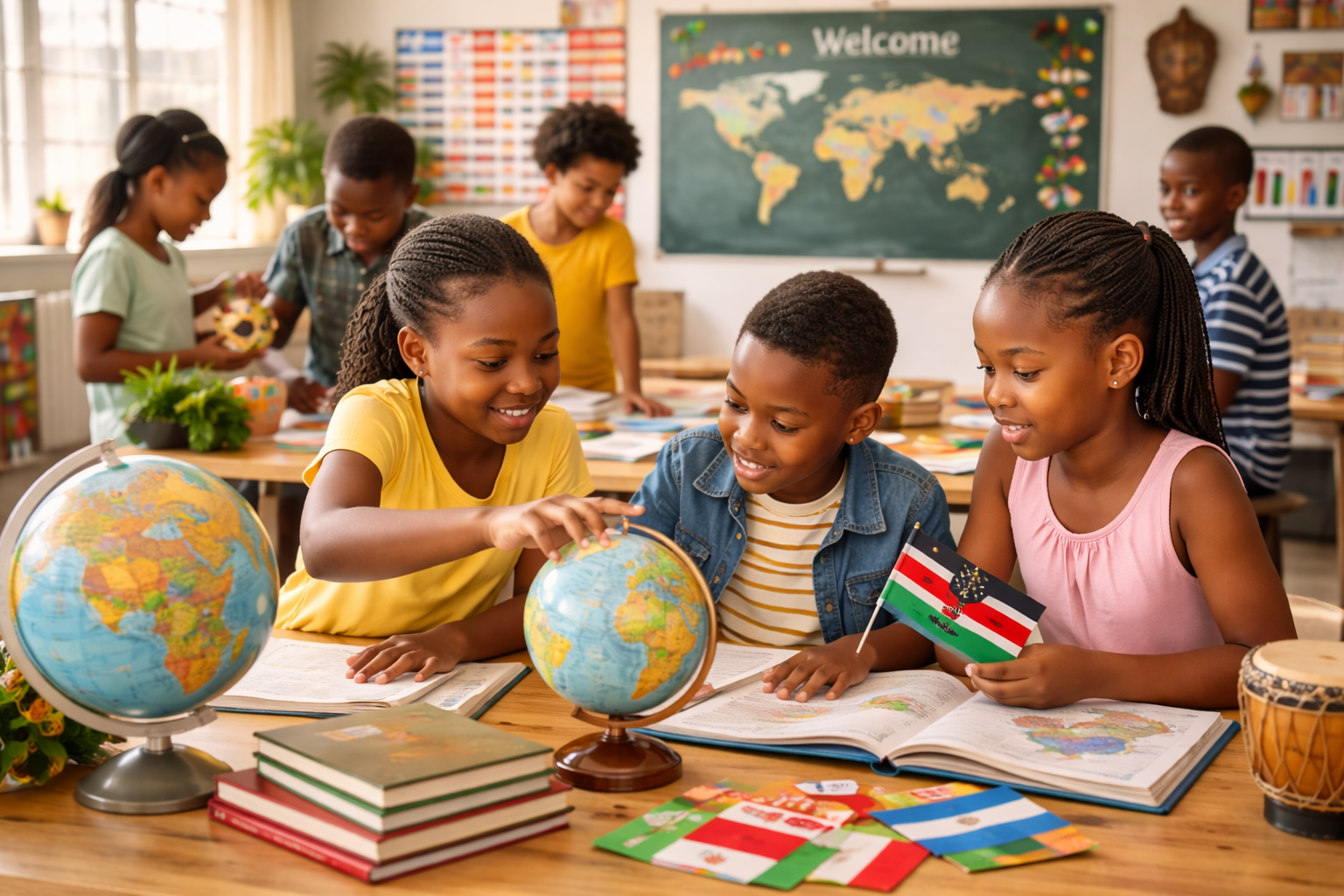
Walk into a typical classroom in Nigeria, Kenya, or South Africa today, and you’ll likely find students who speak different languages, practice different religions, and come from diverse cultural backgrounds. In one Abuja classroom I observed, students spoke Hausa, Igbo, Yoruba, and English—yet were expected to learn from the same standardized materials. The result? Some students thrived, while others quietly disengaged.
This is where multicultural education becomes essential—not optional.
Multicultural education is more than celebrating cultural days or displaying traditional clothing. It is a structured, research-backed approach to teaching that ensures every student feels represented, respected, and able to succeed. According to UNESCO, inclusive education systems that respect diversity lead to better academic outcomes and stronger social cohesion.
This article explores what multicultural education truly means, why it matters, and how schools—especially in Africa—can implement it effectively.
What Is Multicultural Education?
Multicultural education is a teaching approach that integrates diverse cultural perspectives into curriculum, instruction, and school systems.
It is grounded in educational research, including frameworks like Culturally Responsive Teaching, which emphasizes aligning teaching methods with students’ cultural contexts.
At its core, multicultural education aims to:
- Promote equal learning opportunities
- Reduce bias and discrimination
- Reflect diverse histories and perspectives
- Prepare students for global citizenship
Unlike traditional systems that prioritize a single dominant narrative, multicultural education ensures that learning reflects the real world students live in.
Why Multicultural Education Matters (With Evidence)
1. Improves Student Engagement and Performance
When students see themselves reflected in learning materials, they are more likely to participate and succeed.
Research cited by the World Bank shows that inclusive and culturally relevant education can significantly improve student retention and learning outcomes, particularly in multilingual societies.
Real example:
In a Lagos secondary school, introducing local literature alongside British texts increased class participation and comprehension, especially among students who previously struggled with abstract foreign contexts.
2. Reduces Prejudice and Builds Social Cohesion
Exposure to diverse cultures in a structured learning environment helps students develop empathy and critical thinking.
According to UNESCO, education systems that promote diversity reduce stereotypes and contribute to peaceful societies.
3. Prepares Students for a Global Economy
Employers increasingly value cultural intelligence. Students who understand different perspectives are better equipped for collaboration in international environments.
4. Promotes Equity in Education
Multicultural education helps address systemic inequalities—especially in regions where language and cultural differences affect access to learning.
However, it is important to be precise: it does not “guarantee” equality but significantly improves access and fairness when properly implemented.
Key Elements of Effective Multicultural Education
1. Inclusive Curriculum
An inclusive curriculum goes beyond token representation.
It should include:
- African and global literature
- Multiple historical perspectives (not just colonial narratives)
- Real-world examples relevant to students’ environments
Example:
Teaching history in Nigeria should include pre-colonial civilizations—not just colonial accounts.
2. Culturally Responsive Teaching
Teachers must adapt how they teach—not just what they teach.
This includes:
- Using familiar cultural examples
- Adjusting teaching styles for diverse learners
- Recognizing cultural communication differences
Research in Culturally Responsive Teaching shows this approach improves comprehension and participation.
3. Language Inclusion
Africa is home to over 2,000 languages. Ignoring this reality creates barriers.
Effective strategies include:
- Supporting bilingual learning
- Using local languages for foundational instruction
- Providing language support programs
According to the World Bank, early education in a child’s first language improves literacy outcomes.
4. Safe and Inclusive School Environment
Students must feel psychologically safe to express their identity.
This requires:
- Anti-bullying policies
- Clear reporting systems
- Open discussions about identity and respect
Practical Strategies Schools Can Implement (Step-by-Step)
Step 1: Audit Your Curriculum (Week 1)
- Identify gaps in cultural representation
- Review textbooks for bias or stereotypes
Step 2: Diversify Learning Materials (Week 2)
- Introduce local stories, case studies, and examples
- Use visuals that reflect diverse communities
Step 3: Train Teachers (Week 3–4)
Provide training on:
- Recognizing unconscious bias
- Inclusive teaching strategies
- Managing multilingual classrooms
Step 4: Create Student Dialogue Spaces
- Organize guided discussions on culture and identity
- Encourage respectful peer learning
Step 5: Engage Parents and Communities
- Invite cultural contributions from families
- Partner with local leaders and organizations
Step 6: Monitor and Improve
- Track student engagement and performance
- Collect feedback from students and teachers
- Adjust strategies accordingly
Challenges (And Practical Solutions)
1. Limited Resources
Challenge: Lack of diverse materials
Solution: Use locally available stories, oral histories, and community knowledge
2. Resistance to Change
Challenge: Some educators or parents may prefer traditional methods
Solution: Provide awareness programs backed by evidence from UNESCO
3. Language Barriers
Challenge: Multilingual classrooms are harder to manage
Solution: Use peer support systems and bilingual teaching aids
4. Teacher Preparedness
Challenge: Many teachers lack training
Solution: Continuous professional development programs
The Role of Policy and Leadership
Educational change must be supported at the top.
Governments and school leaders should:
- Develop inclusive education policies
- Fund teacher training programs
- Provide culturally relevant materials
According to UNESCO, national policies that prioritize inclusion significantly improve education quality.
Benefits Beyond the Classroom
Multicultural education shapes society—not just schools.
Students exposed to inclusive learning environments are more likely to:
- Become tolerant and open-minded adults
- Contribute to economic and social development
- Promote peace in diverse communities
In Africa, where diversity is a major strength, this approach can help build more unified and resilient societies.
Conclusion
Multicultural education is not just a trend—it is a necessity for modern education systems.
By combining:
- Inclusive curricula
- Culturally responsive teaching
- Evidence-based strategies
schools can create environments where every student has the opportunity to succeed.
As classrooms continue to evolve, the question is no longer whether to adopt multicultural education—but how quickly and effectively it can be implemented.