





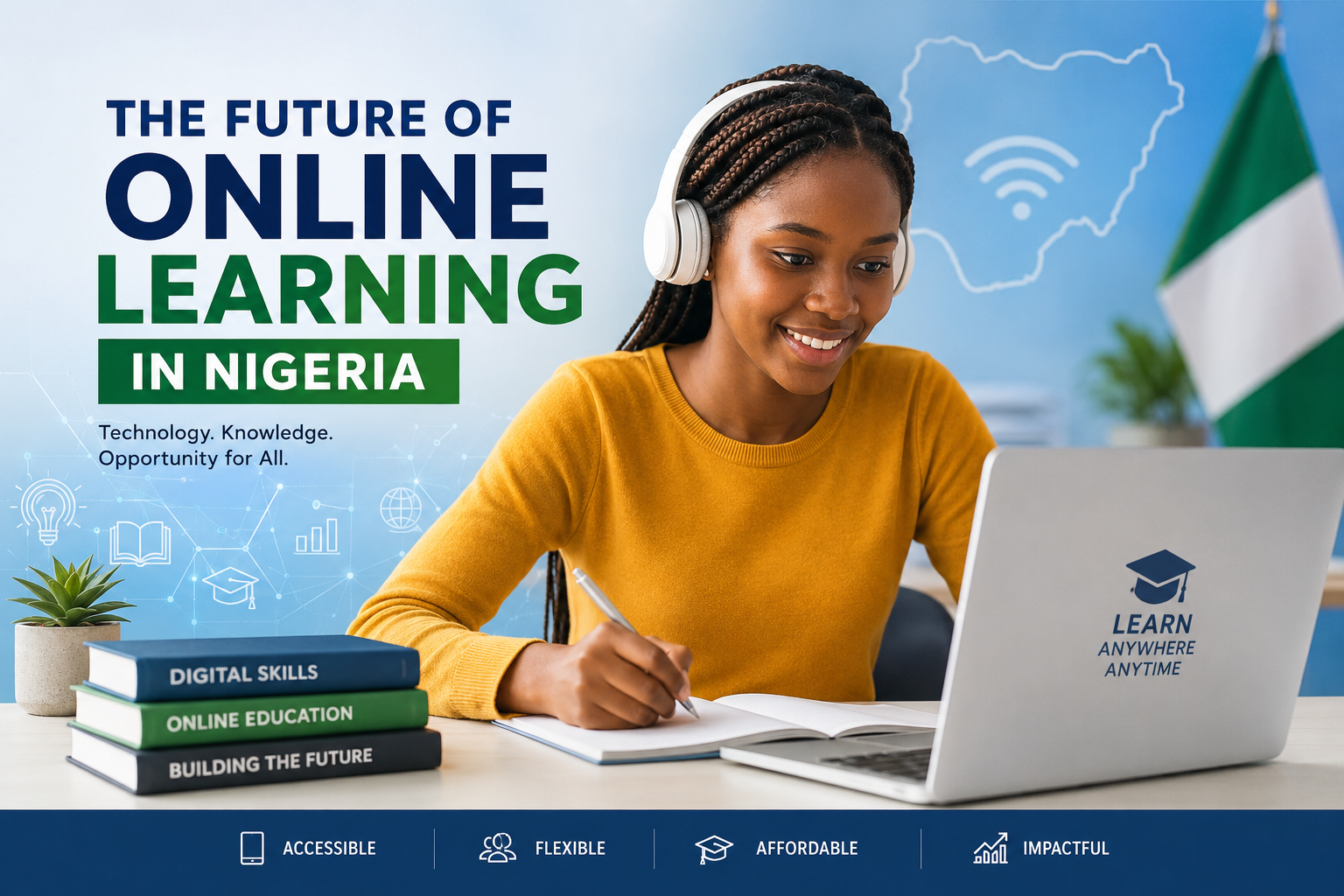
There is no private tutor available to explain a difficult mathematics topic. The nearest learning centre is several kilometres away. But the student has a smartphone, a modest internet connection and access to an online lesson.
Within minutes, a teacher thousands of kilometres away can explain the topic through a video.
Now imagine another student in Abuja learning graphic design online after school, a university student in Lagos taking an international professional course, or a young person in Kaduna learning digital marketing without having to relocate.
This is no longer simply an idea about the future.
It is already happening.
But Nigeria’s online learning revolution is more complicated than simply putting lessons on the internet.
A Nigerian student may have a smartphone but struggle to afford data. Another may have an excellent internet connection but unreliable electricity. A teacher may want to use artificial intelligence but have received little training in how to use it responsibly. A parent may want their child to learn online but worry about social media, inappropriate content and excessive screen time.
And for Christian families, there is another important question:
How do we embrace the opportunities of technology without losing the values that should guide our children?
That question makes the future of online learning in Nigeria not merely an educational issue, but also a family, social, economic and spiritual issue.
What Does Online Learning Really Mean in Nigeria?
Online learning is often associated with Zoom classes, online universities or video courses.
But in Nigeria, it can look very different.
It may be:
- A secondary school student watching a mathematics lesson on a smartphone.
- A teacher downloading lesson materials before going to a community with poor connectivity.
- A university student taking a professional certification course online.
- A young entrepreneur learning how to advertise a business on social media.
- A parent helping a child complete an online assignment.
- A church organising a virtual Bible study.
- A young person learning coding through an online platform.
- A student using an AI assistant to understand a difficult concept.
- A teacher creating digital revision materials for students.
This is important because Nigeria should not simply copy online education models developed for countries with different infrastructure and economic realities.
Nigeria needs online learning designed around Nigerian learners.
Why Online Learning Matters So Much for Nigeria
Nigeria has a large and youthful population, creating enormous demand for education, employable skills and lifelong learning.
Traditional schools and universities remain essential, but they cannot provide every learner with access to every teacher, course or skill.
Online education can complement traditional education by giving learners additional opportunities.
A student studying accounting, for example, can supplement classroom teaching with online tutorials.
A teacher can access professional-development courses without travelling to another state.
A graduate can acquire a new digital skill without enrolling in another full-time degree programme.
A church can train young people in entrepreneurship, leadership or digital skills alongside spiritual development.
The opportunity is therefore much bigger than simply replacing classrooms with computers.
Online learning can make education more flexible, continuous and accessible.
The Nigerian Reality: A Smartphone Does Not Automatically Mean Digital Inclusion
One mistake we must avoid is assuming that every Nigerian with a smartphone has equal access to online education.
A smartphone may be available, but several questions remain:
Can the family afford regular data?
Is electricity available to charge the device?
Is the network reliable?
Does the learner know how to find quality educational resources?
Can the family afford a laptop when one is required?
Does the student have a quiet place to study?
These questions matter.
Nigeria’s digital future will depend not only on developing impressive educational platforms but also on making those platforms practical for ordinary families.
The future of online learning must therefore be mobile-friendly, affordable, low-bandwidth where possible and accessible beyond major Nigerian cities.
A Typical Nigerian Student’s Online Learning Journey
Consider this fictional but realistic example.
Let’s call her Grace.
Grace is a secondary school student living with her parents. She attends a conventional school during the day. Her teachers are hardworking, but there are subjects she finds difficult.
One evening, she uses her mother’s smartphone to watch an online lesson explaining a topic she did not understand in class.
She pauses the video.
She rewinds it.
She watches the explanation again.
Then she searches for practice questions.
Eventually, she understands the topic.
That simple experience illustrates one of the biggest advantages of digital education:
A learner can revisit a lesson at their own pace.
The classroom bell does not determine when learning stops.
This does not mean online learning is automatically better than classroom teaching. It means technology can provide an additional layer of support that traditional education sometimes cannot provide on its own.
Artificial Intelligence Could Change How Nigerian Students Learn
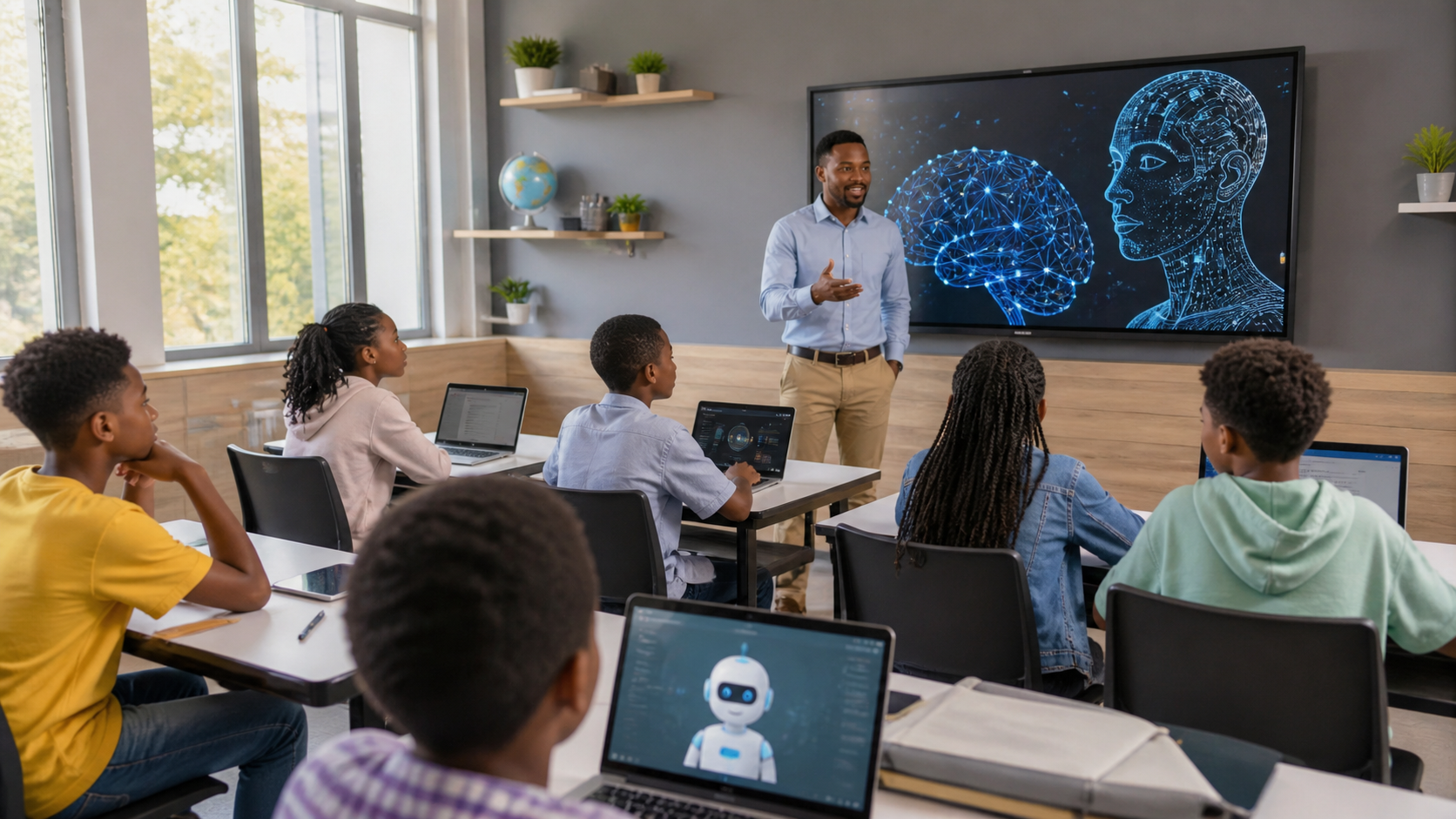
Artificial intelligence is likely to become one of the biggest developments in online education.
An AI-powered learning assistant could potentially help a student understand a difficult concept, generate practice questions, explain a topic in simpler language or create a personalised study plan.
Imagine a student preparing for WAEC or JAMB.
Instead of simply reading a textbook, the student could ask an AI learning assistant to:
- Explain a difficult topic.
- Create revision questions.
- Identify weak areas.
- Provide step-by-step explanations.
- Create a study timetable.
- Test the student using practice questions.
- Explain an answer in simpler language.
That could be powerful.
But there is a serious warning.
AI should be a learning assistant—not a shortcut around learning.
If students simply ask AI to complete assignments, write examinations or do all their thinking, technology could weaken rather than strengthen education.
The Christian principle of diligence remains relevant.
“Whatsoever thy hand findeth to do, do it with thy might.” — Ecclesiastes 9:10 (KJV)
The goal should be to use technology to become better learners, not to avoid learning.
The Teacher Is Not Becoming Obsolete
Whenever artificial intelligence enters education, one question naturally arises:
Will AI replace teachers?
For Nigeria, the better question may be:
How can AI help Nigerian teachers become more effective?
A good teacher does much more than deliver information.
Teachers encourage students.
They recognise when a child is struggling.
They understand classroom dynamics.
They mentor young people.
They teach discipline.
They model character.
They can recognise circumstances affecting a student’s performance.
Technology cannot easily replace that human relationship.
The teacher of the future may therefore become less of an information distributor and more of a mentor, facilitator, coach and learning guide.
This is especially important in Christian education, where teaching is not only about transferring information but also about developing character and wisdom.
Online Learning Could Create New Opportunities for Nigerian Youth
Perhaps one of the most exciting possibilities is the connection between online education and employable skills.
A young Nigerian does not necessarily have to wait until graduation before developing practical abilities.
Through online learning, young people can explore:
Digital skills
- Graphic design
- Web development
- Software development
- Video editing
- Digital marketing
- Content creation
- Data analysis
- Artificial intelligence
Business skills
- Entrepreneurship
- E-commerce
- Sales
- Customer service
- Financial literacy
- Business management
Creative skills
- Photography
- Writing
- Animation
- Music production
- Fashion design
- Branding
Technical and vocational skills
- Electronics
- Renewable energy
- Agriculture
- Technical drawing
- Computer maintenance
- Other practical trades
This is particularly important because education should prepare young people not only to pass examinations but also to solve problems and contribute meaningfully to society.
The Future of Education in Nigeria Will Probably Be Blended
The debate should not be:
Online education or physical education?
The better answer may be:
Both.
A student could attend school physically and then use online resources for additional learning.
A university student could combine campus lectures with digital courses.
A church could provide physical discipleship classes alongside an online Bible-learning programme.
A teacher could teach in a classroom while using digital tools for assessment and revision.
This is called blended learning.
It recognises that physical interaction remains valuable while taking advantage of the flexibility of digital technology.
What About Nigerian Students in Rural Communities?
This is where the conversation becomes particularly important.
It is easy to imagine the future of education from the perspective of a student with a laptop, fast internet and uninterrupted electricity.
But Nigeria contains communities where those conditions cannot be taken for granted.
If online education is going to transform Nigeria, it must reach beyond Lagos, Abuja and other major urban centres.
A child in a rural community deserves educational opportunity too.
That means Nigeria needs solutions that consider:
- Affordable internet access
- Reliable electricity
- Offline learning
- Low-data educational content
- Affordable smartphones and computers
- Community learning centres
- Teacher training
- Local educational content
- Accessibility for learners with disabilities
The digital divide should not become an educational divide.
Parents Will Become Digital Education Partners
For Nigerian parents, the rise of online learning creates both opportunities and responsibilities.
Parents may no longer be able to simply ask:
“What did you learn in school today?”
They may also need to ask:
“What are you learning online?”
“Which websites are you using?”
“Who are you learning from?”
“How do you know the information is true?”
“What did you learn from using AI today?”
Children need guidance because the internet contains both excellent educational resources and harmful content.
Christian parents have an additional responsibility: helping children develop a biblical framework for evaluating what they encounter online.
Philippians 4:8 provides a useful principle:
“Whatsoever things are true… honest… just… pure… lovely… and of good report…” — Philippians 4:8 (KJV)
The verse was not written about smartphones or artificial intelligence, but its principle remains relevant.
Children need to learn that not everything available online deserves their attention.
How Churches Can Participate in Nigeria’s Digital Education Future
This is an area where religious organisations have an enormous opportunity.
Churches already have something many technology companies struggle to build:
community and relationships.
A church can create online educational programmes covering:
- Bible study
- Christian leadership
- Career development
- Entrepreneurship
- Digital skills
- Financial literacy
- Marriage preparation
- Parenting
- Youth development
- Personal development
- Vocational skills
Imagine a church youth ministry where young people meet physically on Sundays but also have access during the week to a digital learning platform.
A teenager could study Scripture in one course, learn graphic design in another and attend a career-development session online.
That is more than digital ministry.
It is holistic development.
The Church can help young people develop both faith and competence.
Christian Education Must Not Fear Technology
Christians sometimes approach new technology with understandable caution.
There are legitimate concerns about addiction, misinformation, pornography, privacy, artificial intelligence, social media and the erosion of personal relationships.
Those concerns should not be dismissed.
But fear should not prevent responsible engagement.
Throughout history, Christians have used new communication technologies to spread knowledge.
Printed books transformed access to information.
Radio expanded communication.
Television created new educational possibilities.
The internet created global communities.
Today, artificial intelligence and digital learning are creating another transformation.
The important question is:
How can technology be placed under wise human and spiritual direction?
Technology is a tool.
The character of the person using it determines much of what that tool produces.
The Biggest Challenges Nigeria Must Solve
The potential is enormous, but the problems are real.
1. Internet Access
Millions of Nigerians still have limited or no internet access.
2. Cost of Data
Students from lower-income families may struggle to participate consistently in online courses.
3. Electricity
Devices need power, and unreliable electricity can disrupt learning.
4. Digital Literacy
Students, parents and teachers need training in using technology effectively.
5. Quality of Online Content
Not everything labelled “educational” is accurate or trustworthy.
6. Cybersecurity and Privacy
Children’s and students’ personal information must be protected.
7. Distraction
The same smartphone used for learning can also provide endless entertainment.
8. Academic Integrity
AI and online resources create new challenges around plagiarism and cheating.
9. Teacher Training
Teachers need support to integrate technology rather than simply being given devices.
10. Inequality
Digital education must not become a privilege available only to wealthier families.
What Nigerian Students Should Start Doing Today
Students do not need to wait for the perfect educational system.
They can begin preparing for the future now.
1. Become Curious
Develop the habit of asking questions and searching for reliable answers.
2. Learn Digital Skills
Do not limit education to what is required for examinations.
Learn skills that can solve real-world problems.
3. Learn How to Use AI Responsibly
Use AI to explain, practise, brainstorm and learn—but don’t allow it to do all your thinking.
4. Verify Information
Check important information against reliable sources.
5. Develop Self-Discipline
Online learning gives you freedom, but freedom requires responsibility.
6. Protect Your Digital Identity
Do not casually share passwords, private information or sensitive documents online.
7. Keep Reading
Do not allow short videos and AI-generated answers to replace deep reading.
8. Keep Your Faith Strong
Knowledge without wisdom can be dangerous.
Proverbs 9:10 says:
“The fear of the LORD is the beginning of wisdom.” — Proverbs 9:10 (KJV)
The objective should not simply be to create highly educated young Nigerians.
It should be to develop knowledgeable, wise, responsible and purpose-driven Nigerians.
What Nigerian Parents Can Do
Parents do not need to become technology experts to support digital learning.
They can start with simple steps:
Create a learning routine.
Set aside specific times for online education.
Know what your children are watching.
Educational does not automatically mean safe.
Discuss what they learn.
Ask children to explain new concepts to you.
Teach critical thinking.
Encourage them to question information rather than accept everything they see online.
Set healthy boundaries.
Learning should not become endless screen time.
Encourage practical application.
If a child learns entrepreneurship, encourage them to identify a small problem they can solve.
Teach values alongside skills.
A child who knows how to use technology but does not know how to use it responsibly may become more powerful without becoming wiser.
What Nigerian Churches Can Do
Church leaders can begin preparing their congregations for the digital education era.
Here are practical possibilities:
Create a digital learning library
Provide trustworthy Christian educational materials in one place.
Train young people
Offer courses in technology, entrepreneurship and career development.
Support teachers
Help Christian educators learn how to use AI and digital tools responsibly.
Develop online Bible studies
Create structured Bible-learning programmes rather than relying only on occasional social media posts.
Mentor young people
Connect experienced professionals with younger members of the church.
Support disadvantaged learners
Consider device, data or scholarship programmes for students who cannot afford digital learning.
This can turn the Church from a passive observer of technological change into an active participant in community transformation.
What Will Online Learning in Nigeria Look Like by 2030?
Nobody can predict the future perfectly.
But several developments are worth watching.
AI-assisted learning
Students may increasingly use AI-powered tutors and learning assistants.
Mobile-first education
Smartphones will remain an important gateway to digital learning.
Micro-courses and certifications
Learners may increasingly acquire specific skills through shorter programmes rather than relying exclusively on traditional degrees.
Blended classrooms
Physical schools may increasingly integrate digital learning tools.
Digital vocational education
More young Nigerians may use online platforms to acquire practical and entrepreneurial skills.
Personalised learning
Technology may increasingly adapt educational content to individual learners.
Offline-first education
Educational platforms may increasingly design for learners with inconsistent connectivity.
Faith-based digital education
Churches and Christian organisations may increasingly develop online resources for discipleship, leadership, career development and youth education.
The Real Question Is Not Whether Technology Will Change Education
It will.
The real question is:
What kind of education will Nigeria build with technology?
Will technology widen the gap between rich and poor?
Or will it help close that gap?
Will AI make students lazy?
Or will it help them learn more effectively?
Will smartphones become distractions?
Or will they become powerful learning tools?
Will churches ignore technological change?
Or will they use technology to equip the next generation?
Will young Nigerians merely consume digital content?
Or will they learn to create, innovate and solve problems?
These are decisions we are making now.
The Future Needs More Than Smart Students
Nigeria does not simply need students who can pass examinations.
Nigeria needs young people who can think.
Young people who can create.
Young people who can innovate.
Young people who can solve problems.
Young people who can lead.
Young people who can use technology responsibly.
And for Christian families, Nigeria needs young people whose character grows alongside their competence.
This is where education and faith meet.
The Bible says:
“And wisdom and knowledge shall be the stability of thy times.” — Isaiah 33:6 (KJV)
Technology can provide access to knowledge.
But wisdom determines how that knowledge is used.
Final Thoughts: Nigeria Has an Opportunity
The future of online learning in Nigeria will not be created by technology companies alone.
It will be shaped by teachers who are willing to learn new methods.
Parents who guide their children.
Students who take responsibility for their education.
Churches that embrace responsible digital ministry.
Entrepreneurs who build solutions for Nigerian realities.
Government agencies that invest in infrastructure and policy.
And communities that refuse to leave vulnerable learners behind.
The opportunity is enormous.
A young person in a Nigerian community should not have to live in a major city before discovering what is possible.
With the right combination of technology, teachers, infrastructure, responsible AI, parental guidance and strong values, online learning can help make educational opportunity more accessible.
For Christians, the challenge is not to choose between faith and technology.
The challenge is to use technology with wisdom, discernment and purpose.
We should teach our children how to use technology without allowing technology to use them.
We should encourage them to pursue knowledge while reminding them that knowledge must be accompanied by wisdom.
And we should help them understand that education is not merely about getting a certificate.
It is about becoming equipped to serve God, serve people and contribute meaningfully to society.
A Prayer for Nigerian Students, Teachers and the Future of Education
Heavenly Father,
We thank You for the gift of knowledge and for the opportunities that technology is creating for learners across Nigeria.
Give our students wisdom, discipline and understanding.
Help them distinguish truth from misinformation and use technology responsibly.
Strengthen our teachers and give them the ability to adapt to new educational methods without losing the human connection that makes teaching meaningful.
Give parents wisdom to guide their children through an increasingly digital world.
Help churches recognise opportunities to educate, mentor and empower young people.
Give our leaders wisdom to develop an educational system where technology serves every learner—not only those who can afford it.
Help us ensure that children in rural communities, low-income families and underserved areas are not forgotten.
Above all, help the next generation grow not only in knowledge and skills but also in character, wisdom, compassion and faith.
May Nigeria’s educational future produce young people who use knowledge to solve problems, create opportunities, serve others and honour You.
In Jesus’ name, Amen.
Key Takeaways
The future of online learning in Nigeria will likely be:
- Mobile-first
- AI-assisted
- Blended
- Skills-focused
- More personalised
- More flexible
- Increasingly accessible
- But still challenged by connectivity, affordability and inequality
For Nigerian Christians, the opportunity goes even further.
Online learning can become a tool for education, discipleship, career development, youth empowerment and community transformation.
The future belongs not merely to those who have access to technology, but to those who learn how to use it wisely and purposefully.
Frequently Asked Questions
What is the future of online learning in Nigeria?
The future is likely to involve mobile learning, artificial intelligence, blended classrooms, digital skills training, personalised learning and greater use of online educational resources.
Is online learning suitable for Nigerian students?
Yes. Online learning can complement traditional education by giving students access to additional lessons, teachers, courses and skills. However, affordability, internet access, electricity and digital literacy remain important challenges.
How will AI affect education in Nigeria?
AI could provide personalised explanations, practice questions, study plans and learning assistance. However, students and teachers need to use AI responsibly and avoid depending on it for cheating or replacing genuine learning.
Can online learning replace traditional schools?
It is unlikely that online learning will completely replace physical schools. A blended model combining face-to-face teaching with digital resources may be more appropriate for many Nigerian learners.
What can parents do to support online learning?
Parents can create learning routines, monitor online resources, discuss what their children are learning, teach digital safety and encourage responsible use of technology.
How can churches use online learning?
Churches can create online Bible studies, discipleship programmes, youth-development courses, leadership training, career programmes, digital-skills training and other educational resources.
Author’s Note
This article is intended to encourage conversation about the intersection of education, technology, faith and Nigerian society. Examples such as the student learning from a smartphone are illustrative scenarios rather than claims about a specific individual.
Where statistics, government policies or current technology developments are discussed, the published version should link directly to the relevant primary sources and be reviewed periodically as Nigeria’s digital education landscape changes.
Written by: Mary Ajayi
Role: Faith & Education Writer
Expertise: Christian education, digital learning, youth development and technology
Last Updated: 21 August 2026