






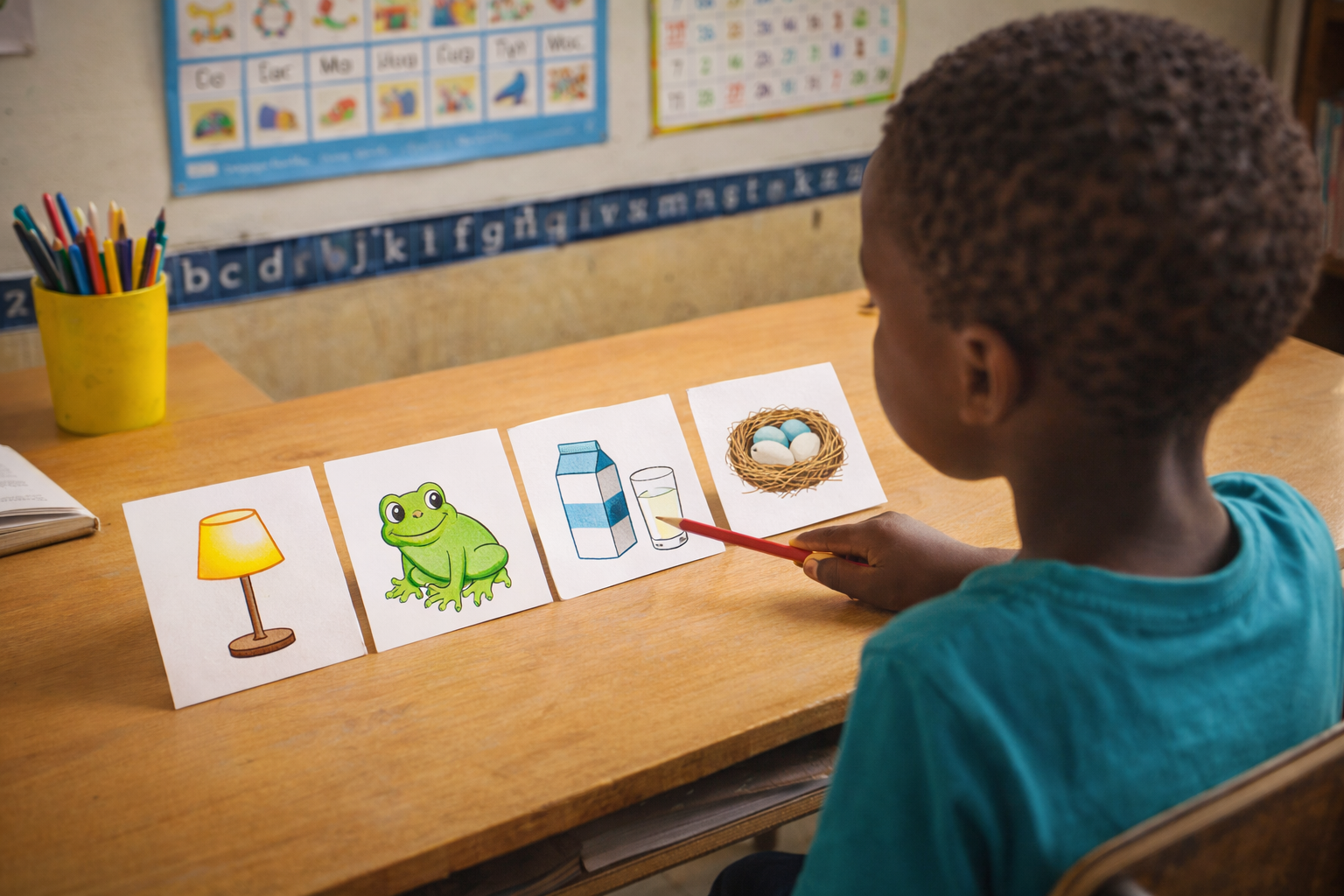



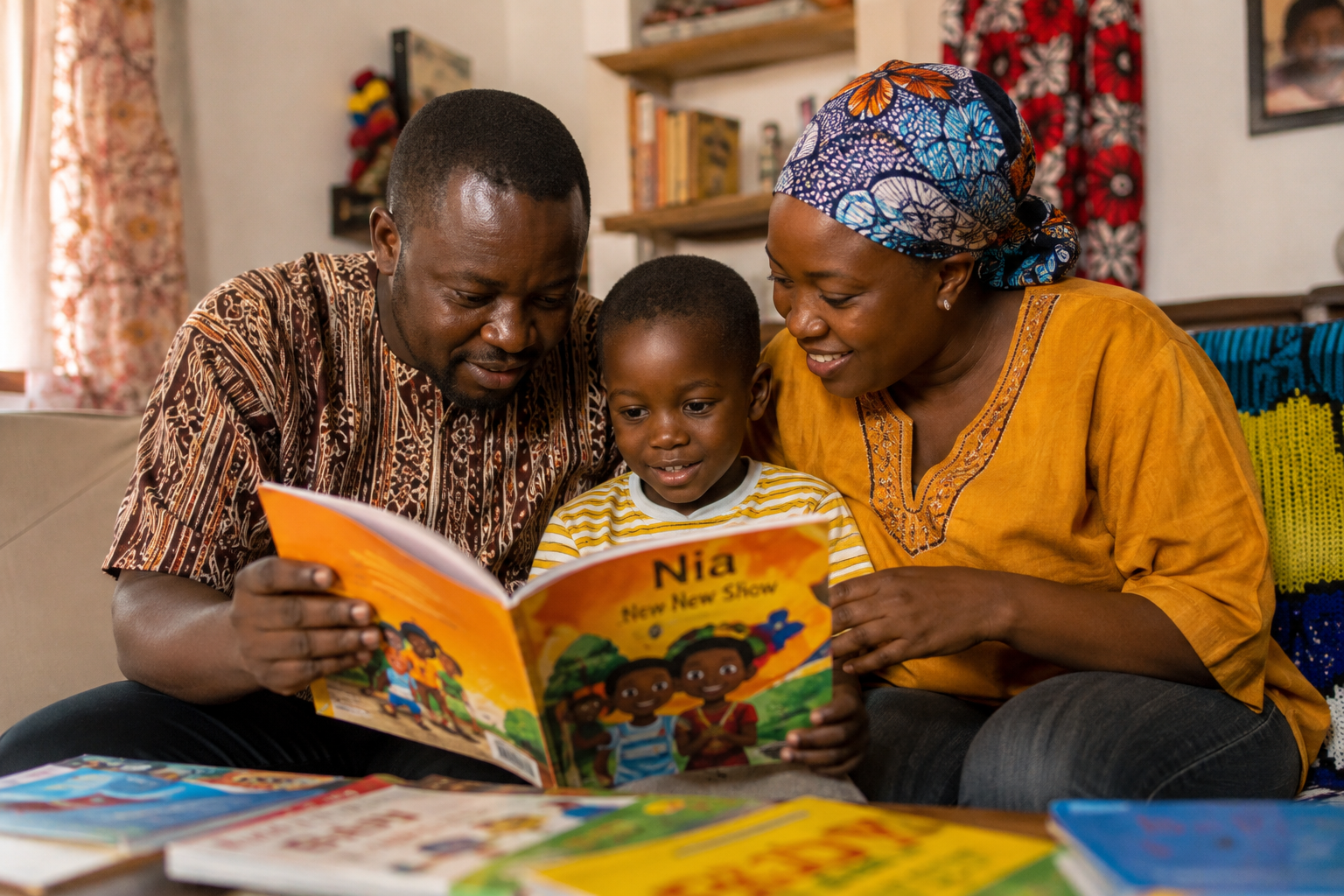
A child does not have to wait until the first day of school to begin developing a relationship with books.
Long before children can read independently, they can look at pictures, listen to stories, learn new words, ask questions, recognise familiar books, talk about characters and discover that books can be enjoyable sources of information and imagination.
For parents, this means that building a strong reading habit is less about forcing a child to finish a certain number of pages and more about creating repeated, positive opportunities to interact with books.
UNICEF’s guidance for parents similarly encourages reading with children from an early age and highlights opportunities for language development, vocabulary building and parent-child bonding through shared reading.
This is especially relevant for families across Africa, where access to books, libraries, learning materials and languages of instruction can differ considerably from one community to another. UNESCO’s education reporting has highlighted the importance of access to appropriate learning materials and opportunities for children to learn to read in languages they understand.
The good news is that parents do not need an expensive home library to begin.
A few books, borrowed materials, locally produced stories, oral storytelling, shared conversations and a consistent routine can all become part of a child’s reading environment.
The goal is not simply to produce children who can pronounce words on a page. It is to help children become curious, confident and increasingly independent readers who can use reading to learn, communicate, imagine and understand the world around them.
Why Early Reading Habits Matter
Reading involves much more than recognising words.
Children’s early experiences with books can provide opportunities to hear language, encounter vocabulary, understand stories, talk about ideas and connect new information with what they already know.
UNICEF notes that reading with young children can support language development and vocabulary while also creating opportunities for parents and children to spend meaningful time together.
Early shared reading is therefore valuable even when a child cannot yet read independently.
A toddler pointing at a picture of an animal and saying its name is participating in a literacy-related interaction. A preschooler predicting what might happen next in a story is beginning to think about narrative meaning. An older child explaining why a character made a particular decision is practising comprehension and communication.
These experiences gradually help children understand that reading is not merely a school activity.
It can be a way to:
- discover new information;
- learn unfamiliar words;
- understand other people’s experiences;
- ask and answer questions;
- develop imagination;
- explore personal interests;
- solve problems;
- communicate ideas; and
- enjoy time with family.
However, parents should avoid presenting every reading experience as an academic exercise. Children also need opportunities to read simply because a story is funny, a topic is interesting, a character is exciting or a book answers a question they have.
Start Reading to Children Early
Parents do not have to wait until a child knows the alphabet before introducing books.
Babies and toddlers can participate in shared reading through simple activities such as:
- looking at colourful pictures together;
- naming familiar objects;
- pointing to people, animals and objects in illustrations;
- singing songs and nursery rhymes;
- telling short stories;
- talking about what is happening in a picture;
- allowing children to turn pages when appropriate;
- repeating favourite stories; and
- responding to children’s questions and comments.
At this stage, the purpose is not to test whether the child can read.
The adult is helping the child develop positive associations with books, language, conversation and shared attention.
UNICEF recommends beginning early and notes that talking about characters, objects and sounds while reading can help parents turn book time into an active language experience.
What if the child wants the same story repeatedly?
Let them.
Repeated reading can give young children additional opportunities to become familiar with vocabulary, characters, sequences and story patterns.
A story that seems repetitive to an adult may be helping a young child become increasingly comfortable with language and narrative structure.
Create a Realistic Daily Reading Routine
Consistency is more important than creating an elaborate schedule that a family cannot maintain.
Parents can attach reading to an existing routine such as:
- after bathing;
- before bedtime;
- after dinner;
- during a quiet afternoon period;
- after homework; or
- during a weekend family reading period.
A simple routine might look like this:
- Let the child choose from several suitable books.
- Find a comfortable place.
- Read together.
- Pause occasionally to talk about the story.
- Allow the child to ask questions.
- Finish while the child is still reasonably interested.
- Choose a book for the next session.
There is no universal number of minutes that every child must read every day.
UNICEF, for example, suggests that even 10–15 minutes of daily book time can help spark a young child’s interest in reading, but parents should treat this as a practical starting point rather than a rigid requirement for every child and age group.
A younger child may need a very short session. An older child who is deeply interested in a story may happily continue for much longer.
The aim is to establish a sustainable habit, not to turn the clock into another source of pressure.
Adapt Reading Activities to the Child’s Age
One weakness of many reading guides is that they treat all children as if they have the same abilities.
Reading strategies should change as children develop.
Babies and Toddlers
Focus on:
- picture books;
- naming objects;
- songs and rhymes;
- repetition;
- pointing;
- simple conversations; and
- letting children interact with books safely.
Preschool Children
Introduce:
- story prediction;
- retelling;
- new vocabulary;
- questions about characters;
- rhyming and sounds;
- discussions about illustrations; and
- connections between stories and everyday life.
Early Primary Children
Encourage:
- shared reading;
- independent reading;
- age-appropriate nonfiction;
- vocabulary exploration;
- comprehension discussions;
- reading for pleasure; and
- choosing some of their own books.
Older Primary Children
Gradually encourage:
- longer books;
- independent book selection;
- fiction and nonfiction;
- biographies;
- newspapers or magazines appropriate for children;
- research-related reading;
- book discussions; and
- reading about subjects connected to their interests.
The purpose of age-specific strategies is not to create rigid rules. Children develop at different rates, so parents should adjust activities according to the child’s ability, interests and confidence.
Make Reading Interactive
Reading together does not have to mean that an adult simply reads every word while the child listens silently.
One evidence-informed approach is known as dialogic reading. It involves making the child an active participant in the story through questions, discussion, prompts and opportunities to describe what is happening.
The U.S. Department of Education’s What Works Clearinghouse has found positive effects of dialogic reading on oral language in preschool children, while describing the approach as an interactive shared-reading practice in which the adult acts as an active listener and questioner.
Parents can try questions such as:
- “What do you think will happen next?”
- “Why do you think the character did that?”
- “What do you notice in this picture?”
- “Which part of the story did you like?”
- “What would you have done?”
- “Can you explain what happened?”
- “What does this new word mean?”
- “Can you tell the story in your own words?”
For younger children, even pointing to pictures and asking them to identify objects can turn reading into a conversation.
The important point is to listen to the child’s response.
Reading should not become an interrogation in which the child is constantly required to provide the “correct” answer.
Let Children Choose Some of Their Books
Parents naturally want children to read educational materials.
That is understandable.
A child fascinated by animals might choose wildlife books. Another might prefer football, science, space, adventure stories, comics, poetry, biographies, technology or traditional tales.
Allowing reasonable choice can give children a greater sense of ownership over their reading.
Parents can still provide guidance by offering several age-appropriate choices.
For example:
“Would you like the animal book, the adventure story or the book about space?”
The child is making a choice, while the parent is still providing appropriate boundaries.
Use African Stories, Local Authors and Familiar Languages
Children deserve opportunities to encounter stories that reflect their lives and communities.
Parents can include books featuring:
- African characters;
- African environments;
- local history;
- traditional stories;
- African geography;
- familiar family experiences;
- local occupations;
- indigenous languages; and
- contemporary African experiences.
This does not mean children should read only African books.
A healthy reading collection can contain both local and international stories.
What matters is giving children access to a broad range of ideas while also ensuring that they can sometimes recognise their own communities and experiences in what they read.
Language also matters.
UNESCO’s work on foundational learning in Africa has highlighted the importance of enabling children to learn to read in a language they understand and of providing appropriate, locally developed learning materials.
Where appropriate books are available in a child’s familiar or home language, parents can incorporate them into family reading.
Oral storytelling can also play an important role.
A parent or grandparent might tell a traditional story orally and then encourage the child to read a related written version. This can create a bridge between family storytelling traditions and formal reading.
Build a Small Reading Space at Home
A reading corner does not need to look like a classroom or a library.
A small shelf, basket, mat, chair or quiet corner may be enough.
The purpose is to make books:
- visible;
- accessible;
- organised; and
- associated with a comfortable part of the home.
Families with limited space can keep a small collection of books in a basket and rotate them occasionally.
Parents can also create a “book of the week” area where one book is displayed prominently.
The principle is simple:
When books are easy to see and reach, they become a more natural part of everyday family life.
What If Your Family Cannot Afford Many Books?
A strong reading habit does not require a large private collection.
Parents can explore affordable or free options such as:
- school libraries;
- public libraries where available;
- community reading programmes;
- book exchanges;
- second-hand books;
- borrowing books from relatives and friends;
- community organisations;
- legitimate free digital books;
- locally produced children’s publications;
- shared family book collections; and
- storytelling combined with whatever reading materials are available.
Parents can also encourage children to create their own books.
A child can fold several sheets of paper together, create a simple story, draw illustrations and read the finished story aloud to the family.
This does not replace access to quality children’s literature, but it can help children see themselves as creators of stories rather than merely consumers of them.
Do Not Turn Every Reading Session Into a Test
Parents naturally want to know whether children understand what they read.
Questions can help.
But reading should not always feel like an examination.
If every story is followed by a long list of comprehension questions, vocabulary drills and demands to remember details, children may begin to associate reading primarily with academic pressure.
Instead, combine learning-focused questions with relaxed conversation.
For example:
“That character made an interesting decision. What did you think about it?”
Or:
“Which part made you laugh?”
Or simply:
“Would you like to read another story like this?”
Interactive shared reading can support language and comprehension when adults discuss the text, explain unfamiliar words and connect the story to children’s experiences.
But the conversation should remain appropriate to the child’s age and interest.
Be a Reading Role Model
Children often notice what adults do.
If parents read books, newspapers, magazines, work-related materials or other appropriate content, children can see that reading is not something people do only because a teacher assigned it.
Parents can occasionally explain what they are reading.
For example:
“I’m reading about farming because I want to learn more about growing vegetables.”
This communicates an important message:
Adults read because reading helps them do things.
They read to:
- learn;
- solve problems;
- understand instructions;
- discover information;
- relax;
- follow their interests; and
- make decisions.
A child who sees reading as part of ordinary adult life may begin to understand it as a useful everyday activity rather than merely a school requirement.
Connect Books to Real-Life Activities
One of the best ways to demonstrate the usefulness of reading is to connect books with everyday experiences.
After reading about cooking, a parent and child might prepare a simple meal.
After reading about animals, they could discuss animals found in their local environment.
After reading about plants, they could start a small garden.
After reading about a historical figure, they could investigate what was happening in the person’s country at the time.
After reading a story, the child could:
- draw a favourite scene;
- act out a character;
- retell the story;
- write an alternative ending;
- explain the story to a younger sibling; or
- create questions for another family member.
These activities reinforce the idea that reading is connected to knowledge, creativity and real life.
Use Digital Reading Thoughtfully
Phones, tablets and computers can provide additional opportunities to access books and other reading materials.
Digital resources may be particularly useful where physical books are difficult to obtain.
However, digital reading should not automatically become passive screen time.
Parents can encourage active engagement by asking:
- “What did you learn?”
- “What happened in the story?”
- “Which part interested you?”
- “Can you explain that word?”
- “What do you think will happen next?”
Where practical, children can experience a mixture of printed and digital materials.
The important question is not simply whether a book is printed or digital.
It is whether the child is actively engaging with meaningful language, ideas and information.
Visit Libraries, Book Fairs and Community Reading Programmes
If a library is available nearby, visiting it can become a regular family activity.
Libraries can expose children to books that may not be available at home and can give them opportunities to explore subjects independently.
Families can also look for:
- school libraries;
- book fairs;
- reading clubs;
- community libraries;
- literacy programmes;
- book exchanges;
- cultural centres; and
- community organisations that support children’s reading.
Where formal library access is limited, parents can create informal reading networks with relatives, neighbours, schools or community groups.
A small group of families could, for example, exchange children’s books each month.
Be Patient With Reluctant Readers
Not every child develops reading confidence at the same pace.
A child may:
- struggle with unfamiliar words;
- lose concentration quickly;
- prefer listening to stories;
- avoid certain types of books;
- feel embarrassed about reading aloud;
- have difficulty understanding what they have read; or
- simply have not yet discovered a topic that interests them.
These behaviours should not automatically be interpreted as laziness.
Parents can begin by reducing unnecessary pressure and identifying what makes reading difficult or unappealing.
Try:
- shorter texts;
- easier books;
- topics the child enjoys;
- shared reading;
- audiobooks alongside print where appropriate;
- comics and illustrated texts;
- repeated reading of familiar stories;
- reading aloud together; and
- celebrating genuine improvement.
When Should Parents Seek Additional Help?
If a child has persistent difficulties with reading, language, hearing, vision or comprehension, parents should discuss their concerns with the child’s teacher and, where appropriate, a suitably qualified professional.
Parents should not attempt to diagnose a learning difficulty from a single reading problem.
The purpose of seeking help is to understand what the child is experiencing and determine whether additional educational or professional support is appropriate.
A Simple Reading Troubleshooting Guide for Parents
| If your child… | Try this |
|---|---|
| Says reading is boring | Start with the child’s interests rather than insisting on a particular genre. |
| Cannot sit still for long | Use shorter, interactive reading sessions. |
| Only wants comics | Allow them as part of the reading collection while gradually introducing other formats. |
| Struggles with difficult words | Choose an easier text and read together. |
| Prefers being read to | Continue shared reading while gradually inviting the child to participate. |
| Wants to read the same book repeatedly | Allow repetition and occasionally introduce a related book. |
| Does not understand what was read | Pause, explain unfamiliar vocabulary and ask simple questions. |
| Avoids reading aloud | Do not embarrass the child; use private shared reading first. |
| Has persistent reading difficulties | Speak with the child’s teacher and seek appropriate professional guidance. |
A Practical 7-Day Family Reading Challenge
Parents who are unsure where to begin can try this simple one-week plan.
Day 1: Let the Child Choose
Offer three suitable books and allow the child to choose one.
Day 2: Read Together
Read the chosen book aloud and invite the child to comment on the pictures or story.
Day 3: Ask Three Questions
Ask:
- What happened?
- What did you like?
- What do you think will happen next?
Day 4: Connect the Story to Real Life
Find something in the story that relates to your family, community or environment.
Day 5: Read Something Different
Introduce a poem, nonfiction book, comic, magazine article or African story.
Day 6: Let the Child Retell
Ask the child to explain the story in their own words.
You do not need to correct every detail.
Encourage the child to communicate.
Day 7: Celebrate the Habit
Ask:
“Which book did you enjoy most this week?”
Then allow the child to choose what the family should read next.
The purpose of the challenge is not to create a perfect seven-day reading record.
It is to help the family discover a routine that can continue beyond the first week.
Simple Ways to Encourage Reading Every Day
Parents can strengthen reading habits through small actions:
- Keep books visible and accessible.
- Read aloud regularly.
- Let children choose some of their reading materials.
- Talk about stories rather than only testing comprehension.
- Introduce books connected to children’s interests.
- Include African authors, characters, stories and experiences.
- Use appropriate books in familiar languages where available.
- Visit libraries or community reading programmes.
- Exchange books with other families.
- Give books as gifts when appropriate.
- Let children see adults reading.
- Connect books to practical activities.
- Celebrate effort and genuine progress.
- Avoid using reading exclusively as punishment or extra schoolwork.
- Be patient when reading is difficult.
- Seek appropriate support when persistent difficulties arise.
What Parents Should Remember About Building a Reading Habit
There is no single perfect reading routine for every family.
A child who reads independently for 30 minutes is not necessarily developing a better relationship with books than a younger child who spends 10 enjoyable minutes discussing a picture book with a parent.
The quality of the interaction, the child’s developmental stage, the suitability of the material and the consistency of the experience all matter.
Evidence on shared reading also reminds us that different approaches can produce different outcomes. For example, the U.S. Department of Education’s What Works Clearinghouse has reported positive effects of dialogic reading on oral language, while its review of broader shared-book-reading practices found mixed effects across some language and comprehension outcomes.
This is why parents should avoid treating any single reading technique as a guaranteed solution.
Instead, build a supportive environment around reading.
Final Thoughts
Strong reading habits are built gradually through repeated, positive experiences.
Parents do not need an expensive library, specialist teaching equipment or a complicated curriculum to begin creating a reading culture at home.
Start with what is available.
Read a short story.
Talk about a picture.
Tell a family story.
Let the child choose a book.
Visit a library if one is accessible.
Borrow books from friends.
Use appropriate digital resources.
Share stories in familiar languages.
Let children see adults reading.
Most importantly, make reading a meaningful part of family life rather than something associated only with tests and schoolwork.
The evidence supports the value of interactive experiences around books, while international education organisations also emphasise the importance of appropriate learning materials and language that children understand.
The ultimate goal is bigger than getting children to finish more books.
It is to help them develop the confidence to ask questions, explore ideas, understand information, enjoy stories and eventually choose reading for themselves.
A reading habit does not have to begin with a perfect library. It can begin with one story, one child and one caring adult.
A Note for Parents
Every child is different.
This guide provides general educational information and practical suggestions. It is not a diagnostic tool and should not replace advice from a child’s teacher or an appropriately qualified professional when persistent learning or developmental concerns arise.