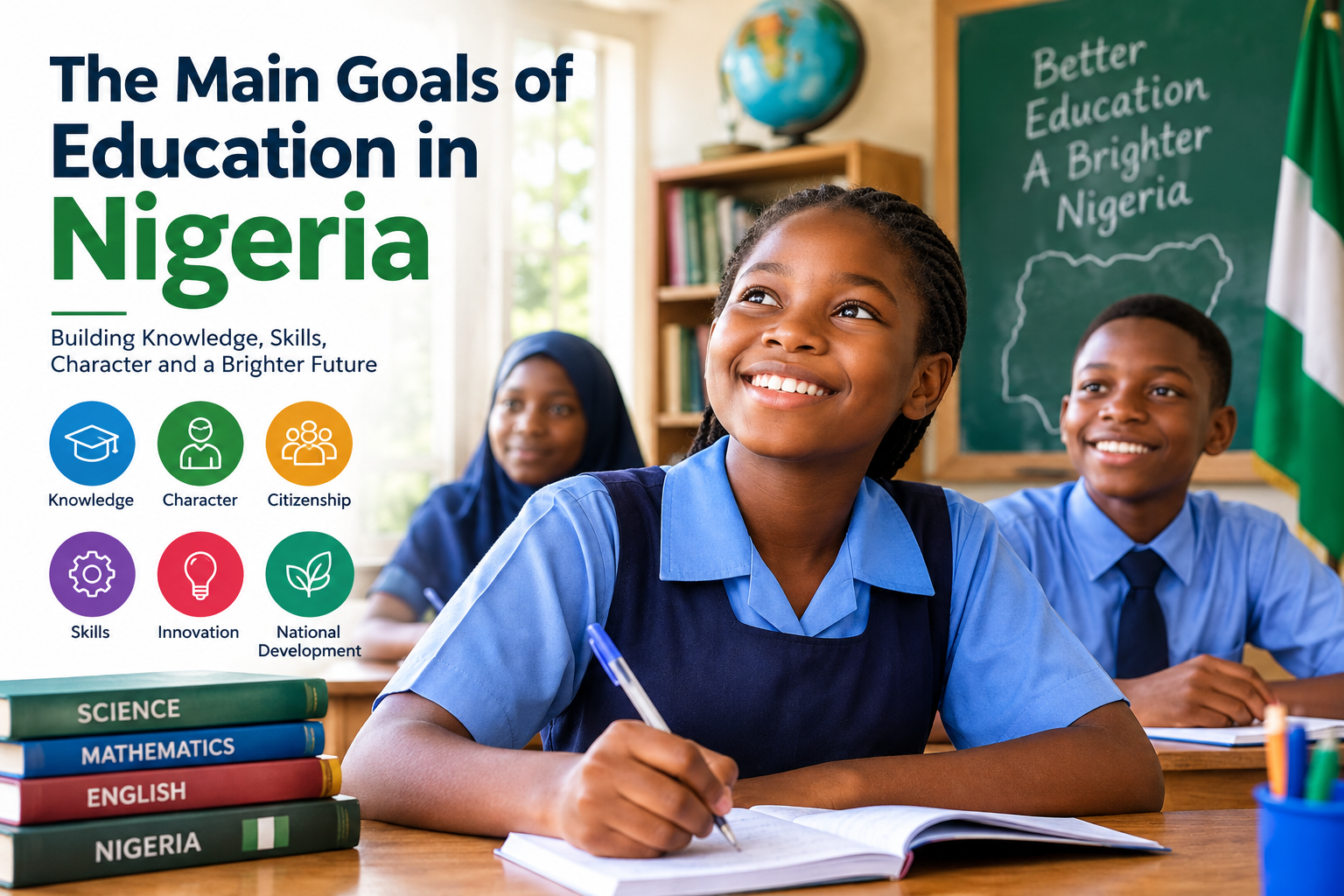


Education is expected to help develop individuals who can contribute positively to their families, communities and country. Nigeria’s National Policy on Education (6th Edition) describes the philosophy of Nigerian education in terms of developing the individual into a sound and effective citizen and providing equal opportunities for citizens at different levels of education, both within and outside the formal school system. The policy’s stated goals include developing morally sound and patriotic citizens, integrating individuals into their communities and the wider world, and providing equal access to qualitative educational opportunities.
This makes education both a personal and national investment.
A child learning to read in a primary school in Kano, a student developing digital skills in Lagos, an apprentice learning a trade in Plateau State, and a university student studying engineering in Abuja are all participating in different parts of Nigeria’s broader educational system.
The central question is therefore not simply “What does education teach?” but also “What kind of person and society should education help Nigeria build?”
What Are the Main Goals of Education in Nigeria?
The main goals of education in Nigeria include:
- Developing morally sound and effective citizens.
- Promoting patriotism and responsible citizenship.
- Integrating individuals into their communities and wider society.
- Providing equal access to quality educational opportunities.
- Developing knowledge, skills and intellectual abilities.
- Preparing learners for productive work and self-reliance.
- Promoting national development.
- Encouraging creativity, innovation and problem-solving.
- Promoting national unity and peaceful coexistence.
- Supporting lifelong learning and personal development.
These goals should not be viewed as separate objectives. They work together to develop individuals who can learn, work, participate in society and contribute to Nigeria’s development.
1. Developing Morally Sound and Effective Citizens
One of the most important goals identified in Nigeria’s National Policy on Education is the development of the individual into a morally sound, patriotic and effective citizen.
This means education is not supposed to focus exclusively on academic achievement.
A student may obtain excellent examination results but still need education in areas such as:
- Integrity
- Responsibility
- Respect
- Discipline
- Cooperation
- Empathy
- Fairness
- Accountability
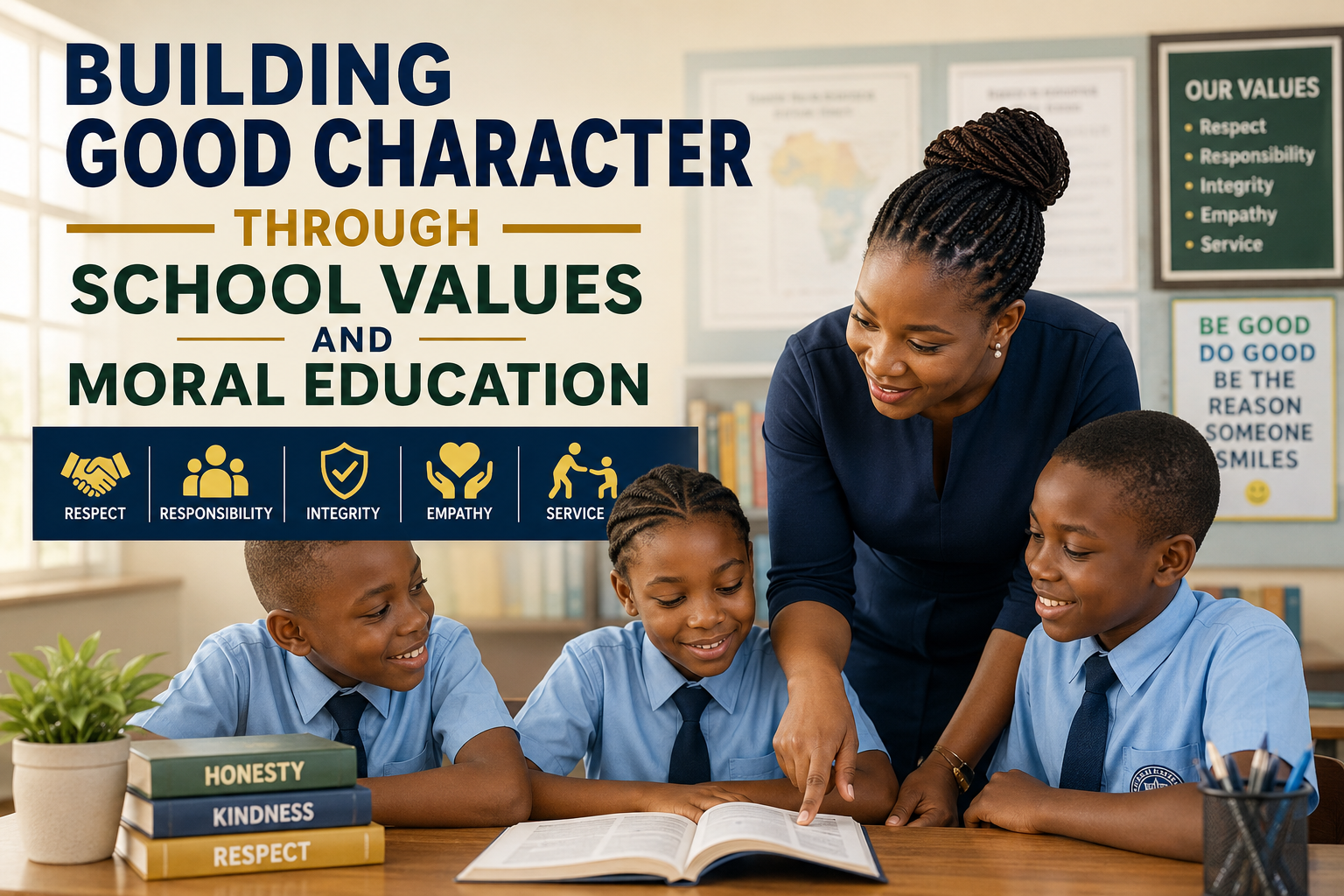
For example, a school that teaches mathematics while also encouraging students to return lost property, respect classmates, care for school facilities and take responsibility for their actions is contributing to character development.
Why does this matter?
Nigeria needs citizens who can use their education responsibly.
2. Promoting Patriotism and Responsible Citizenship
Education also has an important role in preparing Nigerians to participate responsibly in national life.
Students should have opportunities to understand:
- Their rights and responsibilities.
- The importance of obeying legitimate laws.
- The value of public institutions.
- The importance of peaceful participation in society.
- The responsibilities of citizenship.
- The importance of protecting public resources.
Patriotism should not simply mean saying positive things about Nigeria. It can also involve contributing positively to one’s community, respecting other citizens and seeking constructive solutions to national problems.
A student who learns to keep the school environment clean, participate responsibly in community activities and respect other people is already developing habits that can contribute to responsible citizenship.
3. Promoting National Integration
Nigeria is one of Africa’s most culturally and linguistically diverse countries.
Education can therefore serve as an important instrument for national integration.
The National Policy on Education identifies the integration of the individual into the immediate community, Nigerian society and the wider world as one of its goals.
A Nigerian classroom can bring together children from different:
- Ethnic backgrounds
- Languages
- Regions
- Socioeconomic circumstances
- Cultural traditions
When students learn to work together and appreciate differences, education can help reduce prejudice and promote peaceful coexistence.
Practical Nigerian example
A student from Plateau State may study alongside students whose families originated from Kaduna, Benue, Nasarawa, Kano, Lagos or other parts of Nigeria.
Through classroom projects, sports, cultural activities and group assignments, students can learn that cooperation is possible despite differences.
4. Providing Equal Access to Quality Education
Education cannot achieve its purpose if large numbers of children are unable to access it or attend school without gaining foundational skills.
Nigeria’s Universal Basic Education programme was introduced in 1999 to improve access to and the quality of basic education. UBEC states that the Compulsory, Free Universal Basic Education Act 2004 provides for free, compulsory and universal basic education for children of primary and junior secondary school age.
This objective is particularly important because educational opportunity can be affected by:
- Poverty
- Location
- Gender
- Disability
- Conflict
- Inadequate infrastructure
- Lack of learning materials
- Other socioeconomic barriers
UNICEF reports that Nigeria continues to face major challenges involving access, equity and learning, while emphasizing the need to reach disadvantaged children and improve the quality of education.
Why equal access matters
A child’s educational opportunity should not be determined solely by whether the child was born in an urban or rural community or into a financially secure or disadvantaged family.
Providing equitable opportunities is therefore central to achieving the wider goals of Nigerian education.
5. Developing Knowledge and Intellectual Abilities
Education should equip learners with knowledge and the ability to think.
Students need opportunities to develop:
- Reading and writing skills
- Mathematical reasoning
- Scientific understanding
- Communication skills
- Critical thinking
- Research skills
- Problem-solving abilities
- Digital literacy
However, education should not become nothing more than memorising information for examinations.
A student who understands why an answer is correct is better prepared to apply knowledge outside the examination hall.
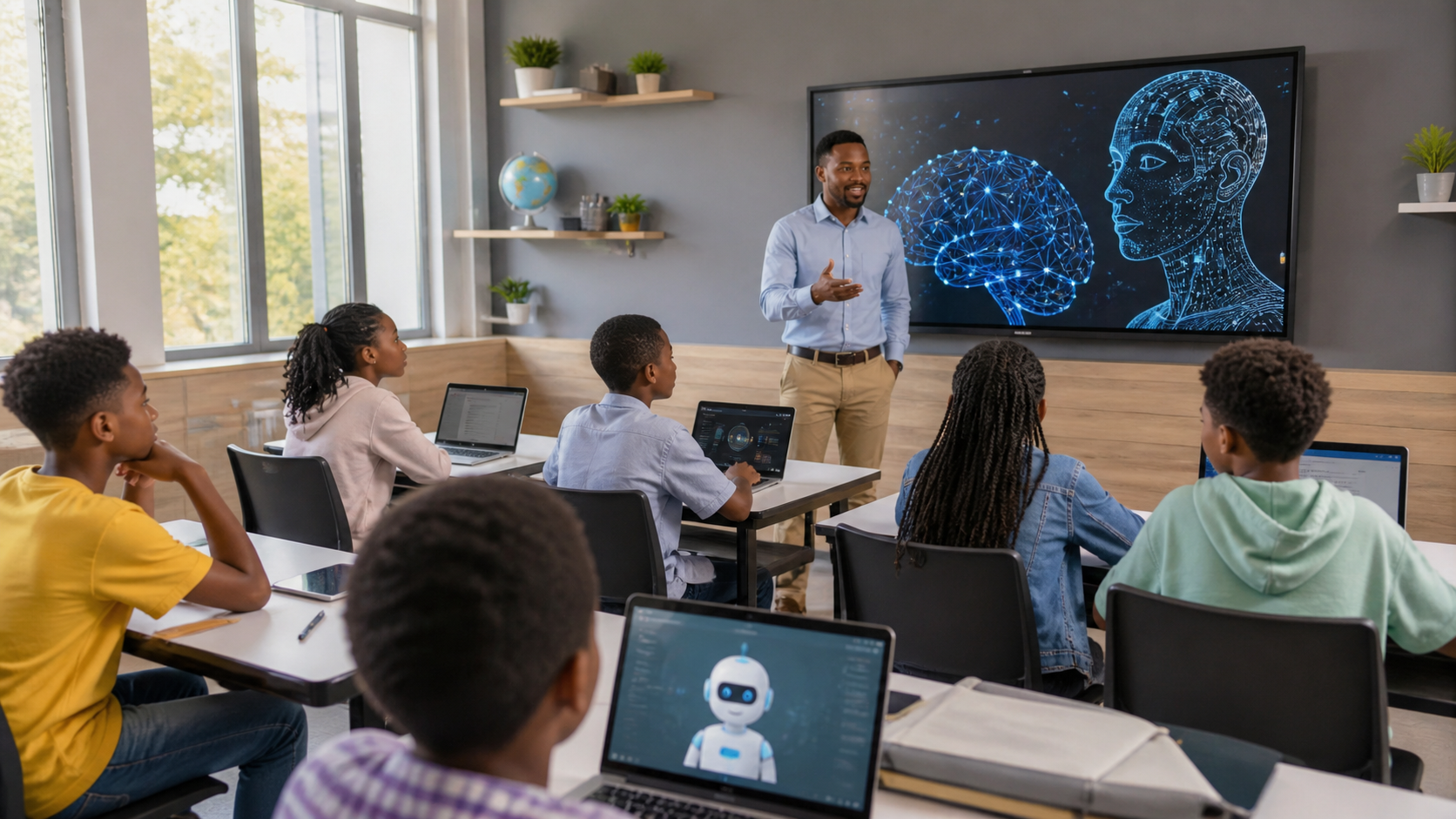
This is particularly important as Nigerian students enter a world increasingly influenced by technology, artificial intelligence, digital businesses and rapidly changing employment opportunities.
6. Building Strong Foundational Literacy and Numeracy
Before students can fully benefit from advanced education, they need strong foundational skills.
Reading, writing and basic mathematics form the foundation for learning across many subjects.
UNICEF’s education work in Nigeria specifically emphasizes improving foundational literacy and numeracy and learning outcomes. Its education resources include a national assessment of learning achievement in basic education and other evidence-based learning initiatives.
A practical example
Consider a Primary 4 pupil who can memorise mathematical procedures but struggles to understand a simple word problem.
The educational goal should not merely be to help the child reproduce the procedure. The child should be supported in understanding the language of the problem, identifying the relevant information and applying mathematical reasoning.
That is the difference between memorising knowledge and learning how to use knowledge.
7. Developing Practical, Technical and Vocational Skills
Education should also prepare learners for productive participation in the economy.
Academic education is valuable, but not every learner will follow the same career path.
Nigeria needs skilled people in areas such as:
- Agriculture
- Construction
- Engineering
- Information technology
- Fashion
- Catering
- Automotive services
- Renewable energy
- Manufacturing
- Healthcare
- Creative industries
- Entrepreneurship
This is why technical and vocational education and skills development are important parts of the wider educational ecosystem.
Recent education initiatives in Nigeria have also placed emphasis on technical, vocational and foundational skills as part of preparing young people for a changing economy. UNICEF’s 2025 Nigeria annual report, for example, describes expanded technical, vocational and foundational skills initiatives.
8. Preparing Young Nigerians for the World of Work
One important outcome of education should be the ability to apply knowledge and skills productively.
However, the world of work is changing.
Young Nigerians increasingly need skills such as:
- Digital literacy
- Communication
- Teamwork
- Entrepreneurship
- Financial literacy
- Creativity
- Adaptability
- Problem-solving
- Research
- Professional ethics
A university graduate, for example, may need to combine a degree with digital skills, communication abilities and entrepreneurial thinking.
Similarly, a secondary school student interested in fashion may benefit from learning design, digital marketing, financial management and entrepreneurship alongside traditional academic subjects.
Education should therefore help learners understand not only what to learn, but also how to apply what they learn.
9. Encouraging Creativity and Innovation
Nigeria faces complex problems that require creative solutions.
Education should therefore give learners opportunities to:
- Experiment.
- Ask questions.
- Design solutions.
- Conduct research.
- Build projects.
- Use technology.
- Work collaboratively.
- Learn from mistakes.
Innovation does not belong exclusively to universities or technology companies.
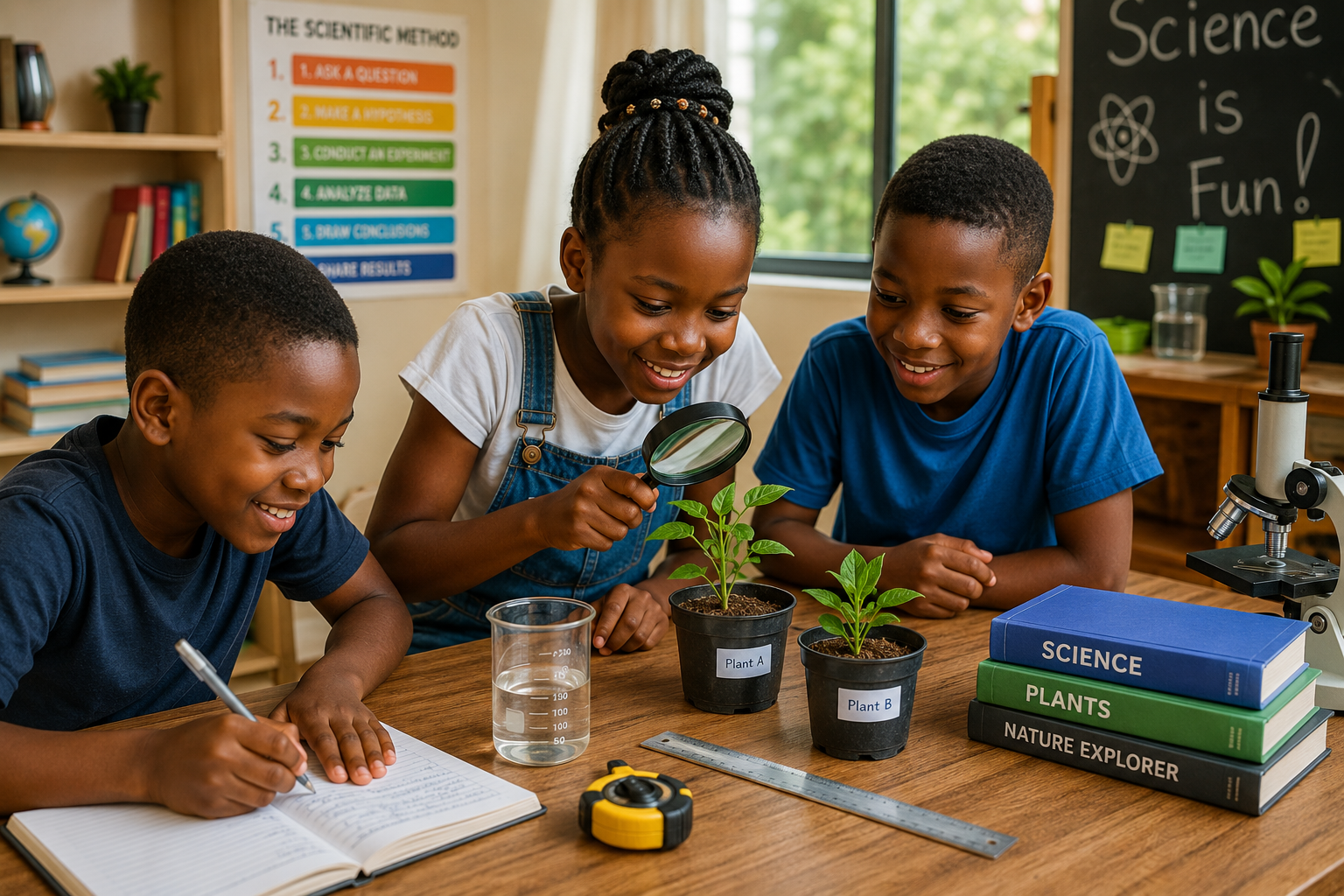
A secondary school student developing a simple irrigation system for a school garden is demonstrating innovation.
A student creating a mobile application to help parents find schools is demonstrating innovation.
A young farmer using digital tools to improve farm management is also applying innovation.
The classroom should therefore become a place where students learn to create solutions, not simply memorise answers.
10. Promoting National Development
Education is closely connected to human capital development.
Nigeria requires educated and skilled citizens to work across virtually every sector of the economy.
These include:
- Teachers
- Doctors
- Nurses
- Engineers
- Scientists
- Farmers
- Entrepreneurs
- Lawyers
- Accountants
- Technicians
- Software developers
- Researchers
- Public servants
- Skilled artisans
- Creative professionals
UNICEF’s State of Nigeria’s Children 2024 emphasizes that investment in Nigeria’s children and adolescents represents a strategic opportunity for long-term human capital, economic and social development.
This illustrates why education should not be treated simply as an individual benefit. It is also an investment in the country’s future productive capacity.
Promoting Peaceful Coexistence and Respect for Diversity
Education can help children understand that people may have different backgrounds while still sharing common responsibilities as citizens.
Teachers can encourage:
- Respectful dialogue
- Teamwork
- Empathy
- Conflict resolution
- Cultural awareness
- Respect for different perspectives
This is particularly relevant in Nigeria because of its considerable cultural, linguistic and religious diversity.
A school that teaches students to disagree respectfully and resolve conflicts peacefully is preparing them for participation in a diverse society.
Supporting Inclusive Education
The goal of education should include children who face additional barriers to learning.
This includes learners affected by:
- Disability
- Poverty
- Displacement
- Conflict
- Gender-based barriers
- Remote locations
- Limited access to learning resources
UNICEF’s education strategy in Nigeria emphasizes inclusive and equitable education and specifically highlights marginalized children and those living in humanitarian and fragile contexts.
What can inclusion look like?
In practical terms, schools can work toward:
- Accessible classrooms.
- Appropriate learning materials.
- Support for learners with disabilities.
- Safe learning environments.
- Flexible learning approaches.
- Teacher training.
- Community involvement.
Education becomes more meaningful when children who face barriers are not forgotten.
Promoting Digital Literacy and Adaptability
Technology has changed how Nigerians learn, work and communicate.
Education must therefore prepare learners to use technology effectively and responsibly.
Digital education can involve:
- Online learning
- Digital research
- Computer literacy
- Coding
- Artificial intelligence literacy
- Digital communication
- Online safety
- Digital entrepreneurship
Recent initiatives demonstrate this direction. UNICEF reported that the Nigeria Learning Passport expanded to more than two million users in 2025, providing curriculum-aligned learning resources, while efforts also expanded school connectivity.
Digital access, however, must be accompanied by digital skills and responsible technology use.
Promoting Lifelong Learning
Education should not end when a student leaves school.
People may need to acquire new knowledge throughout their lives because technology, careers and society continue to change.
A learner who develops curiosity and the ability to learn independently is better prepared for these changes.
Lifelong learning can include:
- Professional development
- Online courses
- Vocational training
- Reading
- Research
- Apprenticeships
- Entrepreneurship programmes
- Adult education
The goal should be to develop people who remain capable of learning long after they leave the classroom.
The Role of Teachers in Achieving the Goals of Education
Teachers are central to the success of Nigeria’s education system.
A curriculum may contain excellent objectives, but those objectives must eventually be translated into classroom experiences.
Teachers can help achieve educational goals by:
- Encouraging critical thinking.
- Supporting struggling learners.
- Developing students’ confidence.
- Teaching practical skills.
- Promoting good character.
- Using appropriate technology.
- Creating inclusive classrooms.
- Connecting lessons to real-life situations.
UNICEF has highlighted teacher development as an important part of improving education and learning outcomes in Nigeria, including professional development initiatives designed to strengthen teaching quality.
Teachers therefore need not only curriculum documents but also adequate training, resources, professional support and safe working environments.
The Role of Parents in Achieving Educational Goals
Parents are among the child’s first educators.
A child’s educational development is influenced by what happens both inside and outside school.
Parents can support education by:
- Encouraging regular reading.
- Creating time for homework.
- Discussing school experiences.
- Teaching responsibility.
- Encouraging good behaviour.
- Supporting children’s interests.
- Monitoring digital activities.
- Encouraging curiosity.
- Working with teachers.
Education becomes more effective when parents and schools work together rather than treating education as the responsibility of teachers alone.
The Role of Government and Communities
Government has an important responsibility in creating the conditions under which education can succeed.
This includes areas such as:
- Education policy.
- School infrastructure.
- Teacher development.
- Learning materials.
- Education financing.
- Monitoring and evaluation.
- Data systems.
- School safety.
- Access and inclusion.
UBEC describes its role as coordinating implementation of the Universal Basic Education programme and working toward uniform, qualitative and functional basic education across Nigeria.
Communities also have an important role.
Community participation can help schools identify local needs, improve accountability and create stronger relationships between schools and families.
The Reality: Nigeria Still Faces Major Education Challenges
Having clear educational goals is only the first step. The country must also create the conditions required to achieve them.
UNICEF identifies significant challenges involving access, equity, learning outcomes and the number of children who remain out of school.
UNESCO’s Nigeria education country brief similarly identifies issues involving learning outcomes, teaching and learning, data, gender equality, equity and inclusion as important areas for education policy and research.
These challenges demonstrate why educational reform cannot focus exclusively on examination results.
Nigeria needs an education system that considers:
Access + Quality + Equity + Skills + Character + Safety + Inclusion + Innovation.
What Should Nigerian Schools Do Differently?
If the goals of education are to be achieved in practice, schools should provide students with opportunities to do more than prepare for examinations.
A modern Nigerian school should encourage learners to:
Think
Students should be encouraged to ask questions, analyse information and develop independent thinking.
Create
Learners should have opportunities to design projects, conduct experiments and develop solutions.
Communicate
Students need strong written, verbal and digital communication skills.
Collaborate
Group projects can teach teamwork and respect for different perspectives.
Solve Problems
Lessons should connect academic knowledge to real-life Nigerian challenges.
Develop Character
Schools should intentionally promote integrity, responsibility, respect and service.
Acquire Practical Skills
Students should have exposure to vocational, technical, digital and entrepreneurial skills.
Continue Learning
Students should leave school with the confidence and ability to learn independently.
A Practical Nigerian Example: What Educational Success Should Look Like
Imagine two students who both graduate from secondary school.
Student A can memorise information and perform well in examinations but struggles to solve unfamiliar problems, communicate effectively and apply knowledge outside the classroom.
Student B has good academic knowledge but can also communicate, work with others, use technology responsibly, solve practical problems, demonstrate integrity and continue learning independently.
Both students may have certificates.
But the second student’s education more closely reflects the broader purpose of education: knowledge combined with skills, character, adaptability and the ability to contribute meaningfully to society.
This does not mean examination performance is unimportant. Rather, examinations should be part of education rather than the entire definition of educational success.
What Does Quality Education Mean for Nigeria?
Quality education should not simply mean having a school building or increasing enrolment.
It should mean that learners have meaningful opportunities to attend school, participate, learn, develop relevant skills and progress toward their potential.
UNICEF’s education work in Nigeria emphasizes access to quality education, improved learning outcomes, inclusive and equitable systems, stronger governance and attention to marginalized children.
This broader understanding is important.
A child sitting in a classroom without appropriate learning support may technically be enrolled, but enrolment alone does not guarantee meaningful learning.
Frequently Asked Questions
What are the main goals of education in Nigeria?
The goals include developing morally sound and effective citizens, promoting patriotism and national integration, providing equal educational opportunities, developing knowledge and skills, supporting national development, encouraging creativity and preparing learners for productive participation in society.
What is the main purpose of education in Nigeria?
The broad purpose is to develop individuals who can contribute positively to society while providing opportunities for knowledge, skills, character development and personal growth.
What does the National Policy on Education say about the goals of education?
Nigeria’s National Policy on Education identifies goals including developing morally sound, patriotic and effective citizens, integrating individuals into their communities and wider society, and providing equal access to qualitative educational opportunities.
Why is education important to national development?
Education develops the human knowledge and skills required across sectors of the economy and helps individuals participate productively in society. UNICEF describes investment in Nigerian children and adolescents as a strategic opportunity for long-term human capital and economic and social development.
Is vocational education important in Nigeria?
Yes. Technical and vocational skills can help learners develop practical competencies for employment, entrepreneurship and participation in a changing economy.
What is the role of parents in education?
Parents support children’s education by creating positive learning environments, encouraging good habits, teaching values, communicating with teachers and helping children develop curiosity and responsibility.
What is the role of teachers?
Teachers translate educational objectives into classroom experiences by teaching knowledge and skills while supporting character development, critical thinking, creativity and inclusion.
Why is equal access to education important?
Equal access gives children from different backgrounds opportunities to develop their potential. Nigeria’s UBE framework specifically emphasizes free, compulsory and universal basic education for children of primary and junior secondary school age.
Key Takeaways
The main goals of education in Nigeria can be understood through several interconnected objectives:
- Knowledge — helping learners understand the world.
- Character — developing responsible and morally sound individuals.
- Citizenship — preparing people to participate responsibly in society.
- National integration — encouraging unity and peaceful coexistence.
- Equal opportunity — expanding access to quality education.
- Skills — preparing learners for employment, entrepreneurship and productive work.
- Innovation — encouraging creativity and problem-solving.
- Inclusion — ensuring disadvantaged learners are not left behind.
- National development — building human capital for Nigeria’s future.
- Lifelong learning — preparing people to continue learning throughout life.
Conclusion
The main goals of education in Nigeria are much broader than academic examinations.
Nigeria’s education policy places importance on developing morally sound and effective citizens, promoting national integration, providing equal access to quality educational opportunities and helping individuals become productive members of society.
At the same time, Nigeria’s current education challenges show that achieving these goals requires more than policy statements. It requires effective teachers, adequate resources, inclusive schools, safe learning environments, practical skills, strong foundational learning, responsible technology use and sustained investment.
For parents, the lesson is simple: education should develop the whole child.
For teachers, the responsibility is to help students turn knowledge into understanding, skills and character.
For policymakers, the challenge is to create an education system in which quality learning is accessible to every child.
And for students, education should be viewed not merely as a path to a certificate but as an opportunity to develop the knowledge, character and abilities needed to build a meaningful life and contribute to Nigeria.
The ultimate measure of education is therefore not only what students know, but also what they can do with what they know and the kind of citizens they become.
Expert Review
Educational Review:
This article should be reviewed before publication by a qualified Nigerian education professional, such as a teacher, education administrator, lecturer, education researcher or curriculum specialist.
Reviewer: Hauwa Yusuf Barau
Qualification: MSc Special Education
Professional Role: Special Education Consultant
Area of Expertise: Special Education
Review Date: 24/8/2026
Editorial note: Do not publish invented qualifications or an artificial expert endorsement. The reviewer information should only be completed after a genuine qualified professional has reviewed the article.
About the Author
Written by: Mary Ajayi
Mary Ajayi is an education writer and researcher focused on education, learning, career development, digital skills and educational opportunities in Nigeria and Africa.
The author creates educational resources designed to make complex educational issues easier for students, parents, teachers and other education stakeholders to understand.
Sources and Further Reading
1. Federal Republic of Nigeria — National Policy on Education
The National Policy on Education provides the core policy framework for understanding the philosophy and goals of education in Nigeria. The 6th Edition (2013) identifies the development of morally sound, patriotic and effective citizens, national integration and equal access to qualitative educational opportunities among its goals.
Federal Republic of Nigeria — National Policy on Education
2. Universal Basic Education Commission (UBEC)
UBEC coordinates the implementation of Nigeria’s Universal Basic Education programme. Its official materials explain the objectives of the UBE framework, including free, compulsory and universal basic education for children of primary and junior secondary school age.
Universal Basic Education Commission
3. UNICEF Nigeria — Education
UNICEF’s Nigeria education programme provides evidence and analysis on access, equity, learning outcomes, foundational learning, teacher development and marginalized children.
4. UNICEF Nigeria — State of Nigeria’s Children 2024
This report examines the situation of Nigerian children and adolescents and highlights the importance of investment in education and human capital development.
The State of Nigeria’s Children 2024
5. UNESCO — Nigeria Education Country Brief
UNESCO’s education country brief provides data, research references and policy resources covering learning outcomes, teaching, early childhood education, gender, equity, inclusion and other issues affecting Nigeria’s education system.