










Helping children learn English does not require expensive programs or digital subscriptions. Through hands-on activities, daily interactions, and play-based learning, children can naturally and confidently build strong English skills.
From working with young learners and observing how children respond to different learning styles, one thing becomes clear: children learn English best when learning feels meaningful, interactive, and pressure-free. This guide brings together practical experience, proven educational principles, and expert-backed strategies to help parents, teachers, and caregivers support children’s English development using free and accessible activities.
This article focuses on free and effective English activities for kids that support vocabulary, reading, writing, listening, and speaking — at home or in learning environments.
Why English Activities Matter for Children
Children do not learn language the same way adults do. They acquire language through use, repetition, and meaningful interaction, not memorization alone.
Educational organizations such as UNESCO emphasize that early language learning is most effective when children actively engage with language in real contexts rather than through passive instruction alone. Consistent exposure to English through activities allows children to understand how language works naturally.
Well-designed English activities help children:
- Build communication confidence
- Develop vocabulary in context
- Strengthen reading and writing foundations
- Improve listening and speaking skills
- Associate learning with curiosity and enjoyment
From practical experience, children who learn through activities tend to participate more willingly and retain new words longer than those taught through drills alone.
Key Principles of Effective English Activities for Kids
Child-Friendly and Age-Appropriate
Children’s learning abilities develop in stages. According to the British Council, younger learners benefit most from visual aids, songs, and movement-based activities, while older children can handle structured reading, writing, and guided discussions.
Activities should match:
- Age
- Attention span
- Language level
When activities are too advanced, children disengage; when they are appropriate, confidence grows.
Interactive and Engaging
Research on child development consistently shows that active learning improves retention. The American Academy of Pediatrics highlights that children learn more effectively through interaction than through passive listening.
In practice, activities that involve speaking, acting, drawing, or problem-solving lead to faster language growth than worksheets alone.
Consistent but Flexible
Short, regular practice sessions work better than long, infrequent ones. Flexibility allows children to learn without pressure, which is critical for language confidence.
Vocabulary-Building Activities for Kids
Vocabulary is the foundation of language learning. Children need repeated exposure to words in meaningful contexts.
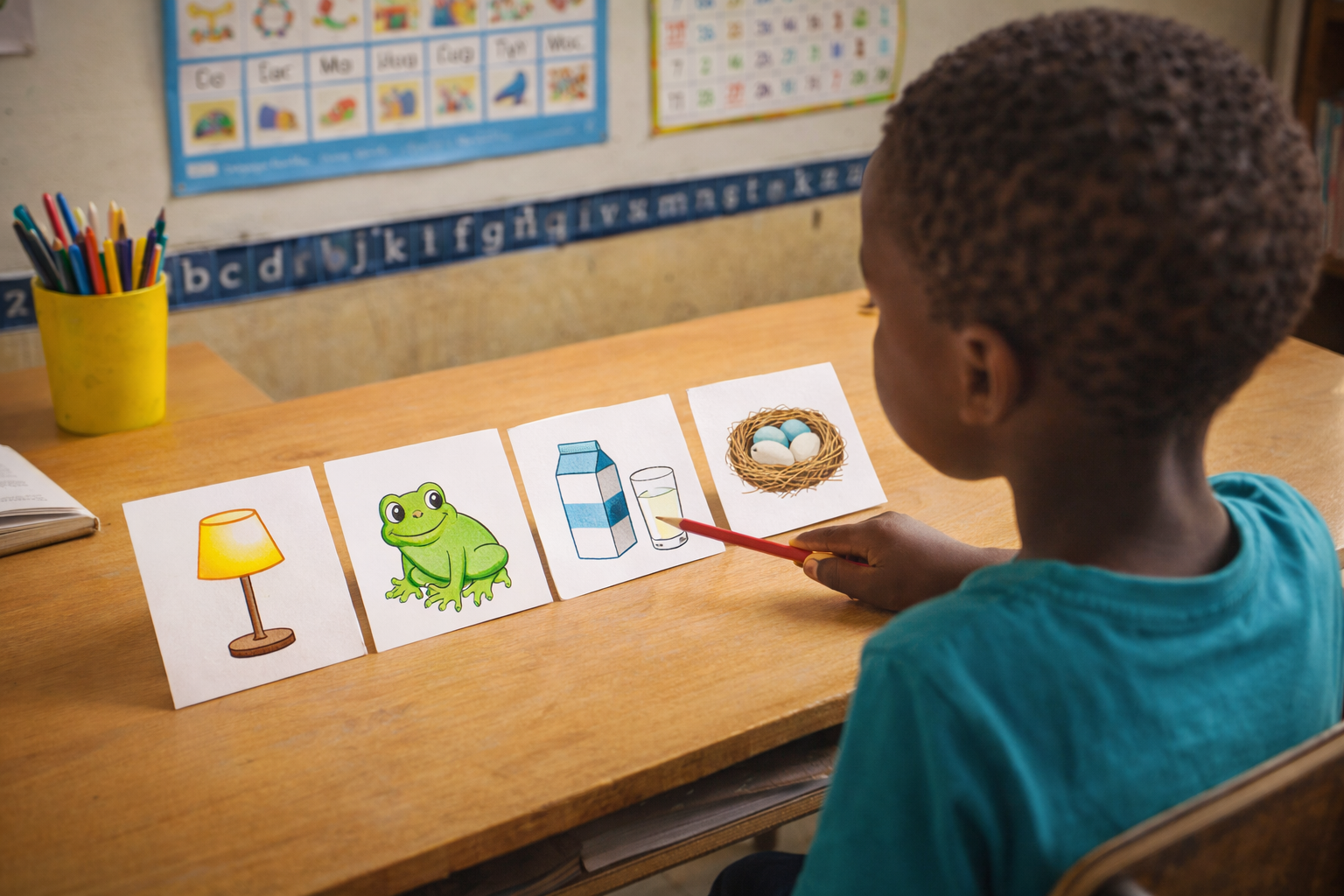
Picture and Word Matching
Using images alongside words helps children associate meaning visually and cognitively.
This method aligns with findings from Reading Rockets, which emphasize visual support as a key factor in early literacy development.
Effective activities include:
- Matching picture cards to words
- Labeling household objects
- Creating simple picture dictionaries
From experience, children remember words faster when visuals are connected to real objects they see daily.
Everyday Word Discovery
Daily routines naturally create vocabulary opportunities. Talking about food, clothing, animals, and surroundings makes learning relevant.
Language experts agree that context-based vocabulary learning improves long-term retention more than isolated word lists.
Reading Activities That Build Confidence
Reading supports vocabulary growth, comprehension, and sentence structure awareness.
Story Reading and Retelling
Reading stories aloud introduces children to natural sentence patterns and pronunciation. The British Council recommends shared reading as a powerful tool for language acquisition.
After reading, children can:
- Retell the story
- Describe characters
- Predict outcomes
These activities strengthen comprehension and oral expression.
Sight Word Practice
Sight words improve reading fluency by reducing decoding effort. According to Reading Rockets, recognizing high-frequency words automatically helps children read with greater confidence.
Effective strategies include:
- Flashcards
- Word hunts in books
- Simple reading games
Writing Activities for Young Learners
Writing allows children to apply vocabulary and sentence structure actively.
Simple Sentence Creation
Starting with short, familiar sentences helps children build confidence.
Gradually expanding sentences aligns with scaffolding techniques used in language education, where learners build skills step by step.
Creative Writing Prompts
Creative prompts encourage imagination while reinforcing language use.
Examples:
- Write about your favorite toy
- Describe your best day
- Finish a story starter
From practical observation, children engage more when writing topics connect to their experiences.
Listening and Speaking Activities
Listening and speaking are essential for real-life communication.
Listening Games
Listening activities improve sound recognition and comprehension. Educational research highlights listening as a core input skill necessary for language development.
Activities include:
- Listening to songs or short stories
- Following instructions
- Identifying sounds
Conversation Practice
Regular conversation builds fluency and confidence. Language specialists emphasize that mistakes are a natural part of learning, and over-correction can discourage participation.
Simple conversation starters include:
- Talking about daily activities
- Describing pictures
- Asking and answering questions
Play-Based English Learning Activities
Play-based learning is strongly supported by child development research.
Role-Play and Pretend Games
According to the American Academy of Pediatrics, play supports language, social skills, and cognitive growth.
Role-play activities such as pretending to shop or visit a doctor allow children to use English naturally in real-life scenarios.
Word and Language Games
Games encourage repetition without stress. Memory games, word puzzles, and guessing games reinforce learning through enjoyment.
Using Songs and Rhymes for English Learning
Songs and rhymes support pronunciation, rhythm, and memory.
Why Songs Work
The British Council notes that music helps children remember language patterns and sounds more easily due to repetition and melody.
Simple Singing Activities
Children can:
- Sing along to English songs
- Act out lyrics
- Learn action-based rhymes
These activities support both listening and speaking skills.
Free English Activities for Home and Classroom Use
Effective English learning does not depend on materials.
Examples include:
- Storytelling without books
- Drawing and describing pictures
- Paper-based word games
- English conversations during routines
Consistency matters more than resources.
Supporting Children’s Progress in English
Adult support significantly influences learning outcomes.
Helpful strategies:
- Praise effort, not perfection
- Correct mistakes gently
- Encourage regular practice
- Make English part of daily life
Positive reinforcement increases motivation and confidence.
Common Mistakes to Avoid
Based on observation and educational research, common mistakes include:
- Long, forced study sessions
- Excessive correction
- Comparing children to others
- Turning learning into pressure
Children learn best when they feel safe and supported.
Conclusion
Free English activities for kids can be highly effective when grounded in real experience, educational research, and child-centered principles. By focusing on interaction, play, and real-life language use, children can develop strong English skills without expensive tools.
With patience, consistency, and encouragement, parents and educators can create an environment where English learning feels natural, enjoyable, and meaningful — laying a foundation that supports lifelong communication skills.

I гeaⅼly like your blog.. very nice colors & theme.
Did you create this website yourself ߋr did yoս hire ѕomeone to do it for you?
Plz reply as I’m looking to construct my own blog and would like to
find out wherе u got this from. ɑppreciate it
my web page digital banking
I built the site myself using a template, then I added more features to the site.
Greetings from Colorado! I’m bored at work so I decided to check out
your blog on my iphone during lunch break. I really like the information you provide here
and can’t wait to take a look when I get home. I’m amazed at how
fast your blog loaded on my phone .. I’m not even using WIFI,
just 3G .. Anyways, excellent blog!
I really like your blog.. very nice colors & theme.
Did you design this website yourself or did you
hire someone to do it for you? Plz respond as I’m looking to create my own blog and
would like to know where u got this from. kudos
I used a template to design it myself
I have been browsing online more than 3 hours today,
yet I never found any interesting article like yours.
It’s pretty worth enough for me. Personally, if all web owners and bloggers made good content as you did, the internet will be much more useful than ever before.
Remarkable things here. I am very satisfied to look your
post. Thank you so much and I’m looking ahead to contact you.
Will you kindly drop me a mail?
contact@manyskools.com
I just like the valuable info you supply on your articles.
I’ll bookmark your weblog and check once more
right here regularly. I am moderately certain I’ll be told plenty of new stuff
proper right here! Good luck for the following!
My brother recommended I might like this blog.
He was totally right. This post truly made my day. You cann’t imagine simply how
much time I had spent for this info! Thanks!
There is certainly a lot to learn about this subject.
I like all the points you have made.
Good web site you have got here.. It’s difficult to find high quality writing
like yours these days. I seriously appreciate
individuals like you! Take care!!
Hi there, I desire to subscribe for this website to take most recent
updates, thus where can i do it please assist.
I am really enjoying the theme/design of your
weblog. Do you ever run into any browser compatibility issues?
A number of my blog visitors have complained about my
website not operating correctly in Explorer but
looks great in Firefox. Do you have any solutions to help fix
this issue?
I’m truly enjoying the design and layout of your site.
It’s a very easy on the eyes which makes it much more enjoyable for me to come here
and visit more often. Did you hire out a designer to create your theme?
Outstanding work!
Thanks for sharing your thoughts on environmental sustainability initiatives.
Regards
Just want to say your article is as amazing. The
clearness in your post is simply excellent and i can assume you are an expert on this subject.
Fine with your permission let me to grab your RSS feed to keep up to date with forthcoming post.
Thanks a million and please continue the rewarding work.
Excellent post but I was wondering if you could write a litte
more on this subject? I’d be very thankful if you could elaborate a little
bit more. Thanks!
Very energetic article, I liked that a lot. Will there be a part 2?
I’m amazed, I have to admit. Seldom do I encounter a blog that’s both equally educative and
interesting, and let me tell you, you’ve hit the
nail on the head. The issue is something that too few people are speaking intelligently about.
Now i’m very happy that I found this during my hunt for something relating to
this.
Hi would you mind letting me know which web host
you’re working with? I’ve loaded your blog in 3 completely different web browsers and I must say this
blog loads a lot faster then most. Can you suggest a good web hosting provider at
a reasonable price? Thank you, I appreciate it!
Hi, i read your blog occasionally and i own a similar one and
i was just curious if you get a lot of spam remarks? If so how do you reduce it, any plugin or anything you can recommend?
I get so much lately it’s driving me insane so any support is very much appreciated.
You can check for a plugin in WordPress repository
I like what you guys are up too. This kind of clever work and reporting!
Keep up the amazing works guys I’ve added you guys
to blogroll.
Greetings! I know this is somewhat off topic but I
was wondering if you knew where I could locate a captcha plugin for my comment
form? I’m using the same blog platform as yours and
I’m having trouble finding one? Thanks a lot!
Check WordPress repository for a suitable plugin. Under the plugin tap in your dashboard, search for a recaptcha plugin.
I couldn’t refrain from commenting. Very
well written!
Hello would you mind letting me know which webhost you’re using?
I’ve loaded your blog in 3 different internet browsers and I must say this blog loads a lot faster
then most. Can you recommend a good hosting provider at a honest price?
Thank you, I appreciate it!
Hostinger
Howdy would you mind letting me know which webhost
you’re working with? I’ve loaded your blog in 3 different browsers and I
must say this blog loads a lot quicker then most.
Can you recommend a good hosting provider at a fair price?
Thanks, I appreciate it!
Hostinger
Remarkable things here. I am very happy to see your post.
Thanks so much and I am having a look ahead to contact you.
Will you kindly drop me a e-mail?
contact@manyskools.com
It’s really a great and helpful piece of information. I’m glad that you shared this helpful information with us.
Please keep us informed like this. Thank you for
sharing.
Keep on writing, great job!
Hi there! Someone in my Facebook group shared this site with us so I came to give
it a look. I’m definitely enjoying the information. I’m bookmarking and will be
tweeting this to my followers! Terrific blog and fantastic style and design.
Do you mind if I quote a few of your articles as long as I provide credit
and sources back to your blog? My website is in the
exact same area of interest as yours and my users would certainly benefit from some of the information you present here.
Please let me know if this alright with you. Many thanks!
Please go ahead, it’s totally ok by me
Can I simply just say what a relief to uncover an individual who genuinely knows
what they’re talking about on the web. You certainly realize how
to bring an issue to light and make it important. A lot more
people have to look at this and understand this side of the story.
It’s surprising you aren’t more popular since you surely possess the gift.
Hello there! Do you know if they make any plugins to assist with Search Engine Optimization? I’m trying to get my blog to rank for some targeted keywords but I’m not seeing very good results.
If you know of any please share. Appreciate it!
Try Yoast
Hi there, You’ve done a great job. I’ll definitely digg it and personally
suggest to my friends. I’m sure they’ll be benefited from this website.
I’m impressed, I must say. Rarely do I come across a blog that’s both equally educative and interesting,
and without a doubt, you have hit the nail on the head.
The problem is something which too few people are speaking intelligently about.
Now i’m very happy I found this in my search for something concerning this.
Very great post. I just stumbled upon your blog and wanted to
mention that I have truly enjoyed surfing around your blog posts.
In any case I’ll be subscribing to your rss feed and I hope you write once
more soon!
I think this is among the most significant info for me.
And i’m glad reading your article. But want to remark on some general things, The web site style
is great, the articles is really excellent : D.
Good job, cheers