





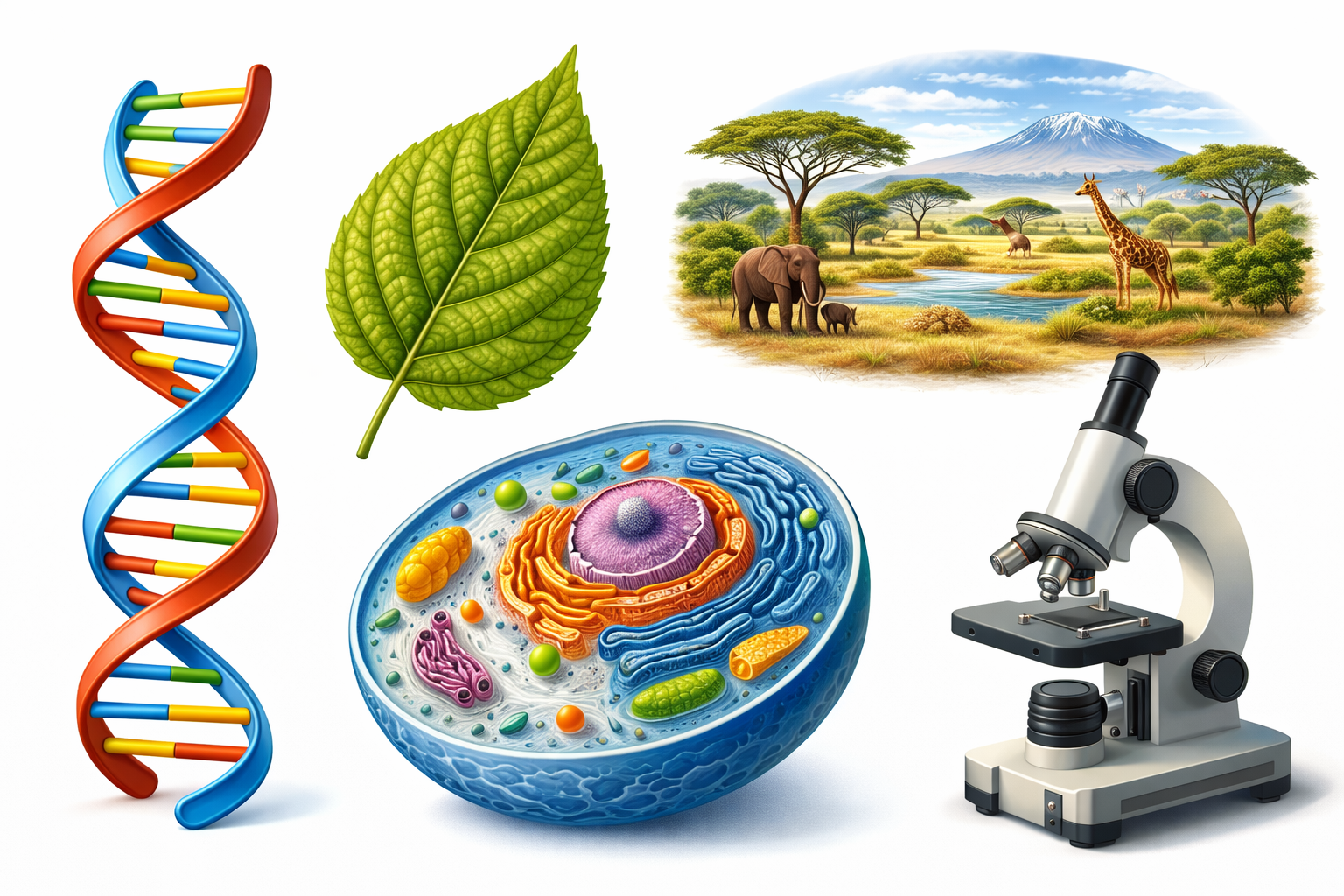
Biology is the scientific study of life and living organisms. From the smallest microscopic bacteria to complex plants, animals, and humans, biology helps us understand how living things function and interact with the world around them.
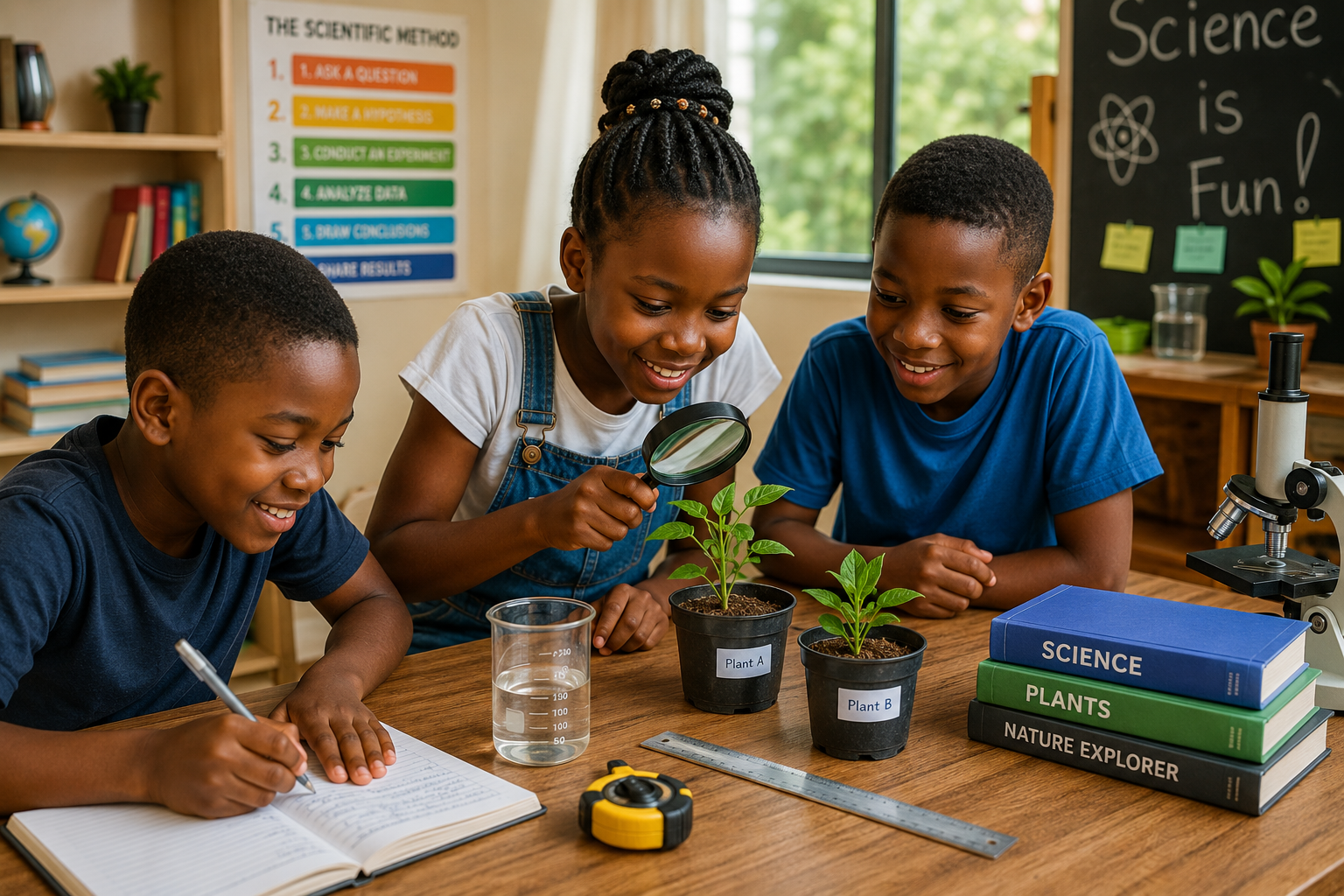
Students studying biology for the first time often begin by exploring cells under microscopes, observing plant growth, or learning how organisms survive in different environments. These early lessons reveal that life is built upon a set of shared principles that govern all living organisms.
Understanding the basic concepts of biology is important not only for students but also for anyone interested in health, nature, environmental conservation, or scientific discovery. Biology plays a crucial role in fields such as medicine, agriculture, biotechnology, and environmental science.
This article explains the fundamental biological concepts that form the foundation of life sciences and helps readers better understand how living organisms grow, survive, reproduce, and evolve.
What Is Biology?
Biology is a branch of science that studies the structure, function, growth, origin, evolution, and distribution of living organisms. Scientists who study biology are known as biologists, and their work helps us understand how life develops and survives on Earth.
Because life is incredibly diverse, biology is divided into several specialized fields, including:
Cell Biology
The study of cells, their structure, and their functions.
Genetics
The study of genes, heredity, and how traits are passed from parents to offspring.
Ecology
The study of how organisms interact with one another and with their environment.
Microbiology
The study of microscopic organisms such as bacteria, viruses, and fungi.
Botany
The study of plants and plant life.
Zoology
The study of animals and animal behavior.
Together, these fields allow scientists to examine life from the molecular level all the way to entire ecosystems.
Characteristics of Living Things
One of the fundamental questions in biology is how scientists distinguish living organisms from non-living matter. Although living organisms vary widely in size and complexity, they all share certain key characteristics.
1. Cellular Organization
All living organisms are composed of one or more cells, which are considered the basic units of life.
Cells perform essential functions such as energy production, waste removal, and reproduction. According to cell theory, one of the central principles of biology:
- All living organisms are made of cells
- Cells are the basic unit of life
- All cells arise from pre-existing cells
There are two primary types of cells:
Prokaryotic cells
These are simple cells that lack a nucleus and membrane-bound organelles. Bacteria and archaea are examples of organisms made of prokaryotic cells.
Eukaryotic cells
These cells contain a nucleus and specialized organelles. Plants, animals, fungi, and protists are made of eukaryotic cells.
For example, when students observe onion cells or cheek cells under a microscope in biology labs, they can clearly see the nucleus and cell membrane, demonstrating how cells function as the building blocks of life.
2. Metabolism
All living organisms carry out chemical reactions necessary to maintain life. These reactions collectively form metabolism.
Metabolism includes two main processes:
Anabolism
The process of building complex molecules from simpler ones. For example, plants build glucose molecules during photosynthesis.
Catabolism
The process of breaking down molecules to release energy. Animals break down food molecules during digestion to produce energy for body functions.
These metabolic processes allow organisms to grow, repair tissues, and maintain internal balance.
3. Growth and Development
Living organisms grow and develop according to instructions encoded in their DNA (deoxyribonucleic acid).
Growth involves an increase in size or number of cells, while development refers to the changes an organism undergoes during its life cycle.
For example:
- A seed develops into a mature plant.
- A fertilized egg grows into a complex organism through stages of embryonic development.
These processes are controlled by genetic information stored within cells.
4. Response to Stimuli
Living organisms can respond to changes in their environment, known as stimuli.
This ability helps organisms survive and adapt to environmental conditions.
Examples include:
- Plants growing toward sunlight (phototropism)
- Humans withdrawing their hand from a hot object
- Animals responding to sound, light, or danger
These responses are controlled by complex biological systems that allow organisms to detect and react to environmental signals.
5. Reproduction
Reproduction enables living organisms to produce new individuals and ensure the survival of their species.
There are two primary forms of reproduction:
Asexual Reproduction
A single parent produces offspring genetically identical to itself. This occurs in many bacteria, some plants, and certain simple animals.
Sexual Reproduction
Two parents contribute genetic material, producing offspring with unique genetic combinations. This type of reproduction increases genetic diversity within populations.
Genetic diversity is essential because it allows populations to adapt to changing environments.
The Role of Cells in Life
Cells are often referred to as the building blocks of life. Every living organism is made of cells that perform specific functions necessary for survival.
Basic Structure of a Cell
Although cells vary in size and shape, most contain several important structures:
Cell Membrane
Controls the movement of substances into and out of the cell.
Cytoplasm
A gel-like substance where many metabolic reactions occur.
Nucleus
Contains the cell’s DNA and controls cellular activities in eukaryotic cells.
Organelles
Specialized structures that perform specific tasks.
Examples include:
- Mitochondria – produce energy for the cell
- Ribosomes – help build proteins
- Endoplasmic reticulum – assists in protein and lipid production
In multicellular organisms, cells become specialized to perform particular functions. For example, nerve cells transmit signals throughout the body, while red blood cells transport oxygen.
Understanding DNA and Genetics
DNA contains the genetic instructions that guide the growth, development, and functioning of all living organisms.
What DNA Does
DNA is organized into structures called chromosomes, which contain thousands of genes.
Genes store instructions for producing proteins that determine an organism’s traits, such as:
- eye color
- blood type
- certain inherited conditions
Every cell in the human body contains nearly identical DNA, which directs the cell’s activities.
Genetic Variation
Genetic variation refers to differences in DNA sequences among individuals.
These variations arise through:
- mutations
- genetic recombination during reproduction
Genetic diversity plays a critical role in evolution, allowing populations to adapt to changing environments over many generations.
Energy and Life Processes
All living organisms require energy to perform essential life functions such as movement, growth, and reproduction.
How Organisms Obtain Energy
Different organisms obtain energy in different ways.
Producers
Producers, such as plants and algae, create their own food through photosynthesis, a process that converts sunlight into chemical energy.
Consumers
Consumers, including animals and humans, obtain energy by eating other organisms.
Decomposers
Decomposers such as fungi and bacteria break down dead organisms and organic matter, recycling nutrients back into the ecosystem.
This continuous recycling of energy and nutrients is essential for maintaining balanced ecosystems.
Ecosystems and the Interconnection of Life
Biology also examines how organisms interact with one another and with their physical environment.
What Is an Ecosystem?
An ecosystem is a community of living organisms interacting with their physical surroundings.
Examples of ecosystems include:
- forests
- oceans
- deserts
- wetlands
- grasslands
Each ecosystem contains both biotic factors (living organisms) and abiotic factors (non-living components such as water, soil, sunlight, and temperature).
Food Chains and Energy Flow
Energy moves through ecosystems in a sequence known as a food chain.
A simple food chain might include:
- Plants (producers)
- Herbivores such as rabbits or deer
- Carnivores such as wolves or lions
- Decomposers such as fungi and bacteria
These relationships help maintain ecological balance and support biodiversity.
Evolution: How Life Changes Over Time
Evolution is one of the central concepts in biology. It explains how species change over long periods of time.
The theory of evolution by natural selection was first proposed by Charles Darwin in the 19th century.
Natural Selection
Natural selection occurs when individuals with traits better suited to their environment are more likely to survive and reproduce.
Over many generations, these advantageous traits become more common within the population.
For example, animals with better camouflage may avoid predators more successfully, increasing their chances of survival.
Adaptation
Adaptations are characteristics that improve an organism’s ability to survive in its environment.
Examples include:
- Thick fur in animals living in cold climates
- Long roots in desert plants that reach deep water sources
- Sharp claws and teeth in predators for capturing prey
These adaptations develop gradually through evolutionary processes.
Why Understanding Biology Matters
Biology affects many aspects of everyday life.
Understanding biological principles helps people:
- Make informed health decisions
- Understand nutrition and disease prevention
- Protect ecosystems and biodiversity
- Support advances in medicine and biotechnology
- Address global challenges such as climate change and food security
For example, biological research has helped scientists develop vaccines, improve crop production, and better understand emerging diseases.
Frequently Asked Questions About Biology
What are the basic concepts of biology?
The core concepts of biology include cells, metabolism, genetics, evolution, ecosystems, and the characteristics of living organisms.
Why are cells called the building blocks of life?
Cells are considered the building blocks of life because all living organisms are made of cells, and cells perform essential life functions such as energy production, growth, and reproduction.
How does DNA store genetic information?
DNA stores genetic information in sequences of chemical bases that form genes. These genes provide instructions for producing proteins that determine traits and control biological processes.
Conclusion
Biology provides a framework for understanding the complex systems that sustain life on Earth. From the microscopic world of cells to vast ecosystems, biological processes shape the natural world and influence human life.
By learning the basic principles of biology—including cellular organization, metabolism, genetics, ecosystems, and evolution—we gain insight into how living organisms grow, adapt, and interact with their environment.
A strong foundation in biology not only improves scientific literacy but also helps individuals better understand the natural systems that support life on our planet.
Sources and References
- OpenStax Biology Textbook
- Encyclopaedia Britannica – Biology
- National Institutes of Health (NIH)
- National Geographic Education
- Campbell Biology (Pearson)