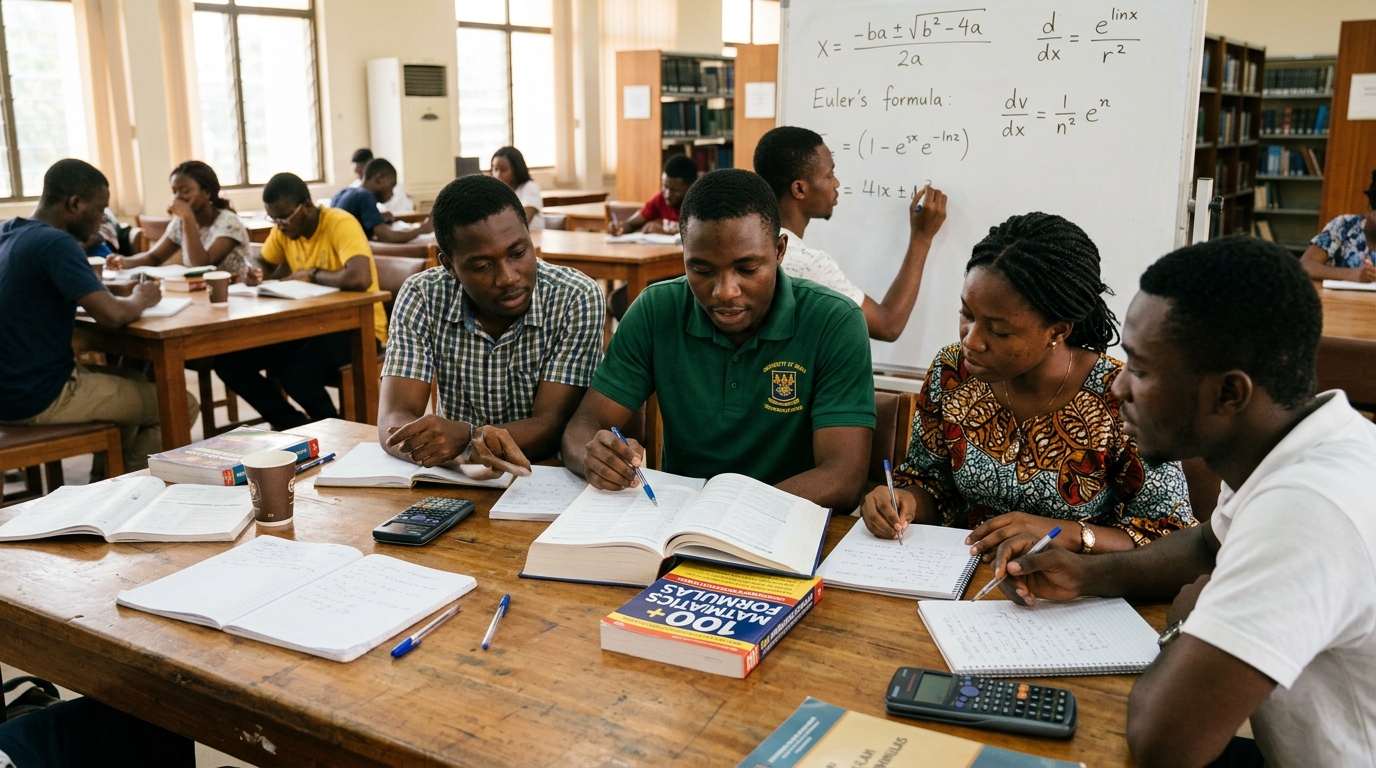







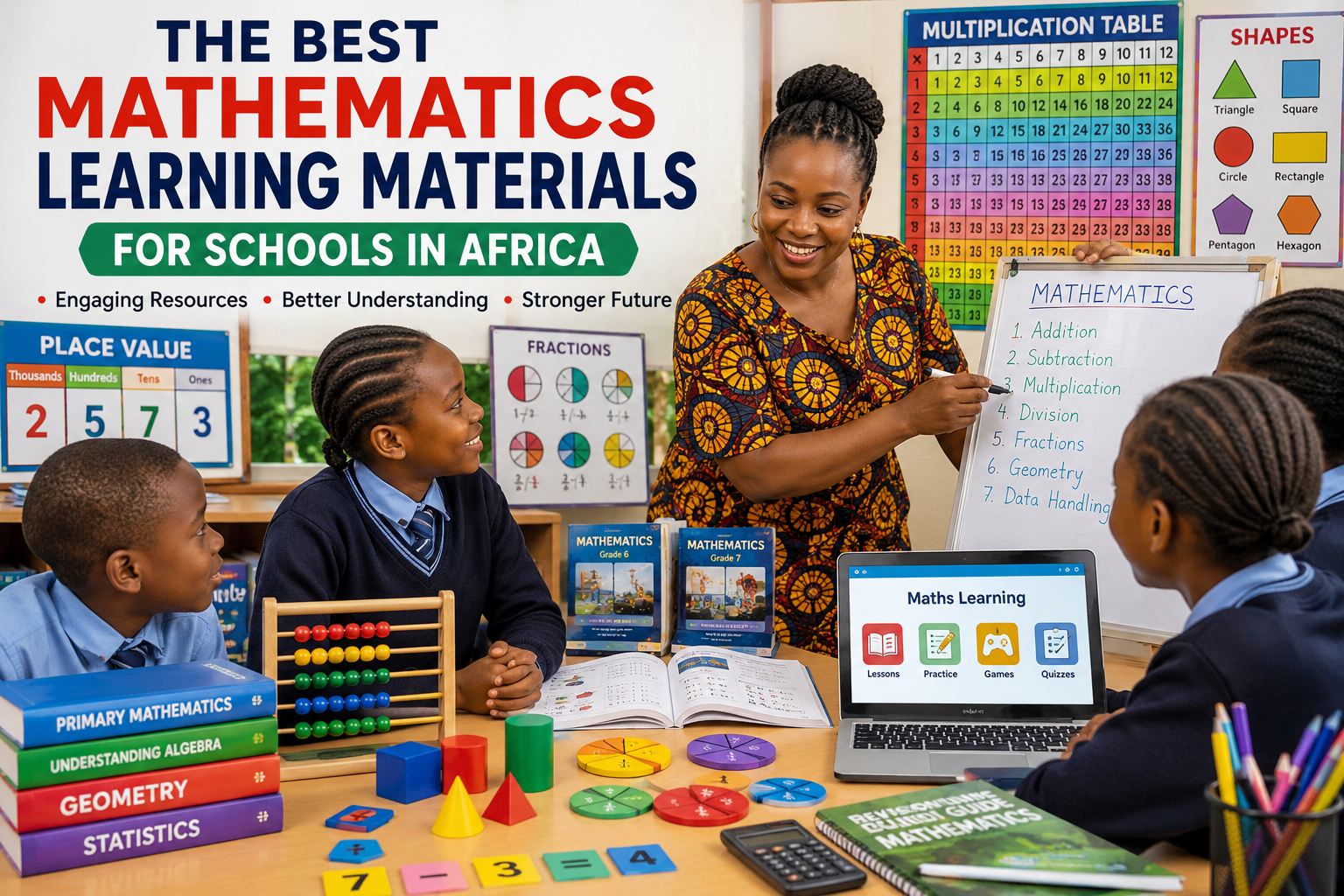
Mathematics is far more than a school subject—it is a life skill that helps learners think logically, solve problems, make informed decisions, and prepare for careers in science, technology, engineering, finance, and many other fields. Whether calculating household expenses, measuring farmland, managing a business, or developing software, mathematical knowledge plays a vital role in everyday life.
Having worked with educators and reviewed teaching practices across different African school environments, one challenge consistently stands out: while many teachers are passionate about helping students succeed, limited access to quality learning materials often makes mathematics difficult to teach and even harder for students to master. Conversely, schools that combine well-designed textbooks with practical teaching aids, regular assessment, and engaging classroom activities frequently see greater student participation and confidence.
According to UNESCO, strengthening foundational numeracy is essential to improving educational outcomes and preparing young people for future opportunities. Likewise, the World Bank emphasizes that access to quality learning materials and effective teaching practices is critical to addressing learning gaps in many developing countries.
This guide explores the best mathematics learning materials for schools in Africa and provides practical recommendations for teachers, school administrators, and parents seeking to improve mathematics learning while making the most of available resources.
Why Quality Mathematics Learning Materials Matter
Learning mathematics involves much more than memorizing formulas or repeating procedures. Students develop lasting understanding when they explore concepts, practice consistently, receive timely feedback, and apply mathematical ideas to real-life situations.
Educational research consistently shows that learners benefit when instruction combines clear explanations with active participation. The National Council of Teachers of Mathematics (NCTM) encourages teaching approaches that promote reasoning, problem-solving, communication, and conceptual understanding alongside procedural fluency.
Quality learning materials help students:
- Understand mathematical concepts more clearly.
- Develop logical reasoning and critical thinking.
- Build confidence through guided practice.
- Participate actively during lessons.
- Apply mathematics to everyday situations.
- Prepare effectively for classroom assessments and national examinations.
For teachers, high-quality resources simplify lesson planning, support differentiated instruction, and provide reliable ways to monitor student progress.
Features of Effective Mathematics Learning Materials
Not every textbook, worksheet, or digital platform provides the same educational value. Schools should prioritize resources that support meaningful learning rather than simple memorization.
Clear Explanations
Students learn best when new concepts are introduced gradually using language appropriate to their age and supported by practical examples.
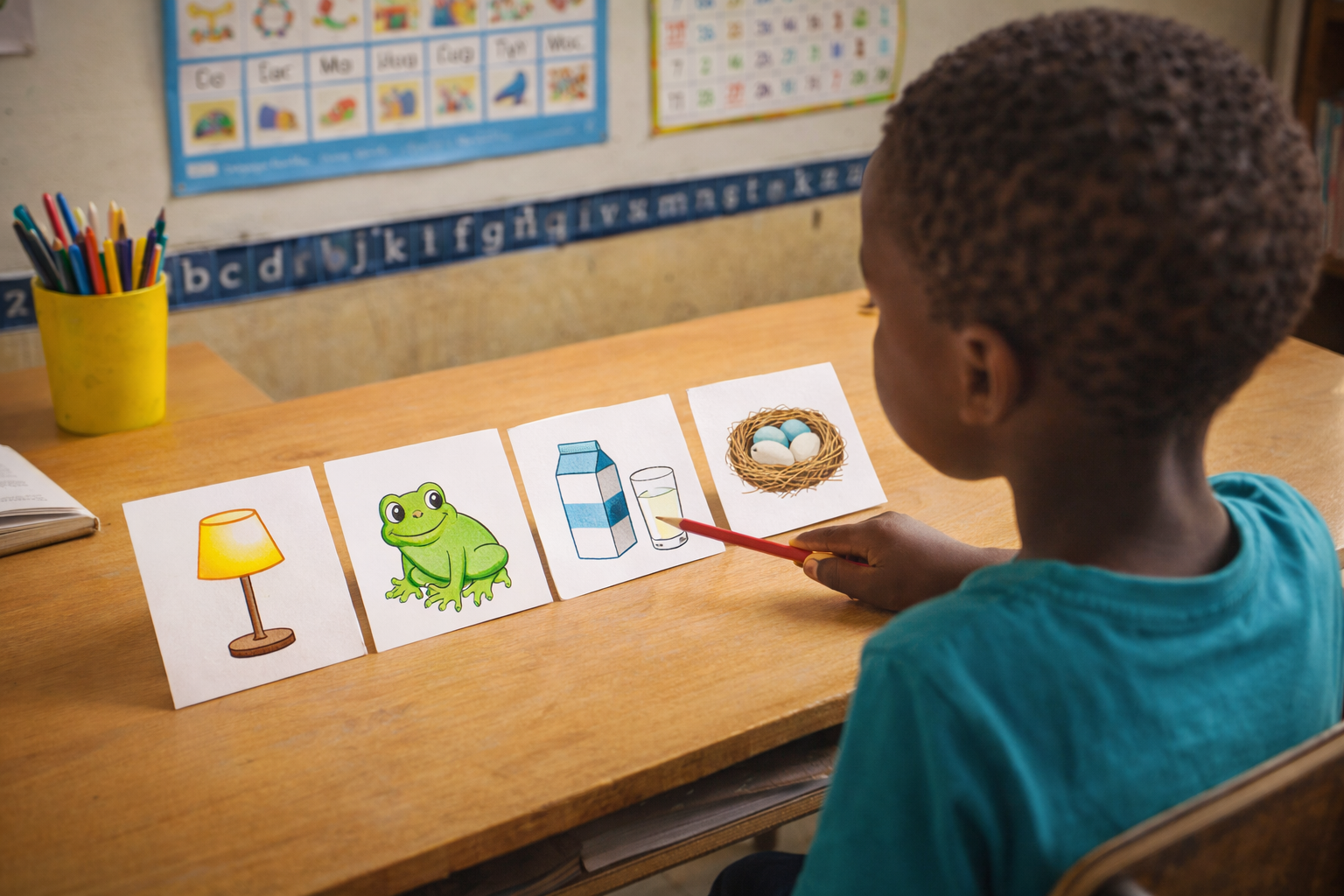
For instance, introducing fractions through sharing food or measuring ingredients often helps younger learners understand abstract ideas before moving to symbolic notation.
Curriculum Alignment
Learning materials should align with national curricula while incorporating internationally recognized mathematical practices where appropriate.
Curriculum-aligned resources ensure students develop the knowledge and skills required for school assessments while preparing them for higher education and future careers.
Regular Practice Opportunities
Practice remains one of the strongest predictors of mathematics achievement when combined with meaningful feedback.
Effective resources include:
- Worked examples
- Guided exercises
- Independent practice
- Revision activities
- Mixed assessments
- Extension tasks for advanced learners
Rather than assigning large amounts of repetitive work, experienced teachers often find that shorter, well-targeted practice sessions improve both understanding and motivation.
Visual Learning
Many learners understand mathematical concepts more quickly when diagrams, charts, number lines, graphs, and illustrations accompany written explanations.
Visual representations help bridge the gap between concrete experiences and abstract mathematical thinking.
Real-Life Applications
Students become more engaged when mathematics connects to everyday life.
Examples involving shopping, farming, transportation, sports, banking, construction, and small business management demonstrate how mathematical skills solve real problems within African communities.
Mathematics Textbooks
Despite rapid advances in educational technology, textbooks remain the foundation of mathematics education in many African schools.
An effective mathematics textbook should provide:
- Step-by-step explanations
- Worked examples
- Progressive exercises
- Chapter summaries
- Practice assessments
- Opportunities for independent learning
Schools should review textbooks periodically to ensure they reflect current curriculum requirements and modern teaching practices.
Where possible, teachers should encourage students not merely to memorize procedures but to explain why a solution works. This simple practice develops deeper conceptual understanding.
Mathematics Workbooks
Workbooks complement textbooks by giving students additional opportunities to apply what they have learned.
From classroom observations, many teachers report that learners who complete regular workbook exercises become more confident when solving unfamiliar examination questions because they have practiced multiple problem types.
Effective workbooks typically include:
- Topic-based exercises
- Review questions
- Word problems
- Mixed practice activities
- Self-assessment sections
The OECD, through its Programme for International Student Assessment (PISA), has highlighted that students perform better when they regularly engage in mathematical reasoning rather than relying solely on memorization.
Teacher Guides
High-quality teaching begins with well-prepared teachers.
Teacher guides provide valuable support by offering:
- Lesson objectives
- Classroom activities
- Suggested teaching strategies
- Common misconceptions
- Assessment ideas
- Sample solutions
Experienced educators often adapt these materials to suit learners with different abilities rather than following them word for word.
For example, while introducing geometry, a teacher may use locally available materials such as sticks, bottle tops, or cardboard to demonstrate shapes before moving to textbook diagrams.
This approach reflects differentiated instruction, an evidence-based teaching strategy that helps learners with varying needs participate successfully.
Teacher guides that encourage formative assessment—asking questions during lessons, observing student work, and providing immediate feedback—often produce better learning outcomes than relying only on end-of-term examinations.
Manipulatives and Hands-On Learning Materials
Research consistently shows that younger learners develop stronger conceptual understanding when they first interact with physical objects before working with mathematical symbols.
Useful manipulatives include:
- Counting blocks
- Abacuses
- Fraction circles
- Measuring instruments
- Number cards
- Geometric solids
- Pattern blocks
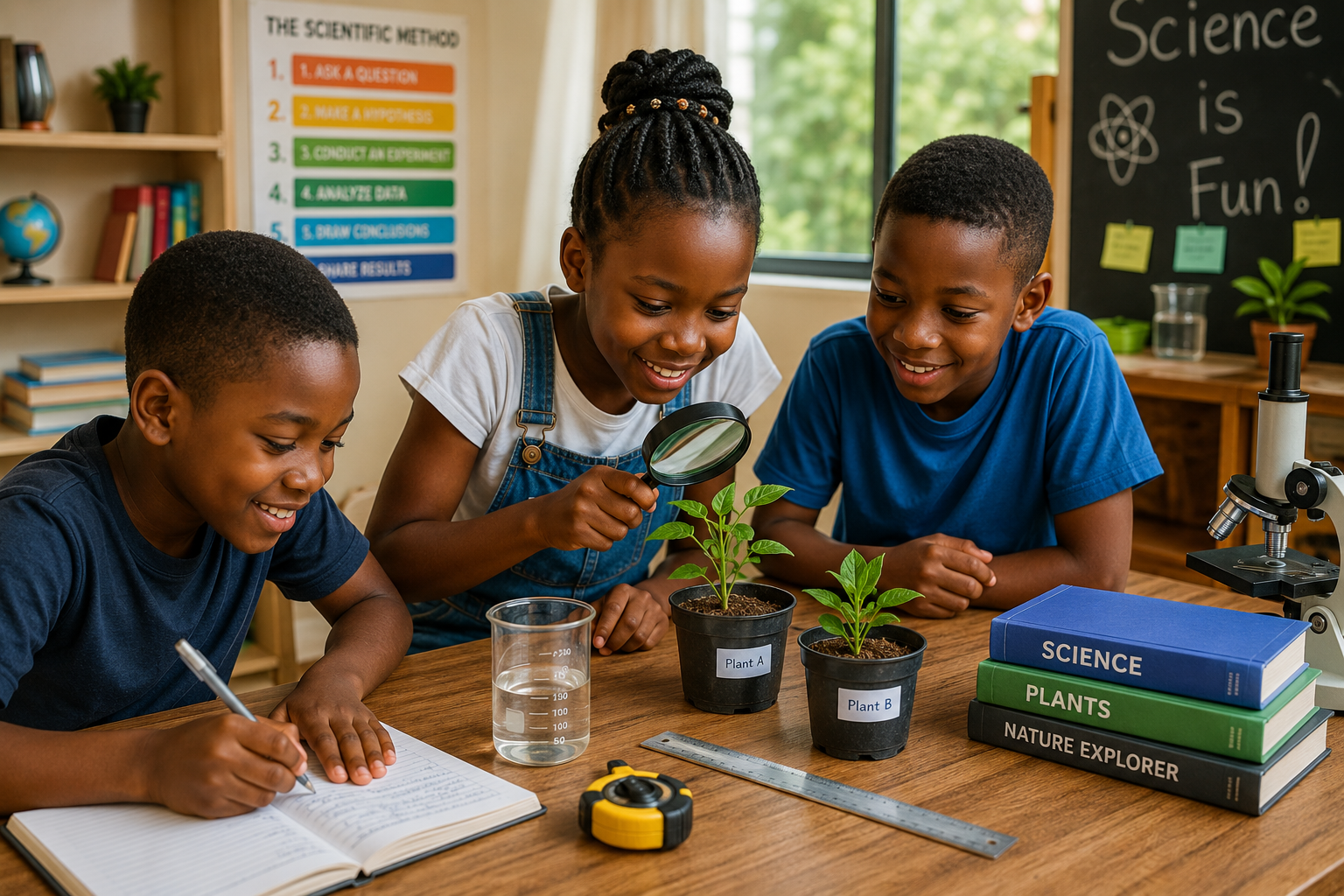
In several primary classrooms, teachers have observed that students who physically build fractions using fraction circles or compare lengths with measuring tools understand these concepts more quickly than those introduced only through written explanations.
Schools with limited budgets do not necessarily need expensive commercial resources. Locally made teaching aids—including bottle tops, beans, sticks, strings, cardboard, and recycled materials—can effectively demonstrate many mathematical ideas while reducing costs.
Educational Charts and Classroom Displays
Classroom displays reinforce mathematical concepts long after a lesson ends.
Helpful displays include:
- Multiplication tables
- Number lines
- Place value charts
- Measurement conversions
- Fraction charts
- Geometric shapes
- Mathematical formulas
Rather than simply decorating classroom walls, teachers can actively refer to these visual aids during lessons, encouraging learners to explain what they observe and how the displayed information helps solve problems.
Mathematics Games
Games transform mathematics practice into enjoyable learning experiences.
Effective classroom games include:
- Sudoku
- Math bingo
- Logic puzzles
- Flash-card competitions
- Mental arithmetic challenges
- Board games involving numbers
Educational research suggests that well-designed mathematics games reduce anxiety while increasing student participation because learners practice repeatedly in a supportive environment.
Teachers frequently notice that quieter students often become more willing to participate during games than during traditional question-and-answer sessions.
Digital Mathematics Learning Platforms
Technology is creating new opportunities for mathematics education throughout Africa.
Where devices and internet access are available, digital learning platforms provide:
- Interactive lessons
- Animated explanations
- Adaptive learning activities
- Immediate feedback
- Progress tracking
- Personalized learning pathways
Adaptive learning systems adjust question difficulty according to student performance, allowing struggling learners to receive additional support while advanced students continue progressing.
The World Bank and UNICEF have both highlighted the growing importance of responsibly integrating digital learning into education, particularly when combined with effective classroom teaching rather than replacing it.
Importantly, schools with unreliable internet connectivity can still benefit from downloadable lessons, offline educational applications, and locally stored digital content. Combining technology with traditional teaching methods often produces better results than relying exclusively on either approach.
Video-Based Mathematics Lessons
Educational videos have become valuable teaching tools for both classroom instruction and independent learning. When used alongside textbooks and teacher guidance, videos can help students visualize complex concepts, revisit difficult topics, and learn at their own pace.
Many experienced teachers find that short videos are particularly effective when introducing topics such as algebra, geometry, graphs, and trigonometry because animations can clearly demonstrate mathematical relationships that are difficult to explain using words alone.
Students also benefit because they can:
- Pause and replay lessons.
- Review concepts before examinations.
- Learn outside school hours.
- Reinforce classroom instruction.
Research summarized by UNESCO suggests that digital learning resources are most effective when they complement—not replace—quality classroom teaching and active teacher involvement.
Mathematics Assessment Resources
Assessment is not simply about assigning grades; it is a powerful tool for improving learning. Effective assessment helps teachers identify misconceptions early and adjust instruction before students fall behind.
Useful assessment materials include:
- Weekly quizzes
- Topic tests
- Diagnostic assessments
- Mock examinations
- End-of-term examinations
- Performance tasks
- Oral questioning
Many successful mathematics teachers use formative assessment, which involves asking questions during lessons, observing students as they work, and providing immediate feedback. This approach helps learners correct mistakes before they become long-term misunderstandings.
The OECD has consistently highlighted that timely feedback and regular assessment contribute significantly to improved mathematics achievement.
Mathematics Revision Guides
Revision guides provide concise summaries of important concepts and are particularly useful during examination preparation.
A quality revision guide should include:
- Key formulas
- Important definitions
- Worked examples
- Practice questions
- Examination tips
- Common mistakes to avoid
Rather than encouraging students to memorize answers, effective revision materials promote understanding by explaining how mathematical principles can be applied to solve different types of problems.
Mathematics Learning Apps
As smartphone ownership continues to increase across Africa, educational apps are making mathematics learning more accessible beyond the classroom.
Many reputable mathematics apps offer:
- Interactive exercises
- Instant scoring
- Progress tracking
- Gamified challenges
- Daily practice reminders
- Topic-based quizzes
Parents and teachers can use these apps to supplement classroom learning, especially during weekends and school holidays. However, digital tools work best when combined with teacher guidance and regular practice using printed materials.
Printable Worksheets
Printable worksheets remain one of the most practical learning resources for schools with limited internet access.
Teachers can create worksheets covering topics such as:
- Arithmetic
- Fractions
- Algebra
- Geometry
- Statistics
- Probability
- Measurement
From practical classroom experience, targeted worksheets focusing on one concept at a time often produce better learning outcomes than lengthy worksheets covering multiple unrelated topics.
Providing students with immediate feedback after completing worksheets further strengthens understanding and builds confidence.
Mathematics Resource Centres and School Libraries
Schools that establish mathematics resource centres create environments where curiosity and independent learning can flourish.
Useful resources include:
- Reference textbooks
- Past examination papers
- Mathematical puzzles
- Educational magazines
- Geometry equipment
- Scientific calculators
- Mathematical models
Even schools with limited budgets can create small mathematics corners within classrooms using donated books, locally produced teaching aids, and student projects.
Such learning spaces encourage exploration beyond the regular curriculum and foster a culture of problem-solving.
Supporting Mathematics Learning at Home
Parents play a crucial role in developing children’s mathematical confidence, even if they are not mathematics experts themselves.
Simple everyday activities can reinforce classroom learning, including:
- Calculating shopping expenses.
- Measuring ingredients while cooking.
- Estimating travel distances.
- Managing pocket money.
- Reading timetables.
- Playing educational board games.
Many teachers observe that students whose parents regularly discuss numbers and problem-solving at home often participate more confidently in mathematics lessons.
The World Bank and UNICEF have both emphasized that parental involvement positively influences children’s educational outcomes, particularly during the foundational years.
Common Challenges Facing Mathematics Education in Africa
Despite significant progress, many African schools continue to face challenges that affect mathematics teaching and learning.
Common challenges include:
- Limited access to updated textbooks.
- Large class sizes.
- Shortages of qualified mathematics teachers.
- Inadequate teaching materials.
- Limited internet connectivity.
- Insufficient educational funding.
- Wide differences in learners’ abilities.
However, these challenges should not discourage schools from improving mathematics instruction. Experience from many successful schools demonstrates that committed teachers, creative use of locally available resources, and consistent learner practice can significantly improve outcomes even in low-resource environments.
Best Free Mathematics Learning Resources
Schools and families can supplement classroom instruction with high-quality free educational resources, including:
- Khan Academy – Comprehensive video lessons and practice exercises.
- GeoGebra – Interactive tools for geometry, algebra, graphing, and statistics.
- OpenStax – Free mathematics textbooks for secondary and higher education.
- CK-12 Foundation – Digital mathematics lessons, simulations, and adaptive learning materials.
Before adopting any online resource, teachers should ensure that it aligns with their national curriculum and complements classroom instruction.
Choosing Mathematics Materials for Low-Budget Schools
Improving mathematics education does not always require expensive technology.
Schools with limited budgets can maximize learning by prioritizing:
- High-quality curriculum-aligned textbooks.
- Locally produced teaching aids.
- Reusable manipulatives.
- Printed worksheets.
- Teacher professional development.
- Free digital resources where internet access is available.
Many effective mathematics lessons across Africa have been delivered using simple materials such as bottle tops, sticks, cardboard, string, and measuring tapes. Creativity often matters more than cost.
Mathematics Learning Materials Buying Checklist
When selecting mathematics resources, school leaders should ask the following questions:
✓ Does the material align with the national curriculum?
✓ Is the content accurate and age-appropriate?
✓ Does it promote conceptual understanding instead of memorization?
✓ Are there sufficient practice activities?
✓ Does it support learners with different ability levels?
✓ Can teachers easily integrate it into daily lessons?
✓ Is it affordable and sustainable for long-term use?
Using this checklist helps schools invest in resources that deliver meaningful educational value.
Frequently Asked Questions
What are the most important mathematics learning materials for primary schools?
Primary schools benefit most from curriculum-aligned textbooks, workbooks, manipulatives, number charts, educational games, and teacher guides that encourage active learning.
Are digital learning platforms better than textbooks?
No. The most effective approach combines traditional classroom resources with carefully selected digital tools. Technology should enhance—not replace—good teaching.
How can schools improve mathematics learning with limited budgets?
Schools can use locally made teaching aids, printable worksheets, free educational platforms, teacher collaboration, and regular formative assessment to improve learning without significant financial investment.
How can parents support mathematics learning at home?
Parents can encourage daily practice by involving children in shopping, cooking, budgeting, measuring, and other everyday activities that require mathematical thinking.
Conclusion
Strong mathematics education begins with access to high-quality learning materials, skilled teachers, and supportive learning environments. Across Africa, schools continue to demonstrate that excellent mathematics teaching is possible even in challenging circumstances when educators use available resources creatively and focus on meaningful learning.
The most effective mathematics programmes combine curriculum-aligned textbooks, workbooks, manipulatives, educational games, regular assessment, revision resources, digital learning platforms, and active parental support. Equally important is the professional development of teachers, whose expertise remains the single most influential factor in student success.
As emphasized by organizations such as UNESCO, UNICEF, the World Bank, the OECD, and the National Council of Teachers of Mathematics (NCTM), improving foundational numeracy requires quality teaching, appropriate learning resources, equitable access, and sustained investment in education.
For African schools, success does not necessarily depend on expensive technology. Well-trained teachers, engaging lessons, practical learning experiences, and thoughtfully selected instructional materials can transform mathematics from a subject many students fear into one they understand, appreciate, and confidently apply in everyday life.
By investing in evidence-based learning materials and fostering a culture of curiosity, problem-solving, and continuous improvement, schools equip learners with the mathematical knowledge and critical thinking skills needed for higher education, meaningful employment, entrepreneurship, and active participation in an increasingly technology-driven world.
References
The recommendations in this article are informed by guidance and research from internationally recognized educational organizations, including:
- UNESCO – Resources on foundational learning, mathematics education, and quality teaching.
- UNICEF – Research on learning recovery, foundational numeracy, and equitable education.
- World Bank – Reports on learning poverty, effective teaching, and education system improvement.
- OECD (Programme for International Student Assessment – PISA) – Evidence on mathematics achievement, assessment, and instructional practices.
- National Council of Teachers of Mathematics (NCTM) – Principles and best practices for mathematics teaching and learning.