










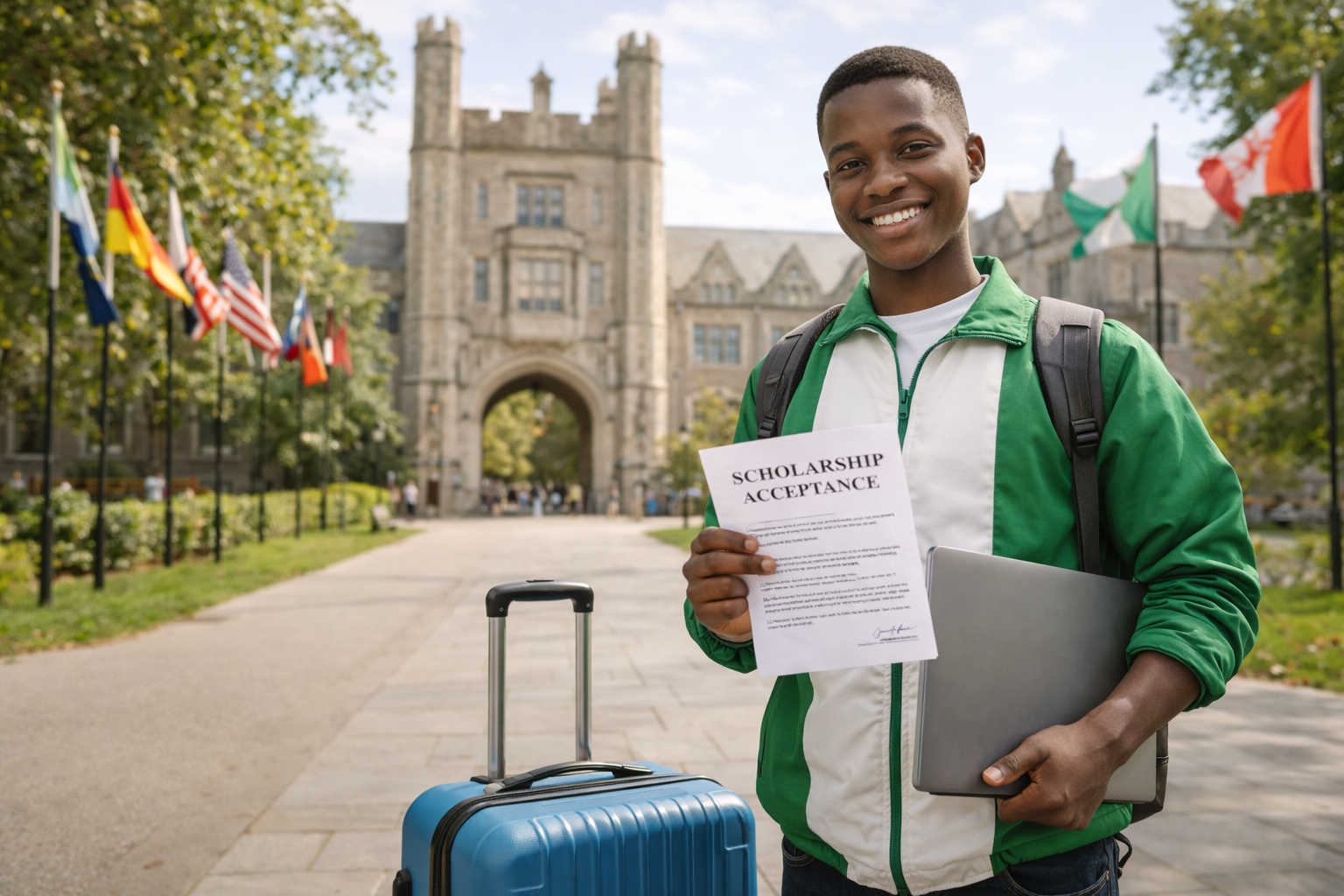
Studying abroad is a dream for many students—but for most Nigerians, the biggest barrier is cost.
Tuition, accommodation, travel, and living expenses can easily run into millions of naira. That’s why international scholarships are not just helpful—they are life-changing.
But here’s the truth most people don’t say:
Thousands apply
Only a small percentage succeed
And most rejections happen because of poor strategy—not lack of intelligence
This guide will show you:
- Proven international scholarships you can apply for in 2026
- What selection panels actually look for
- Real application strategies
- Ready-to-use templates to increase your chances
Why Scholarships Matter (Beyond Free Education)
Scholarships are more than financial aid—they are global opportunities.
Programs like Chevening Scholarships and Fulbright Program don’t just fund education—they develop:
- Future leaders
- Policy influencers
- Global professionals
Many alumni go on to work in government, NGOs, and international organizations.
Top Fully Funded Scholarships for 2026
1. Chevening Scholarships (UK)
What It Covers:
- Full tuition
- Monthly stipend
- Travel costs
- Visa fees
Who It’s For:
- Graduates with leadership potential
- Strong academic background
- At least 2 years of work experience
Real Insight:
Many Nigerian applicants fail because:
They list achievements.
But don’t show leadership impact.
2. Fulbright Program (USA)
What It Covers:
- Tuition
- Living expenses
- Travel
What They Look For:
- Academic excellence
- Research potential
- Community impact
Pro Tip:
Your application must answer:
“How will your education benefit your home country?”
3. DAAD (Germany)
What It Covers:
- Tuition (often free)
- Monthly stipend
- Health insurance
Why Nigerians Choose It:
- No tuition fees in many universities
- Strong engineering and tech programs
4. Erasmus+ (Europe)
Benefits:
- Study in multiple countries
- Full or partial funding
- Travel opportunities
Real Nigerian Application Insight
From observed trends among successful applicants:
- Those who applied to 3–5 scholarships had higher success rates
- Applicants who customized essays performed better than those who reused templates
- Early preparation (6–12 months ahead) significantly improved outcomes
Step-by-Step: How to Apply for Scholarships Successfully
Step 1: Start Early (6–12 Months Before)
Prepare:
- Academic transcripts
- CV
- Passport
- Certificates
Step 2: Choose the Right Scholarships
Don’t apply randomly.
Focus on:
- Your field
- Your experience level
- Your career goals
Step 3: Prepare Required Documents
Most scholarships require:
- Academic transcripts
- Personal statement
- CV
- Recommendation letters
- English test (IELTS/TOEFL if required)
Step 4: Write a Winning Personal Statement
This is where most applicants fail.
Winning Personal Statement Template
Use this structure:
1. Introduction (Your Story)
- Who you are
- Your background
Example:
“I grew up in a community where access to quality education was limited…”
2. Academic & Professional Journey
- What you studied
- Key achievements
3. Career Goals
- What you want to do
- Why it matters
4. Impact (CRITICAL)
- How your education will help your country
Example:
“My goal is to improve access to affordable healthcare in Nigeria…”
5. Why This Scholarship
- Align with their mission
Recommendation Letter Template (Guide for Referees)
A strong letter should include:
- Relationship to you
- Your strengths
- Specific examples
- Why you’re a good fit
Sample Structure:
“I have known [Name] for X years as a student/employee…
They demonstrated exceptional leadership when…”
Common Reasons Applications Get Rejected
- Generic essays
- No clear career direction
- Weak recommendation letters
- Applying without meeting eligibility
- Poor storytelling
Advanced Strategy Most Applicants Don’t Use
Apply to Multiple Scholarships Strategically
Instead of:
Applying to 10 random scholarships
Do this:
Apply to 3–5 well-matched programs with strong applications
Build a “Proof of Impact”
Scholarships favor candidates who show:
- Leadership
- Initiative
- Community impact
Examples:
- Volunteering
- Starting a project
- Teaching others
Nigerian-Specific Challenges (And Solutions)
Problem: Transcript delays
Solution: Request early and follow up consistently
Problem: IELTS cost
Solution: Apply to programs that waive it
Problem: Lack of guidance
Solution: Learn from past winners and mentors
Realistic Expectations
Let’s be honest:
- Scholarships are competitive
- Rejections are common
- Success often comes after multiple attempts
But:
With the right strategy, your chances increase significantly.
Final Advice: What Actually Gets You Selected
It’s not just:
High grades
It’s:
Clear vision.
Real impact.
Strong storytelling.
Alignment with scholarship goals.
Conclusion
International scholarships in 2026 offer incredible opportunities—but success requires more than just applying.
You need:
- Strategy
- Preparation
- Persistence
Programs like Chevening Scholarships, Fulbright Program, and DAAD are highly competitive—but achievable with the right approach.
Start early. Apply smart. Stay consistent.
Your opportunity to study abroad might be closer than you think.