







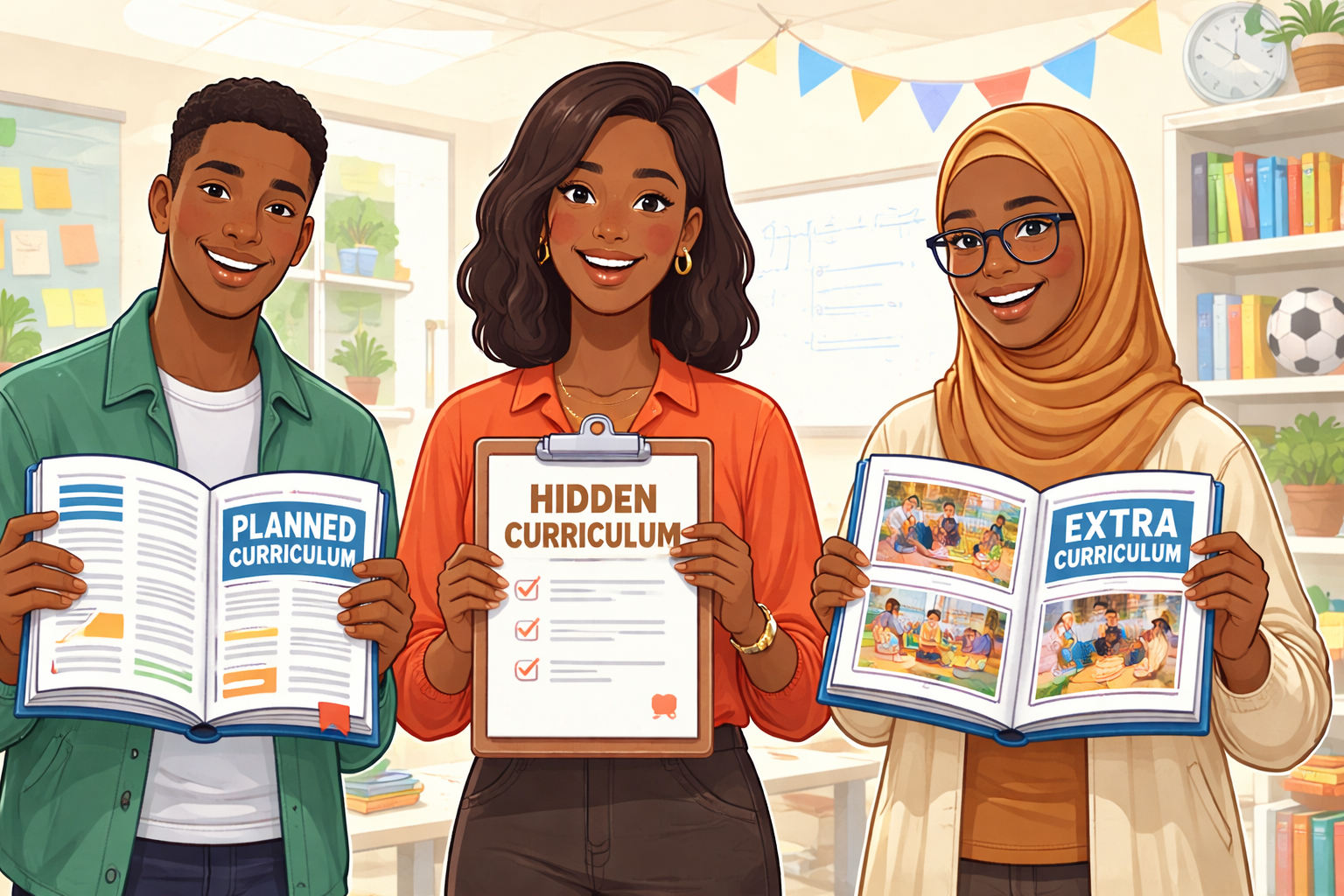
In education, understanding the types of curriculum is fundamental to delivering meaningful learning experiences. Whether you’re a teacher, school administrator, curriculum developer, or education enthusiast, knowing how curriculum shapes learning is crucial. But what are the three main types of curriculum? How do they differ, and why does each matter in today’s classrooms and learning environments?
In this in-depth guide, we’ll explore the three foundational types of curriculum — formal (overt), hidden, and null — with evidence from recent educational research and expert insights. By the end, you’ll have a complete grasp of how these curriculum types influence teaching, student outcomes, and educational design.
What Does Curriculum Really Mean?
Before diving into the types of curriculum, let’s clarify what “curriculum” means. In broad terms, a curriculum is:
A structured set of learning experiences and intended outcomes designed to guide what students should learn, how instruction is delivered, and how learning is assessed.
Curriculum isn’t limited to textbooks or school schedules. It spans formal instruction, social environments, unseen norms, and even what’s not included in educational plans.
With that foundation, let’s unpack each of the three main types of curriculum that frame educational experiences around the world.
1. Formal Curriculum (Overt Curriculum)
What It Is
The formal curriculum, also called the overt curriculum, represents the planned and documented educational experiences that institutions intentionally teach.
It includes:
- Subjects listed in syllabi
- Standards and benchmarks
- Textbooks and learning materials
- Lesson plans and official assessments
This type of curriculum is the one most people imagine when they think about schooling: the math, science, literature, and other academic content deliberately chosen by educators. (Teachers Institute)
Purpose of Formal Curriculum
The formal curriculum exists to:
- Provide a structured framework for learning
- Ensure alignment with national or regional educational goals
- Support measurable student outcomes
- Guide instruction systematically
In practice, this type of curriculum helps students build core knowledge and skills. From primary school through higher education, formal curricula are the backbone of student progress.
Why It Matters
Formal curriculum is crucial because:
- It creates consistency across classrooms and schools
- Allows educators to target and measure learning progress
- Serves as the basis for evaluations, exams, and certifications
Whether in Lagos, London, or Los Angeles, schools depend on the formal curriculum to uphold academic standards and prepare learners for future pathways.
2. Hidden Curriculum
What It Is
While the formal curriculum outlines what students should learn, the hidden curriculum represents what students actually learn beyond textbooks — without explicit instruction.
This includes:
- Social norms and values learned in school
- Behavioral expectations
- Peer interactions and routines
- Cultural norms embedded in the school environment
The hidden curriculum is not written or taught through official channels, but it profoundly shapes students’ attitudes and beliefs. (Wikipedia)
How It Works
For example, a school might not teach students directly about teamwork, but group projects, classroom culture, and playground interactions communicate valuable social skills. Students learn competition, conflict resolution, leadership, and even social inequality patterns — often without explicit lessons.
Because it’s unwritten, the hidden curriculum varies across contexts. It reflects the environment, social relationships, and cultural messages present in education spaces.
Real-World Impact
Hidden curriculum is powerful because:
- It affects identity, values, and interpersonal skills
- It can promote or undermine equity
- It influences student behavior more subtly than formal lessons
If a school culture prioritizes silence and obedience over curiosity and questioning, students internalize those norms — shaping how they engage with learning and society.
3. Null Curriculum
What It Is
The null curriculum refers to what the education system chooses to leave out—the topics and perspectives not included in official learning plans.
This can include:
- Certain subjects or skills (e.g., financial literacy, mental health education)
- Historical viewpoints or cultural contributions
- Critical thinking on social issues
Although it might seem like “nothing,” null curriculum sends a message about what a school values by omission. (Teachers Institute)
Why Null Matters
The null curriculum shapes learning because:
- Excluding topics reflects societal priorities and norms
- Students miss opportunities to learn about vital real-world skills
- It may reinforce biases or gaps in knowledge
When essential topics such as environmental sustainability or digital citizenship are left out, learners graduate with blind spots that impact later life and civic engagement.
Example in Practice
In many regions, contemporary issues like digital ethics, climate change, or comprehensive life skills are either minimally addressed or absent from formal curricula. Their absence — the null curriculum — tells students these areas are less important.
Schools that fail to include diverse perspectives, underserved histories, or modern competencies may unintentionally communicate that these topics are “less valuable,” affecting learners’ worldviews.
Comparing the Three Types of Curriculum
| Curriculum Type | What It Represents | Example |
|---|---|---|
| Formal Curriculum | Official, planned learning | Mathematics syllabus, science lessons |
| Hidden Curriculum | Implicit learning through experience | Norms, values, social behavior |
| Null Curriculum | Excluded/not taught topics | Absence of financial literacy |
Each type interacts in complex ways. For instance, what a school teaches, what students experience, and what is left out together shape the full educational journey.
Why Understanding These Types of Curriculum Matters
For Teachers and Educators
Understanding curriculum types helps instructors:
- Recognize the full scope of student learning
- Address hidden messages in the classroom
- Ensure no important skills or perspectives are unintentionally excluded
Teachers who are aware of the hidden and null curriculum can adapt instruction to promote equity and inclusiveness.
For Curriculum Developers
Curriculum designers must:
- Ensure formal plans include diverse, relevant content
- Anticipate hidden messages conveyed through school culture
- Address gaps that may harm learners due to exclusion
Intentional curriculum design is a growing focus in education research, improving learner outcomes and relevance.
For Parents and Students
Recognizing all three types helps families understand:
- The full experience of their child’s education
- The societal values conveyed in schools
- The importance of skills and topics beyond textbooks
Parents can advocate for curricula that reflect both academic and real-world needs.
Trends in Curriculum Research (2025 & Beyond)
Recent studies and education policy reforms show a rising emphasis on:
- Curriculum inclusivity — balancing traditional academic content with real-world and culturally responsive topics
- Holistic learning models — recognizing that hidden curriculum elements like emotional literacy and social development matter just as much as formal lessons
- Curriculum innovation — integrating digital skills, critical thinking, and sustainability into core frameworks
Researchers argue that understanding the types of curriculum isn’t just academic — it’s essential for preparing learners for future careers and civic life.
Conclusion
In exploring “What are the three main types of curriculum?” we’ve covered the most influential curriculum forms in education:
- Formal (Overt) Curriculum – Planned and documented academic content
- Hidden Curriculum – Unintended lessons from culture and environment
- Null Curriculum – What’s deliberately left out of education
Together, these types of curriculum shape the full educational experience — beyond what’s taught in classrooms. By recognizing all three, educators, parents, and policymakers can design learning environments that are effective, equitable, and relevant for the 21st century.