







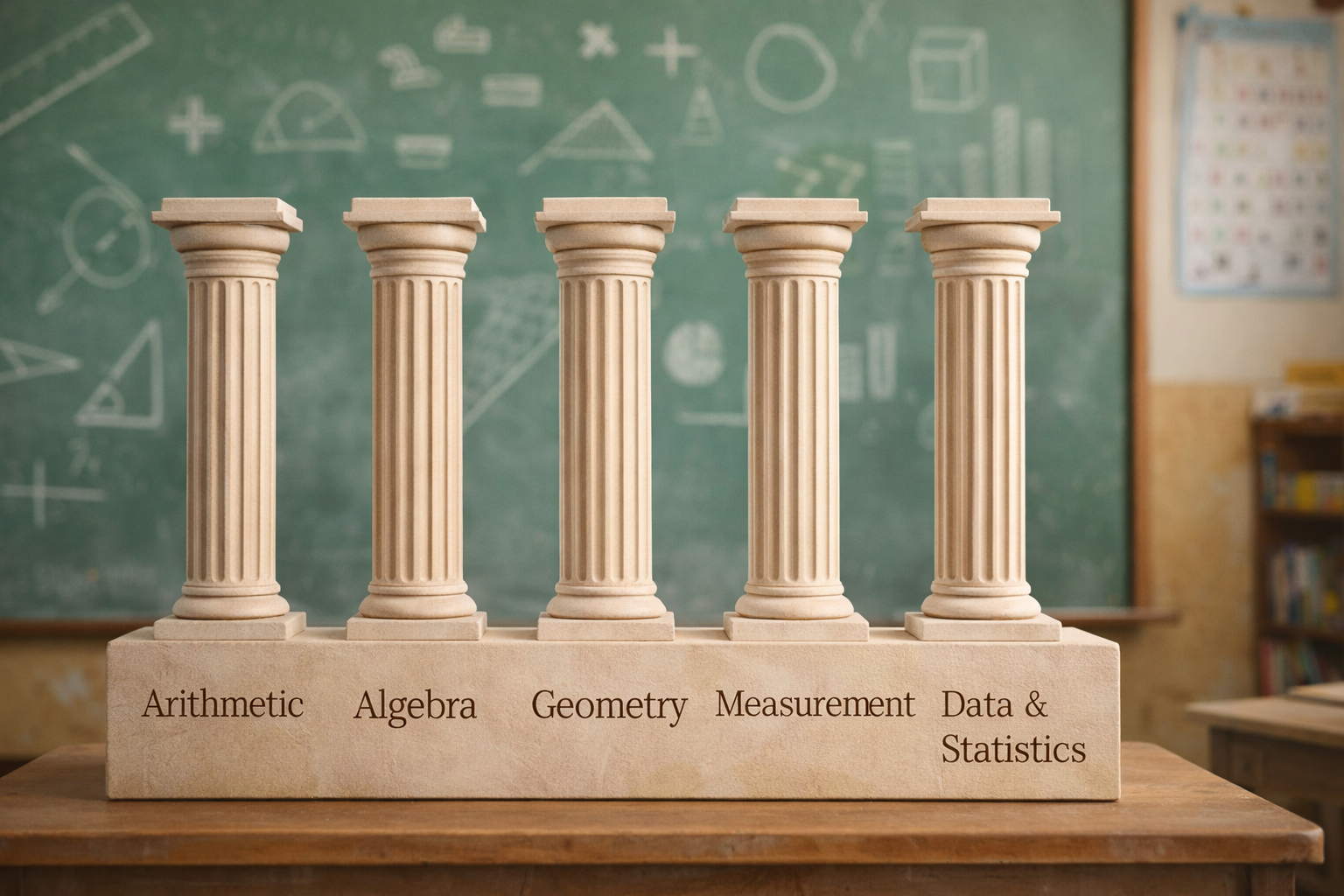


Mathematics classrooms are often dominated by procedures, formulas, and single-answer problems. While these are essential skills, they do not always reflect how mathematical thinking works in real life. In my experience teaching upper elementary and middle school students, I found that many learners who struggled with traditional problem sets became noticeably more engaged when lessons emphasized reasoning rather than speed or memorization.
One of the most effective tools I used to shift this mindset was math logic puzzles. When introduced intentionally, logic puzzles encourage students to analyze information, test ideas, explain reasoning, and persist through uncertainty—skills strongly linked to deep mathematical understanding.
This article shares classroom-tested strategies for using math logic puzzles to promote critical thinking, discussion, and perseverance. It also connects these practices to established educational research and professional teaching standards, providing practical guidance teachers can confidently apply.
Why Math Logic Puzzles Matter in Learning
Logic puzzles require students to think, not simply apply memorized steps. Instead of asking “Which formula do I use?”, students must interpret clues, recognize patterns, eliminate possibilities, and justify conclusions.
Educational research supports this approach. According to the National Council of Teachers of Mathematics (NCTM), meaningful mathematical tasks should emphasize reasoning and sense-making rather than routine procedures (NCTM, Principles to Actions).
In my classroom, logic puzzles consistently led to:
- Longer student discussions
- Increased participation from hesitant learners
- Greater willingness to attempt challenging problems
Key learning benefits include:
- Development of critical and analytical thinking
- Improved perseverance during complex tasks
- Stronger mathematical communication
- Increased student engagement and confidence
Research on productive struggle also shows that students learn more deeply when they work through challenging problems with appropriate support rather than being shown solutions immediately (Hiebert & Grouws, 2007).
What Are Math Logic Puzzles?
Math logic puzzles are problems that emphasize reasoning and deduction over straightforward computation. They typically include constraints or clues that must be carefully analyzed to reach a solution.
Common classroom examples include:
- Logic grids
- Pattern recognition challenges
- Deduction puzzles with written clues
- Strategy-based number games
The instructional goal is not speed, but clarity of thinking. Asking students to explain how and why they reached a conclusion is often more valuable than the final answer itself.
Using Logic Puzzles as Effective Math Warm-Ups
One of the most successful ways I used logic puzzles was as 5–10 minute warm-up activities at the start of lessons. These short tasks helped students transition into “thinking mode” and reduced math anxiety.
Classroom Strategy
- Display one puzzle for the entire class
- Allow quiet individual thinking time first
- Encourage multiple solution paths
- Facilitate a short whole-class discussion
Even brief warm-ups like this can significantly improve focus and readiness for deeper learning. According to Edutopia, warm-up tasks that activate reasoning improve student engagement and lesson retention (Edutopia, Using Rich Math Tasks).
Supporting Mathematical Discussion Through Logic Puzzles
Logic puzzles naturally generate discussion because students often approach them differently. These moments create valuable opportunities to develop mathematical language and reasoning skills.
Discussion Prompts That Work
- “What information did you focus on first?”
- “Which clues helped you eliminate options?”
- “Can you explain your thinking step by step?”
The Common Core Standards for Mathematical Practice emphasize constructing arguments and critiquing the reasoning of others—skills that logic puzzles support directly (CCSSM, Practice Standard 3).
Building Perseverance and a Growth Mindset
Many students believe math ability is about being “fast” or “naturally good.” Logic puzzles help challenge this belief by normalizing struggle as part of learning.
In my classroom, students who initially gave up quickly began spending more time testing ideas once they realized puzzles were meant to be challenging.
Strategies That Support Perseverance
- Choose puzzles that are challenging but accessible
- Praise effort, strategy, and persistence
- Highlight partial progress
- Model thinking aloud when stuck
Research by Carol Dweck on growth mindset shows that students who view challenge as part of learning are more likely to persist and succeed over time (Dweck, 2006).
Differentiating Instruction With Logic Puzzles
Logic puzzles are particularly effective for differentiated instruction because they allow multiple entry points and solution paths.
Differentiation Techniques
- Provide puzzles at varied difficulty levels
- Offer optional hints or guiding questions
- Allow individual, pair, or group work
- Encourage advanced students to design their own puzzles
Because reasoning—not memorization—is emphasized, students with different ability levels can participate meaningfully.
Integrating Logic Puzzles Into Core Math Lessons
Rather than treating puzzles as enrichment activities, they can be embedded directly into core instruction.
Classroom Integration Examples
- Introduce variables through logic constraints
- Explore patterns before formal algebraic rules
- Use student explanations as formative assessment
- Connect puzzle strategies to standard word problems
NCTM emphasizes that reasoning tasks should be integrated into daily instruction, not isolated as extras (NCTM, Principles to Actions).
Encouraging Collaboration Through Group Puzzles
When students work on logic puzzles collaboratively, they practice essential communication and teamwork skills.
Best Practices for Group Work
- Assign clear roles (reader, recorder, explainer)
- Set norms for respectful discussion
- Require groups to justify solutions
- Rotate group membership regularly
Collaborative problem-solving reflects real-world mathematics, where complex problems are rarely solved alone.
Assessing Student Thinking With Logic Puzzles
Although logic puzzles may not always have a single correct answer, they provide rich insight into student understanding.
What Teachers Can Assess
- Clarity and organization of reasoning
- Use of evidence and elimination
- Willingness to revise thinking
- Quality of mathematical explanation
Assessment can be informal (observation, discussion) or formal (written reflections or reasoning rubrics).
Addressing Common Classroom Challenges
Some teachers worry that logic puzzles take too much time or do not align with curriculum goals. In practice, I found the opposite to be true.
Practical Solutions
- Use short puzzles aligned to lesson objectives
- Replace—not add to—routine practice occasionally
- Start with one puzzle per week
- Reflect on student engagement and progress
When used strategically, puzzles enhance learning efficiency rather than reduce it.
Long-Term Benefits for Students
Consistent exposure to logic puzzles helps students develop transferable skills, including:
- Logical reasoning
- Problem decomposition
- Clear communication
- Confidence with unfamiliar problems
These abilities support success across subjects and in real-life decision-making (OECD, Education 2030).
Conclusion
Math logic puzzles are not simply enrichment activities—they are powerful instructional tools that promote reasoning, perseverance, and deep understanding. Through firsthand classroom experience and research-backed practice, it is clear that when puzzles are integrated thoughtfully, students begin to see mathematics as an active process of thinking rather than a set of rigid rules.
By valuing explanation over speed and curiosity over perfection, educators can help students experience math as something to explore, question, and enjoy.