









Civic education is more than just a school subject—it is a practical tool that shapes how individuals interact with society, government, and one another. In countries like Nigeria and across the world, civic education plays a key role in promoting responsible citizenship, democratic participation, and national development.
From classroom lessons to real-life activities like voting, community service, and public discussions, civic education equips individuals with the knowledge and skills needed to function effectively in society.
According to UNESCO, civic learning is essential for building peaceful, inclusive, and participatory societies. This makes understanding its aims and objectives not just important—but necessary.
What Is Civic Education?
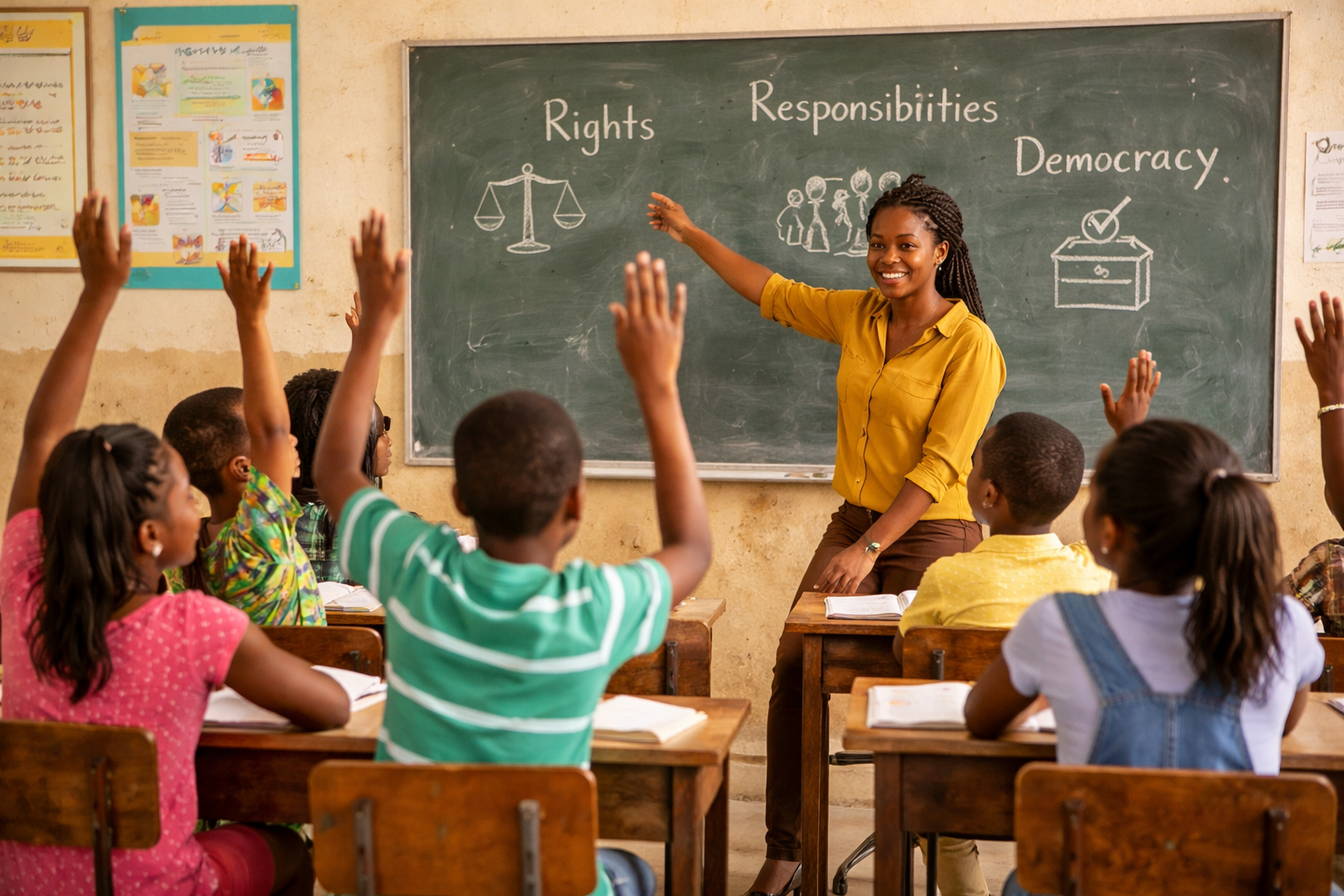
Civic education is the process of teaching individuals their rights, responsibilities, and roles as citizens. It includes learning about:
- Government structures
- Laws and policies
- Democratic values
- Social responsibility
In practice, civic education goes beyond textbooks. For example, students who participate in school debates, mock elections, or community sanitation exercises are actively experiencing civic education in action.
Why Civic Education Matters in Today’s Society
A well-functioning society depends on informed and active citizens. Research and global policy frameworks highlight that civic education helps to:
- Strengthen democracy
- Promote peaceful coexistence
- Reduce social conflicts
- Increase political awareness
The World Bank emphasizes that citizen engagement and accountability are critical drivers of good governance and development outcomes.
Aims of Civic Education
The aims of civic education are its long-term goals—what it ultimately seeks to achieve in individuals and society.
1. To Promote Responsible Citizenship
Civic education teaches individuals how their actions affect society. A responsible citizen:
- Obeys laws
- Respects others’ rights
- Contributes positively to their community
Real-Life Example:
In many Nigerian secondary schools, students participate in environmental sanitation days, learning responsibility through action—not just theory.
2. To Encourage Active Participation in Society
Democracy thrives when citizens participate. Civic education motivates individuals to engage in:
- Voting during elections
- Community development projects
- Public discussions
Example:
Mock elections conducted in schools help students understand voting processes before they become eligible voters.
3. To Foster National Unity and Social Integration
In diverse societies, civic education promotes:
- Tolerance
- Respect for cultural differences
- Shared national identity
This is especially important in multi-ethnic countries, where unity is essential for stability.
4. To Instill Democratic Values
Civic education introduces core democratic principles such as:
- Rule of law
- Justice
- Equality
- Freedom
These values help citizens understand their rights and hold leaders accountable.
5. To Develop Critical Thinking Skills
In the digital age, misinformation is widespread. Civic education helps individuals:
- Analyze information critically
- Question political narratives
- Make informed decisions
According to UNESCO, critical thinking is a key component of global citizenship education.
Objectives of Civic Education
While aims are broad, objectives are specific, measurable outcomes that civic education seeks to achieve.
1. To Educate Citizens About Their Rights
Citizens must understand rights such as:
- Freedom of expression
- Right to education
- Right to vote
Why It Matters:
When people understand their rights, they are less vulnerable to exploitation and abuse.
2. To Teach Civic Responsibilities
Rights come with duties. Civic education emphasizes:
- Paying taxes
- Obeying laws
- Respecting others
Example:
Community tax awareness campaigns help citizens understand how their contributions support public services.
3. To Promote Law-Abiding Behavior
A law-abiding society is more stable and secure.
Studies in civic education programs show that communities with strong civic awareness often experience lower levels of antisocial behavior, as individuals understand the consequences of their actions.
4. To Encourage Community Service
Civic education inspires individuals to give back through:
- Volunteering
- Supporting local initiatives
- Participating in social causes
Real-Life Example:
Youth groups organizing clean-up drives or charity events demonstrate civic responsibility in action.
5. To Build Awareness of Government Structures
Understanding how government works enables citizens to:
- Hold leaders accountable
- Participate effectively in governance
- Advocate for change
This includes knowledge of the executive, legislative, and judicial branches.
6. To Promote Peaceful Conflict Resolution
Conflicts are inevitable, but civic education teaches constructive ways to handle them:
- Dialogue
- Negotiation
- Respect for opposing views
This reduces violence and promotes social harmony.
7. To Develop Leadership Skills
Civic education prepares individuals for leadership by building:
- Decision-making skills
- Accountability
- Confidence
Example:
Student leadership roles (e.g., prefects or student union leaders) serve as early training for future leaders.
Practical Benefits of Civic Education
1. Better Decision-Making
Civically educated individuals make informed choices in elections and everyday life.
2. Stronger Communities
When citizens cooperate and respect one another, communities become safer and more supportive.
3. Increased Political Awareness
People stay informed about policies, governance, and national issues.
4. Reduced Social Conflict
Tolerance and understanding reduce ethnic, religious, and social tensions.
Challenges Facing Civic Education
Despite its importance, civic education faces several challenges:
- Lack of awareness among citizens
- Insufficient teaching resources
- Low youth participation
- Spread of misinformation online
The World Bank notes that limited civic engagement can weaken governance and accountability systems.
How Civic Education Can Be Strengthened
1. Integrating Practical Learning
Schools should go beyond theory by introducing:
- Mock elections
- Debates
- Community projects
2. Promoting Media Literacy
Teaching individuals how to identify fake news and misinformation is critical in today’s digital world.
3. Encouraging Youth Participation
Young people should be actively involved in civic activities early in life to build lifelong habits.
4. Supporting Lifelong Learning
Civic education should continue beyond school through:
- Workshops
- Media programs
- Community initiatives
Conclusion
Civic education is a powerful foundation for building responsible citizens and strong nations. Its aims focus on long-term societal growth—promoting unity, participation, and democratic values—while its objectives provide practical steps to achieve these goals.
By combining knowledge with real-life application, civic education empowers individuals to actively shape their communities and contribute to national development.
As emphasized by UNESCO, investing in civic education is essential for creating a more just, peaceful, and inclusive society.