









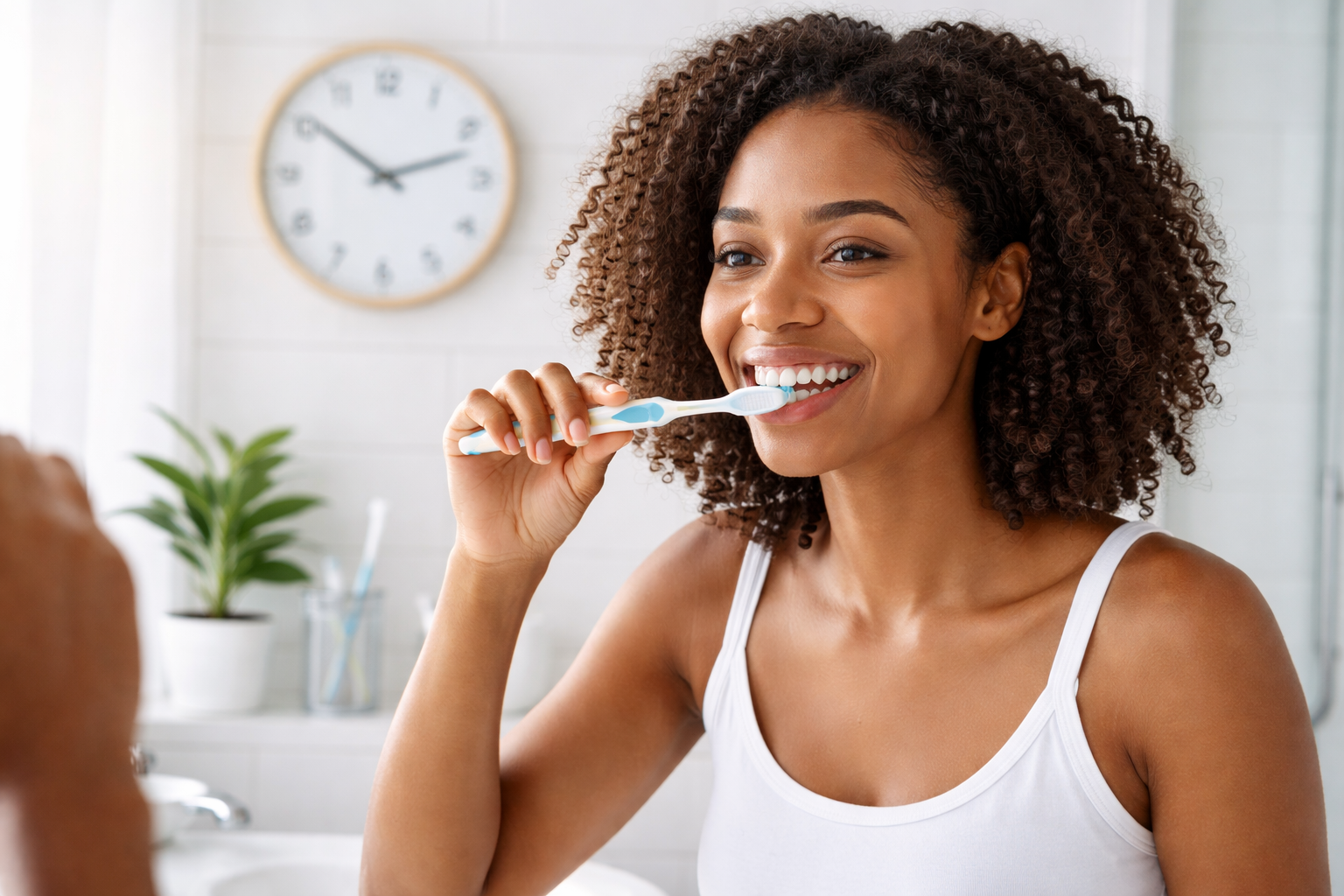
Most people brush their teeth every day—yet dentists still treat cavities, gum disease, and enamel damage that could have been prevented with better daily habits. This gap often isn’t about whether people brush, but how they do it.
After reviewing guidance from the American Dental Association (ADA) and the UK National Health Service (NHS)—and observing how common brushing mistakes show up repeatedly in real-life oral health outcomes—it becomes clear that small, consistent errors can quietly undermine even the most well-intentioned routines.
This guide breaks down evidence-based toothbrushing habits, explains why they matter, and shows how to protect your teeth and gums more effectively—without complicated tools or extreme routines.
Why Proper Toothbrushing Technique Matters
Toothbrushing removes plaque, a sticky film of bacteria that constantly forms on teeth and along the gumline. If plaque isn’t removed regularly, it hardens into tartar and contributes to:
- Tooth decay
- Gum inflammation (gingivitis)
- Bad breath
- Long-term gum disease (periodontitis)
According to the American Dental Association, brushing incorrectly—or too aggressively—can be just as harmful as not brushing enough, leading to enamel abrasion and gum recession (ADA, Oral Health Topics).
Key takeaway: Effective brushing is about gentle precision, not force.
Common Toothbrushing Mistakes Dentists See Most Often
1. Brushing Too Hard
Many people believe scrubbing harder cleans better. In reality, excessive pressure can wear down enamel—the tooth’s protective outer layer—which does not regenerate once damaged.
The NHS warns that aggressive brushing is a leading cause of sensitive teeth and receding gums (NHS: Teeth Cleaning).
2. Brushing for Too Little Time
A quick brush often misses plaque on inner surfaces and back molars. The ADA recommends brushing for two minutes, twice daily to effectively clean all tooth surfaces.
3. Ignoring the Gumline
Plaque accumulates most easily where teeth meet the gums. Skipping this area increases the risk of gum disease—even if teeth look clean.
How to Build a Dentist-Recommended Brushing Routine
Choose the Right Toothbrush
Both the ADA and NHS recommend:
- Soft-bristled toothbrushes
- A head size that reaches back teeth easily
- A handle that allows controlled movement
Electric toothbrushes can improve plaque removal for some users, but manual brushes are equally effective when used correctly (ADA).
The Correct Brushing Technique (Step-by-Step)
How should you brush your teeth properly?
- Hold the toothbrush at a 45-degree angle toward the gums
- Use small, circular motions
- Clean:
- Outer surfaces
- Inner surfaces
- Chewing surfaces
- Avoid aggressive side-to-side scrubbing
This technique removes plaque while protecting enamel and gum tissue.
How Long Should You Brush Your Teeth?
Answer: About two minutes, twice a day.
A practical method is dividing the mouth into four sections and spending 30 seconds on each. Many electric toothbrushes include built-in timers to help maintain consistency.
ADA Recommendation: Brush for two minutes, morning and night.
Don’t Skip Your Tongue
Bacteria also collect on the tongue and contribute to bad breath.
The NHS confirms that gently cleaning the tongue can help reduce odor-causing bacteria and improve overall oral hygiene.
You can:
- Brush your tongue gently with your toothbrush
- Use a tongue scraper
Toothpaste: How Much and What Type?
How much toothpaste should adults use?
👉 A pea-sized amount is sufficient.
What to Look for in Toothpaste
- Fluoride (essential for strengthening enamel and preventing decay)
- Low-abrasive formulas if you have sensitive teeth
- Products suited to your needs (sensitivity, gum care, cavity protection)
Both the ADA and NHS strongly recommend fluoride toothpaste for daily use.
When Should You Brush Your Teeth?
After Meals
If you consume acidic foods or drinks (e.g., citrus, soda), wait at least 30 minutes before brushing. This allows saliva to neutralize acids and reduces enamel erosion (NHS guidance).
Morning and Night
- Morning: Removes overnight bacterial buildup
- Night: Most important—saliva production decreases during sleep, increasing cavity risk
Flossing: Why It’s Essential
Toothbrushing alone cannot clean between teeth.
The ADA states that daily flossing:
- Removes plaque from tight spaces
- Reduces cavity risk
- Supports gum health
Proper flossing tips:
- Use a clean section of floss per tooth
- Curve floss gently around each tooth
- Avoid snapping into gums
Mouthwash: Helpful, Not a Substitute
Mouthwash can:
- Reduce bacteria
- Freshen breath
However, the NHS emphasizes that mouthwash should not replace brushing or flossing. Some alcohol-based rinses may not be suitable for everyone.
How Lifestyle Habits Affect Oral Health
Diet & Hydration
- Frequent sugar intake fuels plaque bacteria
- Water helps rinse debris and supports saliva production
Regular Dental Checkups
Even excellent home care cannot remove hardened tartar. Professional cleanings allow dentists to detect early issues before they become serious.
Both ADA and NHS recommend regular dental checkups based on individual risk.
Teaching Good Brushing Habits Early
Children benefit from:
- Supervised brushing
- Age-appropriate fluoride toothpaste
- Consistent routines
Adults also benefit from periodically reassessing technique as habits drift over time.
Quick Daily Oral Care Checklist (Featured Snippet Friendly)
✔ Brush twice daily for two minutes
✔ Use a soft-bristled toothbrush
✔ Clean along the gumline
✔ Floss once daily
✔ Clean your tongue
✔ Use fluoride toothpaste
Final Thoughts: Small Changes, Long-Term Impact
Toothbrushing is one of the most common daily habits—and one of the most misunderstood. Evidence from trusted dental authorities shows that gentle technique, sufficient time, and consistency matter far more than force or expensive products.
By aligning your routine with ADA and NHS recommendations, you can significantly reduce your risk of cavities, gum disease, and enamel damage—starting today.