








Reading is a foundational skill that shapes a learner’s future academic success and lifelong opportunities. But how reading should be taught has sparked intense debate among educators, researchers, and parents over decades. At the center of this debate is the comparison known as Phonics vs Whole Language — two contrasting approaches to literacy instruction. In this SEO-optimized, in-depth blog post, we’ll explore both methods, examine the latest research, and provide evidence-based recommendations to help you understand which reading method works best.
What Is the “Phonics vs Whole Language” Debate All About?
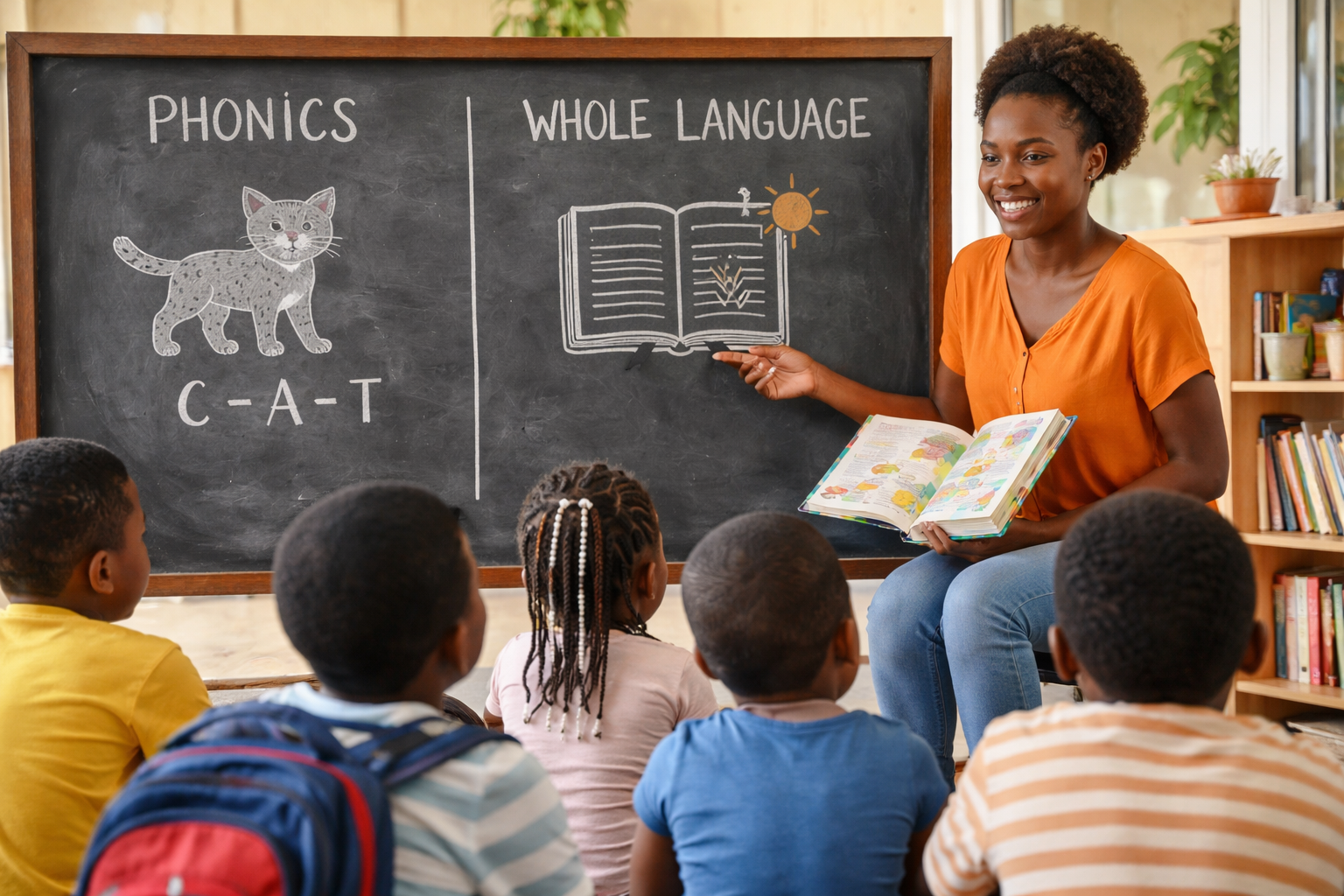
The Phonics vs Whole Language debate — often called the “reading wars” — revolves around two very different philosophies for teaching young readers:
- Phonics focuses on teaching the relationships between letters and sounds (phonemes), helping learners decode words by sounding them out.
- Whole Language emphasizes reading whole texts for meaning, encouraging learners to recognize words through pattern and context rather than breaking them into sounds.
Both approaches aim to help children read, but they differ sharply in instructional method, skill emphasis, and pedagogical philosophy.
Understanding Phonics: What It Is and How It Works
Phonics is a structured method of reading instruction that teaches learners how letters and combinations of letters correspond to sounds. It starts with basic letter-sound relationships and progresses to more complex patterns, such as blends and digraphs.
Key Features of Phonics Instruction
- Explicit and Systematic: Learners are taught to identify sounds in a planned sequence.
- Decoding Focused: Reading is built from the bottom up — from sounds to words to sentences.
- Strong for Beginners: Particularly effective for early readers and struggling learners.
- Supports Spelling: By understanding sound patterns, students improve spelling and writing skills. (Neuhaus Education Center)
Benefits of Phonics
Research consistently shows that phonics instruction improves:
- Word recognition accuracy
- Decoding skills
- Spelling and writing proficiency
- Reading confidence, especially in early grades
According to literacy experts, phonics gives learners the tools to decode unfamiliar words independently, which is crucial for reading fluency. (Neuhaus Education Center)
What Is Whole Language? A Meaning-Centered Approach
The Whole Language approach operates on the idea that reading is a naturally acquired skill, similar to learning to speak. Rather than isolating sound patterns, it immerses learners in rich, meaningful text, emphasizing comprehension and context clues.
Key Features of Whole Language
- Meaning First: Focus on understanding text rather than breaking down words.
- Embedded Phonics: Letter-sound relationships are typically taught incidentally within meaningful reading experiences.
- Rich Literature Exposure: Learners engage with stories and authentic texts early on.
- Natural Learning Philosophy: Proponents treat literacy as an integrated experience combining reading, writing, speaking, and listening. (Springer Link)
Benefits of Whole Language
Supporters argue that whole language:
- Encourages deep comprehension and enjoyment of reading
- Provides contextual learning that mirrors real-world reading
- Can help learners see reading as purposeful and relevant
However, the approach has also faced criticism for not providing enough structured instruction for decoding, particularly for struggling readers. (Springer Link)
What Does Research Say? Evidence From Literacy Studies
Recent research has examined how these two reading instruction methods compare in real learning environments:
1. Performance and Prosody
A 2024 eye-tracking study comparing phonics and whole language learners found:
- Participants taught using phonics had better oral reading fluency and prosody.
- Silent reading processes were more efficient in the phonics group, even though comprehension scores were similar between groups. (Avesis)
2. Systematic Phonics Advantages
Meta-analyses — such as those conducted by the National Reading Panel — indicate that systematic phonics instruction yields better word-recognition and spelling skills compared to less structured methods. (Education Week)
3. Mixed Findings and Critiques
Some researchers argue that the supposed superiority of phonics over whole language may be overstated if comparisons mix different teaching methods. A reanalysis of earlier data suggested that when methodological flaws are accounted for, phonics isn’t always statistically superior. (jeffbowers.blogs.bristol.ac.uk)
Systematic Reviews
Comprehensive reviews show mixed results — some studies find whole language promotes reading comprehension and speed, while phonics supports accuracy and decoding. (ResearchGate)
Bottom Line: Evidence favors phonics for foundational decoding and accuracy, while whole language may support comprehension and reading engagement — suggesting both have value depending on instructional goals.
Why Some Educators Advocate a Balanced Approach
Because both methods have unique benefits and limitations, many literacy experts now recommend a balanced literacy approach — one that integrates phonics instruction with rich exposure to meaningful text.
What Does a Balanced Approach Look Like?
- Explicit phonics for beginning readers to develop decoding skills
- Meaning-based reading activities to build comprehension
- Literacy environments rich in written language
- Individualized instruction adjusting to learner needs (Purdue University)
Experts suggest that literacy is multi-dimensional, and effective reading instruction should include both decoding skills and comprehension strategies.
Current Trends and Educational Policy Shifts
Across many educational systems, there’s a growing shift toward evidence-based phonics instruction — particularly in response to declining reading outcomes. For example, U.S. states like California and Mississippi have reformed reading curricula to emphasize phonics more heavily, with measurable improvements in reading proficiency. (The Washington Post)
At the same time, debates continue about how to integrate phonics without sacrificing the joy and meaning-centered learning that whole language promotes.
What This Means for Teachers and Parents
For Educators:
- Start with phonics to build a strong decoding foundation.
- Integrate authentic literature to foster comprehension and motivation.
- Use assessment data to tailor instruction for individual learners.
For Parents:
- Encourage both skill practice (e.g., phonics games) and book sharing (meaningful reading time).
- Recognize that struggling readers may need additional phonics support.
- Collaborate with teachers about instructional approaches and progress.
Conclusion: So, Which Is Better?
Phonics vs Whole Language isn’t a simple matter of one being “right” and the other “wrong.” Current evidence points to the strength of phonics for teaching foundational reading skills and enabling learners to decode and spell effectively. However, whole language contributes vital elements of comprehension and reading for meaning that phonics alone can’t fully deliver.
The Best Answer?
A balanced literacy program that combines the structured power of phonics with the contextual richness of whole language offers the most comprehensive path to reading success. Such an approach supports learners in becoming accurate, fluent, and engaged readers — ready to thrive in school and beyond.
If you’re ready to implement reading methods that truly work, focus on structured phonics within a meaningful literacy environment — because reading isn’t just about decoding words; it’s about understanding the world.