




Memory doesn’t appear overnight — it develops gradually as young children interact with people, objects, and routines in their everyday world. During my years observing and working closely with toddlers in home and early-learning settings, I’ve seen how small, playful moments — singing a familiar song, searching for a favorite toy, or retelling a short story — can significantly strengthen a child’s ability to remember, recall, and connect ideas.
Between ages 1 and 3, the brain undergoes rapid growth, forming millions of neural connections that support future learning, language development, and problem-solving skills. According to the Center on the Developing Child at Harvard University, early experiences — especially repeated, responsive interactions — play a critical role in shaping memory and cognitive development.
This guide shares practical, age-appropriate memory-boosting activities that I’ve seen work effectively with toddlers. Each activity is grounded in established child-development research, easy to implement at home, and designed to support learning through joyful play.
Why Memory Development Matters in the Early Years
Understanding why memory matters helps caregivers approach these activities with confidence and intention.
1. Rapid Cognitive Growth
Toddlers constantly absorb and store information — even when it isn’t obvious. Research from the American Academy of Pediatrics (AAP) confirms that early memory skills are closely tied to later learning and academic readiness.
2. Strong Links to Language Development
Memory supports vocabulary growth, sentence formation, and comprehension. When toddlers remember words, sounds, and sequences, communication skills improve more naturally.
3. Foundations for Learning Behavior
Working memory helps toddlers follow simple instructions, recognize patterns, and understand cause and effect — all essential for future problem-solving.
Interactive Memory-Boosting Activities for Toddlers
1. Song and Movement Sessions
In my experience, toddlers remember songs faster than spoken instructions. Music activates multiple brain areas at once, reinforcing memory and language.
How to do it:
- Choose repetitive action songs (e.g., clapping, jumping, pointing).
- Repeat the same songs daily for 5–10 minutes.
- Add simple instruments like shakers or drums.
Why it works:
Studies in early childhood education show that rhythm and repetition improve recall and sequencing skills (National Association for the Education of Young Children – NAEYC).
2. Guess-That-Sound Game
Auditory memory is just as important as visual memory, yet often overlooked.
How to do it:
- Introduce familiar sounds (clapping, water pouring, animal noises).
- Say the sound, then pause and let your toddler identify or imitate it.
- Gradually ask them to recall the sound later in the day.
Developmental benefit:
Improves listening skills, sound recognition, and recall.
3. Treasure Hunt With Simple Clues
I’ve found that toddlers become highly engaged when learning feels like a game.
How to do it:
- Hide familiar toys.
- Give one-step clues (“Look near your books”).
- Increase difficulty gradually as recall improves.
Why it works:
This supports memory retrieval, attention, and early problem-solving.
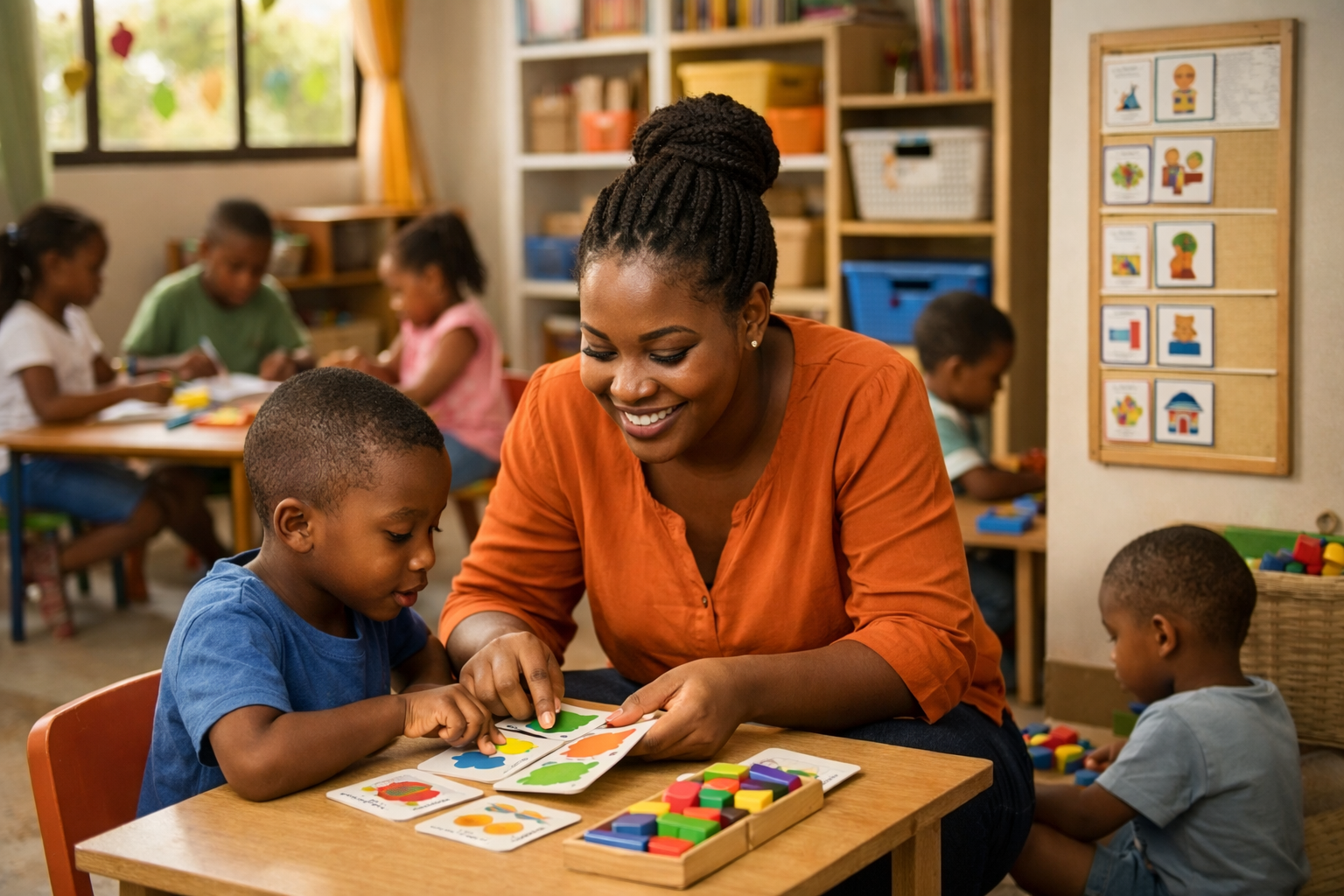
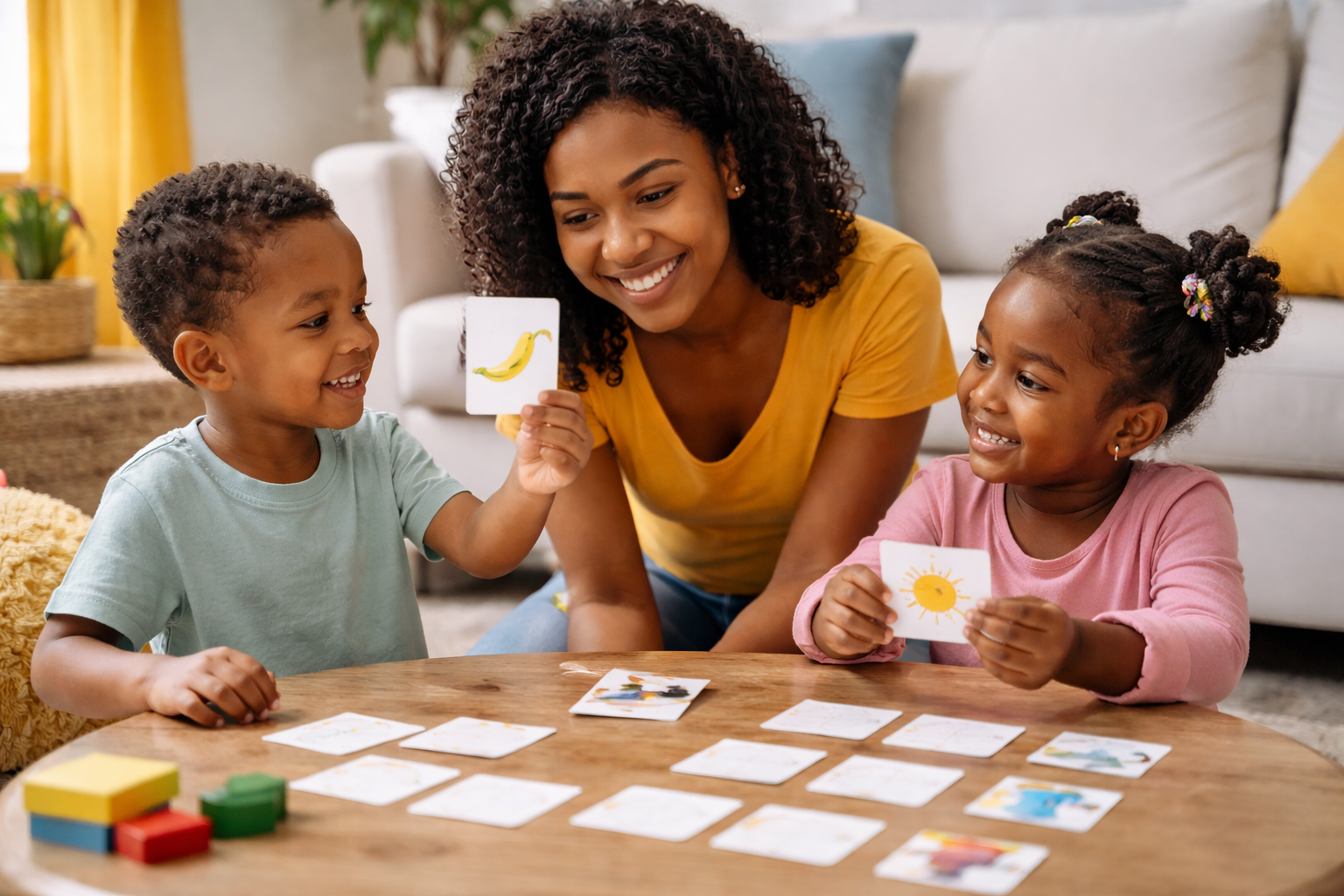
4. Picture or Object Matching Games
Matching is one of the earliest observable memory skills in toddlers.
How to do it:
- Use household objects or picture cards.
- Hide or flip items face down.
- Encourage your child to remember where each item is.
Expert insight:
Visual memory games are widely recommended in early learning curricula to strengthen recall and classification skills.
5. Interactive Storytime
Reading becomes far more powerful when toddlers actively participate.
How to do it:
- Choose short, repetitive books.
- Pause to ask recall questions (“What happened next?”).
- Encourage retelling or acting out scenes.
Evidence:
The AAP emphasizes dialogic reading as a proven method for strengthening memory and language development.
6. Sorting and Categorizing Play
Everyday sorting tasks are excellent memory builders.
How to do it:
- Sort toys by color, size, or shape.
- Pair socks or organize blocks together.
- Repeat the same categories across different days.
Why it works:
Repetition reinforces memory while supporting attention and cognitive organization.
7. Simple Puzzles
Puzzles require toddlers to remember shapes, images, and placement.
Best practices:
- Start with large, simple puzzles (2–5 pieces).
- Offer guidance, not answers.
- Praise effort rather than speed.
Developmental benefit:
Enhances memory, spatial reasoning, and persistence.
8. Sensory Discovery Bins
Sensory play creates strong memory associations through touch and exploration.
How to do it safely:
- Use toddler-safe materials (rice, beans, water beads).
- Hide familiar toys.
- Ask your child to remember what they found.
Research note:
Multisensory learning strengthens neural connections and recall (Harvard Center on the Developing Child).
9. Outdoor Exploration Adventures
Nature offers rich memory-building opportunities.
How to do it:
- Point out distinctive features (“red flower,” “big tree”).
- Ask recall questions later (“Where did we see the bird?”).
Why it works:
New environments stimulate curiosity and reinforce visual memory.
10. Mirror Identity Game
Self-recognition supports memory and self-awareness.
How to do it:
- Name facial features together.
- Ask recall questions (“Where is your nose?”).
- Repeat daily for short sessions.
Tips for Making Memory Activities Effective
Based on both observation and expert guidance:
- Keep sessions short: 5–10 minutes, 1–3 times daily.
- Repeat activities often: Repetition builds memory.
- Follow your toddler’s interest: Engagement improves recall.
- Celebrate effort: Positive reinforcement builds confidence.
Final Thoughts: Learning Through Play
Memory development thrives when toddlers feel safe, supported, and engaged. Research consistently shows that responsive caregiving and playful learning are the strongest drivers of early cognitive growth. From my experience, the most effective memory-building moments are rarely elaborate — they happen during songs, stories, routines, and shared laughter.
By intentionally weaving these activities into daily life, you’re not just improving memory — you’re laying a foundation for lifelong learning, confidence, and curiosity.