








At some point, almost everyone makes this promise:
“From tomorrow, I’ll be more disciplined.”
You wake up early. You plan your day. You feel in control.
Then… life happens.
You skip one task.
You get distracted.
You tell yourself, “I’ll start again tomorrow.”
And just like that, the cycle repeats.
If this sounds familiar, here’s the truth most people don’t tell you:
Discipline is not about motivation. It’s about systems.
And once you understand how it actually works, everything changes.
The Day I Realized Motivation Was a Lie
There was a time I relied completely on motivation.
When I felt like working, I worked.
When I didn’t, I postponed.
At first, it seemed harmless. But over time:
- Goals stayed unfinished
- Habits never stuck
- Progress felt random
The turning point came when I noticed something simple:
People who were succeeding weren’t more motivated than me—they were just more consistent.
That’s when I stopped chasing motivation… and started building discipline.
What Discipline Really Means (And Why Most People Get It Wrong)
Most people think discipline means being strict or forcing yourself to suffer.
That’s not true.
Discipline is simply doing what needs to be done—especially when you don’t feel like it.
And self-control?
That’s your ability to pause and choose the better option in the moment.
Think of it like this:
- Discipline = your long-term system
- Self-control = your short-term decision-making
Together, they shape your life.
Why You Keep Losing Discipline (It’s Not What You Think)
If you’ve ever felt like you “lack discipline,” you’re not alone.
But here’s the real issue:
You don’t have a discipline problem—you have a system problem.
Here’s what usually goes wrong:
1. You rely on motivation
Motivation comes and goes. Discipline stays.
2. You try to change everything at once
You start strong… then burn out fast.
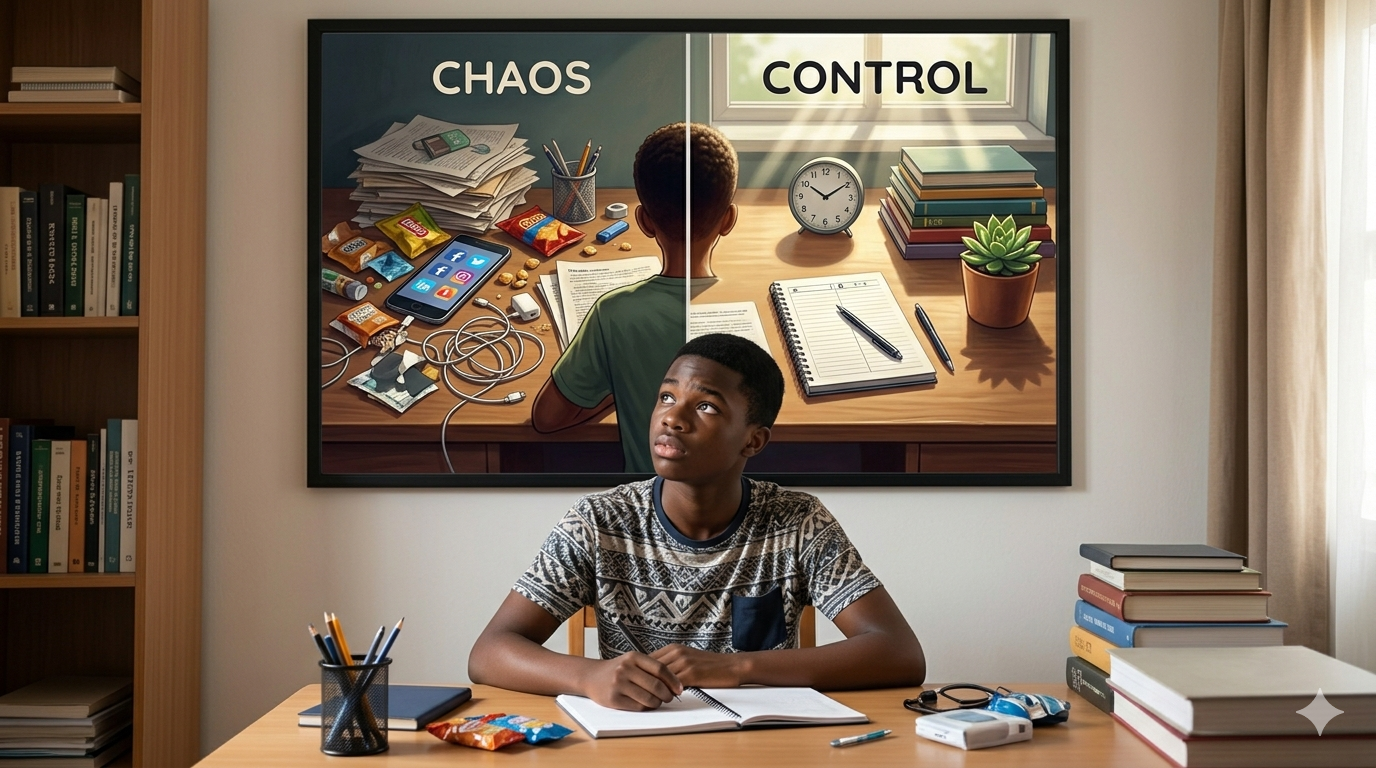
3. Your environment works against you
Your phone, social media, noise—everything pulls your focus away.
4. Your goals are too vague
“Be productive” is not a plan.
Once you fix these, discipline becomes much easier.
The Science Behind Self-Control (Made Simple)
Your brain is constantly choosing between:
- Immediate reward (comfort, distraction)
- Future reward (growth, success)
And here’s the catch:
Your brain is naturally wired to choose the easy option.
That’s why:
- You scroll instead of studying
- You delay instead of starting
- You choose comfort over effort
But the good news?
Self-control improves with practice—and gets easier when your environment supports you.
How I Started Building Discipline (Without Overwhelming Myself)
When I first tried to become “disciplined,” I failed.
Why?
Because I tried to change everything overnight.
So I changed my approach.
Instead of doing more, I started doing less—but consistently.
Here’s what worked:
1. I Made My Goals Impossible to Ignore
Instead of saying:
“I want to be productive”
I switched to:
- Study for 30 minutes at 6 PM
- Exercise for 20 minutes every Monday, Wednesday, Friday
Specific goals remove confusion.
2. I Started Small (Really Small)
At one point, my goal was:
- Just 10 minutes of focused work
That’s it.
It felt too easy—but that was the point.
Small wins build momentum.
3. I Built a Simple Routine
I stopped deciding what to do every day.
Instead, I created a structure:
- Same wake-up time
- Same work block
- Same break pattern
When something becomes routine, it requires less effort.
4. I Removed Temptation Instead of Fighting It
This was a game changer.
Instead of “trying to focus,” I:
- Put my phone in another room
- Turned off notifications
- Cleared my workspace
Discipline becomes easier when distractions disappear.
5. I Learned to Pause Before Acting
One habit changed everything:
When I felt like procrastinating, I paused and asked:
“Will this help or hurt my goals?”
That small moment of awareness prevented countless bad decisions.
The Habit That Builds Self-Control Faster Than Anything Else
It’s called delayed gratification.
In simple terms:
Choosing what you want most over what you want now.
Examples:
- Studying before watching videos
- Saving money instead of spending impulsively
- Finishing work before relaxing
At first, it feels uncomfortable.
But over time?
It becomes your default behavior.
The Biggest Mistake That Destroys Discipline
Here’s what most people get wrong:
They think discipline means never failing.
So when they miss one day, they quit completely.
But real discipline works differently:
Missing once is a mistake. Missing twice is a habit.
What matters is:
- Getting back on track immediately
- Not waiting for “perfect timing”
A Simple 7-Day Plan to Build Discipline Fast
If you want to start today, follow this:
Day 1–2:
Pick ONE small habit
(e.g., 15 minutes of focused work)
Day 3–4:
Do it at the same time daily
Day 5–6:
Remove one major distraction
Day 7:
Track your consistency and reflect
Keep it simple. Consistency beats intensity.
What Happens When You Build Real Discipline
Something powerful begins to happen:
- You trust yourself more
- You stop relying on motivation
- You make better decisions automatically
And slowly…
Discipline becomes part of who you are.
Final Truth: Discipline Is Freedom
Most people think discipline is restrictive.
But in reality?
Discipline gives you control over your life.
It allows you to:
- Achieve your goals
- Build better habits
- Create long-term success
Not because you feel like it…
But because you’ve trained yourself to act anyway.
Final Takeaway
You don’t need to be perfect.
You don’t need extreme motivation.
You just need to start small… and stay consistent.
Because in the end:
Discipline isn’t something you’re born with—it’s something you build, one decision at a time.