







Artificial intelligence (AI) is increasingly shaping how people learn, work, and solve problems across the world. In Nigeria, where classrooms face unique challenges such as large class sizes, limited resources, and uneven access to technology, AI has the potential to support teaching and learning in practical, meaningful ways. However, for AI to truly make an impact, it must be thoughtfully adapted to the Nigerian educational context rather than copied wholesale from other countries.
This article explores how to build AI practices that actually work in Nigerian classrooms—approaches that are realistic, ethical, inclusive, and aligned with local needs.
Understanding the Nigerian Classroom Context
Before introducing AI into education, it is essential to understand the environment in which it will operate. Nigerian classrooms vary widely across urban and rural areas, public and private schools, and different regions of the country.
Some common realities include:
- Large student populations with limited teacher-to-student interaction
- Inconsistent access to electricity and internet connectivity
- Wide differences in digital literacy among teachers and students
- Curricula that are often exam-focused
- Multiple languages and cultural diversity
Effective AI practices must be designed with these factors in mind. Solutions that depend heavily on constant internet access or expensive devices may struggle to succeed at scale.
What AI Can Realistically Do in Nigerian Schools
AI is not a replacement for teachers. Instead, it should be seen as a supportive tool that enhances teaching and learning outcomes.
Personalized Learning Support
AI-powered learning tools can help students learn at their own pace by:
- Providing adaptive quizzes that adjust to a student’s level
- Offering instant feedback on practice exercises
- Recommending learning materials based on performance
In Nigerian classrooms, this can help teachers manage diverse learning abilities without increasing their workload.
Teacher Assistance and Productivity
AI can support teachers by:
- Automating basic grading for objective questions
- Helping create lesson plans and practice questions
- Organizing student performance data
This frees up time for teachers to focus on instruction, mentorship, and classroom engagement.
Learning Analytics and Early Intervention
Simple AI-driven analytics can identify patterns such as:
- Students who are falling behind
- Subjects where many learners struggle
- Attendance or participation trends
When used responsibly, this information allows schools to intervene early and provide targeted support.
Building Practical AI Practices for Nigerian Classrooms
Start With Clear Educational Goals
AI should solve specific problems, not be adopted for its own sake. Schools and educators should ask:
- What learning challenge are we trying to address?
- How will this tool improve understanding or outcomes?
- Can teachers and students realistically use it?
For example, an AI reading assistant may be more useful than a complex virtual reality system in many Nigerian schools.
Focus on Low-Bandwidth and Offline Solutions
Given connectivity challenges, effective AI practices often rely on:
- Applications that work offline or with minimal internet
- Periodic data syncing instead of constant online access
- Lightweight mobile-friendly platforms
Mobile phones are far more common than laptops in Nigeria, making mobile-based AI tools especially practical.
Invest in Teacher Training and Confidence
Teachers play a central role in successful AI integration. Without proper support, even the best tools will fail.
Effective strategies include:
- Basic digital literacy and AI awareness training
- Practical demonstrations rather than theoretical explanations
- Ongoing support communities for teachers
When educators understand how AI supports their work, they are more likely to embrace it.
Ethical and Responsible Use of AI in Education
Data Privacy and Student Safety
Schools must be careful about how student data is collected, stored, and used. Responsible AI practices include:
- Collecting only necessary data
- Clearly explaining how data is used
- Protecting student information from misuse
Trust is essential for long-term adoption.
Avoiding Bias and Inequality
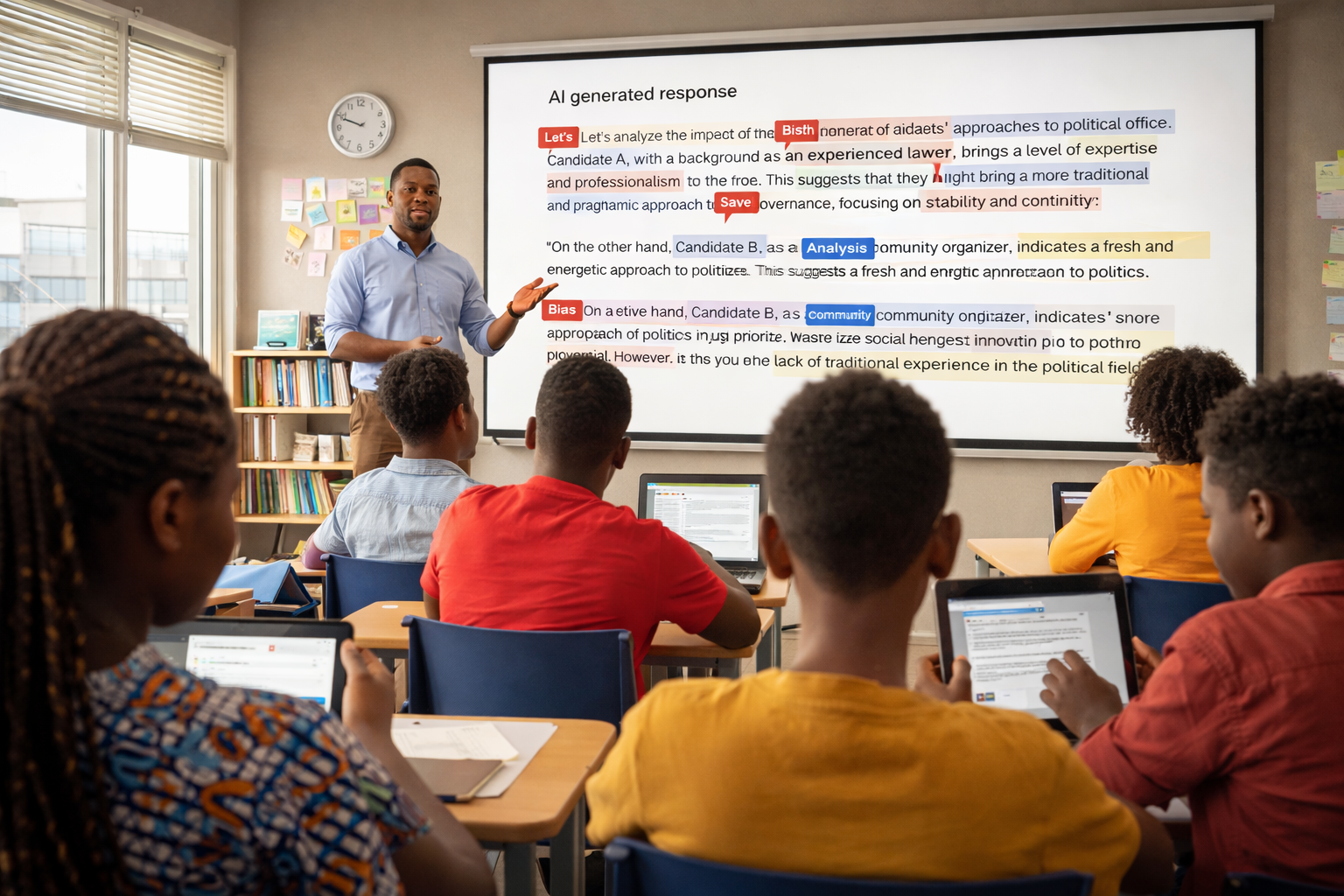
AI systems trained on non-African data may not reflect Nigerian realities. This can lead to biased outcomes, such as:
- Language misunderstandings
- Cultural misrepresentation
- Unfair assessments
Whenever possible, AI tools should be localized and tested with Nigerian learners.
Supporting, Not Replacing, Human Judgment
AI should assist decision-making, not override teachers’ professional judgment. Final decisions about student progress, discipline, or support should remain human-led.
Local Innovation and Homegrown Solutions
One of Nigeria’s greatest strengths is its growing community of tech innovators. Encouraging local participation in educational AI development leads to more relevant solutions.
Benefits of Local AI Development
- Tools better aligned with the Nigerian curriculum
- Support for local languages and contexts
- Lower costs and easier customization
- Opportunities for collaboration between schools and developers
Partnerships between educators, startups, and academic institutions can drive sustainable innovation.
Overcoming Common Challenges
Limited Infrastructure
While infrastructure gaps remain a challenge, gradual implementation helps. Schools can:
- Start with pilot programs
- Share devices where possible
- Combine AI tools with traditional teaching methods
Progress does not need to be immediate to be meaningful.
Resistance to Change
Some educators and parents may be skeptical of AI. Addressing concerns through:
- Transparent communication
- Clear explanations of benefits and limitations
- Demonstrating real classroom value
helps build confidence and acceptance.
The Role of Policy and School Leadership
School leaders and policymakers play a crucial role in scaling effective AI practices.
Key actions include:
- Developing clear guidelines for AI use in schools
- Supporting teacher training initiatives
- Encouraging responsible innovation rather than blanket adoption
Well-defined policies help ensure consistency, fairness, and long-term sustainability.
Preparing Students for the Future
Beyond improving academic outcomes, AI exposure helps students develop important skills such as:
- Digital literacy
- Critical thinking
- Problem-solving
- Ethical awareness of technology
These skills are essential for participation in a technology-driven economy.
Conclusion
Building AI practices that work in Nigerian classrooms requires more than importing foreign technologies. It demands a thoughtful, context-aware approach that prioritizes real educational needs, teacher empowerment, ethical responsibility, and local realities.
When implemented carefully, AI can become a valuable partner in Nigerian education—supporting teachers, empowering students, and improving learning outcomes without losing the human connection at the heart of teaching. By starting small, focusing on practicality, and investing in people as much as technology, Nigerian classrooms can harness AI in ways that are both effective and sustainable.