










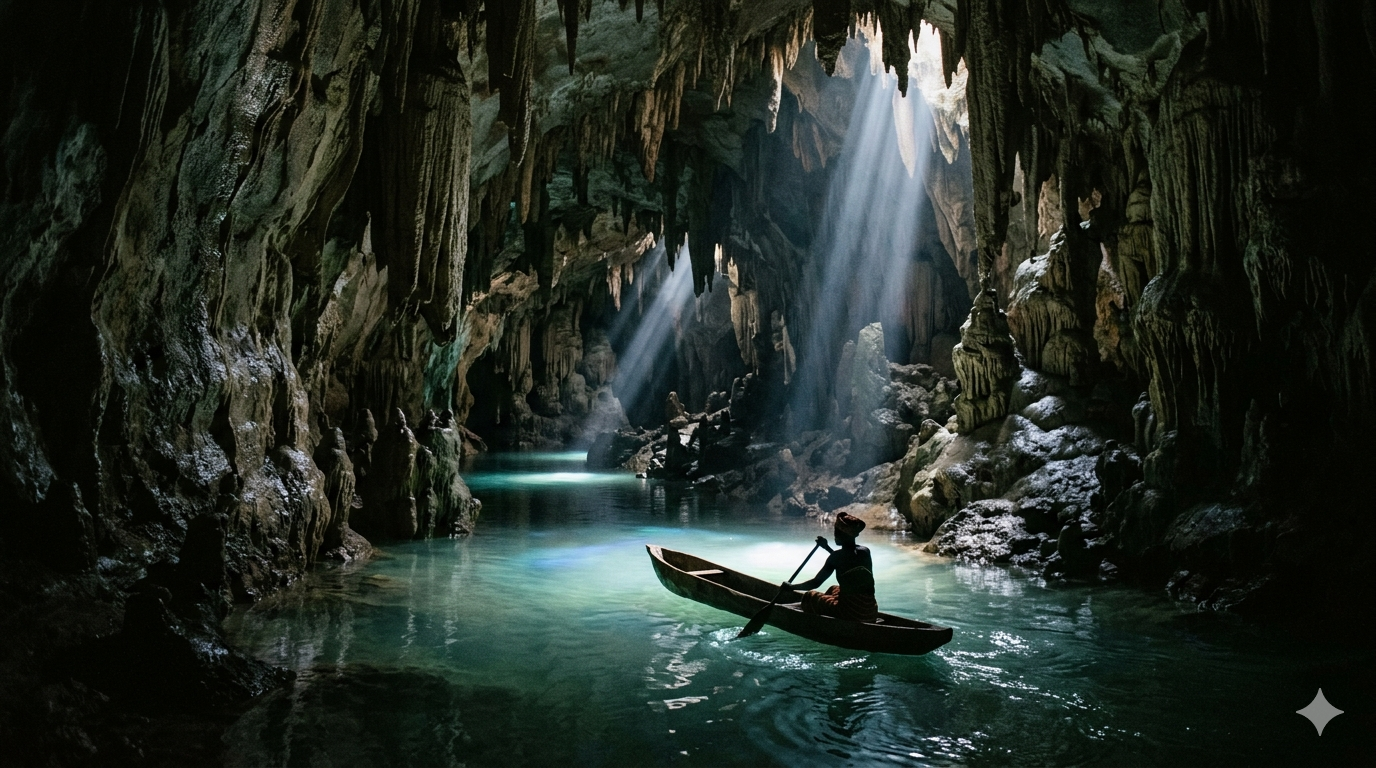
Imagine stepping into a dark cave where the sound of dripping water echoes through massive stone chambers. As your eyes adjust, you notice something unexpected—a river quietly flowing beneath your feet, hidden from the world above.
These are underground rivers—one of Earth’s most fascinating and least understood natural systems.
While most rivers flow openly across landscapes, others travel silently beneath the surface, carving paths through rock over thousands—even millions—of years. These hidden waterways are not only geological wonders but also critical sources of freshwater, biodiversity, and scientific discovery.
In this guide, you’ll explore how underground rivers form, where to find the most remarkable ones, and why they matter more than ever.
What Are Underground Rivers?
An underground river is a natural water flow that moves beneath the Earth’s surface, typically through caves, tunnels, or porous rock systems.
They are most commonly found in karst landscapes—regions where soluble rocks like limestone dissolve over time.
According to geological research, these systems form part of karst aquifers, which supply a significant portion of the world’s drinking water.
Key Characteristics:
- Flow through enclosed cave systems
- Limited or no sunlight exposure
- Often connected to groundwater networks
- May disappear and reappear across distances
Unlike surface rivers, underground rivers are hidden, fragile, and highly sensitive to environmental changes.
How Underground Rivers Form (The Science Explained)
The creation of underground rivers is a slow geological process known as karstification.
1. Chemical Weathering Begins
Rainwater absorbs carbon dioxide from the atmosphere, forming a weak acid called carbonic acid.
This acidic water seeps into the ground and begins dissolving limestone.
2. Cave Systems Develop
Over time, tiny cracks expand into tunnels and caverns—a process studied in speleology (the science of caves).
3. Water Channels Expand
As water continues to flow, it widens these pathways, eventually forming underground streams and rivers.
4. Integration with Aquifers
These rivers often connect to aquifers, underground layers that store and transport freshwater.
According to hydrological studies, karst aquifers provide drinking water to hundreds of millions of people worldwide.
What It Feels Like to Explore an Underground River
Visitors who explore underground rivers often describe the experience as both thrilling and surreal.
- The air is cool and humid
- Light fades quickly into darkness
- The sound of water echoes across stone walls
- Stalactites hang above like natural sculptures
In places like the Puerto Princesa Subterranean River, travelers glide through silent, cathedral-like chambers where the only sound is the paddle cutting through water.
It’s not just sightseeing—it’s stepping into a hidden world beneath the Earth.
Remarkable Underground Rivers Around the World
Here are some of the most fascinating underground rivers, known for their size, beauty, and scientific importance:
Puerto Princesa Subterranean River (Philippines)
A UNESCO World Heritage Site, this river flows through a विशाल limestone cave system before reaching the sea.
Why It’s Unique:
- One of the longest navigable underground rivers
- Rich biodiversity, including bats and cave-dwelling species
- Protected for its ecological significance
Experts recognize it as one of the New 7 Wonders of Nature, highlighting its global importance.
Río Secreto (Mexico)
Located in the Yucatán Peninsula, this underground river is part of an extensive karst network.
Highlights:
- Crystal-clear turquoise water
- Dramatic stalactites and stalagmites
- Carefully managed eco-tourism
Researchers study these cave systems to better understand groundwater flow and environmental preservation.
🇫🇷 Labouiche Underground River (France)
Known as Europe’s longest navigable underground river, Labouiche offers guided boat tours through calm subterranean waters.
Key Features:
- Stable flow and accessible pathways
- Combination of natural cave formations and human adaptation
Sac Actun System (Mexico)
One of the largest underwater cave systems in the world.
Scientific Importance:
- Extends over hundreds of kilometers
- Contains freshwater and saltwater layers
- Has revealed archaeological remains from ancient civilizations
According to exploration studies, this system has provided insight into early human history and climate conditions.
🇺🇸 The Lost River (United States)
This river disappears underground and re-emerges miles away.
What It Demonstrates:
- The dynamic connection between surface and underground water
- How rivers can shift between visible and hidden systems
Why Underground Rivers Matter
Underground rivers are not just geological curiosities—they are essential to life and science.
1. Freshwater Supply
Karst aquifers connected to underground rivers provide drinking water to large populations worldwide, making them critical natural resources.
2. Unique Ecosystems
These environments support specialized species adapted to darkness, known as troglobites.
3. Climate Research
Scientists analyze cave formations and water flow patterns to understand:
- Past climate conditions
- Environmental changes over time
4. Scientific Discovery
Underground rivers have led to discoveries in:
- Geology
- Archaeology
- Hydrology
Can You Visit Underground Rivers?
Yes—many underground rivers are open to visitors through guided tours.
Popular Activities:
- Boat exploration
- Cave walking
- Swimming in controlled environments
Safety Tips:
- Always go with certified guides
- Avoid touching cave formations (they are fragile)
- Follow conservation rules strictly
Responsible tourism helps preserve these ecosystems for future generations.
Challenges and Conservation Concerns
Despite their importance, underground rivers are highly vulnerable.
Major Threats:
- Pollution from surface activities
- Over-extraction of groundwater
- Unregulated tourism
Environmental organizations emphasize that protecting groundwater systems is essential for long-term sustainability.
Underground vs Surface Rivers: Key Differences
| Feature | Surface Rivers | Underground Rivers |
|---|---|---|
| Visibility | Open and visible | Hidden underground |
| Flow Path | Defined channels | Irregular cave systems |
| Light Exposure | Sunlight | Darkness |
| Ecosystem | Diverse | Specialized and fragile |
The Future of Underground River Exploration
Modern technology is transforming how we explore these hidden systems.
New Tools Include:
- 3D cave mapping
- Underwater drones
- Geological scanning
These innovations are helping scientists discover new underground rivers and better understand how they function.
Conclusion
Underground rivers reveal a hidden side of our planet—one that flows silently beneath our feet.
From vast cave systems in the Philippines to disappearing rivers in the United States, these waterways are:
- Scientifically valuable
- Environmentally critical
- Visually breathtaking
As research and exploration continue, one thing is clear:
Protecting underground rivers isn’t just about preserving natural beauty—it’s about safeguarding one of Earth’s most important and fragile water systems.