







Science is everywhere, so what’s science definition? It is in the food we eat, the air we breathe, the phones we use, and even the games children play. Yet many kids (and even adults) ask a very important question: What is science?
In this blog post, we will explain the science definition for kids in a simple, clear, and fun way. We’ll also explore why science matters, how scientists work, and how children use science every day—often without realizing it.
This article is designed to help kids understand science, while also supporting parents and teachers with accurate, up-to-date educational ideas.
What Is Science? (Simple Science Definition for Kids)
The simplest science definition for kids is this:
Science is the study of the world around us and how things work.
Science helps us learn about:
- Plants and animals
- The human body
- Space and planets
- Weather and climate
- Energy and electricity
- Technology and machines
In science, we ask questions, observe carefully, test ideas, and learn from what happens.
Why Is Science Important for Kids?
Science is important because it helps children:
- Understand how the world works
- Ask questions and think critically
- Solve problems
- Make smart decisions
- Become curious learners
Modern education research shows that children who learn science early develop stronger thinking, reasoning, and problem-solving skills. These skills are useful not only in school, but also in everyday life.
Science also prepares kids for future careers in:
- Medicine
- Engineering
- Technology
- Environmental science
- Space exploration
Science Is About Asking Questions
One of the most important parts of the science definition is asking questions.
Kids are natural scientists because they often ask:
- Why is the sky blue?
- Why do plants need water?
- How do birds fly?
- What makes rain fall?
In science, asking questions is encouraged. Scientists believe that every great discovery starts with curiosity.
What Do Scientists Do? (Explained for Kids)
Scientists are people who study science. They don’t just read books—they explore, test, and discover.
Here’s what scientists usually do:
- Ask a question
Example: Why do plants grow toward sunlight? - Observe carefully
They watch what happens and take notes. - Make a guess (hypothesis)
A hypothesis is a smart guess based on what they already know. - Do experiments
They test their ideas to see if they are correct. - Learn from results
Even if the experiment doesn’t work, scientists still learn something new.
This step-by-step process is called the scientific method.
The Scientific Method (Kid-Friendly Explanation)
The scientific method is a simple way to do science. It helps kids think clearly and solve problems.
Steps of the Scientific Method:
- Ask a question
- Make a guess
- Test the guess
- Look at the results
- Share what you learned
Schools around the world use this method because research shows it helps children understand science better and remember what they learn.
Different Types of Science (Made Simple for Kids)
Science is a big subject, but it can be divided into smaller parts. Here are the main types explained simply:
1. Life Science
This part of science studies living things.
It includes:
- Plants
- Animals
- Humans
- Microorganisms
Kids learn about:
- How plants grow
- How animals live
- How the human body works
2. Physical Science
This type of science studies non-living things.
It includes:
- Matter (solids, liquids, gases)
- Energy
- Motion
- Light and sound
Examples:
- Why ice melts
- How magnets work
- How toys move
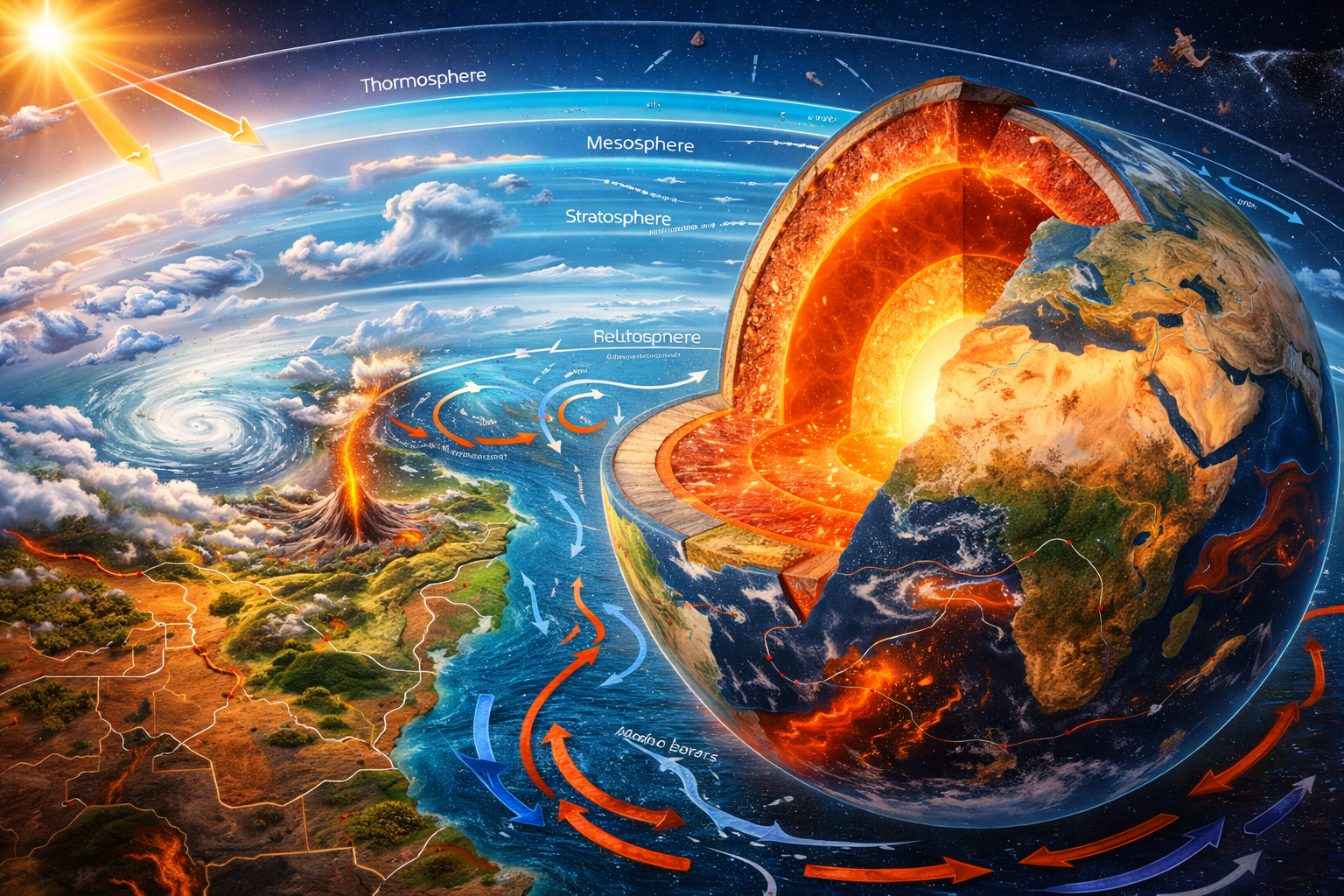
3. Earth and Space Science
This science studies the Earth and the universe.
It includes:
- Weather
- Rocks and soil
- Oceans
- Planets, stars, and the moon
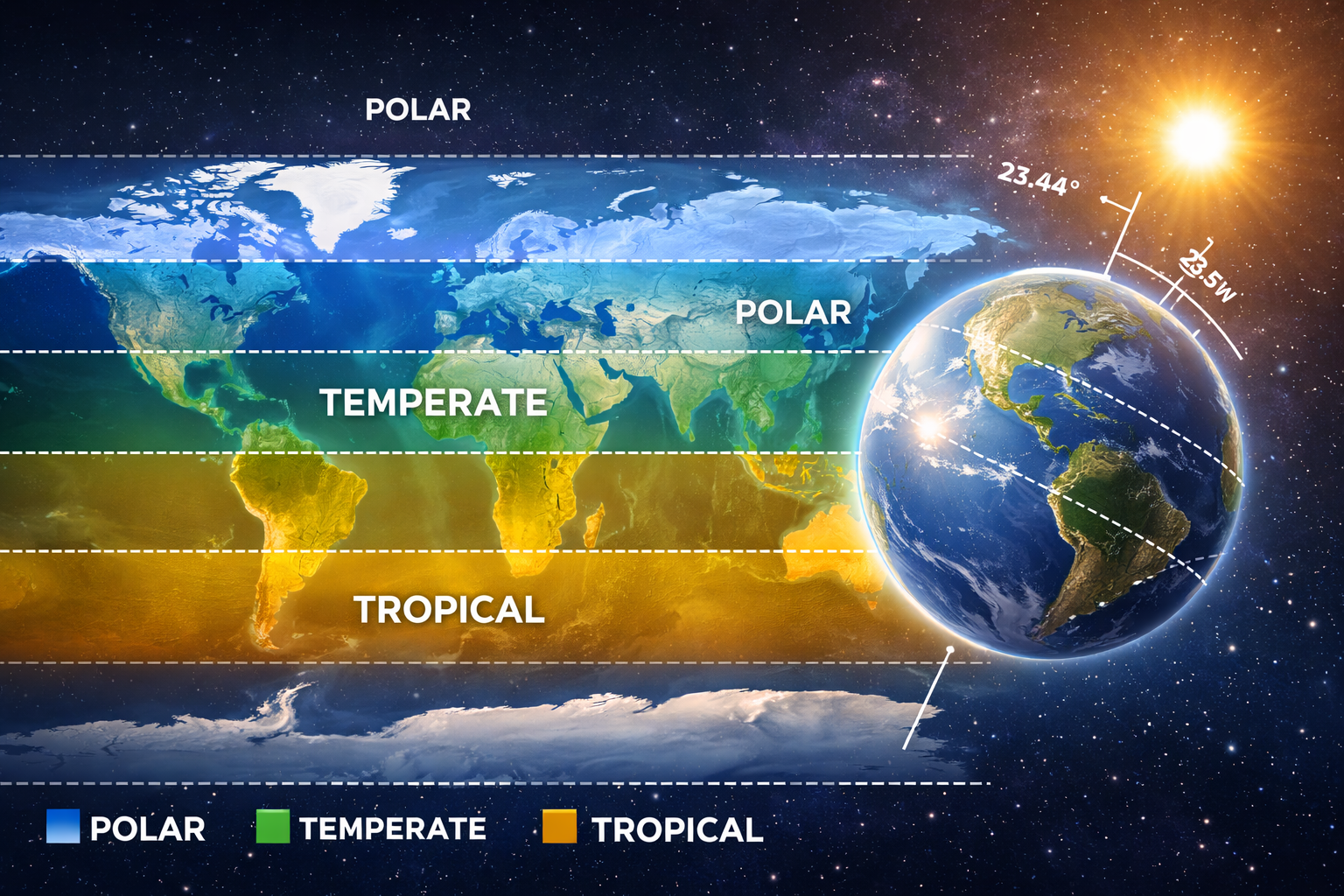
Kids learn why it rains, how volcanoes erupt, and what makes day and night.
Science in Everyday Life (For Kids)
Science is not only in classrooms or laboratories. Kids use science every day without knowing it.
Examples include:
- Cooking food (mixing and heating)
- Riding a bicycle (balance and motion)
- Using a phone or tablet (technology)
- Playing sports (energy and force)
- Growing plants (life science)
Understanding the science definition helps kids realize that science is part of daily life.
Why Science Is Fun for Kids
Science is fun because it:
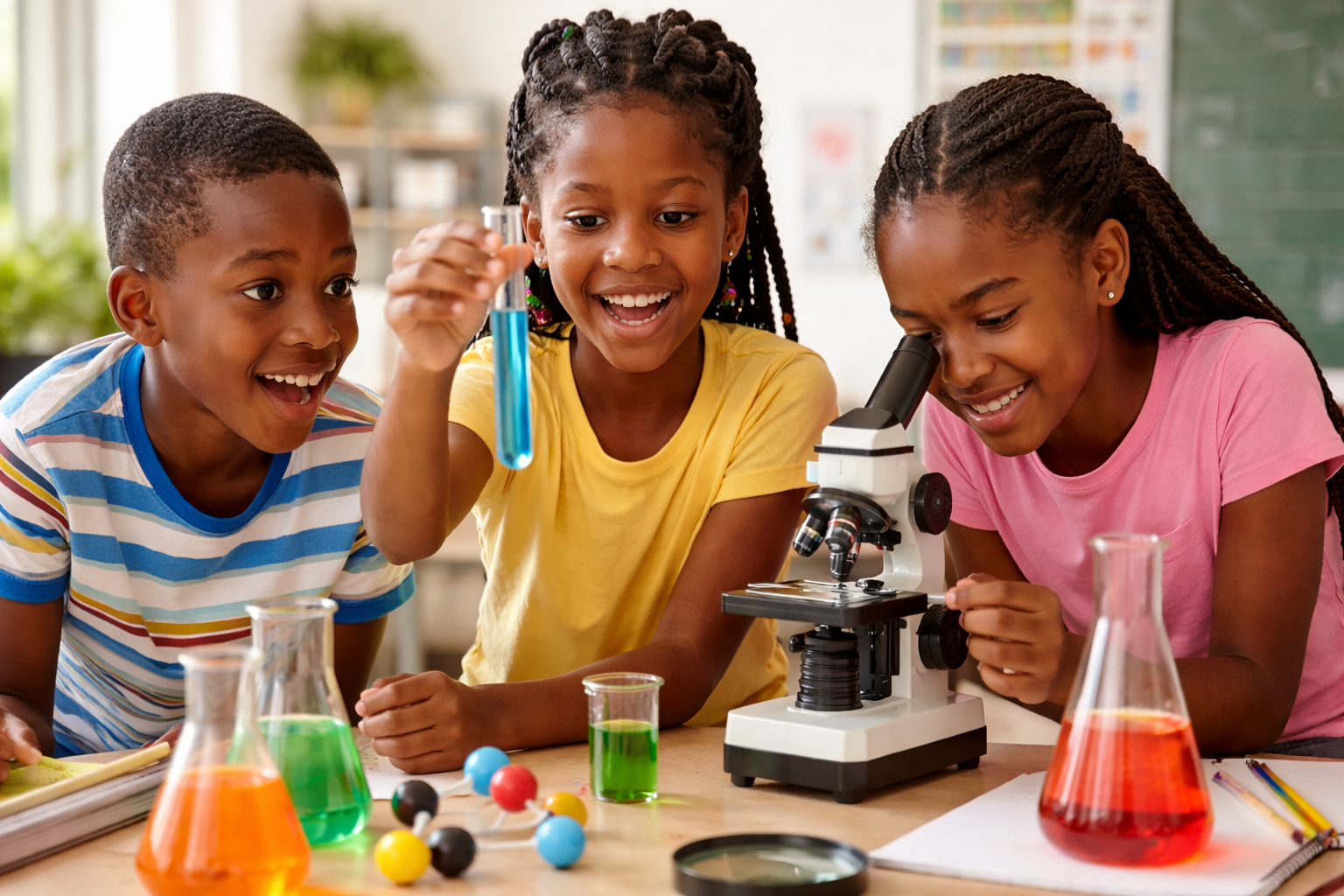
- Involves experiments
- Encourages curiosity
- Allows hands-on learning
- Makes kids feel like explorers
Recent education studies show that children learn science best through:
- Experiments
- Games
- Visual examples
- Group activities
That’s why modern science teaching focuses more on doing science instead of memorizing facts.
Simple Science Experiments Kids Can Try
Here are a few safe and easy experiments that explain the science definition in action:
1. Water and Oil Experiment
Mix water and oil in a clear cup.
👉 Kids learn that some liquids do not mix.
2. Growing a Bean Plant
Plant a bean and water it daily.
👉 Kids learn how plants grow.
3. Magnet Test
Test what objects stick to a magnet.
👉 Kids learn about magnetism.
These activities help children understand science by seeing it happen.
How Schools Teach Science Today
Modern science education has changed a lot in recent years.
Latest educational research shows that schools now focus on:
- Inquiry-based learning
- Hands-on experiments
- Critical thinking
- Problem-solving skills
Instead of just memorizing definitions, kids are encouraged to:
- Explore
- Ask questions
- Explain their thinking
This approach helps children truly understand the science definition rather than just repeating it.
Science and Technology: How They Work Together
Science and technology are closely connected.
- Science helps us understand the world
- Technology uses scientific knowledge to create tools
For example:
- Science explains electricity
- Technology uses electricity to power devices
Teaching kids both science and technology prepares them for the digital world they are growing up in.
Common Myths About Science for Kids
Science is hard
✅ Science is about curiosity, not difficulty.
Only smart kids can do science
✅ Every child can learn science.
Science is only for adults
✅ Kids are natural scientists.
Modern research shows that early exposure to science builds confidence and interest that lasts into adulthood.
How Parents Can Support Science Learning at Home
Parents play an important role in helping kids understand science.
You can:
- Encourage questions
- Watch nature together
- Try simple experiments
- Visit science museums
- Read science books for kids
Studies show that children who receive encouragement at home perform better in science at school.
Simple Science Definition for Different Age Groups
For Young Kids (Ages 5–7):
Science is learning about plants, animals, and things around us.
For Middle Kids (Ages 8–10):
Science is finding out how the world works by asking questions and doing experiments.
For Older Kids (Ages 11–13):
Science is the study of the natural world using observation, experiments, and evidence.
Why Learning Science Early Matters
Research from global education organizations shows that children who learn science early:
- Develop stronger thinking skills
- Perform better in math and reading
- Are more confident problem-solvers
- Are better prepared for future careers
Science education is no longer optional—it is essential.
Conclusion: Science Is Learning About Life
So, what is the best science definition for kids?
Science is a way of learning about the world by asking questions, observing carefully, and discovering new things.
Science helps children understand how life works, how to solve problems, and how to think creatively. Whether at school, at home, or outside, science is always happening.
By helping kids understand science in a simple and fun way, we prepare them to become curious learners, smart thinkers, and future innovators.
Good day! Do you know if they make any plugins to assist with Search
Engine Optimization? I’m trying to get my blog to rank for some targeted keywords but I’m not seeing very
good gains. If you know of any please share. Many thanks!
Yes I do. I use Yoast SEO plugin, there is also Rankmath SEO plugin, and all in one SEO plugin. Search for these plugins and install on your site, it will help.