







Artificial Intelligence (AI) is no longer a futuristic concept reserved for science fiction. It is already embedded in our daily lives—often in ways we don’t even notice. From unlocking smartphones with facial recognition to receiving movie recommendations, AI is quietly transforming how we live, work, and interact with the world.
Yet, despite its growing presence, many people still ask an important question: How does AI work in real life? Understanding AI work beyond buzzwords is essential, especially as AI continues to reshape industries, education, healthcare, and economies.
This article breaks down how AI works in real-world applications, explains the core technologies behind it, and highlights recent research that shows why AI has become such a powerful tool in modern society.
What Is Artificial Intelligence (AI)?
Artificial Intelligence refers to computer systems designed to perform tasks that typically require human intelligence. These tasks include:
- Learning from data
- Recognizing patterns
- Understanding language
- Making decisions
- Solving problems
- Predicting outcomes
In simple terms, AI work happens when machines use data, algorithms, and computing power to mimic human thinking and behavior—often faster and at a larger scale.
How AI Work Happens: The Core Building Blocks
To understand how AI works in real life, it’s important to first understand its key components.
1. Data: The Foundation of AI Work
Data is the fuel that powers AI. Without data, AI cannot learn or improve.
AI systems rely on:
- Text (emails, documents, social media posts)
- Images and videos
- Audio and speech
- Numbers and statistics
- Sensor and behavioral data
According to recent industry research, over 90% of the world’s data has been created in just the last few years, providing massive learning material for AI systems.
2. Algorithms: The Brain Behind AI Work
Algorithms are sets of instructions that tell AI systems how to process data and make decisions.
Different types of algorithms power different kinds of AI work:
- Classification algorithms (to sort data)
- Regression algorithms (to predict values)
- Clustering algorithms (to find patterns)
- Optimization algorithms (to make decisions efficiently)
These algorithms allow AI to recognize relationships and patterns that humans might miss.
3. Machine Learning: Teaching AI to Learn
Machine Learning (ML) is a subset of AI where systems learn from data instead of being explicitly programmed.
There are three main types:
Supervised Learning
AI learns from labeled data (e.g., spam vs non-spam emails).
Unsupervised Learning
AI finds hidden patterns in unlabeled data (e.g., customer behavior segmentation).
Reinforcement Learning
AI learns through trial and error, improving through rewards (used in robotics and gaming).
Most real-life AI work today relies heavily on machine learning models.
4. Neural Networks and Deep Learning
Deep Learning uses neural networks inspired by the human brain. These networks contain layers of connected nodes that process information step by step.
Deep learning powers advanced AI work such as:
- Image recognition
- Speech recognition
- Language translation
- Autonomous driving
Recent studies show that deep learning models now outperform humans in tasks like image classification and medical image analysis.
How AI Works in Real Life: Everyday Examples
Let’s explore how AI work shows up in real-world scenarios.
1. AI Work in Smartphones and Apps
Your smartphone is one of the best examples of AI in action.
Examples
- Face and fingerprint recognition
- Voice assistants like Siri and Google Assistant
- Predictive text and autocorrect
- Camera enhancements and image processing
AI analyzes user behavior and adapts responses over time, making devices smarter the more they are used.
2. AI Work in Healthcare
Healthcare is one of the fastest-growing areas for AI application.
Real-Life AI Work in Healthcare
- Medical image analysis for early disease detection
- AI-assisted diagnosis and decision support
- Predicting patient risks and outcomes
- Drug discovery and research acceleration
- Virtual health assistants and chatbots
Recent research shows that AI systems can detect certain cancers and eye diseases as accurately—or even more accurately—than human specialists, helping doctors make faster and more informed decisions.
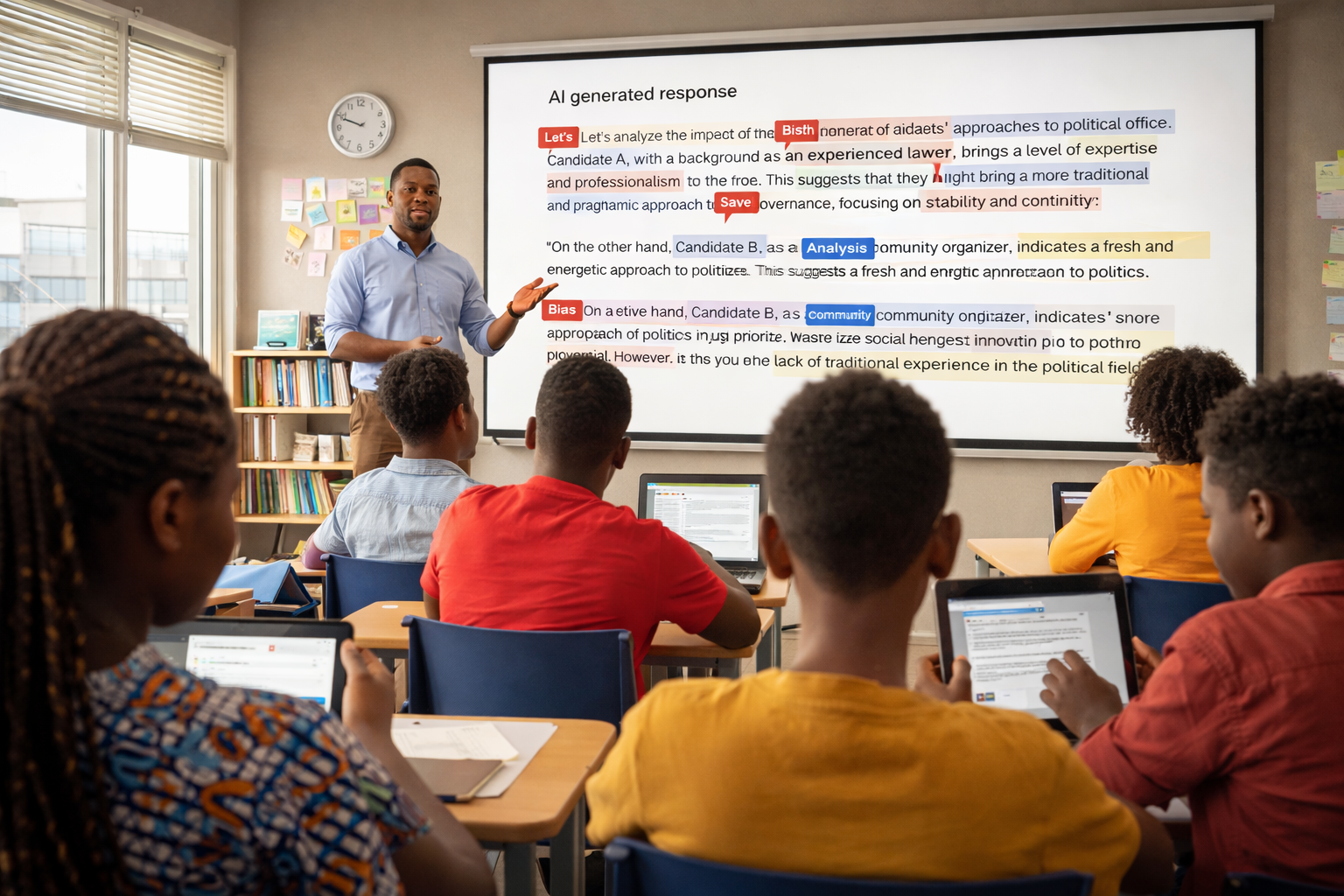
3. AI Work in Education
AI is changing how students learn and how teachers teach.
Applications
- Personalized learning platforms
- Intelligent tutoring systems
- Automated grading and feedback
- Student performance prediction
- Adaptive learning content
AI-powered tools analyze learning patterns and adjust lessons to individual student needs, improving engagement and outcomes.
4. AI Work in Business and Marketing
Businesses use AI to improve efficiency, decision-making, and customer experience.
Examples of AI Work in Business
- Chatbots and customer support automation
- Recommendation engines (Amazon, Netflix)
- Sales forecasting and demand prediction
- Fraud detection
- Customer behavior analysis
According to recent global reports, companies that adopt AI see significant improvements in productivity, revenue growth, and operational efficiency.
5. AI Work in Transportation and Navigation
AI plays a critical role in modern transportation systems.
Examples
- GPS and traffic prediction
- Ride-hailing platforms
- Autonomous and semi-autonomous vehicles
- Fleet management systems
- Logistics and route optimization
AI analyzes real-time data from millions of users to predict traffic patterns and optimize travel routes.
6. AI Work in Finance and Banking
Financial institutions rely heavily on AI for accuracy and security.
Applications
- Fraud detection and prevention
- Credit scoring and risk assessment
- Algorithmic trading
- Personalized financial advice
- Anti-money laundering systems
Recent studies show that AI-driven fraud detection systems can identify suspicious activity much faster than traditional rule-based systems.
7. AI Work in Agriculture
AI is also transforming agriculture and food production.
Real-Life Uses
- Crop disease detection
- Soil and weather analysis
- Precision farming
- Yield prediction
- Automated irrigation systems
AI-powered farming helps increase productivity while reducing resource waste.
How AI Makes Decisions in Real Life
AI does not “think” like humans. Instead, AI work involves:
- Data input
- Pattern recognition
- Probability calculations
- Prediction or classification
- Continuous learning and improvement
AI decisions are based on mathematical models, not emotions or intuition.
Recent Research on How AI Work Is Evolving
Recent global research highlights key trends in AI work:
- AI adoption is accelerating across healthcare, education, finance, and manufacturing.
- Generative AI tools are expanding AI’s role in creativity, writing, and design.
- AI systems are becoming more explainable, ethical, and transparent.
- Governments and organizations are developing regulations to guide responsible AI use.
According to recent industry reports, AI could contribute trillions of dollars to the global economy annually by improving productivity and innovation.
Challenges and Limitations of AI Work
Despite its power, AI has limitations.
Key Challenges
- Data bias and fairness
- Privacy and data security
- Lack of transparency (“black box” models)
- High energy consumption
- Ethical and regulatory concerns
These challenges highlight the need for responsible AI development and human oversight.
AI Work and the Future of Jobs
AI will not replace all jobs—but it will change how work is done.
What AI Will Do
- Automate repetitive tasks
- Assist professionals in decision-making
- Create new job roles in AI development, ethics, and management
What Humans Will Still Do Best
- Creativity
- Emotional intelligence
- Leadership
- Ethical judgment
- Complex problem-solving
Research suggests that humans who learn to work with AI will be more valuable than those who ignore it.
How Humans and AI Work Together
The most effective real-life AI work happens through human-AI collaboration.
Examples include:
- Doctors using AI for diagnosis support
- Teachers using AI for personalized instruction
- Journalists using AI for research assistance
- Engineers using AI for design optimization
AI enhances human capability rather than replacing it entirely.
Is AI Safe in Real Life?
AI safety depends on:
- Quality of data
- Ethical design
- Transparency
- Regulation
- Human supervision
Global organizations and governments are actively working on frameworks to ensure AI is used responsibly and safely.
Conclusion: How AI Work Shapes Real Life
So, how does AI work in real life?
AI works by:
- Learning from vast amounts of data
- Identifying patterns
- Making predictions and decisions
- Improving continuously over time
From healthcare and education to business and everyday technology, AI work is deeply woven into modern life. While challenges remain, AI’s potential to improve efficiency, accuracy, and innovation is undeniable.
Understanding how AI works is no longer optional—it is essential for navigating the future of work, education, and society.
Final Thought
AI is not here to replace humanity.
It is here to extend human potential.