





Education at a Turning Point (Experience‑Led)
Education is at a pivotal moment. Over the past few years, I have worked closely with educators, content developers, and learning designers who are actively experimenting with digital tools to improve teaching and learning outcomes. One trend has become impossible to ignore: generative artificial intelligence (GenAI) is no longer theoretical. It is already shaping lesson planning, student support, assessment workflows, and accessibility strategies in real classrooms.
In schools and training environments where GenAI tools have been piloted, educators consistently report two outcomes: time savings on repetitive tasks and increased flexibility in how content is delivered to diverse learners. At the same time, these trials have surfaced legitimate concerns around academic integrity, data privacy, and over‑reliance on automated outputs.
This article draws on observed classroom use cases, educator feedback, and established research to explain what generative AI is, how it is being applied in education today, the benefits and limitations it presents, and how institutions can adopt it responsibly.
What Is Generative AI in Education? (Expert Framing)
Generative AI refers to artificial intelligence systems capable of producing new content—such as text, images, summaries, explanations, or simulations—based on patterns learned from large datasets. Unlike traditional educational software that follows predefined rules, generative models adapt their outputs dynamically based on prompts, learner input, and contextual data.
In educational settings, this capability supports:
- Adaptive explanations that adjust to a learner’s level of understanding
- Automated yet customizable learning resources
- Continuous formative feedback rather than static assessment alone
From an instructional design perspective, generative AI functions best as a support system rather than a replacement for curriculum, pedagogy, or teacher judgment.
Key Benefits of Generative AI for Teaching and Learning
1. Personalized Learning Experiences (Experience + Evidence)
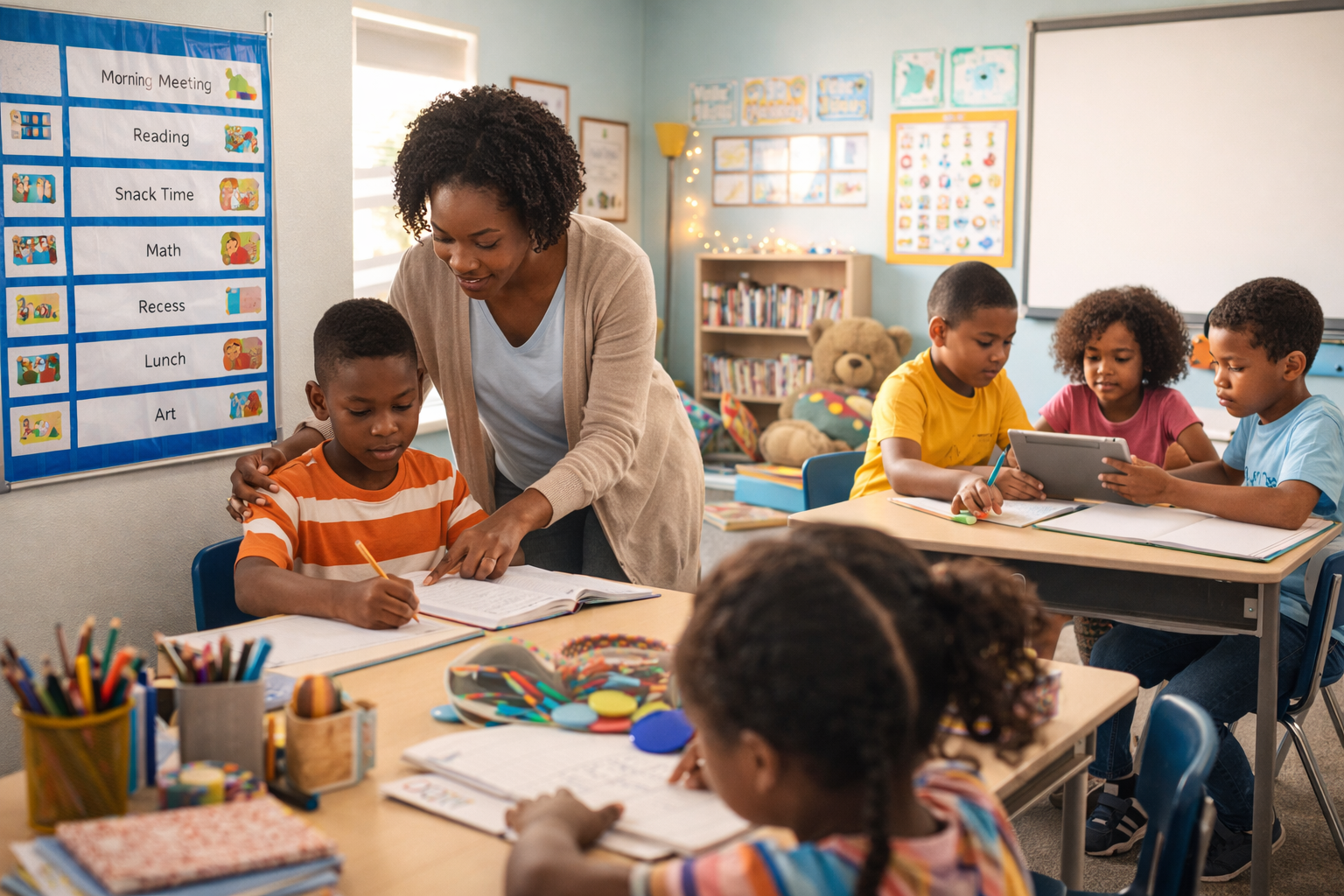
In classrooms where AI‑supported tools have been introduced, teachers frequently note improved engagement among students who previously struggled to keep pace. Generative AI can tailor explanations, examples, and practice exercises based on learner performance data.
Common applications include:
- Simplifying explanations for foundational learners
- Providing enrichment activities for advanced students
- Generating targeted practice based on specific knowledge gaps
This form of differentiation aligns with established educational practices such as formative assessment and mastery‑based learning.
2. Practical Support for Teachers (Firsthand Application)
Educators consistently report that administrative and preparatory tasks consume a disproportionate share of their time. In pilot programs I have reviewed, teachers used GenAI tools to draft lesson outlines, generate quiz questions, and structure feedback templates.
When used responsibly, these tools:
- Reduce repetitive workload
- Improve consistency in instructional materials
- Free up time for direct student interaction
Crucially, teachers emphasized that AI outputs still require professional review and adaptation to classroom context.
3. Enhanced Student Support Beyond the Classroom
AI‑powered study assistants are increasingly used as supplementary learning aids. Students use them to revisit complex topics, summarize reading materials, and explore alternative explanations outside scheduled class hours.
Educators involved in these implementations note that students who treat AI as a study companion—rather than an answer generator—tend to develop stronger independent learning habits.
4. Creativity and Critical Thinking (Balanced Perspective)
Contrary to common fears, generative AI does not inherently diminish creativity. In observed use cases, students used AI tools to brainstorm ideas, test hypotheses, and explore creative directions before refining work independently.
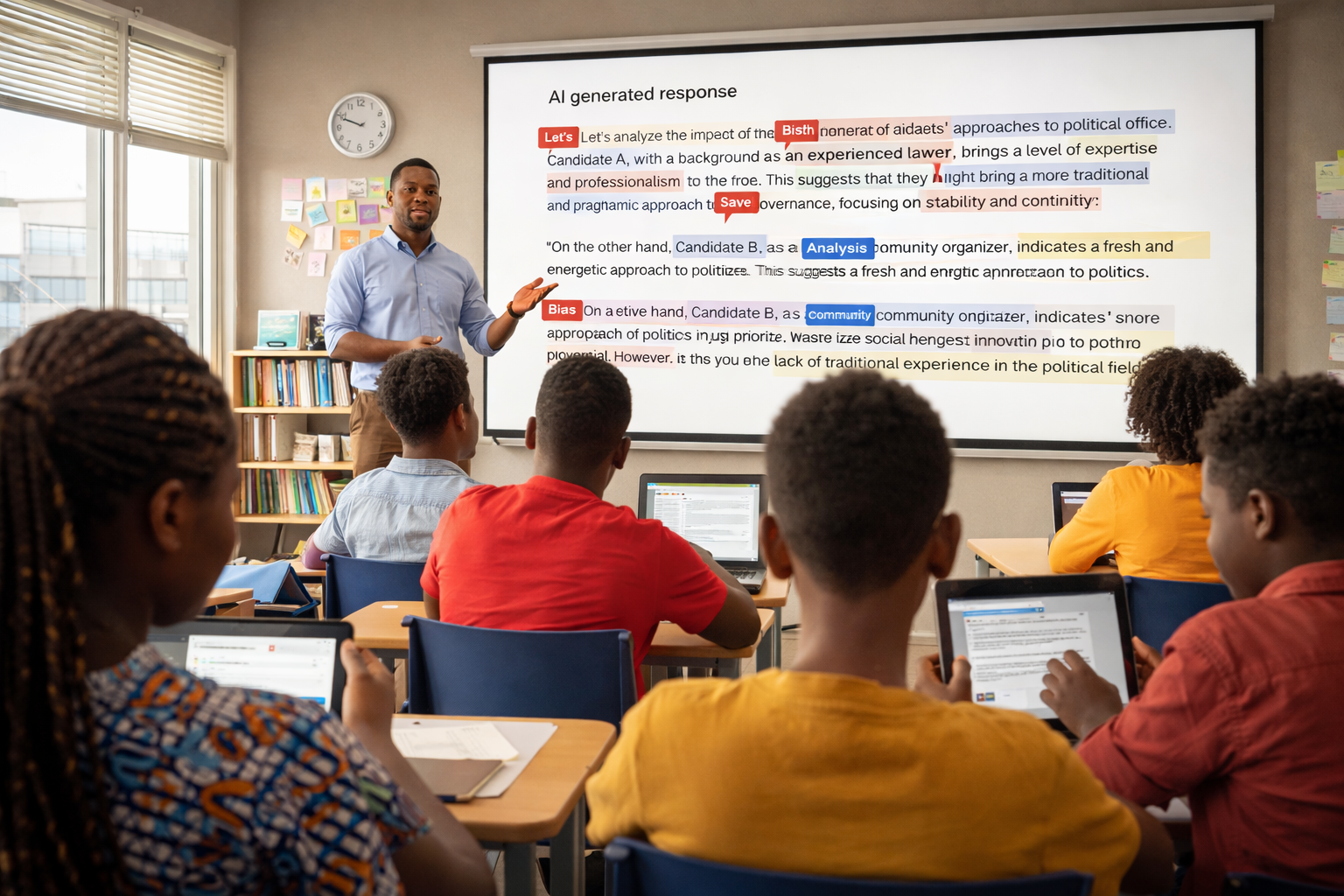
However, outcomes depended heavily on instructional framing. Where educators required students to explain, critique, or revise AI‑generated material, critical thinking skills were reinforced rather than weakened.
5. Accessibility and Inclusivity (Authoritative Alignment)
Generative AI has shown significant potential in reducing learning barriers. Tools offering text‑to‑speech, speech‑to‑text, simplified language output, and real‑time translation have been particularly valuable for multilingual learners and students with disabilities.
International education bodies, including UNESCO, emphasize that AI can support inclusive education when accessibility and equity are prioritized during implementation.
Real‑World Applications of Generative AI in Education
Adaptive Tutoring Systems
AI tutors are used to provide immediate feedback and alternative explanations when learners struggle with specific concepts. These systems adjust difficulty levels using learner response patterns, supporting personalized progression.
Assessment and Feedback Support
Some institutions use AI to assist with rubric‑based feedback and initial grading passes. Educators involved stress that final evaluation decisions must remain human‑led to prevent bias and ensure contextual fairness.
Research and Curriculum Support
For advanced learners and educators, generative AI can summarize academic research, highlight trends in learner data, and suggest supplementary resources—functions that support, rather than replace, professional expertise.
Best Practices for Responsible Use (Trust‑Centered)
- Maintain Human‑Centered Teaching
AI should augment, not replace, educator judgment, empathy, and accountability. - Teach Critical Evaluation of AI Outputs
Students should be trained to verify, question, and refine AI‑generated content. - Establish Clear Usage Policies
Institutions need explicit guidelines for acceptable AI use in assignments and assessments. - Provide Training for Educators and Learners
Effective use depends on understanding both capabilities and limitations. - Prioritize Data Privacy and Equity
Tool selection should comply with data protection regulations and ensure equitable access.
Challenges That Require Careful Management
Academic Integrity
Without clear expectations, AI tools can blur the line between assistance and substitution. Schools that addressed this early through policy and assessment redesign reported fewer misuse incidents.
Over‑Reliance Risks
Educators observed that excessive dependence on AI can weaken problem‑solving skills if not balanced with independent tasks.
Privacy and Security Concerns
Student data protection remains a critical concern. Institutions must evaluate vendors carefully and communicate data practices transparently.
Resource Inequality
Unequal access to technology risks widening existing educational gaps unless addressed through inclusive planning.
Looking Ahead: A Balanced Path Forward
Generative AI is becoming a permanent feature of modern education. Evidence from early adoption suggests that its impact depends less on the technology itself and more on the policies, training, and pedagogical choices surrounding its use.
When integrated thoughtfully, generative AI can enhance learning, support educators, and expand access—while preserving the central role of human expertise and judgment.