




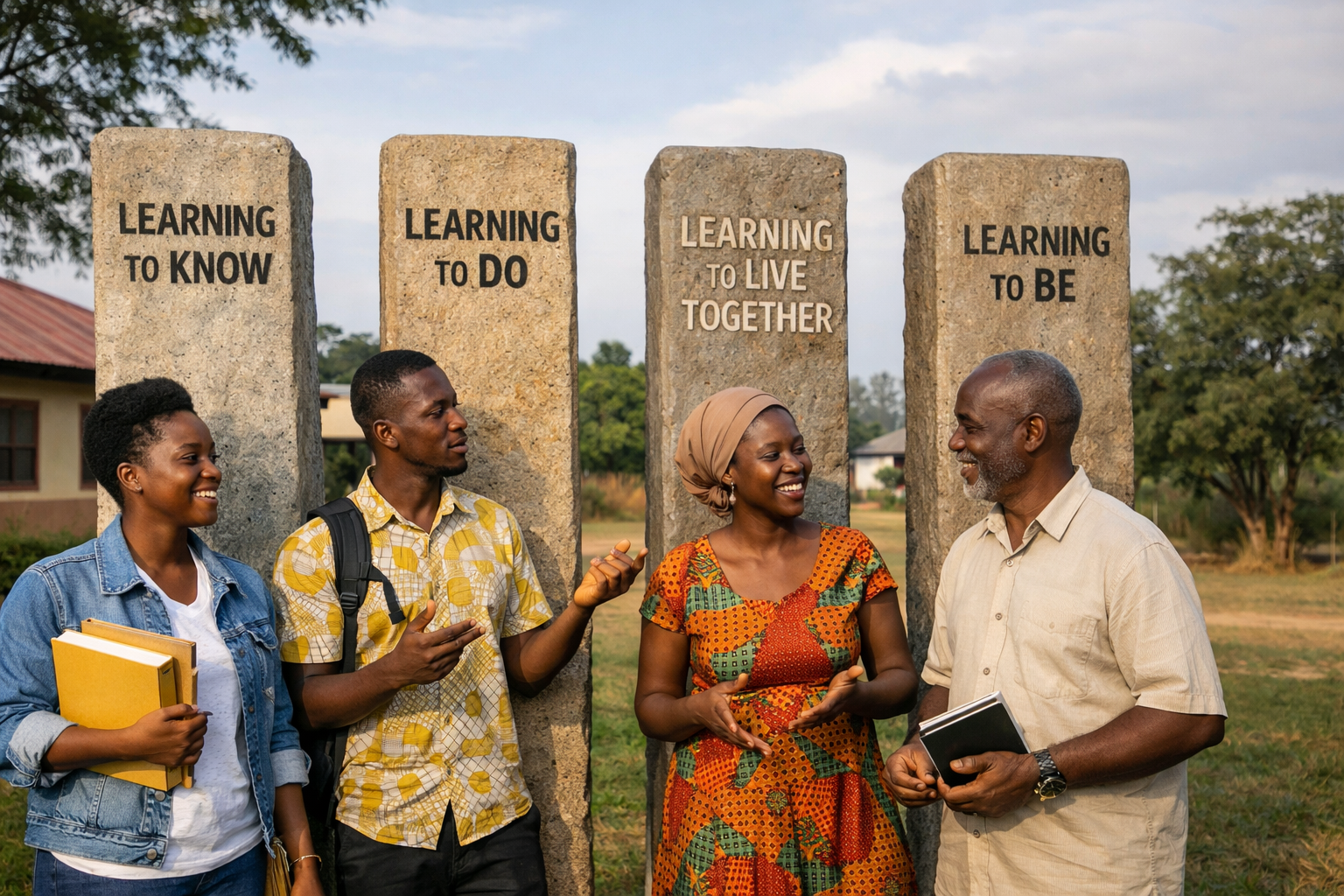
In today’s rapidly changing world, education goes far beyond memorizing facts or preparing for exams. It shapes how we think, act, and interact—not just as individuals, but as members of diverse communities and contributors to society. A visionary framework proposed by global educational leaders reimagines what meaningful learning looks like in the 21st century. This framework identifies four essential dimensions that every education system should nurture. These dimensions, when taken together, form the foundation of lifelong learning that prepares individuals for both personal fulfillment and collective well-being.
Why Rethink Education Today?
Traditional education often emphasizes memorizing information and passing standardized tests. While knowledge certainly has value, this approach alone is no longer sufficient in a world defined by global interconnectedness, technological disruption, and social complexity.
Learners now need more than facts—they need skills that help them solve problems, collaborate across cultures, and adapt to new challenges. Education should also support character development, creativity, and a sense of shared humanity. This broader view of education helps individuals grow holistically and prepares societies for sustainable development.
The Four Pillars of Education: A Modern Framework for Lifelong Learning
Rather than focusing narrowly on academic achievement, this approach conceives education as an integrated experience with four interrelated dimensions. These pillars help individuals flourish in diverse areas of life—intellectual, practical, social, and personal.
1. Learning to Know: Building Deep Understanding
At its core, learning to know is about cultivating curiosity and the ability to think critically. It goes beyond memorizing facts to help learners understand how to learn, explore ideas deeply, and make meaningful connections.
- Encourages curiosity, reflection, and lifelong inquiry
- Combines broad general knowledge with deeper study in specific areas
- Develops cognitive skills like analysis, evaluation, and synthesis
This pillar lays the intellectual foundation that enables individuals to continue learning throughout their lives, whether in formal education, work, or everyday experiences. (Thot Cursus)
2. Learning to Do: Turning Knowledge into Action
Learning to do focuses on practical competence—transforming knowledge into real-world performance. It encompasses both technical skills and broader capabilities such as problem-solving, teamwork, and adaptability.
- Emphasizes skill development and practical application
- Builds capacity to navigate new situations and work collaboratively
- Prepares individuals for varied careers and life roles
In a world where automation and innovation are reshaping work, this pillar ensures learners are ready not just to know, but to act effectively.
3. Learning to Live Together: Fostering Empathy and Cooperation
Education isn’t confined to individual achievement—it’s fundamentally social. Learning to live together nurtures skills for peaceful coexistence, mutual respect, and shared problem-solving.
- Promotes understanding across cultural and social differences
- Encourages conflict resolution, empathy, and cooperation
- Reinforces the value of pluralism and collective wellbeing
By helping learners appreciate diverse perspectives and work effectively with others, this pillar supports more harmonious communities and a deeper sense of global citizenship.
4. Learning to Be: Nurturing the Whole Person
Perhaps the most personal of the four pillars, learning to be centers on self-development. It helps individuals become autonomous, reflective, and responsible.
- Cultivates self-awareness, confidence, and ethical judgment
- Encourages creative expression and personal growth
- Supports independence and lifelong self-improvement
This pillar recognizes that education should help people discover their potential and shape their own lives—not just succeed academically or professionally.
How the Four Pillars Work Together
These four dimensions are not separate subjects; they interact and reinforce each other:
- Knowledge fuels action: Deep understanding enhances practical skill application.
- Action builds empathy: Working with others strengthens social awareness and cooperation.
- Reflection enriches learning: Personal insight improves learning effectiveness and life choices.
Together, these pillars foster a holistic educational experience that prepares learners to thrive in complexity, contribute meaningfully to society, and lead fulfilling lives.
Practical Examples: What This Looks Like in Real Life
To make these ideas concrete, here’s how the four pillars play out in everyday learning settings:
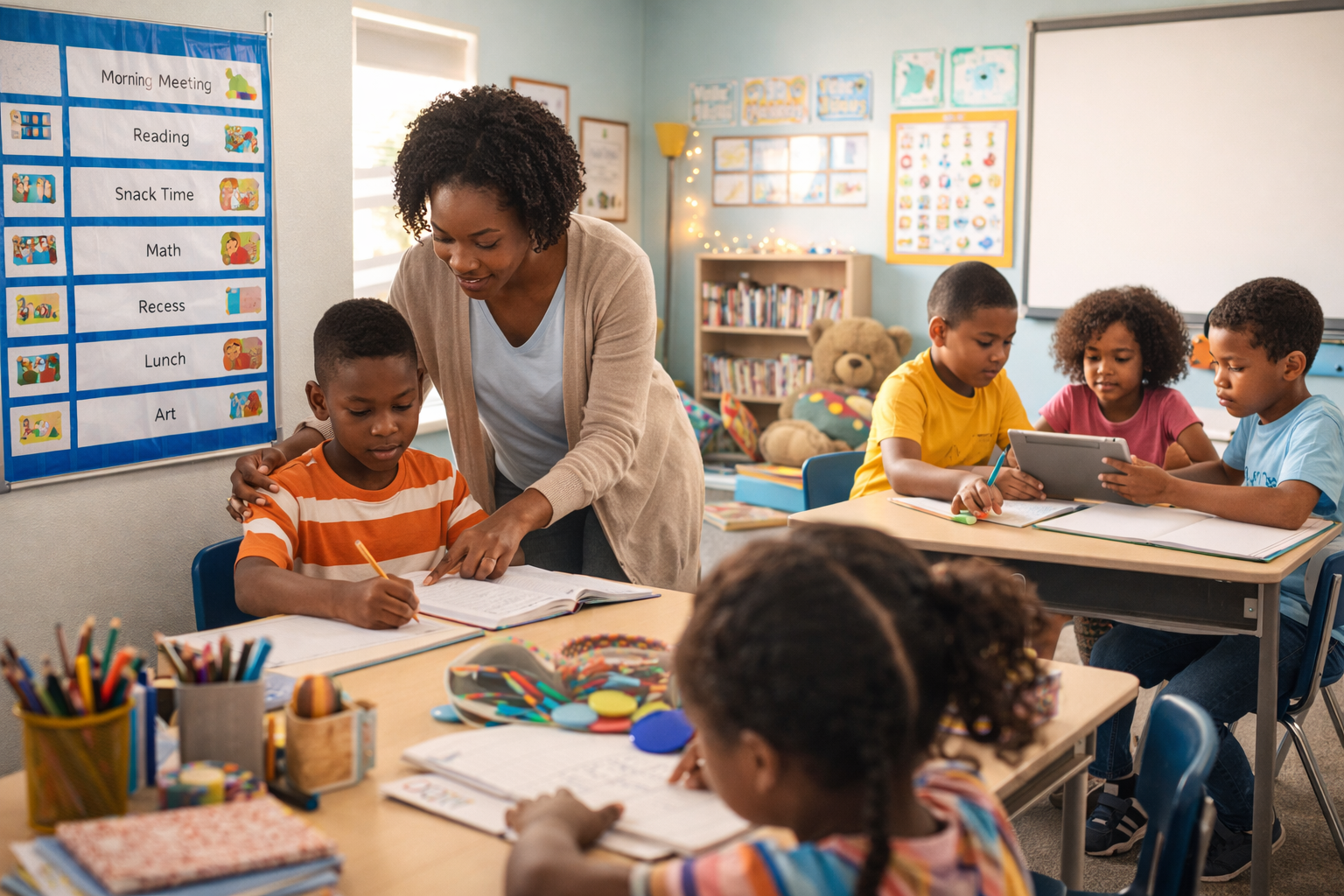
In a Classroom
- Learning to Know: Students engage in project-based learning that requires critical inquiry and research.
- Learning to Do: They collaborate on real problems—like designing a sustainable garden—applying both knowledge and practical skills.
In Community Projects
- Learning to Live Together: Youth work with diverse partners to clean public spaces, learning communication and teamwork.
- Learning to Be: Reflection sessions help participants relate the experience to their values and goals.
In Workplace Training
- Learning to Know: Employees access online courses to deepen digital literacy.
- Learning to Do: Simulated scenarios help them apply new skills in a safe environment.
Why These Pillars Matter for the Future
Education today must be adaptive, human-centered, and inclusive. The four-pillar framework provides a roadmap for designing learning experiences that:
- Celebrate lifelong curiosity
- Equip learners for a dynamic world
- Strengthen social cohesion
- Empower individuals to live meaningful lives
This approach is not just aspirational; it is increasingly being used to guide curriculum development, teacher training, and education policy worldwide. (UNESCO)
Conclusion: A Foundation for Lifelong Growth
Education should be more than a stepping stone to a credential or job—it should be a transformative journey that nurtures thinking, capability, relationships, and character. The four pillars—learning to know, to do, to live together, and to be—offer a holistic framework for building such learning experiences.
By embracing these dimensions, educators, learners, and communities can create environments where people not only succeed academically but also grow into thoughtful, skilled, and compassionate contributors to the world.