








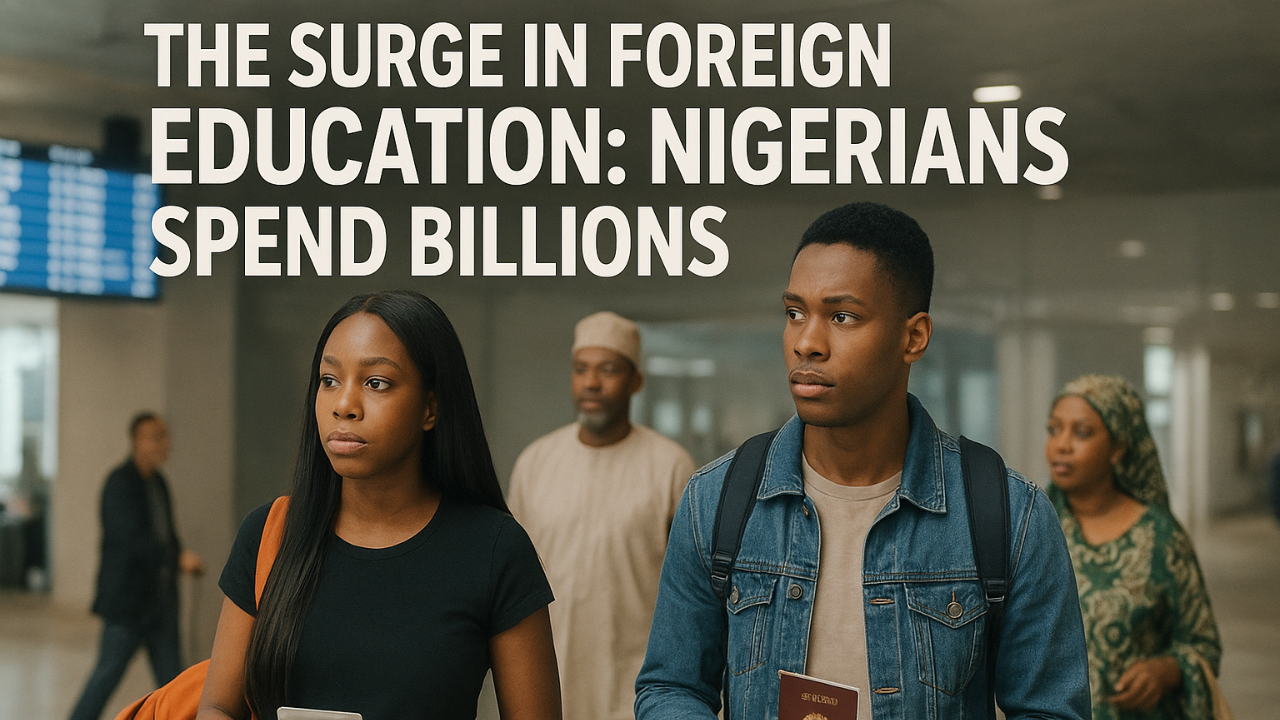
In the last decade, foreign education has become the aspiration of thousands of Nigerian students and families. Once reserved for a select elite, studying abroad has now evolved into a mainstream trend — fueled by globalization, dissatisfaction with local educational systems, and the belief that international credentials create better career opportunities.
But this trend comes at a steep cost: Nigerians are spending billions of dollars on education abroad, draining foreign exchange and raising concerns about national development and rising inequality.
This article explores the true scale of this spending, why it’s happening, and what it means for Nigeria’s future.
How Much Are Nigerians Really Spending on Foreign Education?
Recent research shows that the financial outflow is larger than many expect.
- Between 2020 and 2025, Nigerians spent over $11.1 billion on foreign education, according to CBN data analysis.
- From 2010 to 2020, total spending reached $28.65 billion.
- Estimates suggest 70,000 to 100,000+ Nigerian students are currently studying in foreign institutions.
These figures make foreign education one of the most significant contributors to Nigeria’s foreign exchange outflow — and one of the least regulated.
Top Destinations for Nigerian Students
Where Nigerians Are Studying
The most popular countries include:
- Canada
- United Kingdom
- United States
- Australia
Canada has seen a massive rise in Nigerian student enrollment due to flexible migration policies and post-study work opportunities.
Why These Countries Attract Nigerians
Four major reasons drive the rush toward foreign education:
- Better perceived academic standards
- Work and immigration opportunities
- Advanced research facilities and technology
- Frustration with domestic universities (strikes, overcrowding, limited courses)
The Rise of Digital Learning and International Mobility
While traditional in-person study remains dominant, online degrees and hybrid programs are increasing in popularity. Some universities in the U.S., UK, and Europe now offer online master’s degrees that are fully accredited and cheaper — making foreign education more accessible than ever.
This shift makes education more global, but it also raises questions:
- Will Nigerian universities be able to compete?
- Is foreign education becoming a status symbol rather than a necessity?
- Will digital learning reduce brain drain — or accelerate it?
Economic Impact of Foreign Education
The Positive Side
- Increased skills and global exposure
- Professional networks and diaspora links
- Potential long-term remittances
The Risks
- Severe foreign exchange drain
- Brain drain — many graduates don’t return
- Inequality — only the wealthy can afford it
- Weak local education systems fall further behind
Nigeria is losing both human and financial capital — two critical ingredients for national development.
Why Nigerians Prefer Foreign Education
Several structural issues in Nigeria’s education system fuel this trend:
- Chronic underfunding of public universities
- Frequent ASUU strikes disrupting academic calendars
- Limited postgraduate and research opportunities
- Outdated curricula and skills mismatch
- Lack of modern facilities and technology
In many cases, foreign education is no longer just a choice — it is seen as a necessity.
Can Nigeria Reduce Its Dependence on Foreign Education?
A complete shift may not be realistic, but a strategic approach can help retain both students and financial resources.
Policy Recommendations for Government
- Invest in modernizing universities and research centers
- Create scholarship schemes that encourage students to return
- Support public–private partnerships in higher education
- Reform curricula to match global job markets
- Improve visa regulations for international academic exchange
Guidance for Families & Students
- Explore hybrid or online degree options
- Carefully evaluate return on investment (ROI)
- Seek scholarships and low-cost destinations
- Consider exchange programs instead of full overseas degrees
The Future — A Balanced Model?
The key question is not whether foreign education is good or bad — it is how Nigeria can benefit from it without losing its best minds and resources. A blended approach may be the answer:
✔ Strengthen Nigerian universities
✔ Keep international collaboration open
✔ Encourage return and reintegration of graduates
✔ Promote digital and hybrid learning models
Conclusion
The surge in foreign education reflects both opportunity and concern. Nigerians are investing heavily in global learning — but unless the country builds a stronger local education system, the long-term economic cost may outweigh the benefits.
Nigeria must not only send learners abroad — it must also become a place they are proud to return to.
📌 Do you think studying abroad is worth the cost? Share your thoughts in the comments below!
💡 Subscribe to receive more educational insights and research-backed articles.