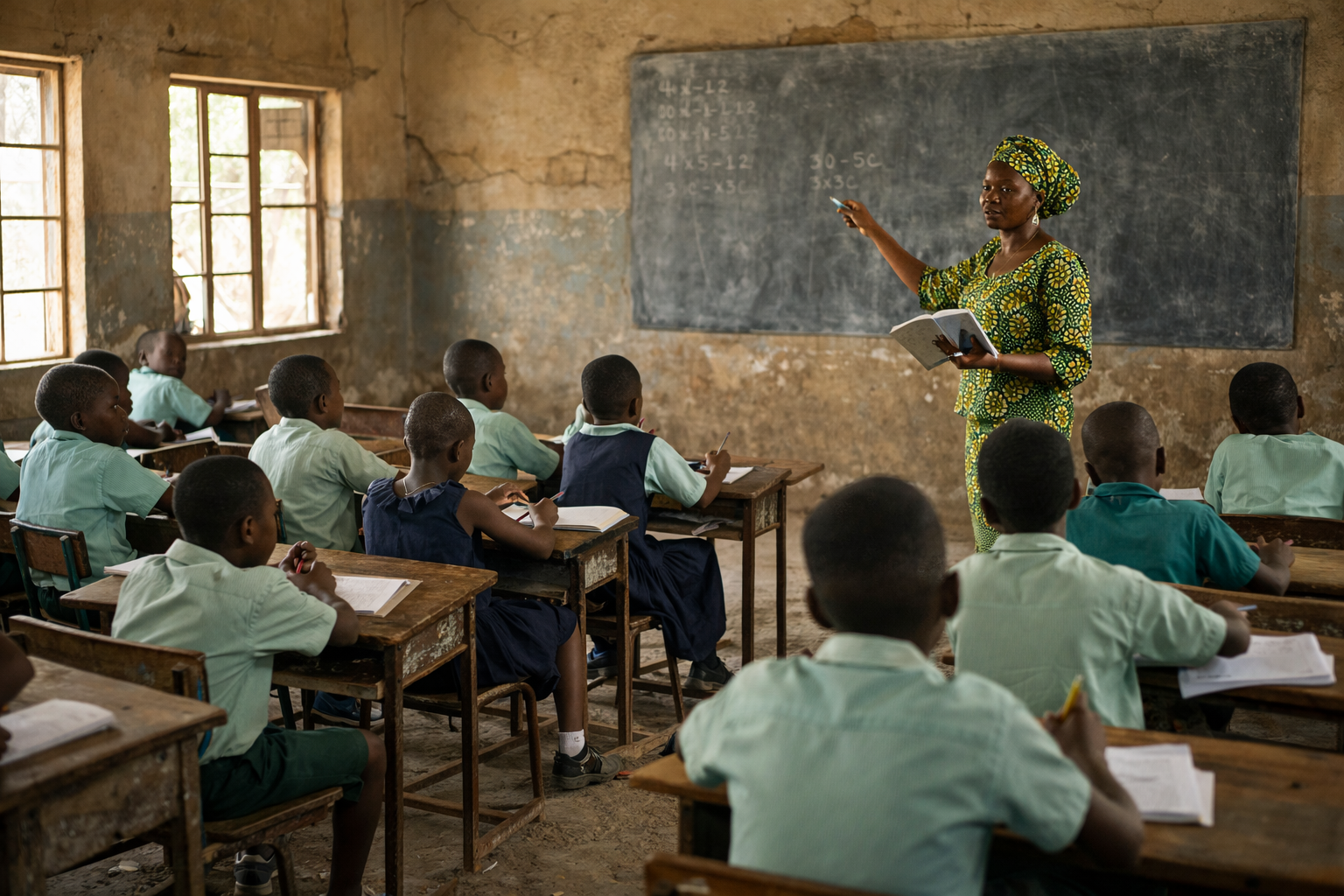




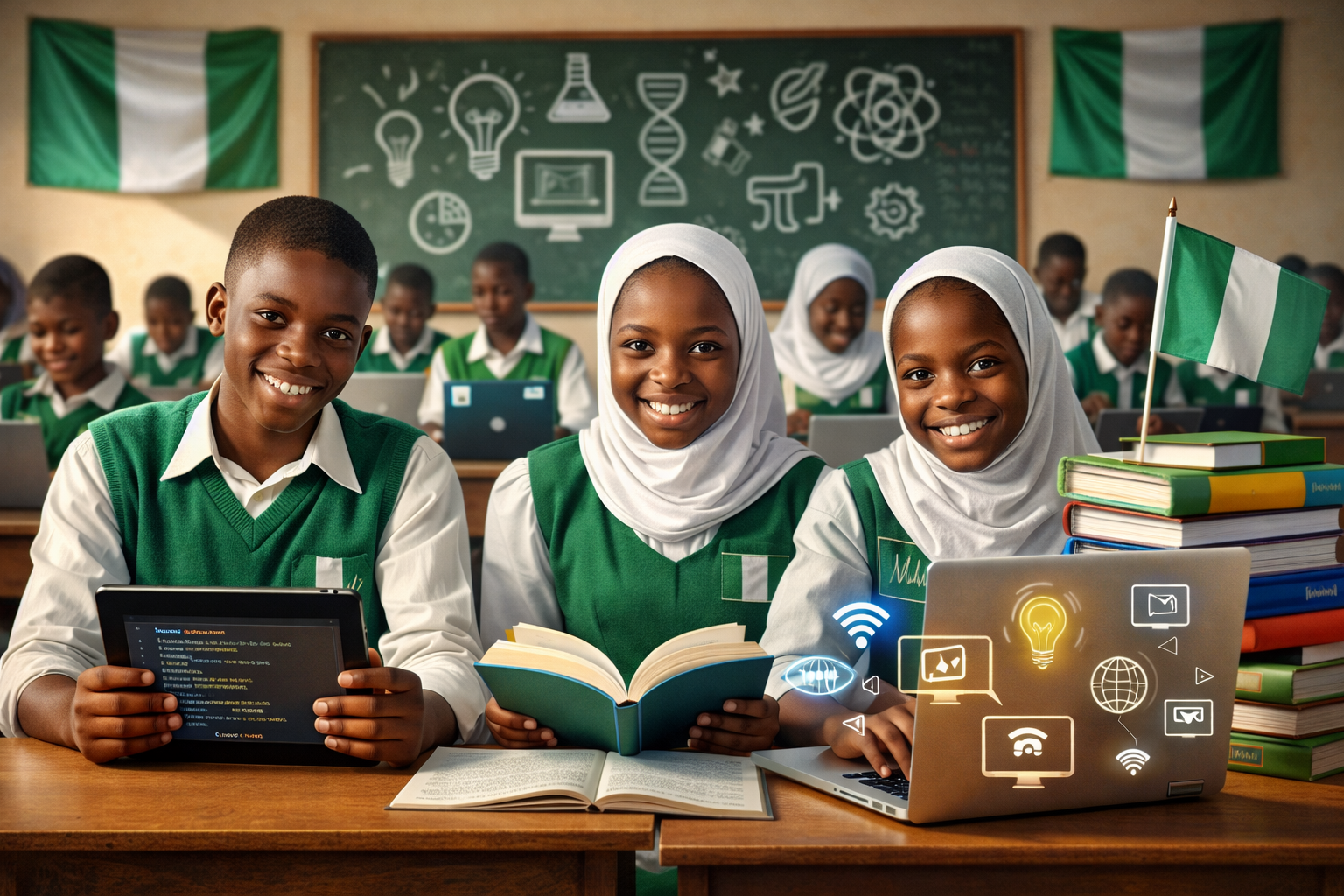
Education is one of Nigeria’s most strategic instruments for national development, social cohesion, and individual empowerment. The philosophical foundation and specific goals of education in Nigeria are formally defined in the National Policy on Education, a document issued by the Federal Ministry of Education that guides how education is planned and implemented nationwide. (Scribd)
Nigeria’s education goals are not arbitrary; they are constitutional and policy‑based objectives aimed at transforming the nation socially, politically, and economically. This article explains each goal, links it to policy language, and highlights real‑world implications.
Nigeria’s National Philosophy of Education (Policy Basis)
According to Nigeria’s National Policy on Education, the five main national goals — endorsed as the necessary foundation for educational planning — are to build:
- A free and democratic society
- A just and egalitarian society
- A united, strong, and self‑reliant nation
- A great and dynamic economy
- A land full of bright opportunities for all citizens
These goals reflect broad national aspirations and serve as the backbone for educational programmes at all levels.
1. Building a Free and Democratic Society
Nigeria’s education system is designed to support democratic values such as freedom, human rights, participatory governance, and civic responsibility. This goal is rooted in the belief that educated citizens are better equipped to contribute to democratic life.
How This Works in Practice
- Civic education is part of the school curriculum and teaches students about the Constitution, rights and responsibilities, and democratic processes.
- Social studies and government courses emphasize critical thinking and informed citizenship.
Educated citizens are better positioned to exercise their voting rights, engage in public dialogue, and challenge injustice — essential components of a functioning democracy. (eprints.gouni.edu.ng)
2. Promoting a Just and Egalitarian Society
A just society ensures that all individuals have fair access to opportunities and resources regardless of background. Within education, this means:
- Universal access to basic education
- Inclusive learning environments for students with disabilities
- Gender parity initiatives and community outreach programmes
Policies like the Universal Basic Education (UBE) Programme aim to reduce educational barriers, particularly in underserved regions.
This goal reflects Nigeria’s commitment to equity and social justice.
3. Developing a United, Strong, and Self‑Reliant Nation
Nigeria’s diversity (ethnic, linguistic, and religious) is a strength — but unity must be actively cultivated.
Key Strategies
- Unity schools (Federal Government Colleges) that admit students from across the country help foster cross‑cultural understanding.
- National Youth Service Corps (NYSC) — while a tertiary‑level programme — complements education by encouraging graduates to serve in states different from their region of origin.
- Curriculum components that teach shared history, national symbols, and constitutional values.
Education also equips citizens with practical skills — through science subjects or vocational training — to increase economic self‑reliance.
4. Building a Great and Dynamic Economy
A central aim of Nigeria’s educational policy is to produce graduates with the knowledge and skills required for economic growth, innovation, and global competitiveness.
How Education Drives Economic Development
- Training professionals in fields such as engineering, medicine, technology, agriculture, and business
- Emphasizing Science, Technology, Engineering, and Mathematics (STEM) education
- Promoting skill acquisition that supports entrepreneurship and industrial participation
Education that is relevant to the modern labour market enhances productivity, supports innovation, and attracts investment.
5. Creating a Land of Bright and Full Opportunities for All Citizens
This goal focuses on expanded opportunities through education, enabling individuals to:
- Enhance career prospects
- Increase earning potential
- Gain the confidence and skills needed to navigate complex societal challenges
Nigeria’s education system aims to be inclusive, empowering learners to achieve personal aspirations while contributing to national development.
Beyond the Five Goals: Specific Educational Objectives
In addition to these broad goals, Nigeria’s policy outlines more detailed education objectives:
- Develop individuals into morally sound, patriotic citizens
- Ensure equal access to quality education at all levels
- Foster appropriate skills, competencies, and attitudes for societal contribution
- Promote national unity and consciousness through curriculum and educational practice (Scribd)
These objectives help operationalize the five main goals, turning broad aspirations into practical programmes.
Why These Goals Matter Today
In an era of rapid globalization, technological change, and socio‑political complexities, Nigeria’s education goals remain highly relevant:
- Democratic governance depends on informed citizens.
- Equity in education promotes social stability.
- A skilled workforce is crucial for economic transformation.
- Opportunity for all strengthens societal resilience.
By aligning education with national development priorities, Nigeria positions itself to address both present and future challenges.
Conclusion
Nigeria’s five main education goals are not abstract ideals — they are constitutionally and policy‑mandated objectives with real socioeconomic implications. Grounded in the National Policy on Education, these goals guide everything from curriculum design to national programmes aimed at expanding access, equity, and opportunity. (eprints.gouni.edu.ng)
As Nigeria continues to implement reforms and expand learning opportunities, these goals remain central to advancing national unity, democratic participation, economic innovation, and individual empowerment.