







1. What Education Reform Really Means Today
Education reform is often discussed in broad terms, but in practice, it refers to systemic changes in how learning is designed, delivered, assessed, and supported.
In schools where reform initiatives have been observed or piloted, one reality becomes clear: education reform is not a single policy or technology upgrade. It is a continuous process of aligning learning with real-world demands, learner diversity, and societal change.
At its core, modern education reform asks a fundamental question:
Are schools preparing learners for the world they will actually live and work in—not the one schools were originally designed for?
2. Why Education Reform Is No Longer Optional
Most education systems were designed during the Industrial Age, when success depended on standardization, compliance, and routine skills. Today’s world demands something very different.
Across classrooms and education systems, educators consistently report a growing mismatch between:
- What students are taught
- And the skills they need to thrive beyond school
International bodies such as the OECD, UNESCO, and the World Economic Forum (WEF) have repeatedly warned that traditional schooling models struggle to develop critical thinking, adaptability, and digital competence at scale.
Research synthesized in Deloitte’s Global Human Capital Trends indicates that a significant majority of employers believe graduates lack essential future-ready skills such as collaboration, creativity, and technological fluency. This perception—rather than a single statistic—has become a central driver of education reform worldwide.
3. Core Goals Driving Global Education Reform
Despite differences across countries, most reform efforts converge around shared goals:
- Ensuring inclusive and equitable access to quality education
- Developing transferable, future-focused competencies
- Aligning education with economic, technological, and civic realities
- Using technology to enhance—not replace—human learning
- Supporting lifelong learning and adaptability
These priorities align closely with United Nations Sustainable Development Goal 4 (SDG 4), which emphasizes inclusive, equitable, and quality education for all learners.
4. Curriculum Reform: From Memorization to Mastery
Why Traditional Curricula Fall Short
In many classrooms, content coverage still outweighs skill development. However, observations from systems that have modernized curricula show that depth matters more than volume.
Competency-Based Education in Practice
Education reform increasingly emphasizes competency-based learning, where students demonstrate understanding through application rather than recall.
Key competencies commonly embedded include:
- Critical thinking and reasoning
- Collaboration and communication
- Creativity and innovation
- Digital and media literacy
Countries such as Finland, Singapore, and Canada have aligned national curricula with competency frameworks similar to the OECD Learning Compass 2030, integrating skills across subjects rather than isolating them.
5. Personalized & Adaptive Learning: What Actually Works
Moving Beyond One-Size-Fits-All Instruction
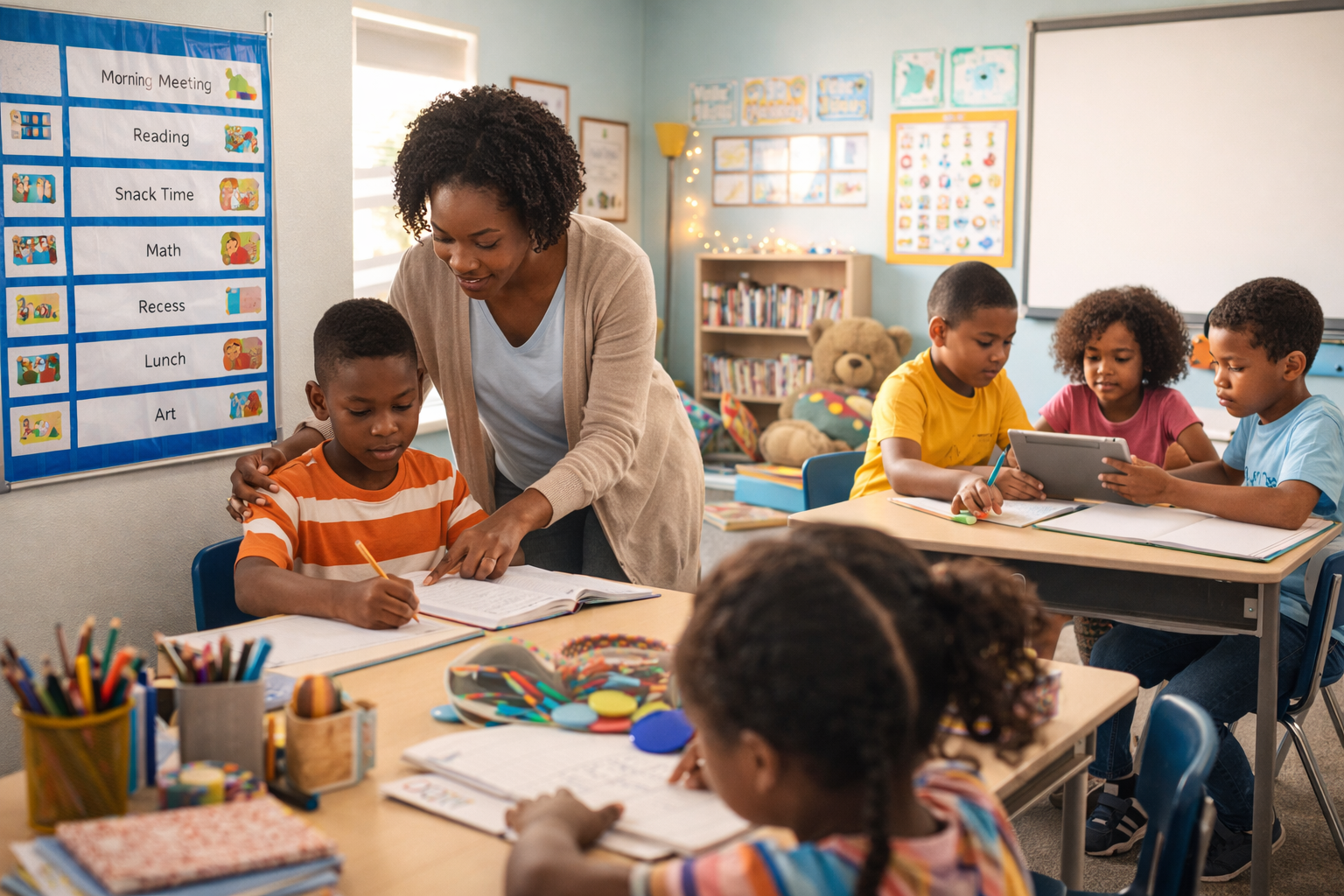
Classroom experience consistently shows that students learn at different paces and in different ways. Personalized learning addresses this reality by adjusting instruction to individual needs.
How Adaptive Learning Technologies Support Teachers
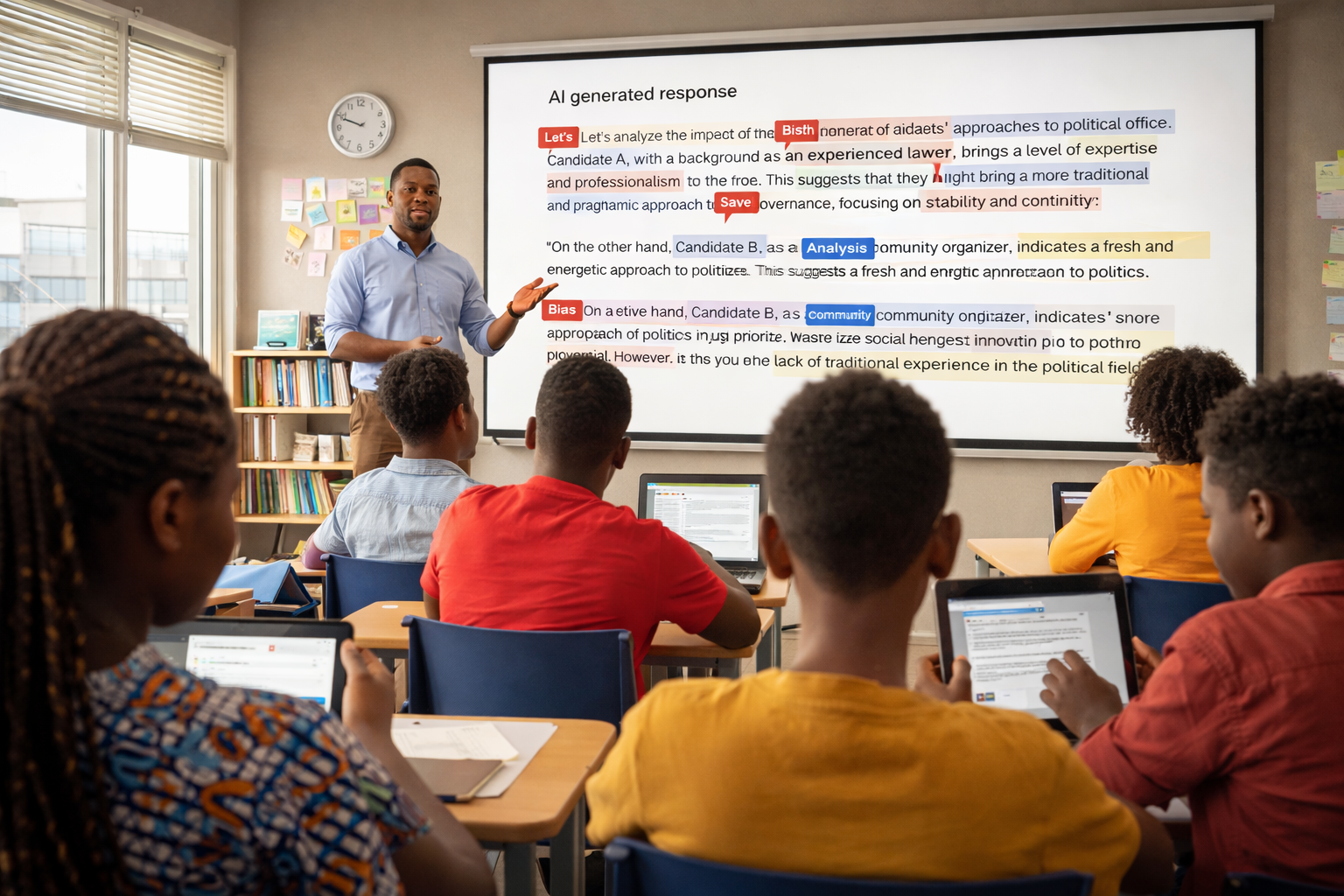
AI-powered adaptive platforms typically work by:
- Analyzing student responses in real time
- Adjusting content difficulty and sequencing
- Providing actionable data to teachers
According to synthesis reports from the World Economic Forum, schools using adaptive tools effectively—combined with teacher guidance—often report measurable improvements in engagement and learning outcomes. However, results vary significantly depending on implementation quality.
6. Equity, Inclusion, and Closing the Learning Gap
Addressing Structural Inequality
Education reform cannot succeed without addressing disparities related to:
- Socioeconomic status
- Gender
- Geography
- Disability
- Language background
The UNESCO Global Education Monitoring Report (2024) highlights that digital expansion without equity planning can widen, rather than close, learning gaps.
Inclusive Education in Practice
Many systems now adopt Universal Design for Learning (UDL) principles, which create flexible learning environments that benefit:
- Students with disabilities
- Multilingual learners
- Diverse learning profiles
7. Teacher Empowerment: The Foundation of Sustainable Reform
Every large-scale reform initiative ultimately succeeds or fails in the classroom.
From Content Delivery to Learning Design
In reformed systems, teachers increasingly act as:
- Facilitators of inquiry
- Learning designers
- Coaches and mentors
High-performing systems such as Singapore and Ontario (Canada) emphasize:
- Collaborative professional learning communities
- Coaching and peer observation
- Data-informed instructional practices
Research summarized by the Brookings Institution consistently shows that sustained, job-embedded professional development has a stronger impact than isolated workshops.
8. Rethinking Assessment Beyond Standardized Testing
Why Assessment Reform Matters
Traditional standardized tests often measure surface-level knowledge. Education reform prioritizes assessment for learning, not just assessment of learning.
Alternative Assessment Models
Modern assessment approaches include:
- Performance-based tasks
- Project-based learning
- Portfolios
- Ongoing formative feedback
These models better reflect real-world problem-solving and allow students to demonstrate mastery in multiple ways.
9. Learning Environments and School Design
Education reform extends to where learning happens.
Innovative schools increasingly feature:
- Flexible classroom layouts
- Collaborative project spaces
- Makerspaces and STEAM labs
- Outdoor and community-based learning areas
These environments mirror modern workplaces and encourage creativity, collaboration, and student agency.
10. Social-Emotional Learning & Global Citizenship
Why SEL Is Central to Education Reform
Classroom experience and large-scale studies consistently show that students learn better when they feel safe, supported, and emotionally regulated.
According to surveys by CASEL, educators widely report positive links between SEL, student well-being, and academic engagement.
SEL focuses on:
- Self-awareness and self-management
- Empathy and social awareness
- Relationship skills
- Responsible decision-making
Global citizenship education complements SEL by preparing learners to engage with global challenges such as climate change, inequality, and cultural diversity.
11. Technology Integration and Digital Literacy
Digital Literacy as a Core Skill
Education reform treats digital literacy as foundational, not optional.
Key competencies include:
- Media and information literacy
- Responsible online behavior
- Coding and computational thinking
- Data interpretation
- Cybersecurity awareness
Ethical Considerations
As technology expands, systems must address:
- Data privacy
- Algorithmic bias
- Equitable access
Effective reform balances innovation with ethics and accountability.
12. Family, Community, and Industry Partnerships
Learning does not stop at the school gate.
Reform-minded schools actively partner with:
- Local businesses
- Higher education institutions
- Nonprofits
- Community organizations
These partnerships provide mentorship, internships, career exposure, and wraparound support. Research consistently shows that family engagement improves both academic and emotional outcomes for students.
13. Preparing Students for Future Workplaces
The World Economic Forum’s Future of Jobs research suggests that many students will enter roles that do not yet exist.
As a result, education reform emphasizes:
- Creativity and ideation
- Complex problem-solving
- Collaboration across cultures
- Entrepreneurial thinking
The goal is not to predict the future—but to prepare students to adapt to it.
14. Common Challenges in Education Reform
Despite strong intentions, reform efforts often face obstacles:
- Insufficient teacher training
- Unequal access to technology
- Policy changes without classroom support
- Resistance to change
- Short-term implementation timelines
Successful systems address these challenges through phased implementation, stakeholder collaboration, and continuous evaluation.
15. The Future of Schools: What Research and Practice Suggest
Evidence from both research and real-world implementation suggests future-ready schools will be:
- Personalized and data-informed
- Skill-focused rather than content-heavy
- Human-centered, not technology-driven
- Inclusive, flexible, and community-connected
Schools increasingly function as learning ecosystems, not isolated institutions.
16. Final Takeaways: Education Reform as a Shared Responsibility
Education reform is not a single initiative—it is an ongoing commitment.
Meaningful reform:
- Closes opportunity gaps
- Empowers teachers
- Prepares learners for uncertainty
- Strengthens communities
- Builds resilient, adaptable societies
The future of education will not be defined by one policy, platform, or program—but by a collective willingness to rethink how learning serves all learners in a changing world.