







Around the world, millions of children and adults face significant barriers to education — from lack of infrastructure and qualified teachers to geographical isolation and conflict. However, digital learning is rapidly transforming this landscape by breaking down long-standing obstacles and extending education to populations who previously had little or no access.
As internet connectivity improves and low-cost devices become more accessible, digital learning is emerging as one of the most powerful tools for expanding educational equity. Recent research shows that integrating digital technology into education systems not only improves access, but also enhances learning outcomes when implemented correctly.
This post explores how digital learning bridges gaps in low-resource communities, the challenges and opportunities it presents, and what the future of equitable digital education looks like.
Why Education Access Remains Unequal
1. Geographic Isolation
Many remote communities lack school buildings, trained teachers, or reliable transportation. Learners often travel long distances to reach the nearest school — or drop out entirely.
2. Economic Barriers
Families living in poverty struggle to afford school fees, uniforms, books, or transportation. These barriers especially affect girls and marginalized groups.
3. Shortage of Qualified Teachers
According to UNESCO, the world needs over 69 million new teachers to meet global education targets. Low-resource communities are often the most affected, facing understaffed schools and overcrowded classrooms.
4. Limited Learning Resources
Without adequate books, science labs, or teaching materials, many learners do not receive the quality of education they deserve.
How Digital Learning Bridges the Gap
Digital learning offers flexible and scalable solutions to these long-standing challenges.
1. Expanding Access Through Mobile and Offline Solutions
Mobile Learning in Remote Regions
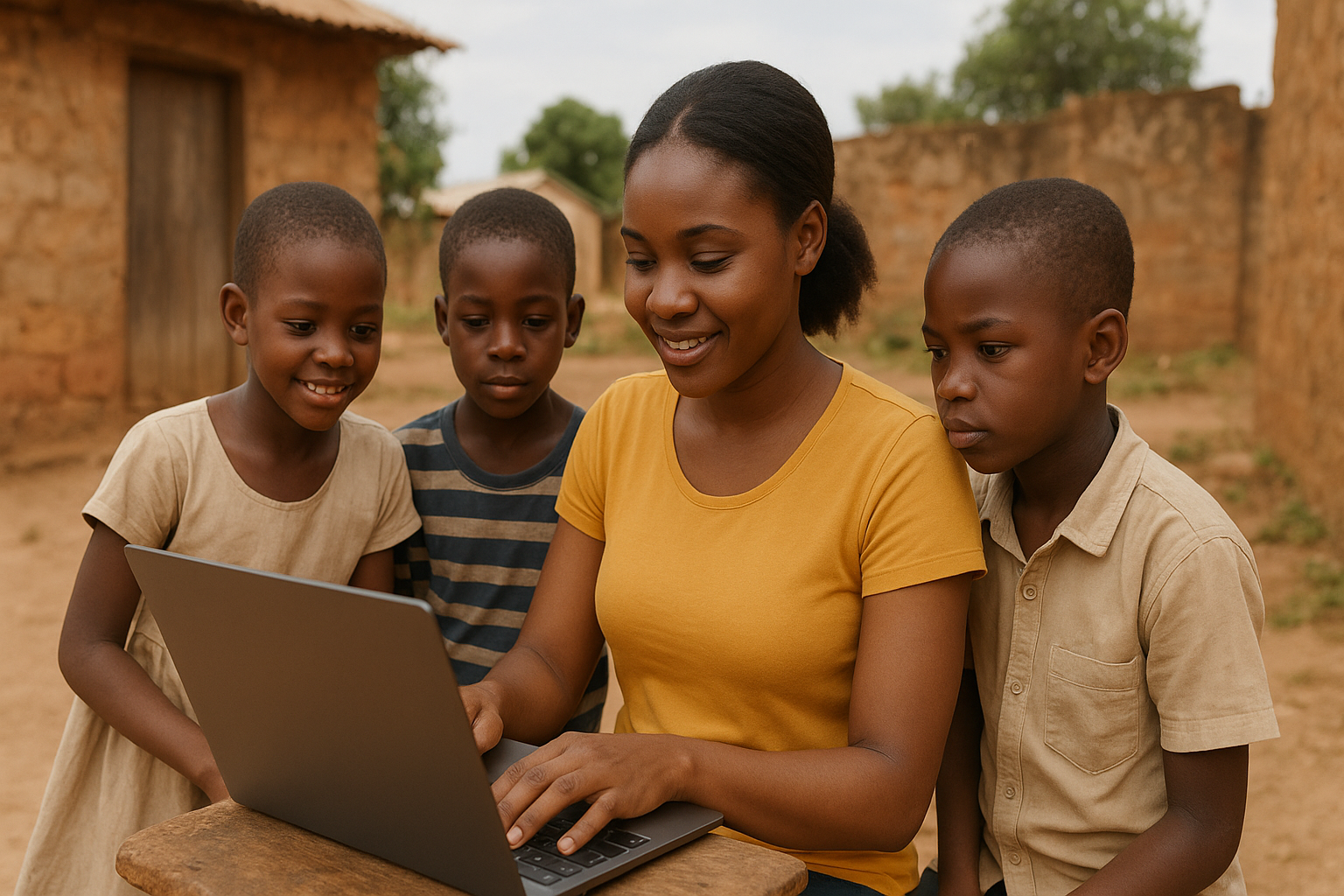
In many low-income areas, smartphones are more common than computers. Mobile-based digital learning programs allow students to access lessons through apps or SMS.
Examples include:
- Eneza Education (Kenya): Delivers curriculum-based learning via basic feature phones.
- Bridge International Academies: Uses tablets and cloud-based content to support instruction in regions with missing materials.
Offline Learning for Areas Without Internet
Offline-first learning platforms like Kolibri provide entire digital curricula without requiring internet connectivity. This is essential for rural communities where networks are unreliable or unavailable.
2. Reducing the Teacher Gap With Digital Tools
Virtual Teachers & Assisted Instruction
Digital learning provides instructional support even when qualified teachers are scarce.
- AI tutoring systems offer personalized explanations.
- Pre-recorded video lessons ensure consistent instructional quality.
- Teachers can use digital content to support multi-grade or multi-level classrooms.
Professional Development Access
Online teacher training platforms help educators upgrade their skills without traveling long distances. This improves quality while reducing system-wide educational inequities.
3. Personalized Learning for Diverse Learners
Digital learning tailors education to individual needs — something traditional systems struggle with.
Adaptive Learning Technology
Adaptive platforms adjust content difficulty and pacing based on learner performance. This helps both advanced and struggling learners thrive.
Support for Learners With Disabilities
Assistive technologies — text-to-speech, visual aids, captioning, and sign-language videos — make learning accessible to students who are often excluded from traditional classrooms.
4. Cost-Effective Deployment in Low-Resource Settings
Digital learning solutions can be more affordable and scalable than building new schools or training thousands of teachers quickly.
Low-Cost Devices & Shared Access
- Solar-powered tablets
- Community ICT hubs
- Shared classroom devices
- Refurbished computers
These options significantly reduce infrastructure demands while improving learning opportunities.
5. Empowering Girls & Marginalized Groups
In communities where cultural barriers prevent girls from attending school, digital learning creates private, flexible alternatives that allow them to continue learning safely from home.
It also supports refugees and displaced people by allowing them to learn in unstable environments where formal schooling is disrupted.
6. Creating Community-Wide Learning Ecosystems
Digital learning does more than educate children — it strengthens entire communities.
Adult Education & Digital Skills
Adults gain access to literacy classes, vocational training, and digital skills — improving employability and community development.
Local Content Creation
Communities can create and share content in local languages, preserving culture and making learning more relatable.
Challenges That Must Be Addressed
While digital learning is powerful, implementation in low-resource communities requires thoughtful planning.
1. Digital Divide & Device Access
Not all families can afford smartphones or tablets. Community device-sharing programs and low-cost manufacturing are essential.
2. Unreliable Power Supply
Many rural communities lack consistent electricity. Solar charging stations and power banks help bridge this gap.
3. Connectivity Barriers
Affordable internet remains a challenge. Offline and hybrid models are critical solutions.
4. Digital Literacy Levels
Parents, teachers, and learners need training to effectively use digital tools.
5. Sustainability & Maintenance
Devices require maintenance and eventual replacement — something donors and NGOs often overlook.
Best Practices for Implementing Digital Learning in Low-Resource Communities
1. Start With Community Needs Assessment
Identify the real barriers: power, connectivity, teacher shortages, or curriculum gaps.
2. Choose Low-Bandwidth and Offline-Ready Platforms
Kolibri, Moodle Offline, and SMS-based platforms work well in low-connectivity regions.
3. Train Teachers and Local Facilitators
Human support remains essential. Digital learning complements teachers — it doesn’t replace them.
4. Use Local Language Content
Learners perform better when instruction matches their language and cultural context.
5. Monitor Learning Outcomes
Use quizzes, assessments, and feedback tools to track progress and adjust strategies.
The Future of Digital Learning in Low-Resource Communities
As technology continues to advance, digital learning will become even more accessible, interactive, and personalized. Innovations such as AI tutoring, VR classrooms, and satellite internet will accelerate progress.
Yet, the true success of digital learning depends on equity-focused implementation. When done right, it does more than deliver lessons — it unlocks opportunities, transforms communities, and ensures that every learner has a fair chance at quality education.