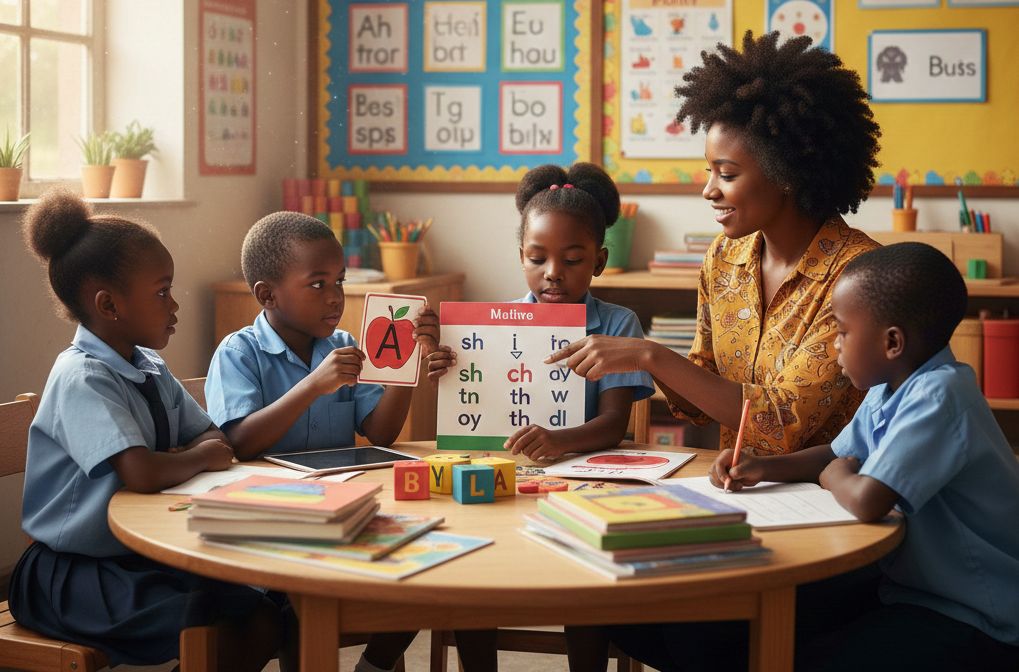









Learning to read begins with understanding how letters and sounds work together. For many children, especially early learners, phonics instruction becomes more effective and enjoyable when it is delivered through play. Creative phonics games help children connect letters to their sounds naturally, building a strong foundation for reading, spelling, and overall literacy.
This article explores practical, engaging phonics games that improve letter-sound recognition. Whether you are a parent, teacher, or caregiver, these ideas are designed to be easy to use, research-informed, and adaptable to different learning environments.
Understanding Letter-Sound Recognition
Letter-sound recognition is the ability to identify letters and correctly associate them with their corresponding sounds. This skill is essential for:
- Early reading development
- Pronunciation and word decoding
- Spelling accuracy
- Reading fluency and comprehension
Children who master letter-sound relationships early tend to develop stronger reading confidence as they progress through school. Games that focus on phonics allow learners to practice these skills in a relaxed, stress-free way.
Why Phonics Games Are Effective for Learning
Phonics games combine learning with active participation. Instead of memorizing sounds through repetition alone, children interact with letters using movement, visuals, listening, and problem-solving.
Key benefits of phonics-based games include:
- Improved engagement: Children stay focused longer when learning feels like play
- Multi-sensory learning: Games involve seeing, hearing, touching, and speaking
- Better retention: Repetition within a game context strengthens memory
- Positive learning attitude: Games reduce anxiety and build confidence
When children enjoy the learning process, they are more likely to practice consistently.
Creative Phonics Games for Letter-Sound Recognition
Sound Matching Games
Sound matching games help children connect letters to the sounds they hear.
How it works:
- Prepare letter cards and picture cards
- Say a sound out loud (for example, /b/)
- Ask the child to find the letter or picture that matches the sound
Why it helps:
- Reinforces auditory discrimination
- Builds quick sound recall
- Strengthens phonemic awareness
You can increase difficulty by introducing multiple sounds at once or using blends.
Phonics Treasure Hunt
A phonics treasure hunt turns learning into an adventure.
How it works:
- Hide objects or letter cards around the room
- Give clues based on letter sounds (for example, “Find something that starts with /s/”)
- Children collect items that match the sound
Why it helps:
- Encourages active movement
- Improves sound identification
- Makes learning memorable
This game works well both indoors and outdoors.
Letter Sound Hopscotch
This physical game supports kinesthetic learners.
How it works:
- Write letters on the ground using chalk or paper
- Call out a sound
- The child jumps onto the correct letter
Why it helps:
- Combines physical activity with learning
- Improves focus and coordination
- Reinforces quick letter-sound association
It is especially useful for children who struggle to sit still during lessons.
Phonics Bingo
Phonics bingo adapts a familiar game for literacy learning.
How it works:
- Create bingo cards with letters or pictures
- Call out letter sounds instead of letter names
- Children mark the matching letter or image
Why it helps:
- Builds listening skills
- Encourages sound recognition in a group setting
- Reinforces learning through repetition
This game is ideal for classrooms or small learning groups.
Rhyming Sound Games
Rhyming activities support phonics by highlighting sound patterns.
How it works:
- Say a word aloud (for example, “cat”)
- Ask the child to think of words that rhyme
- Focus on identifying beginning and ending sounds
Why it helps:
- Develops phonemic awareness
- Helps children hear sound similarities
- Prepares learners for spelling patterns
Rhyming games are simple yet powerful for early literacy development.
Games That Strengthen Blending and Segmenting Skills
Letter-sound recognition improves further when children learn to blend and segment sounds.
Sound Stretch Game
This game teaches children how sounds come together to form words.
How it works:
- Say a word slowly by stretching the sounds (for example, /c/ /a/ /t/)
- Ask the child to blend the sounds and say the word
- Reverse the process by breaking words into individual sounds
Why it helps:
- Builds decoding skills
- Supports early reading fluency
- Encourages careful listening
Build-a-Word Game
Children physically build words using letters.
How it works:
- Provide letter tiles or cards
- Say a simple word
- Ask the child to choose letters and build the word
Why it helps:
- Reinforces letter order
- Improves sound sequencing
- Supports spelling development
This game can be adapted for different skill levels by changing word length.
Using Everyday Items for Phonics Games
Phonics learning does not require expensive materials. Many games can be created using everyday objects.
Examples include:
- Bottle caps with letters written on them
- Flashcards made from cardboard
- Household items grouped by beginning sounds
Using familiar objects helps children connect learning to real life.
Tips for Making Phonics Games More Effective
To get the most value from phonics games, keep these best practices in mind:
- Keep sessions short: Young learners benefit from frequent, brief activities
- Focus on one skill at a time: Avoid overwhelming children with too many sounds
- Offer encouragement: Praise effort, not just correct answers
- Be consistent: Regular practice builds confidence and mastery
- Adapt to the child’s level: Adjust difficulty as skills improve
Consistency and patience play a major role in successful phonics instruction.
Supporting Different Learning Styles
Every child learns differently, and phonics games can be adapted to suit various needs.
- Visual learners: Use colorful letters and picture cards
- Auditory learners: Emphasize listening and repeating sounds
- Kinesthetic learners: Include movement-based activities
- Social learners: Encourage group games and peer interaction
By offering a variety of phonics games, you create an inclusive learning environment.
Conclusion
Creative phonics games are an effective and enjoyable way to improve letter-sound recognition. Through play, children develop essential literacy skills that support reading, spelling, and language comprehension. These games promote active learning, reduce frustration, and build confidence in early readers.
Whether used at home or in the classroom, phonics games provide meaningful opportunities for children to explore sounds, letters, and words in a supportive setting. With consistent practice and thoughtful guidance, learners can develop strong phonics foundations that will benefit them throughout their educational journey.
By focusing on engagement, clarity, and gradual skill-building, phonics games become more than just activities—they become powerful tools for lifelong literacy development.