






Helping children grow into confident, curious, and capable individuals doesn’t require expensive toys or formal lessons. From my experience as a parent and childcare volunteer, simple, creative activities at home can spark imagination, problem-solving, and social-emotional growth.
This guide provides practical, age-appropriate activities, research-backed insights, and tips to make play meaningful and developmentally beneficial.
Why Creative Activities Are Crucial for Child Development
Creative activities aren’t just fun—they actively support brain development and life skills. According to the American Academy of Pediatrics (AAP), play and hands-on experiences promote cognitive, emotional, and social growth.
From my own observations, children engaged in art, building, or role-play activities show improved focus, patience, and communication skills.
Key benefits of creative learning include:
- Cognitive skills: Problem-solving, memory, and early math concepts
- Motor skills: Fine and gross motor coordination
- Language & communication: Vocabulary, storytelling, and social expression
- Emotional growth: Confidence, empathy, and self-regulation
- Attention & independence: Focus, patience, and decision-making
Source: American Academy of Pediatrics. The Importance of Play in Promoting Healthy Child Development. (AAP)
Art and Craft Activities to Build Fine Motor Skills
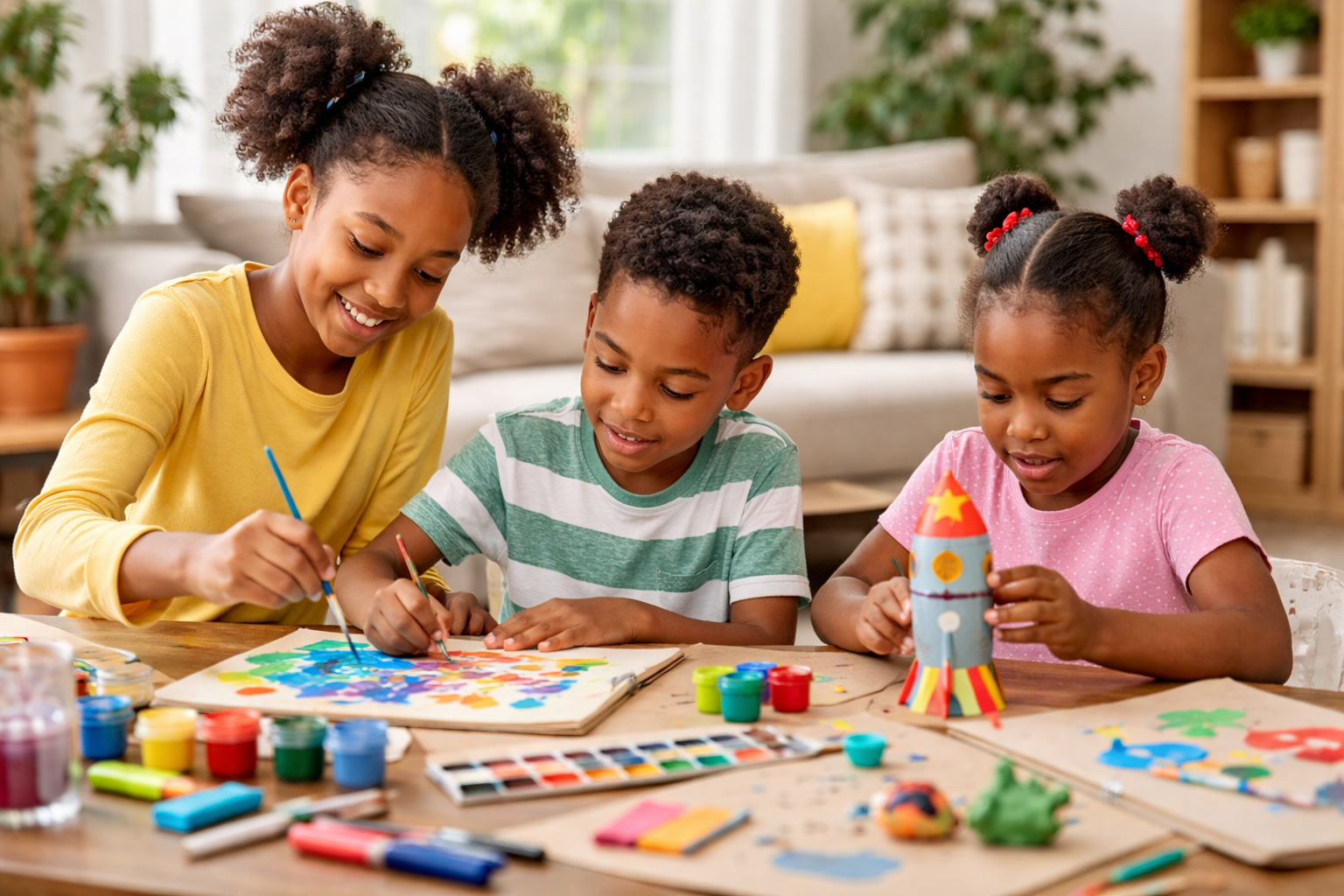
Art and craft activities strengthen hand muscles, coordination, and creativity. Open-ended art keeps children engaged and confident.
Drawing and Coloring
- How to do it: Provide paper, crayons, pencils, or markers. Encourage free drawing or simple prompts.
- Benefits: Enhances focus, hand-eye coordination, and creativity.
- Tip: Praise effort over perfection.
Cutting, Pasting, and Collage Making
- Materials: Child-safe scissors, glue, old magazines, cardboard, leaves.
- Activity example: Ask your child to make a collage about nature, family, or favorite animals.
- Benefits: Improves planning, hand-eye coordination, and creative thinking.
Research: Hands-on art activities support fine motor skill development and cognitive growth (Ginsburg, 2007, Pediatrics).
Imaginative Play for Emotional and Social Growth
Pretend play lets children explore emotions, social roles, and problem-solving in a safe environment.
Role-Playing Games
- Act out scenarios such as shopping, cooking, or doctor visits.
- Benefits: Develops storytelling, cooperation, and empathy.
- Tip: Let children lead the play while adults gently participate.
Puppet Play and Story Acting
- Use homemade puppets (socks, paper bags) to act out stories.
- Benefits: Encourages emotional expression and creative thinking.
- Tip: Invite children to create voices or invent endings.
Expert Reference: The National Association for the Education of Young Children (NAEYC) emphasizes imaginative play as crucial for social-emotional learning.
Music and Movement Activities for Physical Development
Movement-based play builds balance, coordination, and self-expression. Music also supports memory and language development.
Singing and Rhythm Games
- Sing nursery rhymes, action songs, or create simple rhythms using claps and household instruments.
- Benefits: Enhances memory, listening skills, and pattern recognition.
Dance and Free Movement
- Let children move freely to music or create simple routines with scarves or ribbons.
- Benefits: Supports physical fitness, coordination, and creativity.
Evidence: Active movement improves executive function and motor skills (Pellegrini & Smith, 1998).
Hands-On Learning: Building and Problem-Solving
Hands-on building challenges cognitive skills and patience while encouraging creativity.
Blocks, Puzzles, and Construction Play
- Let children build towers or structures with blocks.
- Tip: Ask them to explain their designs—supports reasoning and language development.
- Benefits: Develops spatial awareness, focus, and early engineering concepts.
Recycled Material Projects
- Use cardboard boxes, paper rolls, or bottle caps for creative building.
- Benefits: Teaches creativity and environmental awareness.
- Tip: Encourage planning before building to strengthen executive function.
Language and Storytelling Activities
Language activities improve vocabulary, comprehension, and confidence.
Storytelling and Story Creation
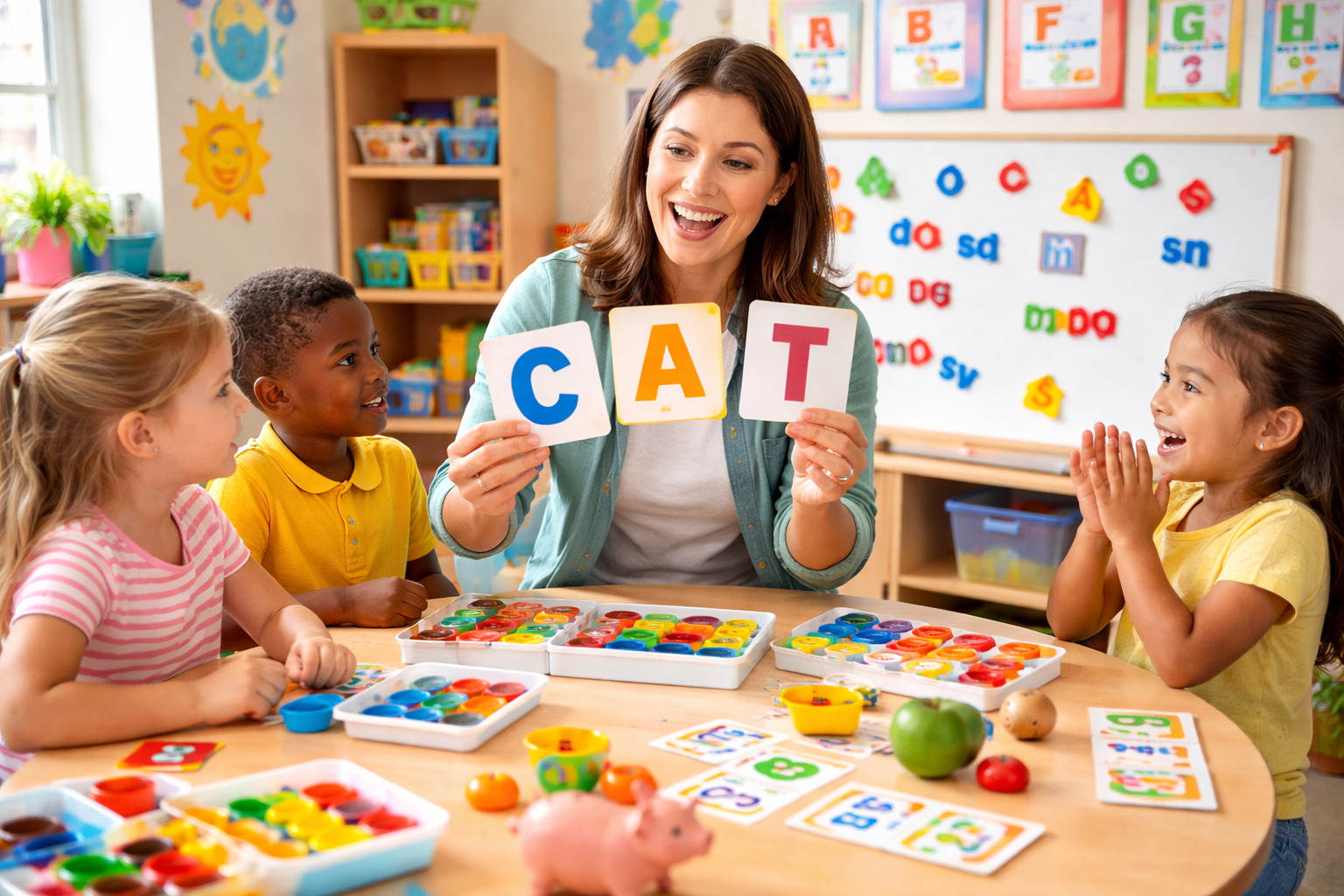
- Children tell stories based on pictures or take turns adding sentences to a shared story.
- Tip: Focus on expression, not grammar.
- Benefits: Develops imagination, narrative skills, and confidence.
Journaling or Drawing Stories
- Older children can write about their day or create comics.
- Benefits: Supports emotional awareness, writing skills, and fine motor coordination.
Sensory and Practical Life Activities
Sensory Bins
- Fill containers with rice, beans, water, or play dough.
- Benefits: Encourages sensory exploration and brain development.
- Tip: Always supervise and use age-appropriate materials.
Cooking and Baking Together
- Let children mix, measure, and describe colors, textures, and smells.
- Benefits: Develops math, language, motor skills, and responsibility.
Expert Insight: Hands-on cooking activities foster cognitive, sensory, and motor development (Joshi et al., 2015, Early Child Development and Care).
Tips for Encouraging Creative Learning at Home
- Provide open-ended materials.
- Allow safe messes—creativity thrives in freedom.
- Praise effort, not just results.
- Give children time and space to explore.
- Limit screen time to encourage active play.
Adapting Activities by Age:
- Toddlers (1–3 years): Focus on sensory play, movement, and basic art.
- Preschoolers (3–5 years): Encourage imaginative play, storytelling, and simple building.
- School-age (6+ years): Introduce complex projects, writing, and problem-solving.
Progress Tip: Track attention span, storytelling complexity, and coordination improvements over time.
Conclusion
Creative activities are essential for healthy child development. Art, music, imaginative play, building, storytelling, and sensory experiences help children grow emotionally, cognitively, and physically.
By integrating small, consistent moments of creative play into daily routines, parents and caregivers can foster confidence, curiosity, and lifelong learning—without expensive toys or lessons.
Final Note: Patience, encouragement, and active participation make all the difference in helping children thrive creatively at home.