










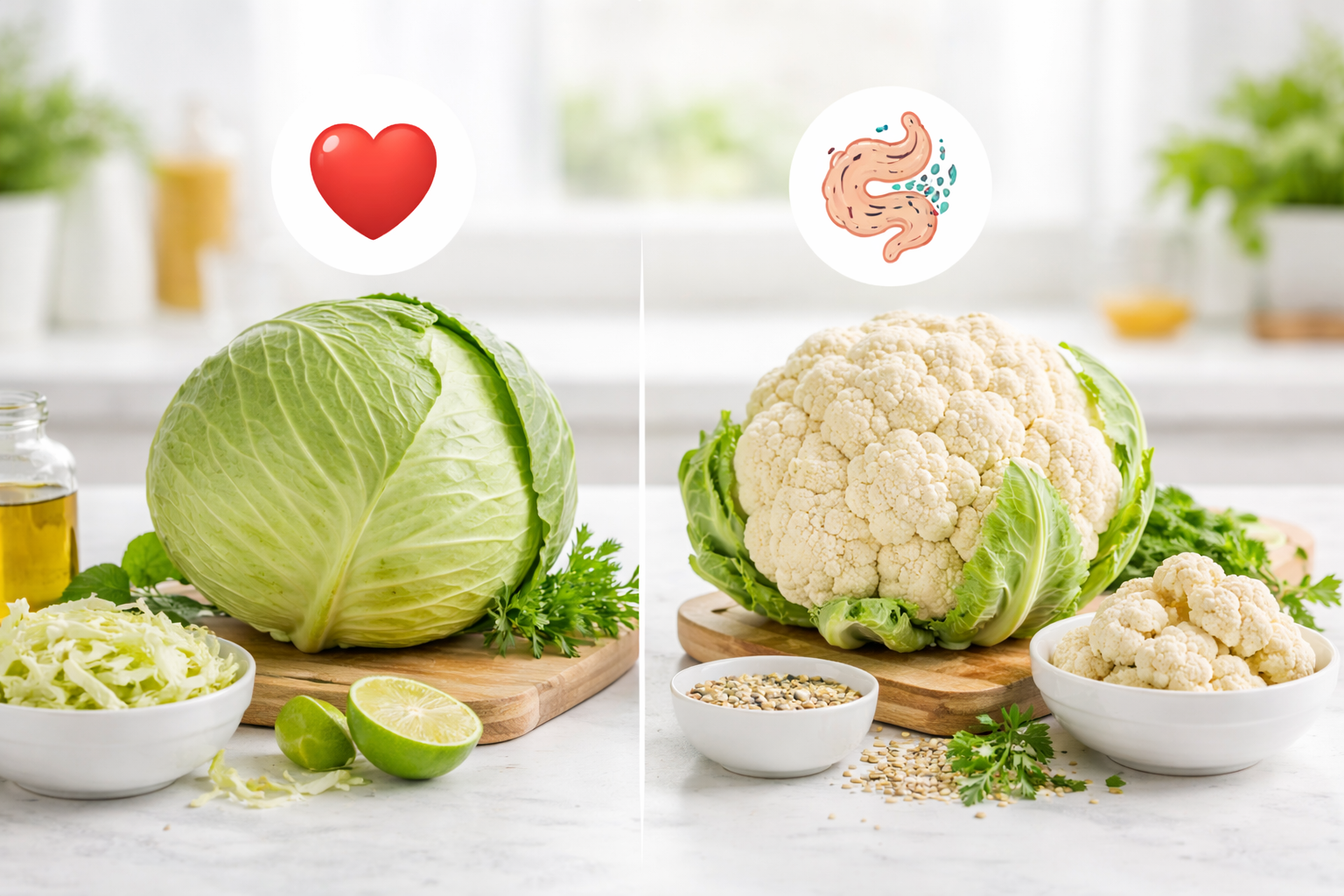
Choosing the right vegetables can significantly impact your heart health and digestive system. Among the most nutrient-dense options are cabbage and cauliflower—two cruciferous vegetables known for their disease-fighting compounds.
But which one is actually better?
This guide provides a science-backed comparison of cabbage vs. cauliflower, including their nutritional differences, benefits for heart and gut health, and how to choose the right one for your needs.
Quick Comparison: Cabbage vs. Cauliflower
| Nutrient (per 1 cup, raw) | Cabbage | Cauliflower |
|---|---|---|
| Calories | ~22 kcal | ~25 kcal |
| Fiber | ~2.2 g | ~2.0 g |
| Vitamin C | ~54% DV | ~57% DV |
| Vitamin K | ~85% DV | ~14% DV |
| Folate | ~10% DV | ~14% DV |
| Choline | Low | Moderate |
| Key Compounds | Anthocyanins (red cabbage), polyphenols | Glucosinolates, isothiocyanates |
Summary (Featured Snippet Target):
- Cabbage is higher in vitamin K and antioxidants
- Cauliflower provides more choline and folate
- Both support heart and digestive health through fiber and plant compounds
What Makes These Vegetables So Healthy?
Both cabbage and cauliflower belong to the cruciferous vegetable family, which has been widely studied for its role in reducing chronic disease risk.
They contain:
- Fiber → supports digestion and cholesterol control
- Antioxidants → reduce oxidative stress
- Glucosinolates → linked to anti-inflammatory effects
According to nutrition research, diets rich in cruciferous vegetables are associated with improved cardiovascular and metabolic health outcomes.
Heart Health: Which One Is Better?
Heart health depends on factors like:
- Cholesterol levels
- Blood pressure
- Inflammation
Both vegetables contribute—but in slightly different ways.
How Cabbage Supports Heart Health
Cabbage—especially red cabbage—is rich in anthocyanins, powerful antioxidants.
Evidence-Based Benefits:
- Fiber content helps reduce LDL cholesterol by binding bile acids
- Anthocyanins are associated with reduced risk of cardiovascular disease
- Vitamin K supports vascular health and proper blood clotting
Diets high in anthocyanin-rich foods have been linked to a lower risk of heart attacks and hypertension in observational studies.
How Cauliflower Supports Heart Health
Cauliflower contains compounds that support vascular function and inflammation control.
Key Benefits:
- Glucosinolates break down into isothiocyanates, which may reduce inflammation
- Potassium helps regulate blood pressure
- Fiber supports cholesterol balance
These compounds contribute to improved endothelial (blood vessel) function.
Verdict: Heart Health
- Choose cabbage for stronger antioxidant support (especially red cabbage)
- Choose cauliflower for anti-inflammatory compounds and nutrient diversity
Best approach: Include both regularly for complementary benefits.
Digestive Health: Which One Is Easier on the Gut?
Digestive health relies heavily on:
- Fiber intake
- Gut bacteria balance
- Individual tolerance
How Cabbage Supports Digestion
Cabbage is particularly beneficial due to both fiber and fermentation potential.
Key Benefits:
- Insoluble fiber promotes regular bowel movements
- Compounds that support stomach lining health
- Fermented cabbage (e.g., sauerkraut) contains probiotics that support gut microbiota
Fermented foods are linked to improved gut diversity and digestion.
How Cauliflower Affects Digestion
Cauliflower provides fiber and prebiotic compounds, but may be harder to digest for some individuals.
Key Points:
- Prebiotics feed beneficial gut bacteria
- Supports overall digestive health
- Contains FODMAPs, which may cause gas or bloating in sensitive individuals
Verdict: Digestive Health
- Cabbage (especially cooked or fermented) → generally easier on digestion
- Cauliflower → beneficial but may cause bloating in some people
If you have a sensitive gut, start with small portions and cooked forms.
Potential Side Effects and Safety Considerations
Both vegetables are safe for most people, but a few considerations apply:
Gas and Bloating
- Caused by fermentable carbohydrates (FODMAPs)
- More likely when eaten raw or in large quantities
Thyroid Considerations
- Cruciferous vegetables contain goitrogens, which may interfere with iodine absorption
- This effect is minimal when consumed in normal amounts and when cooked
Digestive Sensitivity
- Raw forms are harder to digest
- Cooking improves tolerance and nutrient absorption
Practical: Which One Should You Choose?
Choose Cabbage If You:
- Want higher antioxidant intake
- Are focused on heart health
- Enjoy fermented foods (probiotics)
- Have mild digestive sensitivity
Choose Cauliflower If You:
- Want a low-carb alternative (rice, mash)
- Need more choline for brain and liver health
- Prefer versatile cooking options
Best Strategy (Expert Recommendation)
Don’t choose one—rotate both in your diet.
This ensures:
- Broader nutrient intake
- Better gut diversity
- Stronger overall health benefits
Easy Ways to Add Them to Your Diet
Cabbage Ideas
- Raw in salads or slaws
- Stir-fried with protein
- Fermented (sauerkraut)
- Added to soups
Cauliflower Ideas
- Roasted with spices
- Blended into soups
- Used as rice or mash substitute
- Added to curries
Final Verdict: Cabbage vs. Cauliflower
There is no single “better” vegetable—only better choices based on your needs.
Key Takeaways:
- Both support heart and digestive health
- Cabbage → higher in antioxidants and vitamin K
- Cauliflower → richer in choline and versatile nutrients
- Combining both offers maximum health benefits
Important Note
This article is for informational purposes only and does not replace professional medical advice. For personalized dietary guidance, consult a qualified healthcare provider or registered dietitian.
FAQ Section
1. Which is healthier: cabbage or cauliflower?
Both cabbage and cauliflower are highly nutritious. Cabbage is richer in antioxidants and vitamin K, while cauliflower provides more choline and folate. Including both in your diet offers the best health benefits.
2. Is cabbage or cauliflower better for digestion?
Cabbage, especially when cooked or fermented, is generally easier to digest. Cauliflower contains compounds that may cause bloating in sensitive individuals but still supports gut health.
3. Which vegetable is better for heart health?
Both vegetables support heart health. Cabbage provides antioxidants like anthocyanins, while cauliflower contains anti-inflammatory compounds that support blood vessel function.
4. Can cabbage and cauliflower cause gas or bloating?
Yes, both are high in fiber and fermentable carbohydrates, which may cause gas or bloating, especially when eaten raw or in large amounts.
5. Is cauliflower healthier than cabbage for weight loss?
Both are low in calories and high in fiber, making them excellent for weight loss. Cauliflower is often used as a low-carb substitute for rice or mashed potatoes.
6. Can I eat cabbage and cauliflower every day?
Yes, both can be eaten daily in moderate amounts as part of a balanced diet. Cooking them can improve digestion and reduce potential side effects.