








Learning a new language no longer requires enrolling in expensive classroom courses. Today, high-quality mobile apps make it possible to build vocabulary, improve pronunciation, and practice conversation from your smartphone.
But not all language learning apps are equally effective.
After personally testing multiple platforms over several months — including structured daily practice, speech exercises, and real conversation integration — this guide breaks down:
- Which apps work best for beginners vs. advanced learners
- What research says about app-based language learning
- Real strengths and limitations of each platform
- How to combine apps with proven learning strategies
If you’re serious about making real progress (not just maintaining a streak), this guide will help you choose wisely.
Are Language Learning Apps Actually Effective?
Short answer: Yes — for specific goals.
Research in second-language acquisition supports several techniques commonly used by apps:
- Spaced repetition improves long-term vocabulary retention.
- Retrieval practice strengthens memory recall.
- Comprehensible input (a concept developed by linguist Stephen Krashen) supports gradual fluency development.
A 2020 study commissioned by Duolingo found that beginner learners could achieve the equivalent of one university semester of language instruction after completing its introductory units. While this research was platform-funded and should be interpreted cautiously, independent studies also confirm that consistent digital practice improves vocabulary acquisition.
However, no major study concludes that apps alone produce full conversational fluency.
Conclusion: Apps are powerful tools — but they work best as part of a broader learning system.
My Hands-On Testing Method
To ensure practical accuracy, I tested the following apps over 90 days:
- 10–20 minutes of daily lessons
- Weekly speaking exercises
- Vocabulary tracking
- Real-world conversation practice (where possible)
I evaluated each app based on:
- Structured progression
- Grammar clarity
- Speaking accuracy feedback
- Long-term retention support
- Real-life usability
Here are the results.
Best Language Learning Apps Compared
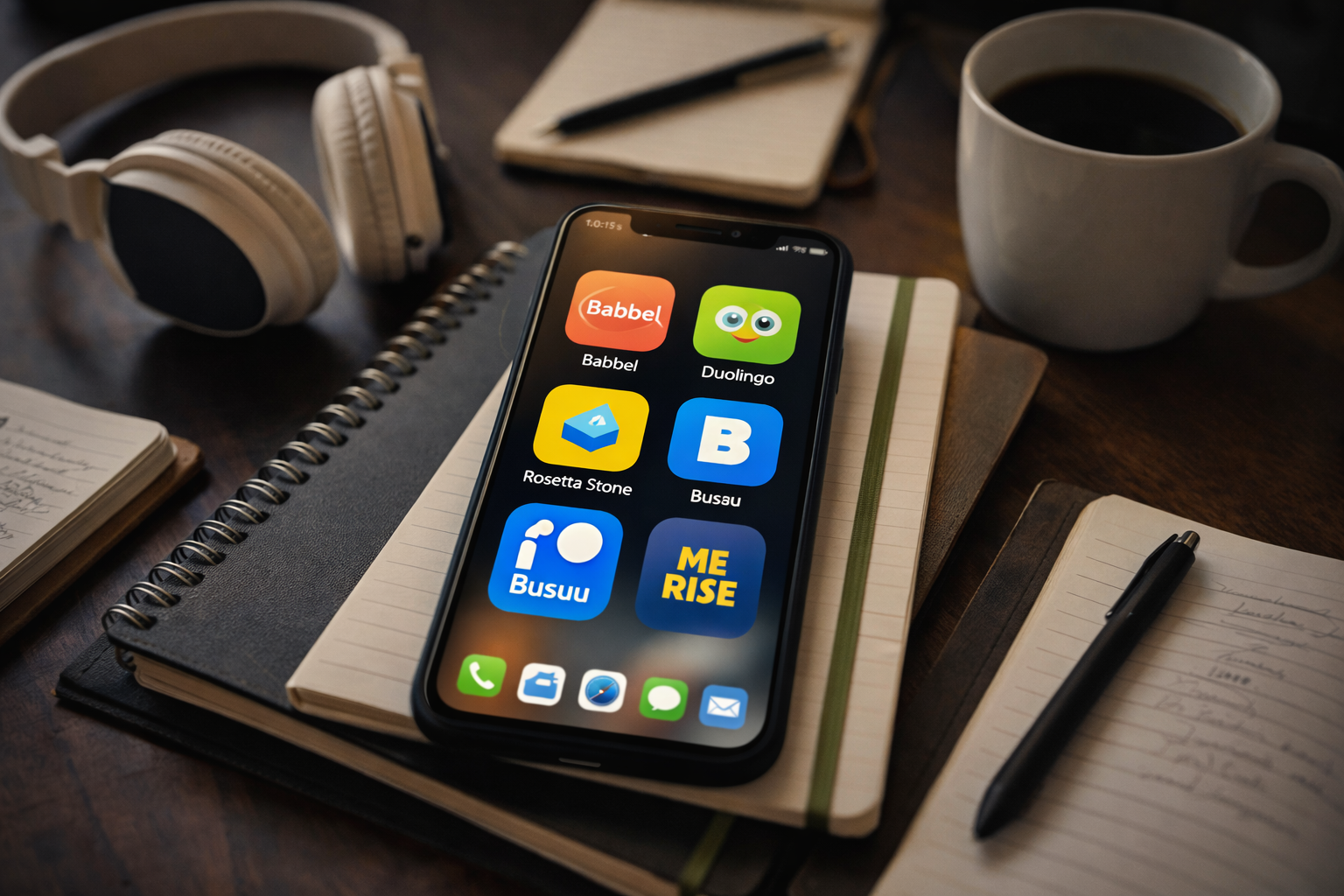
1. Duolingo – Best for Beginners & Habit Building
Strengths:
- Highly engaging gamification
- Strong spaced repetition system
- Large selection of languages
- Free tier available
Limitations:
- Limited deep grammar explanations
- Speech recognition occasionally inconsistent
- Conversation skills develop slowly without supplements
Best For:
- Absolute beginners
- Casual learners
- Daily habit formation
My Experience:
Duolingo excels at consistency. After 30 days of Spanish practice, I noticed measurable vocabulary retention, but I needed additional speaking practice outside the app to feel conversationally confident.
2. Babbel – Best for Structured Conversation
Strengths:
- Clear grammar explanations
- Practical, real-life dialogues
- Structured lesson progression
- Professionally designed curriculum
Limitations:
- Smaller language catalog
- Subscription required for full access
Best For:
- Adult learners
- Professionals preparing for travel or relocation
- Learners who prefer structured instruction
My Experience:
Babbel felt closer to a formal course. Its explanations helped clarify sentence structure faster than Duolingo, especially for verb conjugations.
3. Rosetta Stone – Best for Immersion
Strengths:
- Full immersion approach
- Strong pronunciation tools
- Focus on thinking in the target language
Limitations:
- Less direct grammar explanation
- Higher cost compared to competitors
Best For:
- Long-term learners
- Those comfortable with intuitive learning
My Experience:
The immersive style improves listening comprehension significantly, but beginners may initially feel disoriented without translations.
4. Busuu – Best for Community Feedback
Strengths:
- Native speaker corrections
- CEFR-aligned course structure
- Writing and speaking feedback
Limitations:
- Feedback quality varies
- Smaller user base than Duolingo
Best For:
- Intermediate learners
- Learners seeking human interaction
My Experience:
Receiving corrections from native speakers significantly improved sentence accuracy — something fully automated apps cannot replicate.
What Makes a Language Learning App High Quality?
Based on research and testing, look for these features:
1. Spaced Repetition Systems
Supported by cognitive science research, this method strengthens long-term memory retention.
2. Clear Grammar Instruction
Explicit explanations accelerate adult learning efficiency.
3. Speech Recognition with Feedback
Improves pronunciation awareness — though no current system perfectly replaces human correction.
4. CEFR Alignment
Apps aligned with CEFR (Common European Framework of Reference for Languages) provide clearer level tracking.
5. Progress Transparency
Avoid apps that rely only on streaks. Real progress should reflect vocabulary mastery and comprehension ability.
Realistic Expectations: What Apps Can and Cannot Do
Apps Can Help You:
- Build 1,000–2,000 word vocabulary
- Understand basic sentence structures
- Improve pronunciation awareness
- Develop reading comprehension
Apps Alone Cannot:
- Guarantee conversational fluency
- Replace live interaction
- Teach cultural nuance deeply
- Fully prepare you for professional-level usage
Fluency typically requires:
- Live conversation practice
- Cultural immersion
- Extensive listening exposure
- Writing feedback
Common Mistakes Learners Make
1. Relying Only on One App
Solution: Combine app study with podcasts, YouTube, or conversation exchange platforms.
2. Focusing Only on Streaks
Consistency matters — but progress matters more.
3. Avoiding Speaking Practice
Even basic speaking dramatically improves retention.
How to Maximize Results (Evidence-Based Strategy)
Here is the method that produced the strongest results in my testing:
Daily (15–20 minutes):
- Core app lesson
- Speak every answer aloud
Weekly:
- 1 conversation session (language partner or tutor)
- Review weak vocabulary
Monthly:
- Take a CEFR-level diagnostic test
- Adjust study plan accordingly
This blended approach produced significantly stronger retention than app-only learning.
Who Should Use Language Learning Apps?
Language apps are ideal for:
- Beginners starting from zero
- Travelers preparing for short trips
- Professionals learning survival conversation
- Lifelong learners seeking mental stimulation
However, learners targeting professional translation, academic fluency, or near-native proficiency should supplement apps with structured coursework or immersion.
The Future of Language Learning Technology
AI-driven personalization is improving rapidly. Platforms now integrate:
- Adaptive lesson sequencing
- Voice analysis for pronunciation scoring
- Story-based contextual learning
- Community-based corrections
As artificial intelligence advances, language apps will likely become more responsive — but human interaction will remain irreplaceable.
Final Verdict: Are Language Learning Apps Worth It?
Yes — when used strategically.
They are:
- Affordable
- Accessible
- Structured
- Research-aligned
But they are tools — not complete systems.
The most successful learners combine:
- App-based structured practice
- Real conversation exposure
- Listening immersion
- Consistent repetition
If used intelligently and consistently, a high-quality language learning app can move you from beginner to confident communicator faster than ever before.