






Artificial Intelligence (AI) is no longer science fiction — it’s a dynamic force reshaping how students learn, especially Students With Disabilities. Special education has historically faced significant challenges: insufficient resources, one-size-fits-all instruction, and barriers to accessibility. Today, AI offers innovative, scalable solutions that personalize learning, increase engagement, and support educators while meeting the unique needs of diverse learners.
From adaptive learning platforms to AI-powered assistive technologies, today’s tools are helping bridge educational gaps and improve outcomes for students who have cognitive, physical, visual, or auditory challenges. In this article, we explore how AI supports Students With Disabilities, the benefits, real applications, current research findings, and ethical considerations surrounding this transformative technology.
Why AI Matters for Students With Disabilities
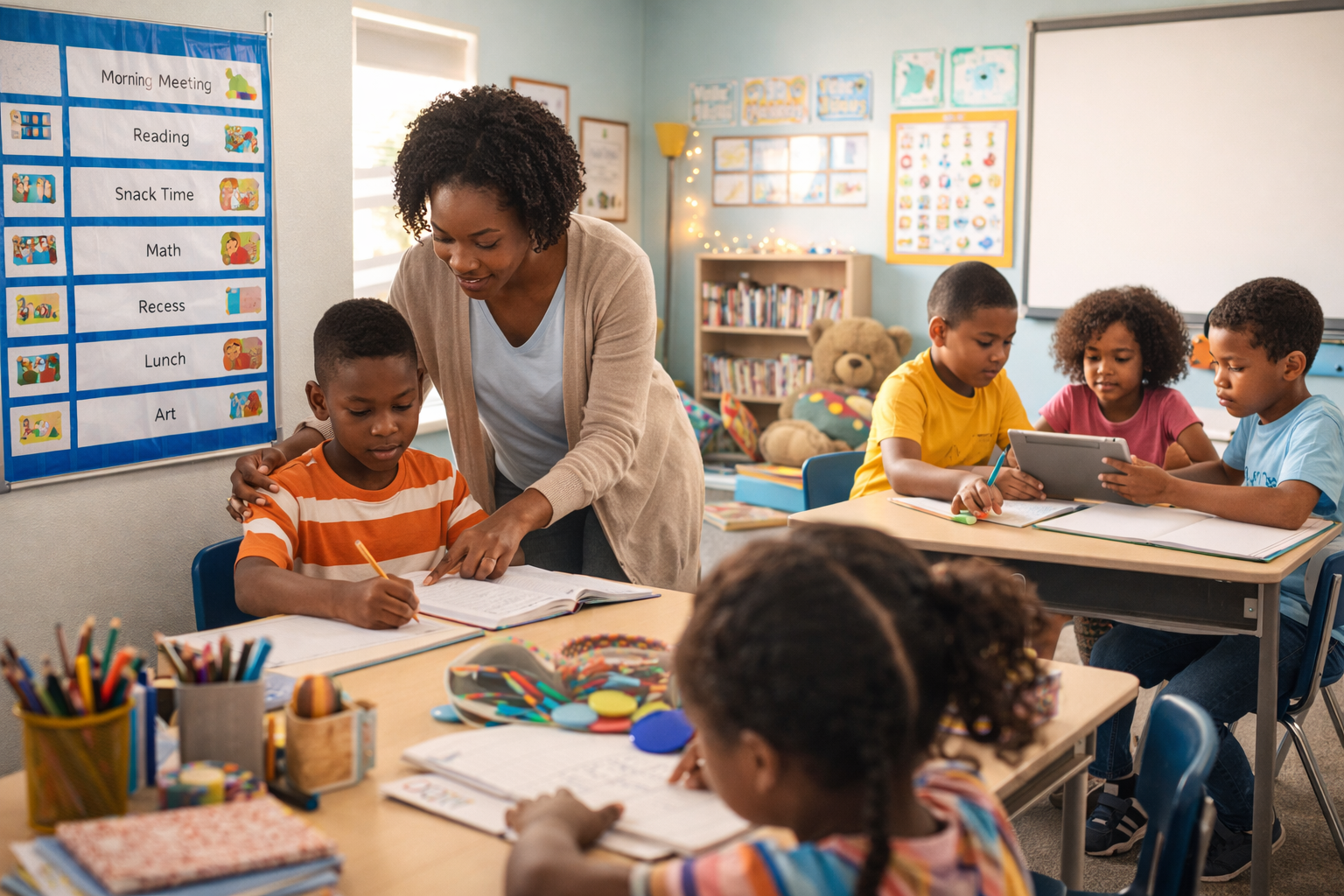
Special education traditionally relies on individualized instruction, often crafted manually by educators who may not have ample time or resources. AI amplifies educators’ capabilities by providing tools that:
- Individualize instruction in real time
- Enhance accessibility and inclusion
- Reduce teacher workload through automation
- Offer new modes of communication and learning support
According to a 2025 systematic literature review, AI technologies — including adaptive learning systems, assistive communication devices, and intelligent tutoring systems — significantly enhance learning experiences and outcomes for students with disabilities. These systems tailor content to individual needs, helping close performance gaps and support emotional and physical engagement in learning environments. (MDPI)
Top AI Applications Supporting Students With Disabilities
AI supports special education across multiple fronts. Below are key technologies and how they empower Students With Disabilities:
1. Personalized Learning Platforms
AI can analyze a student’s performance, adjust lesson difficulty, and offer customized content pacing — a breakthrough for learners with varying needs.
Why This Matters:
- Learners such as those with dyslexia or ADHD often benefit from adaptive pacing and tailored content delivery.
- AI platforms can break down complex topics into manageable steps that fit individual learning styles.
For example, adaptive learning platforms can automatically adjust reading assignments based on comprehension levels and provide scaffolding where needed, improving both confidence and academic performance.
2. Speech-to-Text and Text-to-Speech Tools
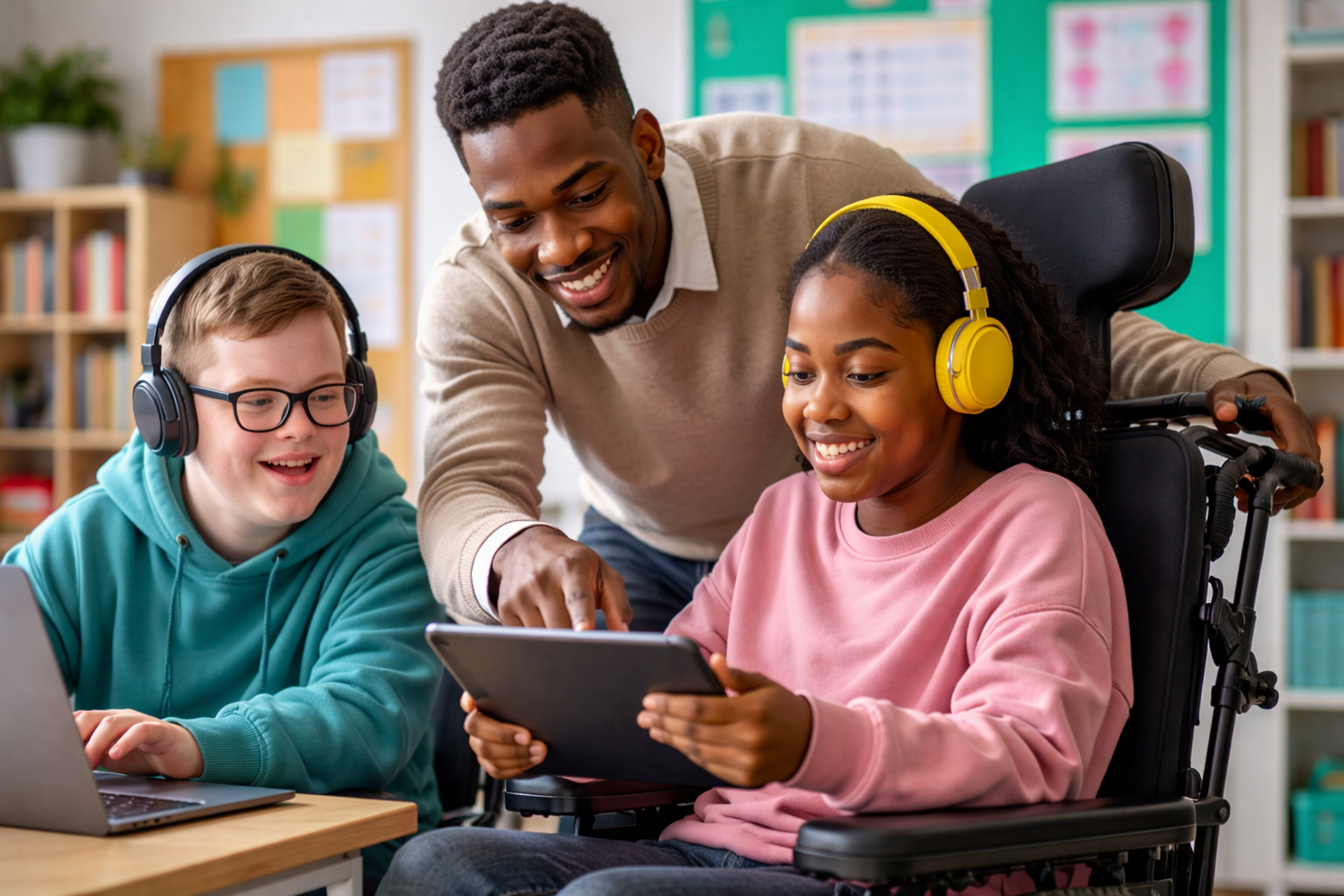
AI-driven speech recognition tools allow students who struggle with reading and writing to interact with text in meaningful ways.
Real-World Benefits:
- Students with visual impairments or learning disabilities can have text read aloud.
- Speech-to-text enables students with motor challenges to produce written work without a keyboard.
Research shows these technologies improve accessibility and engagement for students with visual and reading disabilities, making coursework more approachable and interactive. (researchcorridor.org)
3. Virtual Assistants and Chatbots
AI assistants and chatbots can provide real-time support, answer questions, and guide learners step-by-step through tasks.
Benefits include:
- Immediate feedback loops
- Reductions in student frustration
- Practice for communication skills in a pressure-free environment
These tools also help prepare students to learn independently, complementing teacher support.
4. Intelligent Tutoring Systems (ITS)
Intelligent tutoring systems use AI algorithms to replicate one-on-one instruction.
Special Use Cases:
- Students with autism spectrum disorder (ASD) can benefit from structured learning routines and guided exercises.
- Students who struggle with writing can receive targeted practice in grammar and composition.
However, research finds that many special education teachers have not yet fully integrated AI tools into writing instruction and that preparation and training are key predictors of effective usage. (Frontiers)
5. Social Robots for Communication Practice
Innovative projects like the AI-powered “Echo-Teddy” robot showcase how large language models can support social and communication skill development in autistic students. These robots interact naturally and adapt to individual needs, offering practice in real-world scenarios and promoting engagement. (arXiv)
Real-World AI Initiatives Making a Difference
To illustrate how AI is being deployed in practice, here are notable developments from recent education technology efforts:
Interactive Accessibility Tools for Visual Impairment
Researchers at IIIT-Allahabad have developed an AI-based tool that converts textbooks into enriched audio formats with detailed descriptions for students with visual disabilities. This approach enhances comprehension and ensures learners receive age-appropriate explanations. (The Times of India)
Benefits of AI Integration in Special Education
AI offers several advantages for Students With Disabilities:
1. Customized Learning Experiences
By adapting instruction to a student’s pace and abilities, AI supports mastery and confidence building.
2. Real-Time Feedback and Support
Students no longer need to wait for teacher-led feedback — AI systems can provide corrections and suggestions immediately.
3. Data-Driven Insights
AI tools can track progress and alert educators to learning gaps, enabling timely and targeted interventions.
4. Enhanced Teacher Efficiency
AI automates routines such as grading, IEP documentation, and lesson planning, freeing educators to focus on student interaction. (MDPI)
Challenges and Considerations
Despite its promise, AI integration in special education raises important concerns:
1. Digital Divide and Resource Gap
Access to AI tools is uneven. Schools in low-resource settings may lack infrastructure or funding necessary to implement AI effectively, leaving Students With Disabilities at a disadvantage. (MDPI)
2. Data Privacy and Ethical Use
AI systems often require sensitive student data. Ensuring robust privacy protections and ethical use policies is essential to safeguard learners’ rights.
3. Teacher Training and Support
Research indicates that even where AI tools exist, many teachers lack confidence or preparation to effectively integrate them into instruction. Professional development is crucial for meaningful implementation. (Frontiers)
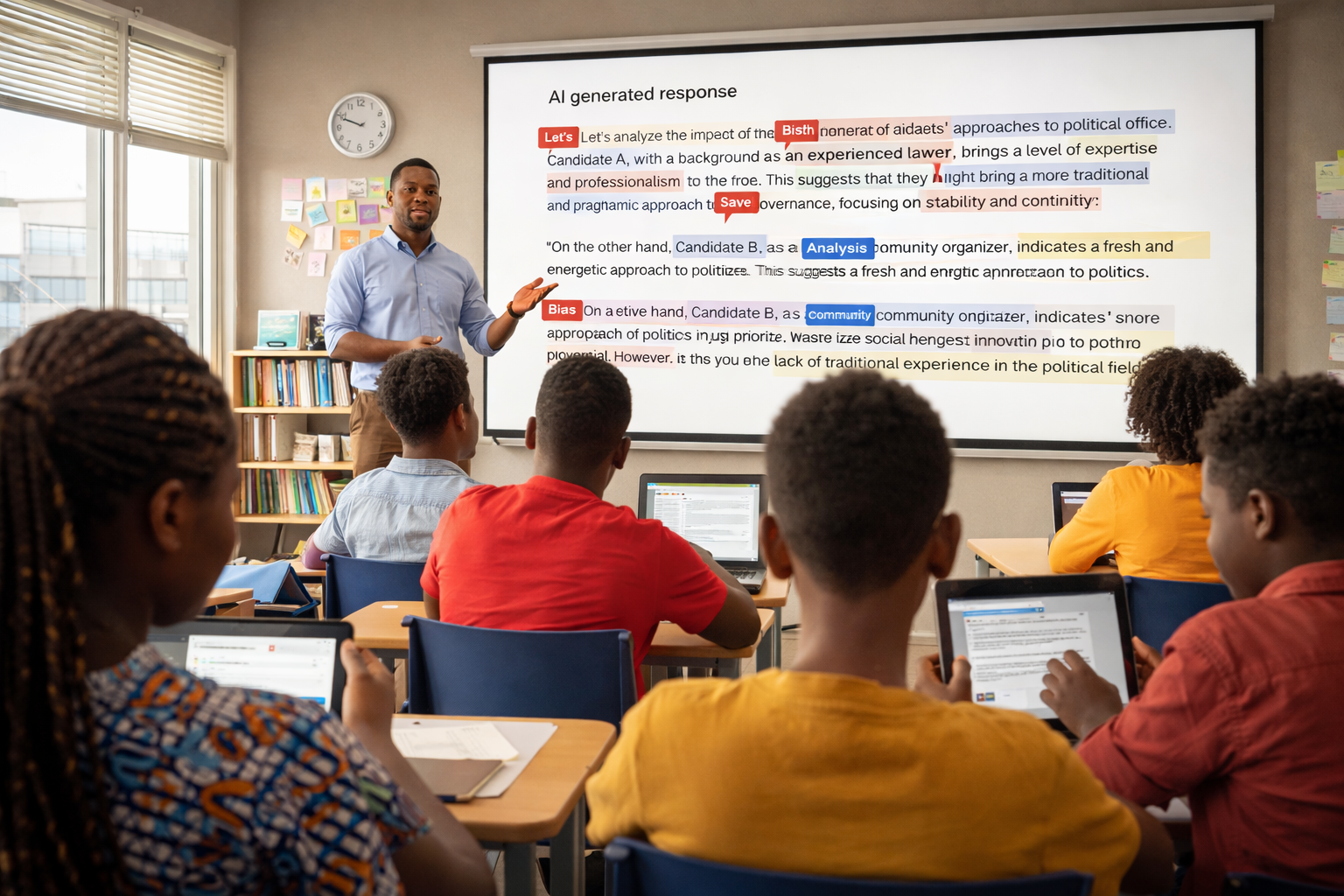
4. Bias and Accessibility
AI models sometimes reflect biases present in training data, which can disadvantage certain learners. Ongoing evaluation and inclusive design practices are necessary to mitigate these risks.
Best Practices for AI-Driven Special Education
For AI initiatives to succeed, schools and educators should adopt the following strategies:
1. Prioritize Inclusive Design
Involve educators, caregivers, and students in the design process to ensure AI tools meet real needs.
2. Ensure Professional Development
Train teachers to integrate AI tools confidently — from customizing adaptive content to interpreting analytics dashboards.
3. Combine AI With Human Support
AI is most effective when it complements, not replaces, human educators. Technology should enhance instructional time, not diminish essential teacher-student relationships.
4. Monitor and Evaluate Impact
Regular assessment of AI effectiveness helps identify what works, what doesn’t, and how tools can be improved.
Looking Ahead: The Future of AI for Students With Disabilities
The potential of AI in special education continues to grow. Emerging fields like affective computing and human-AI collaboration frameworks promise richer support systems that understand student emotions and adapt responses accordingly. Ethical frameworks rooted in participatory design are also gaining traction to ensure AI tools respect learner autonomy and dignity. (arXiv)
In addition, global discussions on AI ethics and inclusion are informing policy development to ensure fair access for all learners, regardless of ability or background.
Conclusion
AI is a powerful tool for supporting Students With Disabilities — from personalized learning pathways and accessibility tools to intelligent tutoring and communication support. When thoughtfully integrated with ethical safeguards and adequate teacher training, AI can unlock new opportunities for inclusion and academic achievement.
Special education stands at a critical inflection point: educators who embrace AI thoughtfully can transform classrooms into more engaging, equitable, and personalized learning environments where every learner has the opportunity to thrive.
By understanding both its possibilities and limitations, we ensure that AI technology serves as a bridge — not a barrier — toward a truly inclusive education for all.