







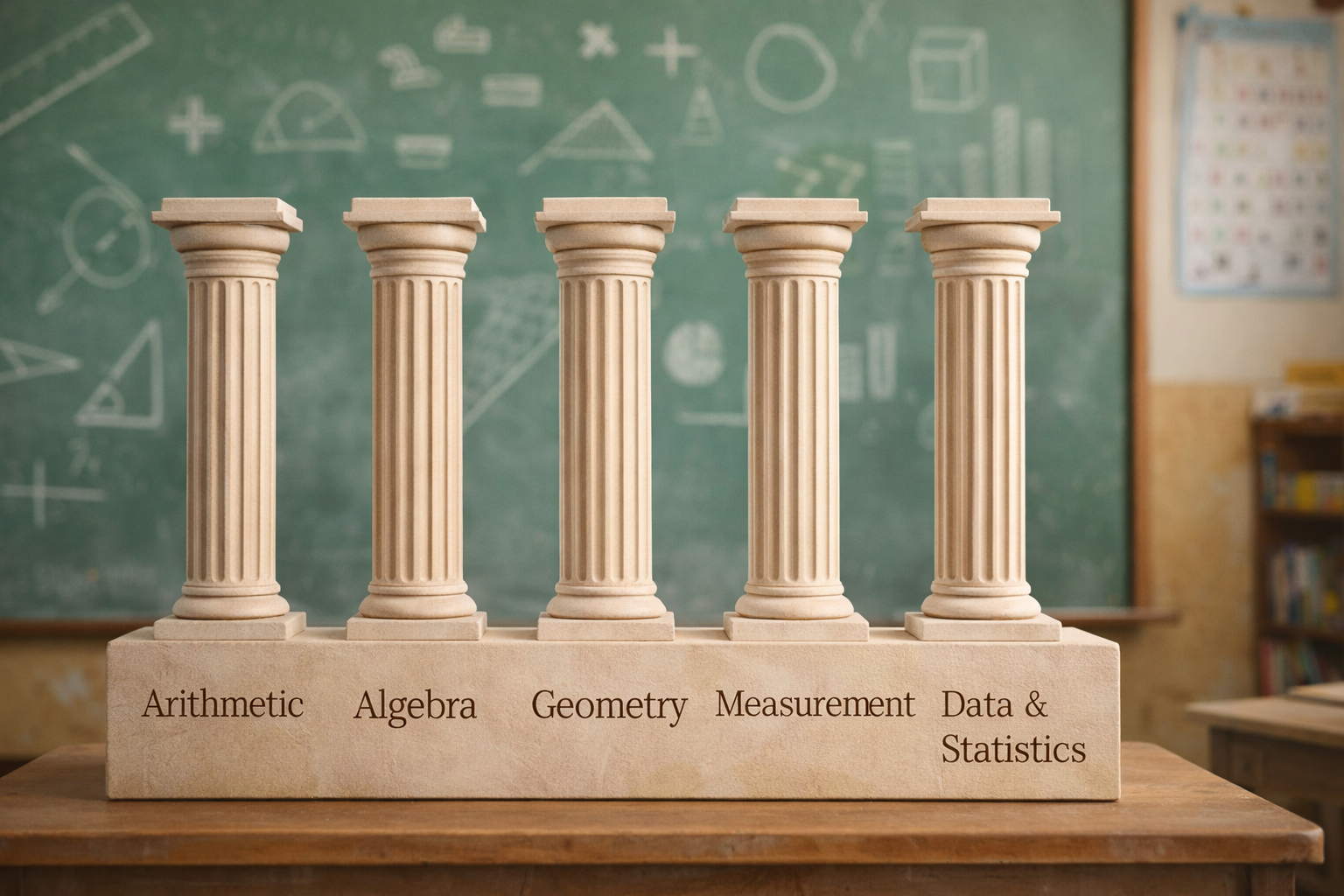


Mathematics is one of the most foundational disciplines shaping how humans understand, describe, and interact with the world. While many people associate mathematics mainly with school exams or calculations, its true scope goes far beyond numbers. Mathematics underpins science, technology, economics, education, and everyday decision-making.
From personal experience studying and applying mathematical reasoning in real-life contexts—such as budgeting, problem-solving, and analyzing patterns—it becomes clear that mathematics is less about memorization and more about structured thinking. This article provides a clear, accurate, and authoritative explanation of what mathematics is, how it developed, why it matters, and how it is applied in the modern world.
What Is Mathematics? (Clear Definition)
Mathematics is the formal study of quantity, structure, space, change, and relationships, using logical reasoning and symbolic representation.
According to Encyclopaedia Britannica, mathematics is a discipline that “deals with logical reasoning and quantitative calculation and its applications” and serves as a universal language for science and technology.
Rather than being limited to arithmetic, mathematics focuses on:
- Identifying patterns
- Modeling real-world situations
- Solving problems logically
- Making predictions based on evidence
This structured approach allows ideas to be tested objectively, which is why mathematics plays a central role in scientific discovery and technological innovation.
Mathematics Beyond Numbers
Although numbers are essential, mathematics is primarily about patterns and relationships. For example:
- Algebra studies relationships between variables
- Geometry explores spatial relationships
- Statistics identifies patterns in data
The National Council of Teachers of Mathematics (NCTM) emphasizes that mathematical understanding involves reasoning, communication, and problem-solving—not just computation (NCTM Principles and Standards for School Mathematics).
The Nature of Mathematics: Abstract and Applied
Mathematics exists in two closely connected forms: pure (abstract) and applied mathematics.
Abstract (Pure) Mathematics
Pure mathematics explores ideas that may not have immediate practical use, such as:
- Number theory
- Logical systems
- Abstract algebra
- Geometric theory
Historically, many abstract concepts later became essential in technology. For example, number theory—once considered purely theoretical—is now fundamental to modern encryption and cybersecurity.
Applied Mathematics
Applied mathematics uses mathematical models to solve real-world problems. Examples include:
- Engineering design calculations
- Financial forecasting
- Data analysis
- Climate modeling
According to NASA, mathematical modeling is critical for predicting planetary motion, spacecraft navigation, and climate behavior.
A Brief History of Mathematics
Mathematics developed gradually as societies faced practical challenges.
Early Civilizations
Early mathematics emerged from basic needs such as:
- Counting goods
- Measuring land
- Tracking time and seasons
Civilizations in Mesopotamia, Egypt, India, China, and Greece laid the foundations of arithmetic, geometry, and algebra. Greek mathematicians such as Euclid introduced systematic proof-based reasoning, which remains central to mathematics today.
Mathematical Growth Over Time
Later developments introduced:
- Algebraic notation (Islamic Golden Age)
- Calculus (Newton and Leibniz)
- Probability and statistics (17th–18th centuries)
Each advancement expanded humanity’s ability to understand change, motion, and uncertainty.
Major Branches of Mathematics
Arithmetic
Focuses on basic operations and numerical understanding. It is essential for everyday tasks like budgeting and measurement.
Algebra
Uses symbols to represent unknown values and relationships. Algebra is essential in physics, engineering, and computer science.
Geometry
Studies shapes, space, and spatial relationships. Geometry is widely used in architecture, design, and physics.
Calculus
Examines change and motion. Calculus is fundamental in engineering, economics, physics, and medical research.
Statistics and Probability
Deals with data, uncertainty, and risk. According to the OECD, statistical literacy is essential for informed decision-making in modern societies.
Why Mathematics Is Important
Mathematics in Everyday Life
People use mathematics daily, often unconsciously, when:
- Managing finances
- Measuring ingredients
- Estimating time and distance
- Comparing prices and discounts
These everyday applications demonstrate that mathematics is a practical life skill, not just an academic subject.
Mathematics in Science and Technology
Modern innovation relies heavily on mathematics. It supports:
- Computer algorithms and software development
- Engineering and construction
- Medical imaging and diagnostics
- Space exploration and satellite navigation
The World Economic Forum identifies mathematical and analytical thinking as core skills for future jobs in technology and data-driven industries.
Mathematics as a Way of Thinking
Beyond calculations, mathematics develops critical thinking skills.
Logical Reasoning
Mathematics teaches people to:
- Follow evidence-based steps
- Test assumptions
- Draw valid conclusions
These skills are valuable in law, medicine, business, and everyday decision-making.
Problem-Solving Skills
Mathematical problem-solving involves:
- Breaking complex problems into smaller parts
- Testing multiple approaches
- Refining solutions logically
These abilities apply far beyond mathematics itself.
Common Misconceptions About Mathematics
“Mathematics Is Only for Geniuses”
Research in mathematics education shows that mathematical ability improves with practice and understanding, not innate talent alone.
“Mathematics Has No Real-World Use”
Virtually every modern system—from smartphones to financial markets—relies on mathematical models.
“Mathematics Is Just Memorization”
Educational research emphasizes conceptual understanding over rote memorization (OECD Education Reports).
Mathematics and Education
Goals of Mathematics Education
Effective mathematics education aims to:
- Build conceptual understanding
- Encourage reasoning and problem-solving
- Develop confidence in logical thinking
Many education systems now emphasize understanding why formulas work, not just how to use them.
Lifelong Value of Mathematical Skills
Mathematical thinking remains useful throughout life, supporting:
- Career growth
- Financial planning
- Informed civic participation
Mathematics in the Modern World
Mathematics and Data Science
With the rise of big data, mathematics is central to:
- Data analysis
- Artificial intelligence
- Machine learning
These fields rely on mathematical models to identify patterns and make predictions, as noted by institutions such as MIT and Stanford University.
Mathematics and Global Challenges
Mathematics helps address major global issues, including:
- Climate modeling
- Population growth
- Resource optimization
Accurate mathematical models support better policy decisions and long-term planning.
Conclusion
Mathematics is far more than numbers and formulas. It is a disciplined way of thinking that allows humans to understand patterns, solve problems, and make informed decisions. From ancient civilizations to modern artificial intelligence, mathematics has continuously shaped human progress.
By viewing mathematics as both a practical tool and a logical framework, readers can better appreciate its relevance in daily life, education, and the future of technology. Whether applied to simple tasks or advanced research, mathematics remains one of the most powerful tools for understanding the world.