









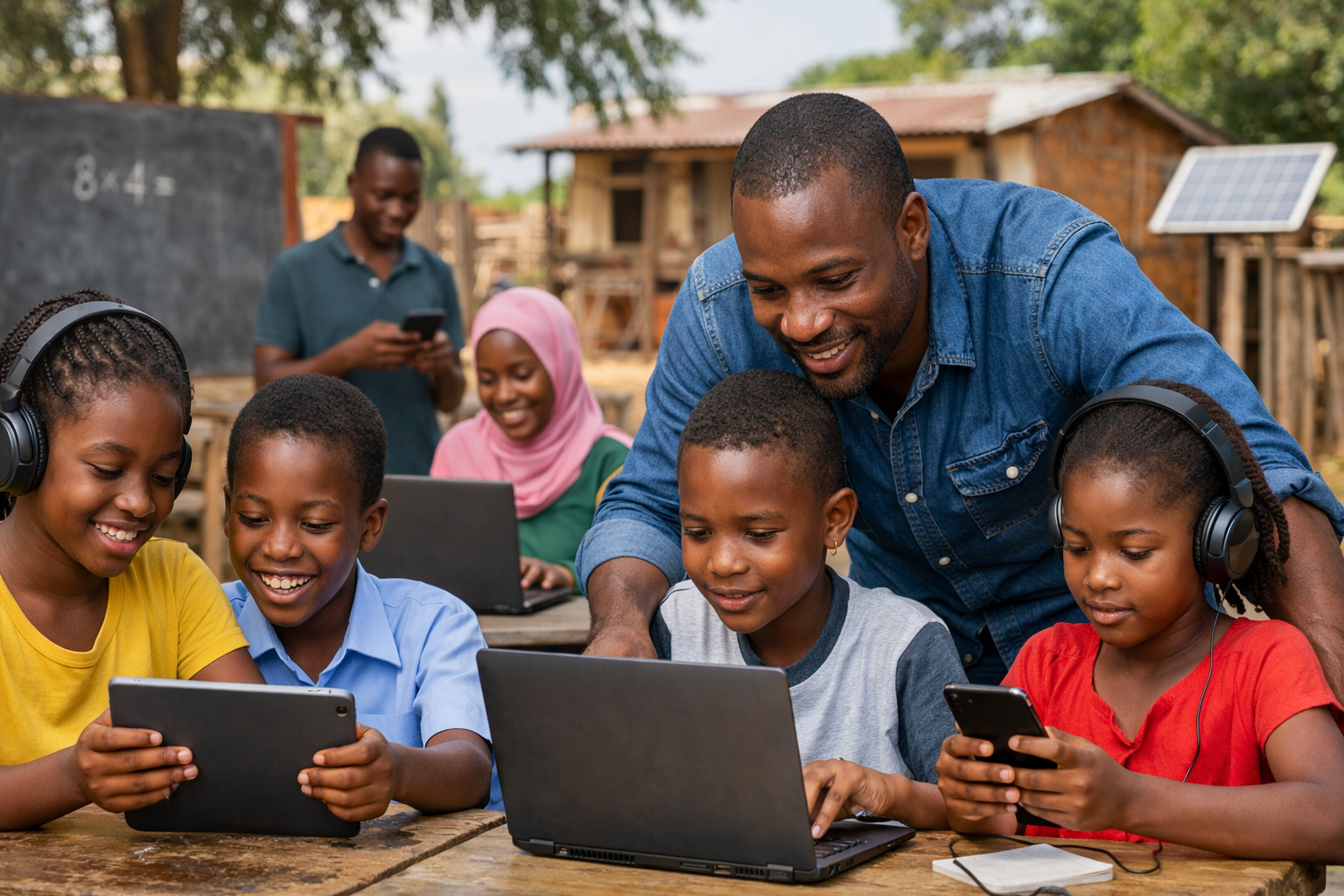
Africa’s education systems are at a defining moment. Through my work analyzing digital education initiatives and policy reports across Sub-Saharan Africa, I have seen firsthand how traditional schooling models—designed decades ago—are struggling to meet the needs of today’s rapidly growing and youthful population. At the same time, I have also observed how well-designed digital learning tools are already reshaping access, quality, and relevance of education in ways that were previously impossible.
With the youngest and fastest-growing population in the world, Africa holds extraordinary potential. However, without urgent reform, existing education systems risk leaving millions of young people without the skills needed to participate meaningfully in the modern economy. Evidence increasingly shows that technology, when applied thoughtfully and inclusively, can play a pivotal role in closing this gap.
Why Education Reform in Africa Is Urgent
Africa is home to over 1.4 billion people, and approximately 70% of the population is under the age of 30 (United Nations Department of Economic and Social Affairs). By 2055, more than 1 billion children worldwide will live in Africa, placing immense pressure on already stretched education systems (UNICEF).
Despite progress in enrollment over the past two decades, critical challenges persist:
- Access gaps: An estimated 98 million children in Sub-Saharan Africa are out of school, the highest number globally (UNESCO Institute for Statistics).
- Teacher shortages: The continent faces a shortage of over 15 million trained teachers, particularly at the secondary level (UNESCO, Global Education Monitoring Report).
- Skills mismatch: About 72 million young people aged 15–24 are neither in education, employment, nor training (NEET), with young women disproportionately affected (International Labour Organization).
These gaps are not only educational—they are economic. The World Bank estimates that learning poverty could cost African economies trillions of dollars in lost lifetime earnings if left unaddressed.
How Technology Is Reshaping Learning Across Africa
Based on both field observations and published evaluations, digital education tools are helping address three core challenges: access, quality, and relevance.
1. Expanding Access Beyond Physical Classrooms
In many rural and low-income communities, schools are distant, overcrowded, or understaffed. Mobile-first learning platforms are proving especially effective in these contexts.
- Eneza Education (Kenya) has reached over 5 million learners using basic mobile phones, demonstrating measurable improvements in exam readiness among low-income students (World Bank EdTech Case Studies).
- Ubongo (Tanzania) delivers curriculum-aligned educational content to over 17 million children weekly through television, radio, and mobile platforms (UNICEF, 2022).
These models work because they align with existing infrastructure—basic phones and broadcast media—rather than relying solely on high-bandwidth internet access.
2. Personalized Learning Through AI and Adaptive Tools
One of the most promising applications of educational technology is personalized learning, particularly in classrooms where student-teacher ratios often exceed 40:1.
Adaptive learning platforms use artificial intelligence to:
- Identify gaps in learner understanding
- Adjust content pace and difficulty
- Provide immediate feedback
While most large-scale evidence comes from outside Africa, relevant insights exist. For example, integration of Khan Academy into public schools in Brazil led to significant gains in mathematics proficiency by enabling self-paced practice (OECD Education Policy Perspectives). Similar pilot programs are now emerging in African countries, though results remain context-dependent.
Importantly, AI tools are also supporting teachers. In South Africa, early trials of AI-assisted grading and lesson planning tools have reduced administrative workload, allowing educators to focus more on instruction and student support (EdTech Hub).
3. Connecting Education to Employment and Skills Demand
Digital learning is not limited to children. Across Africa, platforms are helping young adults acquire job-relevant skills and connect directly to labor markets.
Examples include:
- Andela, which trains software developers and connects them to global employers
- AltSchool Africa, offering online certification programs aligned with digital careers
- Sayna (Madagascar), combining gamified learning with paid micro-tasks, helping learners earn while they build skills
Evidence from the World Economic Forum shows that such skills-linked learning models significantly improve employment outcomes compared to traditional academic pathways alone.
4. Career Guidance and Informed Decision-Making
Beyond skills acquisition, students need better information about education-to-career pathways. Digital guidance tools are beginning to fill this gap.
Platforms like GradesMatch help learners understand how subject choices, grades, and certifications align with future career options—an area long neglected in many education systems.
What Is Driving Africa’s EdTech Growth?
A major enabling factor is connectivity. According to the GSMA, mobile internet penetration in Africa is projected to exceed 50% by 2025, up from under 3% in 2010. While access remains uneven, this rapid expansion is fundamentally changing who can participate in digital learning.
However, connectivity alone is not enough. Research from the World Bank consistently shows that technology improves learning outcomes only when paired with strong pedagogy, teacher support, and relevant content.
Strengthening Teachers, Not Replacing Them
Contrary to common fears, technology works best when it augments teachers rather than replaces them.
- In Rwanda, education management systems such as CA-MIS enable real-time tracking of student performance, helping educators identify learning gaps earlier (Rwanda Ministry of Education).
- In Nigeria, platforms like Edves support lesson planning, assessment tracking, and parent communication, improving school management efficiency (Boston Consulting Group).
These tools support evidence-based teaching and reduce administrative friction—key factors in improving learning outcomes at scale.
What Must Happen Next
To fully realize the promise of digital education in Africa, four priorities stand out:
1. Invest in Infrastructure
Reliable electricity, affordable devices, and broadband access remain foundational. Public investment and universal service funds will be critical.
2. Localize Content
EdTech solutions must reflect local languages, curricula, and cultural contexts to be effective and inclusive (UNESCO).
3. Strengthen Public–Private Collaboration
Governments, startups, NGOs, and donors must align incentives and scale proven solutions rather than duplicating pilots.
4. Align Education With Labor Markets
Curricula should integrate digital literacy, vocational skills, and soft skills aligned with high-growth sectors such as technology, healthcare, and sustainable agriculture (World Bank Skills Development Reports).
Conclusion
Africa stands at the threshold of a new education paradigm. Based on both evidence and lived observation, it is clear that technology—when applied thoughtfully—can dramatically expand access to learning, improve quality, and connect education directly to employment pathways.
This transformation will not happen overnight. But with sustained investment, strong policy frameworks, and collaboration across sectors, Africa’s young population can be equipped not just to learn—but to thrive in a rapidly changing global economy.