







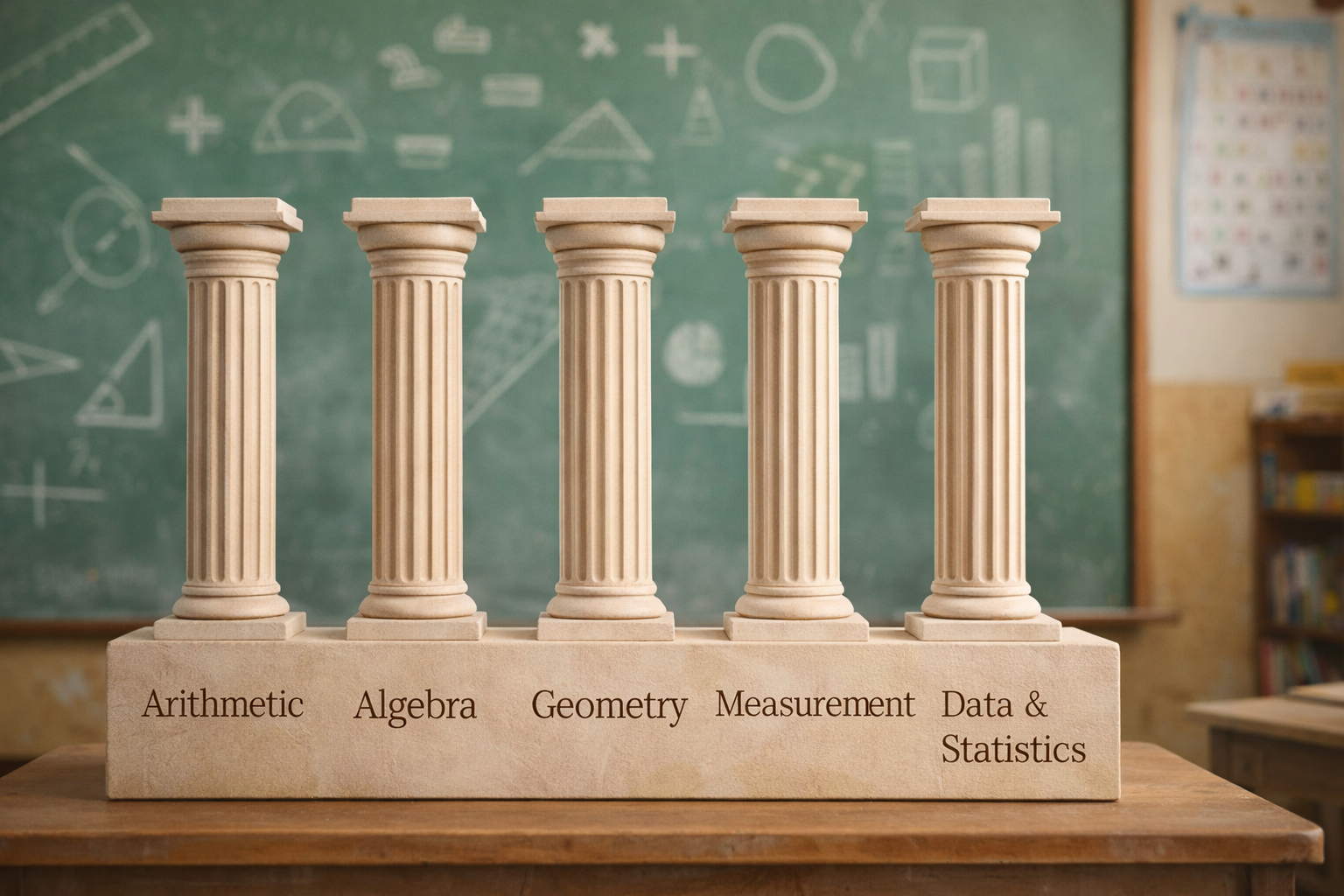


Mathematics plays a critical role in how individuals think, reason, and solve problems in everyday life. Over the past several years, however, I have observed—both through classroom interactions and curriculum reviews—that many learners struggle not because they lack ability, but because their foundational understanding of mathematics was never fully developed. This experience reflects a broader global concern: declining numeracy outcomes, increased math anxiety, and uneven learning progression across education systems.
Research from international assessments such as the OECD’s Programme for International Student Assessment (PISA) consistently shows that students perform better when they develop strong conceptual foundations rather than relying on memorization alone (OECD, PISA Results). Rebuilding effective mathematics education, therefore, requires more than updated textbooks or digital tools. It demands a renewed focus on how students experience math, how teachers are supported, and how learning is assessed.
Why Strong Math Foundations Matter
In my experience working with learners at different stages, early encounters with mathematics often determine long-term confidence. Students who miss key concepts—such as number sense, place value, or proportional reasoning—frequently struggle when math becomes more abstract. These difficulties are rarely about intelligence; they are usually about gaps in understanding.
Educational research supports this observation. The National Council of Teachers of Mathematics (NCTM) emphasizes that strong foundational understanding enables learners to reason, communicate mathematically, and apply knowledge across contexts (NCTM, Principles to Actions).
Strong foundations help learners:
- Develop logical and critical thinking skills
- Apply mathematics confidently in real-life situations
- Persevere when solving unfamiliar problems
- Transition smoothly to advanced mathematical concepts
When foundational learning is secure, mathematics becomes a tool for thinking rather than a source of anxiety.
Understanding the Root Challenges in Math Teaching
Before rebuilding, it is essential to identify what has weakened mathematics instruction in many classrooms.
Overemphasis on Speed and Memorization
In classrooms I have observed, students are often praised for answering quickly rather than explaining their reasoning. While fluency matters, an excessive focus on speed encourages memorization at the expense of understanding.
Research in mathematics education shows that procedural fluency without conceptual understanding leads to fragile learning that breaks down when problems change format (Hiebert & Grouws, Effective Teaching for Conceptual Understanding).
This approach often results in students who:
- Forget concepts easily
- Struggle to transfer knowledge to new situations
- Lose confidence when faced with unfamiliar problems
Gaps in Conceptual Understanding
Mathematics is cumulative. When students advance without mastering earlier ideas, learning gaps widen over time. These gaps frequently surface in later topics such as algebra or problem-solving, where abstract reasoning is required.
Inconsistent Teaching Approaches
Frequent changes in curriculum focus, instructional methods, or assessment styles can confuse learners. Consistency in instructional approach helps students form stable mental models and problem-solving strategies.
Prioritizing Conceptual Understanding Over Rote Learning
One of the most effective ways to strengthen mathematics education is to place understanding before memorization.
Teaching the “Why” Behind the Math
Educational theories such as constructivism emphasize that learners build knowledge by making sense of ideas, not by memorizing isolated procedures. In practice, this means helping students understand why a method works.
Effective strategies include:
- Using visual models and representations
- Asking students to explain solutions in their own words
- Connecting abstract ideas to real-world contexts
Studies summarized by the National Research Council show that students who learn with conceptual explanations retain knowledge longer and apply it more flexibly (NRC, Adding It Up).
Encouraging Multiple Solution Paths
Allowing students to solve problems in different ways reinforces the idea that mathematics is logical and adaptable. In classrooms where multiple strategies are valued, students tend to demonstrate stronger reasoning and greater confidence.
Building Teacher Confidence and Subject Mastery
Strong mathematics instruction depends heavily on teacher expertise and support.
Strengthening Teachers’ Mathematical Knowledge
Through professional development initiatives I have reviewed, teachers consistently report greater instructional confidence when they deepen their understanding of foundational concepts. Research confirms that teacher content knowledge strongly influences student outcomes (Ball, Thames, & Phelps, Content Knowledge for Teaching).
Ongoing professional learning should focus on:
- Core mathematical ideas and progressions
- Common student misconceptions
- Evidence-based instructional strategies
Supporting Effective Teaching Practices
Teachers benefit from clear, practical guidance on:
- Using formative assessment to gauge understanding
- Responding to errors as learning opportunities
- Adapting instruction for diverse learners
Supportive school environments enable teachers to prioritize instructional quality over content coverage.
Creating a Balanced and Coherent Curriculum
A strong mathematics curriculum is focused, logically sequenced, and developmentally appropriate.
Fewer Topics, Deeper Learning
Curriculum analyses from high-performing education systems show that depth leads to stronger understanding than rapid topic coverage (OECD, Education at a Glance). When students have time to explore concepts deeply, they form stronger connections and retain learning longer.
Logical Progression of Concepts
Mathematical ideas should build naturally on prior knowledge. Clear learning progressions reduce cognitive overload and help students see how concepts connect.
Using Assessment as a Tool for Learning
Assessment should support learning, not merely measure it.
Moving Beyond High-Stakes Testing
While standardized testing provides system-level data, research from the Assessment Reform Group shows that formative assessment has a far greater impact on day-to-day learning (Black & Wiliam, Inside the Black Box).
Effective assessment includes:
- Observations and classroom discussions
- Short quizzes focused on reasoning
- Student explanations and reflections
Identifying Learning Gaps Early
Low-stakes, regular assessments help teachers identify misunderstandings before they become entrenched. Early intervention is consistently linked to improved long-term outcomes.
Making Math Meaningful and Relevant
Students engage more deeply when they understand why mathematics matters.
Connecting Math to Everyday Life
In practical classroom settings, real-world examples—such as budgeting, measurement, or data interpretation—help students recognize the usefulness of mathematics beyond school. Educational research shows that relevance increases motivation and retention.
Encouraging a Growth Mindset
Psychological research by Carol Dweck highlights that students who view ability as developable are more resilient when facing challenges. Classrooms that normalize mistakes foster persistence and curiosity.
Supporting Learners with Different Needs
A strong foundation must be accessible to all learners.
Differentiated Instruction
Students differ in pace, background knowledge, and learning style. Effective math instruction includes varied strategies, targeted support, and appropriate enrichment opportunities.
Early Support and Intervention
Evidence from intervention studies shows that timely, focused support can prevent long-term learning difficulties and reduce math-related anxiety.
The Role of Families and Communities
Mathematics learning extends beyond the classroom.
Encouraging Positive Attitudes at Home
Families play an important role by reinforcing positive messages about math, encouraging problem-solving in daily activities, and supporting consistent practice.
Community Support for Education
Communities that value education help reinforce the importance of numeracy as a life skill essential for informed decision-making and economic participation.
Conclusion
Rebuilding strong foundations for effective mathematics education is not about quick fixes. Based on classroom experience, educational research, and international best practices, it is clear that lasting improvement depends on understanding, consistency, teacher support, and meaningful learning.
By prioritizing conceptual understanding, empowering teachers, designing coherent curricula, and supporting learners early, mathematics education can become more inclusive and effective. Strong math foundations do more than improve test scores—they equip learners with skills, confidence, and reasoning abilities that last a lifetime.

One thought on “Rebuilding Strong Foundations for Effective Mathematics Education”