





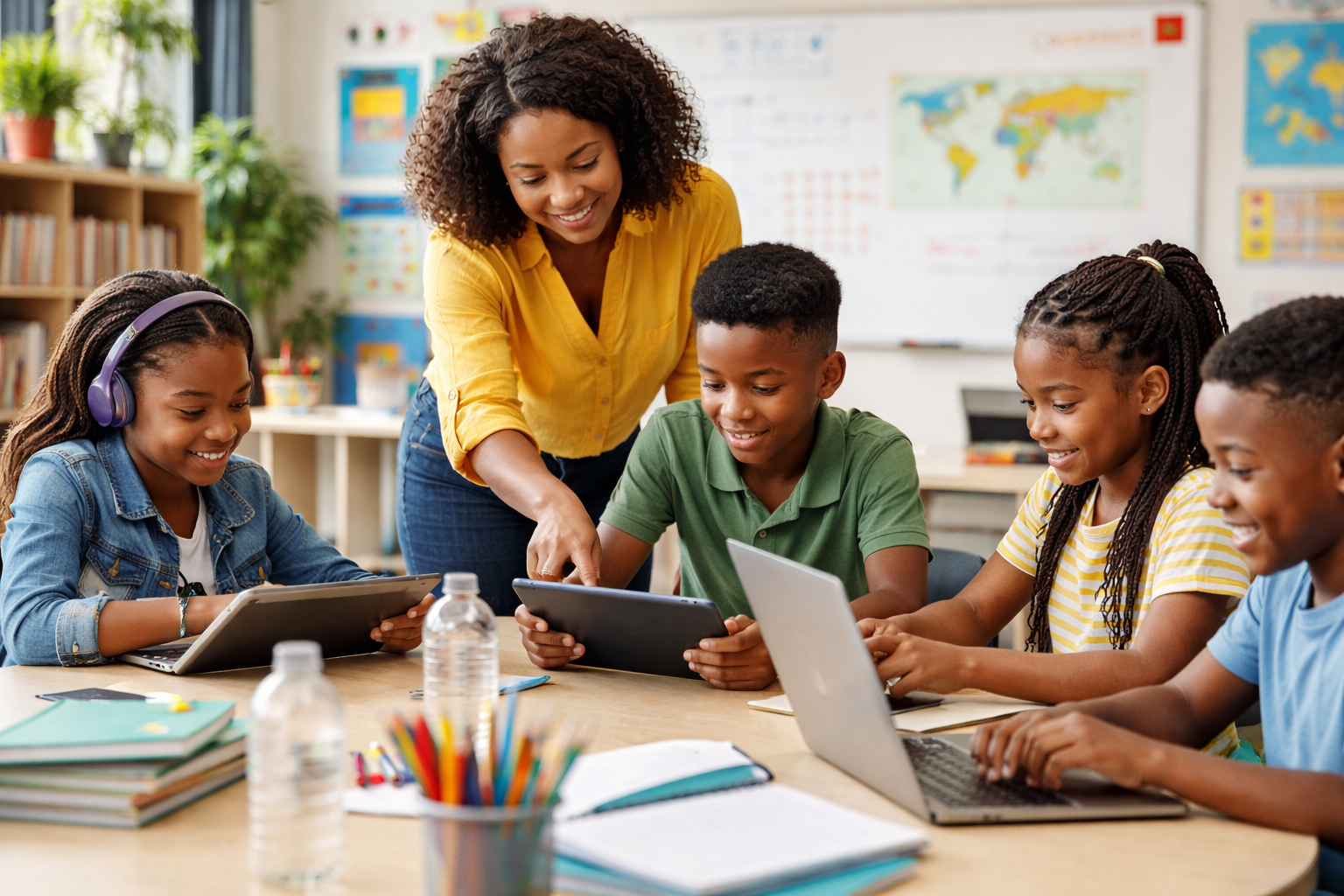
Education is undergoing one of the most significant transformations in its history. While innovations such as virtual reality, gamified apps, and online universities continue to expand, one development stands above the rest:
Personalized learning powered by artificial intelligence (AI).
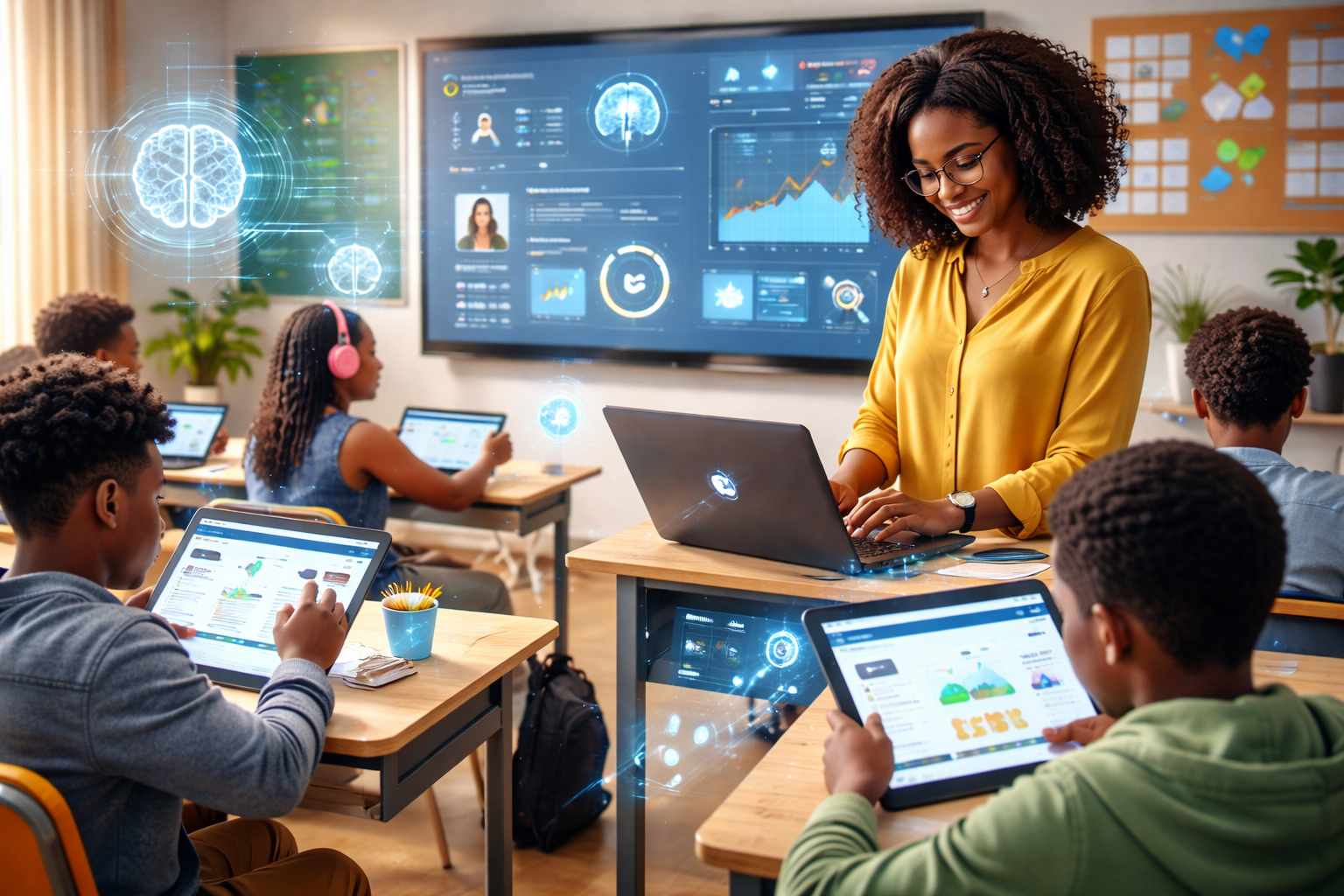
Unlike traditional one-size-fits-all instruction, personalized learning uses data, adaptive algorithms, and learning science to tailor education to individual students’ needs. When implemented responsibly, it has the potential to improve engagement, close achievement gaps, and better prepare learners for a rapidly changing world.
But this shift is more than a technological upgrade—it represents a fundamental change in how we understand learning itself.
The Problem with the Traditional Model
For decades, most school systems followed a standardized instructional model:
- Same lessons
- Same pacing
- Same assessments
- Same expectations
This structure created efficiency, but not equity.
Research from the OECD has consistently shown wide variation in student performance within the same classroom. Learners differ in background knowledge, processing speed, motivation, and support systems. A fixed instructional pace inevitably leaves some students behind while others disengage due to lack of challenge.
Educators have long aimed for differentiated instruction, but in large classrooms, delivering truly individualized support is extremely difficult without technological assistance.
This is where AI-enabled personalization becomes transformative.
What Personalized Learning Actually Means (Beyond the Buzzword)
Personalized learning is often misunderstood as simply “using technology.” In reality, it is grounded in established learning science, including:
- Mastery learning theory
- Formative assessment feedback loops
- Cognitive load management
- Spaced repetition
AI systems enhance these principles by analyzing student interaction data in real time.
Most adaptive platforms use machine learning models trained on large datasets of student performance. These models predict:
- Probability of concept mastery
- Likelihood of misconception
- Optimal next content sequence
For example, in a secondary math pilot program I observed during a digital learning rollout, students who struggled with quadratic equations received automatically generated scaffolded exercises within minutes of incorrect responses. Teachers reported spending less time diagnosing issues and more time coaching individual learners.
The technology did not replace the teacher—it amplified instructional precision.
Evidence Supporting AI-Driven Personalization
Authoritative institutions have examined the role of AI in education.
According to UNESCO, artificial intelligence has the potential to support “inclusive and equitable quality education” when implemented with ethical safeguards.
Similarly, the U.S. Department of Education has noted that data-driven instructional tools can assist educators in identifying learning gaps earlier than traditional assessment cycles.
Studies summarized by the World Economic Forum highlight that adaptive systems can increase learner engagement when feedback is immediate and personalized.
However, research also cautions that outcomes vary widely depending on teacher training, infrastructure quality, and implementation design. Technology alone does not guarantee improved performance.
How Adaptive Learning Platforms Work
Adaptive platforms generally follow a four-stage cycle:
- Student interaction (lesson, quiz, simulation)
- Data capture (response time, accuracy, pattern recognition)
- Algorithmic analysis (prediction of mastery or misunderstanding)
- Dynamic content adjustment
Unlike static digital textbooks, these systems continuously adjust difficulty and presentation style.
For example:
- A fast-moving learner advances without artificial pacing limits.
- A learner struggling with fractions may receive visual models, step-by-step explanations, and additional practice before progressing.
This real-time responsiveness is something traditional classrooms struggle to replicate at scale.
Data-Driven Decision Making in Schools
Beyond individual personalization, education systems are increasingly using learning analytics to inform institutional decisions.
Schools now analyze:
- Engagement trends
- Attendance correlations
- Assessment performance patterns
- Curriculum effectiveness
This allows earlier identification of at-risk students.
However, responsible data governance is critical. UNESCO and other global bodies emphasize the importance of:
- Privacy protection
- Transparent algorithms
- Bias mitigation
- Human oversight
Without these safeguards, personalization could unintentionally reinforce inequities.
Expanding Access and Inclusion
AI-powered assistive technologies are also improving accessibility.
Examples include:
- Text-to-speech for students with visual impairments
- Speech recognition for writing support
- Real-time translation tools for multilingual learners
- Captioning systems for hearing-impaired students
When deployed equitably, these tools expand participation and reduce structural barriers.
But access disparities remain a serious challenge. Not all communities have reliable broadband or device access. Policymakers must address infrastructure gaps to prevent widening the digital divide.
Preparing Students for a Changing Workforce
The modern workforce increasingly demands:
- Critical thinking
- Adaptability
- Digital fluency
- Collaboration
Automation is reshaping industries. Education systems must respond accordingly.
AI-driven personalization supports skill development by allowing students to:
- Practice problem-solving at appropriate challenge levels
- Receive feedback immediately
- Explore interdisciplinary projects
Rather than focusing solely on memorization, students engage in deeper conceptual learning.
The Evolving Role of Teachers
A common misconception is that AI replaces educators.
In practice, the opposite is true.
Teachers become:
- Learning designers
- Mentors
- Critical thinking facilitators
- Emotional support providers
In the schools where adaptive systems were integrated thoughtfully, teachers reported that automation of grading and routine analysis allowed more time for one-on-one interaction.
Technology handles pattern detection.
Teachers provide judgment, empathy, and motivation.
This partnership is where the true transformation lies.
Challenges and Ethical Considerations
Personalized AI-driven education is promising—but not without risks.
Key concerns include:
- Algorithmic bias
- Data privacy breaches
- Over-surveillance
- Excessive screen time
- Reduced human interaction
The OECD has emphasized that educational AI systems must be transparent, explainable, and subject to ongoing evaluation.
Responsible implementation requires:
- Clear policies
- Teacher training
- Regular impact assessment
- Community engagement
Innovation without oversight can erode trust.
Why Personalized Learning Stands Out
Many educational innovations compete for attention—virtual reality simulations, gamified platforms, competency-based credentials.
What makes personalized learning different is that it addresses a foundational issue: individual variation in learning.
Every student learns differently.
By combining:
- Learning science
- Machine learning analytics
- Human instructional expertise
Education systems move closer to meeting learners where they are.
That shift—from standardization to responsiveness—is arguably the most significant change happening in education today.
A Balanced Outlook for the Future
The future of education will not be defined by technology alone.
It will be defined by how responsibly and thoughtfully technology is integrated.
When personalization tools are:
- Evidence-based
- Ethically governed
- Equitably accessible
- Human-centered
They can support better engagement, earlier intervention, and more meaningful learning experiences.
But success depends on implementation—not hype.
Conclusion: A More Responsive Education System
The most exciting development in education today is the move toward personalized, data-informed learning supported by artificial intelligence.
This transformation is powerful because it is not about replacing teachers or digitizing worksheets.
It is about recognizing that learners are different—and building systems flexible enough to respond.
If education adapts to students rather than forcing students to adapt to rigid systems, the result could be:
- Greater equity
- Stronger engagement
- Improved skill readiness
- More human-centered classrooms
The excitement lies not in the algorithms—but in the possibility of education becoming more responsive, inclusive, and effective for every learner.