









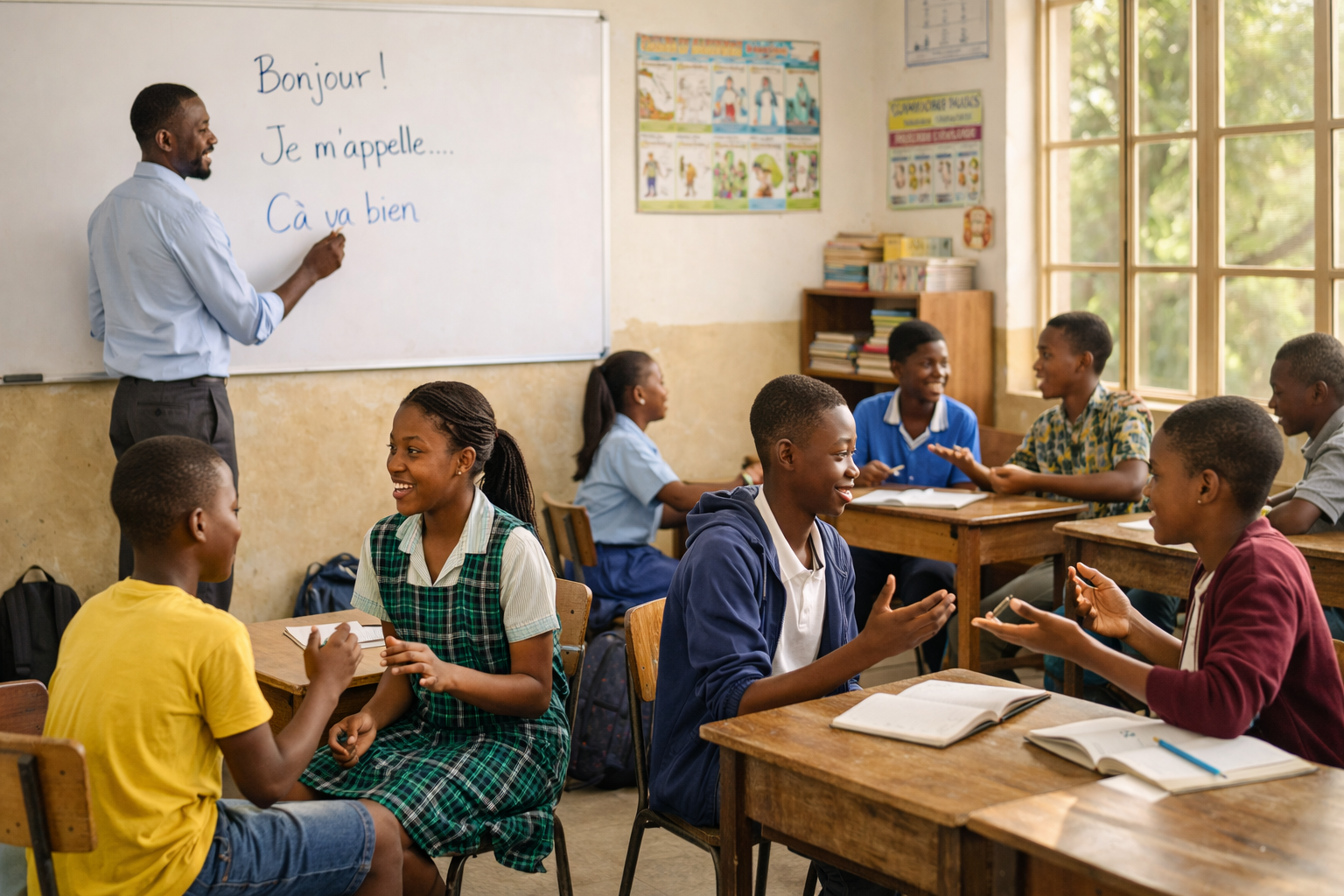
Choosing a foreign language in school is an important academic decision. For many students and parents, learning French as a subject in school raises an important question: Is it truly worth the effort?
Based on classroom experience, educational research, and global language data, the answer is often yes — when approached with consistency and realistic expectations.
This guide explains the benefits of learning French, the common challenges students face, and practical strategies for long-term success.
Why French Is an Important School Subject
French Is a Major Global Language
French is spoken by over 320 million people worldwide, according to the Organisation internationale de la Francophonie (OIF). It is an official language in 29 countries across Europe, Africa, North America, and the Caribbean.
It is also one of the official languages of major international institutions, including:
- United Nations
- European Union
- International Olympic Committee
Because of this international presence, French remains one of the most strategically valuable second languages taught in schools.
Academic and Career Advantages of Learning French
In my experience observing secondary school language programs, students who remain consistent in French often benefit academically in several ways:
- They meet university foreign language entry requirements.
- They qualify for exchange or study-abroad programs in French-speaking countries.
- They strengthen scholarship applications where bilingualism is valued.
Professionally, French is especially useful in:
- International relations
- Aviation
- Tourism and hospitality
- Global development
- Translation and interpretation
- International business
According to data from the OIF, French is one of the fastest-growing languages in Africa, which increases its long-term economic relevance.
Cognitive Benefits of Learning French
Educational and cognitive research suggests that bilingualism can positively influence brain function.
A review published by researchers affiliated with institutions such as University of York has found associations between bilingualism and enhanced executive control — including improved attention management and task switching.
While results vary between individuals, studies generally suggest that learning a second language may contribute to:
- Improved working memory
- Stronger problem-solving skills
- Increased mental flexibility
In classroom settings, I have observed that students who actively engage in vocabulary recall and conversational practice often demonstrate stronger concentration during language tasks compared to passive learners.
It is important to note that language learning is not a guaranteed cognitive “boost,” but consistent engagement appears to strengthen certain mental processes over time.
Cultural Awareness and Global Perspective
Learning French in school extends beyond grammar exercises. It introduces students to diverse Francophone cultures, including regions in:
- France
- Canada (particularly Quebec)
- Senegal
- Ivory Coast
- Belgium
- Switzerland
Exposure to global perspectives can help students develop cultural sensitivity and cross-cultural communication skills — both increasingly important in a globalized world.
In classrooms where cultural content (music, film, food traditions, literature) is integrated, student engagement tends to increase significantly.
What Students Actually Learn in French Class
French as a school subject typically develops four core competencies:
1. Listening
Understanding spoken French through dialogues, recordings, and conversation.
2. Speaking
Pronunciation, structured conversation, presentations, and role-play.
From direct classroom observation, pronunciation (especially nasal sounds and silent endings) is often the first major hurdle students face.
3. Reading
Short texts, articles, and stories that expand vocabulary and comprehension.
4. Writing
Sentence construction, grammar accuracy, and structured composition.
Grammar instruction usually includes:
- Verb conjugation patterns
- Gender agreement rules
- Present, past (passé composé), and future tenses
As students progress to secondary school, expectations become more analytical and structured.
Common Challenges Students Face When Learning French
Pronunciation Differences
French contains sounds not present in many other languages. Students frequently struggle with:
- Nasal vowels
- Silent final consonants
- Liaisons between words
However, consistent oral practice significantly improves fluency over time.
Grammar Complexity
French grammar includes gendered nouns and agreement structures that may initially feel unfamiliar. In structured classrooms where grammar is taught progressively rather than memorized in isolation, students tend to retain concepts more effectively.
Limited Real-World Exposure
In non-Francophone countries, students may not hear French outside school. This makes reinforcement strategies especially important.
Practical Strategies for Success in French Class
From both student feedback and classroom observation, the following methods consistently improve outcomes:
1. Daily Micro-Practice
10–15 minutes of vocabulary review per day is more effective than weekly cramming.
2. Speaking Without Fear
Students who participate orally — even imperfectly — develop confidence faster.
3. Multimedia Exposure
Listening to French podcasts, music, or watching age-appropriate French films improves listening comprehension naturally.
4. Real-Life Vocabulary Reinforcement
Labeling household objects in French creates passive exposure that strengthens recall.
5. Structured Revision Before Exams
Review verb conjugation tables and practice short writing exercises rather than only rereading notes.
French in Primary vs. Secondary School
Primary School
Focus areas include:
- Greetings and simple phrases
- Songs and games
- Listening and repetition
At this stage, learning is activity-based and confidence-building.
Secondary School
Students transition to:
- Formal grammar study
- Essay writing
- Literary analysis
- Oral examinations
Academic expectations increase significantly, requiring stronger study habits.
The Long-Term Value of Bilingualism
Research in bilingual education suggests that multilingual individuals often develop strong adaptability in cross-cultural environments.
While bilingualism alone does not guarantee career success, employers in international sectors frequently value second-language proficiency.
French remains particularly relevant due to its:
- Diplomatic importance
- Educational presence
- Geographic spread
- Economic growth in Francophone regions
For students considering global careers, learning French in school can provide a strategic advantage.
Is Learning French in School Worth It?
For most students, learning French offers:
- Academic qualification benefits
- Broader cultural understanding
- Communication skills development
- Long-term professional flexibility
However, success depends on consistency, instructional quality, and student motivation.
French is not simply about memorizing vocabulary — it is about developing communication skills that connect students to a wider world.
References
- Organisation internationale de la Francophonie — Global French language statistics
- United Nations — Official language information
- European Union — Language policy information
- University of York — Research contributions in bilingualism and cognition