




Creative activities in school are more than enrichment — they are essential tools for developing critical thinking, collaboration, and long-term academic success. As an educator who has implemented project-based and arts-integrated learning in elementary and middle school classrooms, I’ve consistently observed that students engage more deeply when creativity is embedded into instruction rather than treated as an “extra.”
Research in constructivist learning theory supports this observation: students retain knowledge more effectively when they actively build and apply understanding rather than passively receive information. Organizations such as the National Education Association and research on Social-Emotional Learning (SEL) frameworks also highlight the connection between creativity, engagement, and student development.
Below are practical, classroom-tested creative activities — organized by category — with materials, time estimates, and implementation guidance.
Why Creative Activities Matter in School
Creativity in education is not limited to art and music. It includes innovation, flexible thinking, and problem-solving across subjects.
In classrooms where I integrated creative strategies regularly, I observed:
- Increased student participation (especially among quieter students)
- Higher-quality classroom discussions
- Stronger peer collaboration
- Improved retention of academic concepts
Educational psychology research suggests that creativity activates higher-order thinking skills aligned with Bloom’s Taxonomy — such as analyzing, evaluating, and creating — rather than simple memorization.
Creative learning supports:
- Critical thinking
- Communication skills
- Confidence and self-expression
- Collaboration
- Cognitive flexibility
Visual Arts Activities (Academic Integration Included)
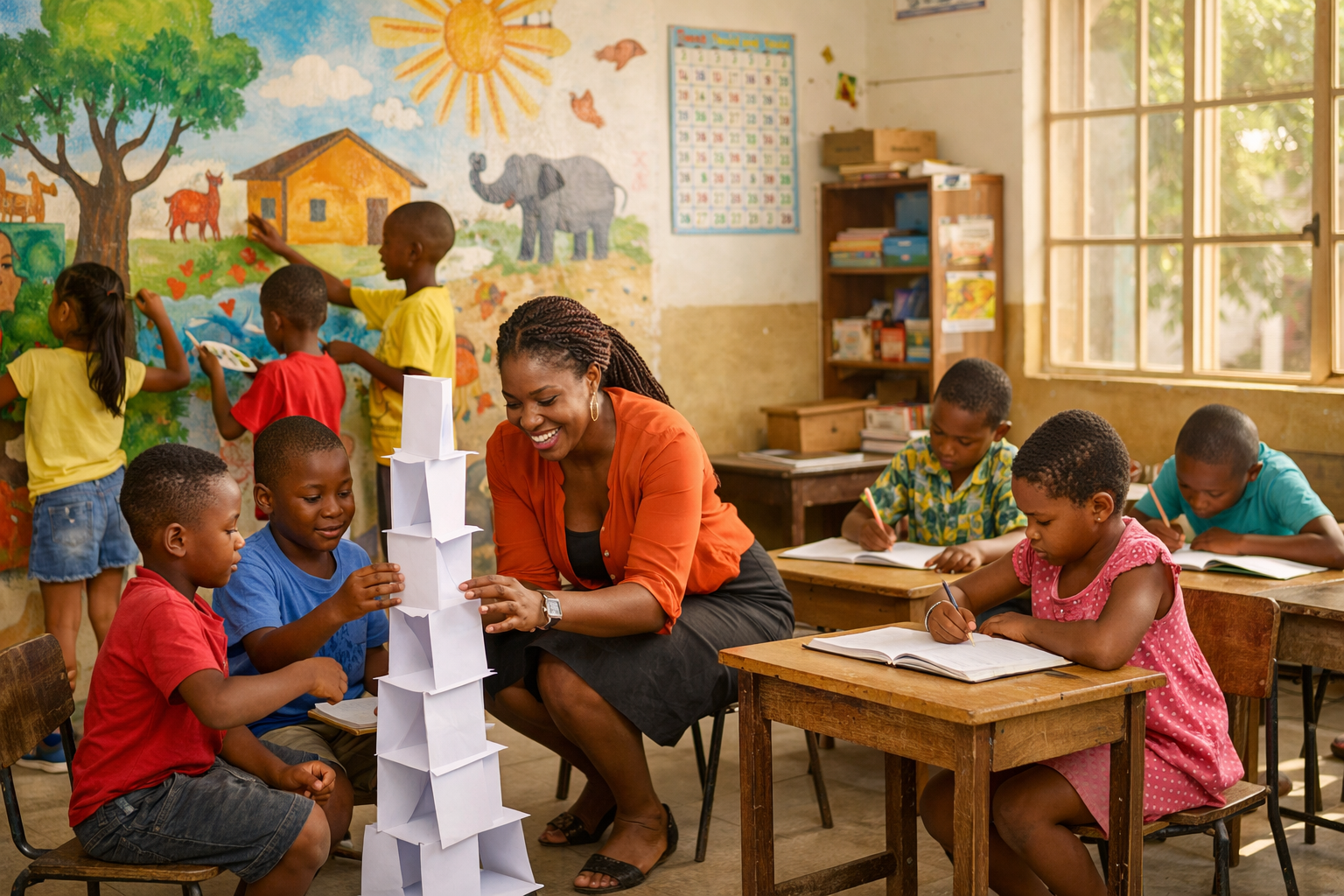
1. Collaborative Mural Project
Best for: Grades 2–8
Time: 2–3 class periods
Materials: Butcher paper, paint/markers, planning sheets
How it works:
Students design a mural around a theme tied to curriculum (e.g., ecosystems, community helpers, historical eras).
Classroom insight:
When I introduced a “Community Ecosystem” mural in a 4th-grade science unit, students who struggled with written assessments demonstrated strong conceptual understanding through visuals and explanations.
Assessment Tip:
Have students write a short reflection explaining their section of the mural and how it connects to the topic.
2. Recycled Engineering Art
Best for: Grades 3–8
Time: 1–2 class periods
Materials: Recyclables, tape, glue
Students create functional models (bridges, habitats, vehicles) using recycled materials.
Why it works:
This combines environmental awareness with design thinking — a key component of STEM education frameworks.
Extension:
Introduce constraints (budget, weight limits) to promote problem-solving.
Creative Writing Activities (Literacy & Critical Thinking)
3. Story Starters With Academic Integration
Instead of generic prompts, connect writing to subject areas.
Example:
“You are a scientist who just discovered a new planet. Describe its ecosystem.”
Classroom Observation:
When students connect creative writing to science topics, comprehension improves because they must apply knowledge creatively.
Assessment Tip:
Use a rubric that includes both creativity and factual accuracy.
4. Classroom Newspaper (Project-Based Learning Model)
Best for: Grades 4–8
Time: Ongoing monthly project
Students take on roles:
- Editor
- Reporter
- Designer
- Photographer
Educational Foundation:
Project-Based Learning (PBL) research shows students develop autonomy and real-world communication skills through authentic projects.
Practical Tip:
Provide structured deadlines and editing checkpoints to maintain academic rigor.
Performing Arts Activities (Confidence & Communication)
5. Historical Role-Play Debate
Best for: Upper elementary and middle school
Time: 1–2 class periods
Students represent historical figures and debate real issues from that time period.
Why it’s effective:
Role-play encourages perspective-taking — a key component of social-emotional learning.
Classroom Insight:
Students who were disengaged during textbook lessons became highly invested when assigned a historical role.
6. Puppet Shows for Younger Learners
Best for: Grades K–3
Time: 1 class period
Students create simple puppets and perform short scripts related to reading lessons.
Benefit:
Supports oral language development and builds confidence in reluctant speakers.
STEM-Based Creative Activities
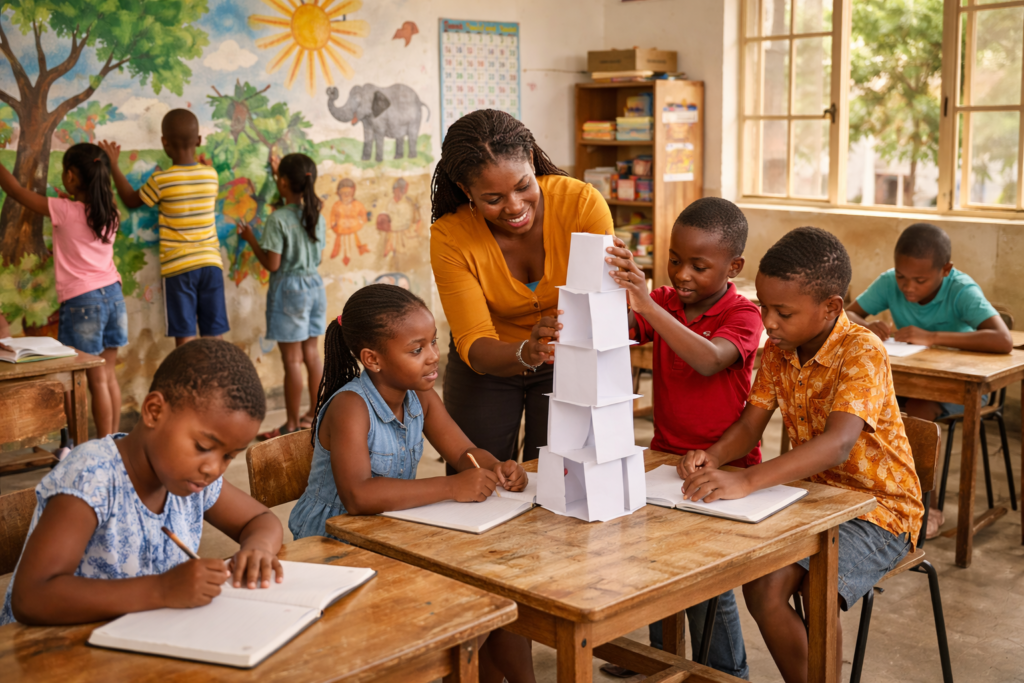
7. Build-and-Test Engineering Challenge
Example Challenge:
Build the tallest free-standing tower using 10 sheets of paper and 1 meter of tape.
Time: 30–45 minutes
Group Size: 3–4 students
Learning Goals:
- Hypothesis formation
- Testing and iteration
- Reflection
Why it matters:
Design thinking and iterative problem-solving mirror real-world engineering processes.
Assessment:
Include a reflection sheet asking:
- What worked?
- What failed?
- What would you improve?
8. Student-Designed Science Experiments
Rather than following pre-written instructions, students create their own controlled experiments.
Example:
- Which material best insulates heat?
Trustworthiness Note:
Ensure students understand safety guidelines and variables before experimentation.
Educational Backing:
Inquiry-based learning is supported by science education research as a way to deepen conceptual understanding.
Social-Emotional Creative Activities
9. Kindness Initiative Project
Students design and implement small kindness campaigns within the school.
Why it works:
SEL research shows that fostering empathy improves classroom climate and academic outcomes.
Implementation Tip:
Have students measure impact through surveys or reflection journals.
10. Personal Vision Boards
Best for: Grades 4+
Students create boards representing academic and personal goals.
Observed Outcome:
Students become more motivated when goals are visual and personalized.
Outdoor Creative Activities
11. Nature Journaling
Students observe and sketch outdoor elements, integrating science vocabulary.
Why it works:
Combines observational science with reflective writing.
Assessment Tip:
Evaluate both accuracy and descriptive detail.
12. Outdoor Story Circles
Each student adds one sentence to a developing story.
Benefit:
Enhances listening skills, spontaneity, and collaboration.
How to Encourage Creativity Without Sacrificing Academic Rigor
A common concern among educators is that creative activities may reduce academic focus. In practice, when structured with clear objectives, creativity strengthens mastery.
To maintain rigor:
- Align activities with curriculum standards
- Include reflection components
- Use clear rubrics
- Incorporate peer feedback
- Connect creative output to learning goals
Creativity does not replace instruction — it enhances it.
Adapting for Different Age Groups
Ages 5–8:
- Simple crafts
- Puppet storytelling
- Guided group games
Ages 9–12:
- Structured writing projects
- Engineering challenges
- Collaborative research
Middle School:
- Debate simulations
- Multimedia storytelling
- Independent project-based learning
Developmentally appropriate planning ensures both engagement and growth.
Final Thoughts
Creative activities for kids in school are not optional extras — they are powerful tools that support cognitive growth, emotional development, and academic success.
When thoughtfully integrated, creativity:
- Activates higher-order thinking
- Builds confidence
- Improves collaboration
- Deepens content retention
Whether through murals, engineering challenges, drama, or inquiry-based science, creativity helps students move from passive learners to active thinkers.
And in today’s rapidly changing world, that shift is not just beneficial — it is essential.