







Climate change is one of the most important environmental challenges facing the world today. Rising global temperatures, extreme weather events, melting ice sheets, and shifting ecosystems are all signals that Earth’s climate system is changing faster than scientists previously expected.
While climate change is frequently discussed in news headlines and political debates, many people still find the science behind it confusing. Understanding the basic science is important because it helps individuals make informed decisions about their lifestyle, communities, and environmental impact.
This article explains how climate change works, what causes it, its real-world effects, and practical actions individuals can take to reduce their environmental footprint, using evidence from leading scientific organizations.
What Is Climate Change?
Climate change refers to long-term shifts in global temperatures and weather patterns. These changes can occur naturally over long geological periods, but the current warming trend is happening much faster than natural cycles alone would explain.
According to the National Aeronautics and Space Administration (NASA), Earth’s average global surface temperature has increased by about 1.1°C since the late 19th century, largely due to human activities that release greenhouse gases into the atmosphere.
This increase in temperature is commonly referred to as global warming, which is one major component of the broader phenomenon known as climate change.
Climate change affects many aspects of Earth’s systems, including:
- Ocean temperatures
- Rainfall patterns
- Sea levels
- Ecosystems and wildlife
- Human health and agriculture
The Science Behind Climate Change
To understand climate change, it is important to understand how Earth’s atmosphere regulates temperature.
The Greenhouse Effect
The greenhouse effect is a natural process that keeps the planet warm enough to support life.
Certain gases in the atmosphere trap heat from the sun, preventing it from escaping back into space too quickly. These gases are known as greenhouse gases.
Key greenhouse gases include:
- Carbon dioxide (CO₂)
- Methane (CH₄)
- Nitrous oxide (N₂O)
- Water vapor
Without this natural warming effect, Earth’s average temperature would be around –18°C, far too cold for most life forms.
However, when human activities increase the concentration of these gases, more heat becomes trapped in the atmosphere, causing global temperatures to rise.
Scientific assessments from the Intergovernmental Panel on Climate Change (IPCC) show that human activity is now the dominant cause of global warming since the mid-20th century.
Major Causes of Climate Change
Although natural factors such as volcanic eruptions and solar variations can influence climate, modern climate change is primarily driven by human activities.
1. Burning Fossil Fuels
The largest contributor to climate change is the burning of fossil fuels such as:
- Coal
- Oil
- Natural gas
These fuels power electricity generation, transportation, and industrial production. When burned, they release large amounts of carbon dioxide into the atmosphere.
According to the International Energy Agency, fossil fuels account for over 75% of global greenhouse gas emissions.
Major sources include:
- Power plants
- Cars and trucks
- Air travel
- Industrial facilities
2. Deforestation
Forests play a crucial role in regulating the global climate. Trees absorb carbon dioxide through photosynthesis and store it as carbon.
When forests are cleared for agriculture, logging, or urban development:
- Stored carbon is released into the atmosphere.
- Fewer trees remain to absorb carbon dioxide.
The United Nations Environment Programme estimates that deforestation contributes around 10% of global greenhouse gas emissions.
Protecting forests is therefore an important climate solution.
3. Agriculture and Livestock
Agriculture is another significant source of greenhouse gas emissions.
Livestock such as cattle produce methane during digestion. Methane is particularly powerful as a greenhouse gas.
According to research summarized by the Intergovernmental Panel on Climate Change, methane traps about 28–34 times more heat than carbon dioxide over a 100-year period.
Agricultural emissions also come from:
- Fertilizer use
- Rice farming
- Land clearing
- Manure management
Improving agricultural efficiency and reducing food waste can help lower these emissions.
4. Industrial Activities
Manufacturing processes often require large amounts of energy and release greenhouse gases directly into the atmosphere.
Industries such as:
- Cement production
- Steel manufacturing
- Chemical processing
are responsible for a significant share of global emissions.
Technological innovations and renewable energy adoption are helping many industries reduce their environmental impact.
Effects of Climate Change
Climate change affects natural systems and human societies across the globe.
Rising Global Temperatures
Global temperatures have been steadily increasing for decades.
Data from the National Oceanic and Atmospheric Administration show that the last decade has been among the warmest on record.
Higher temperatures increase the risk of:
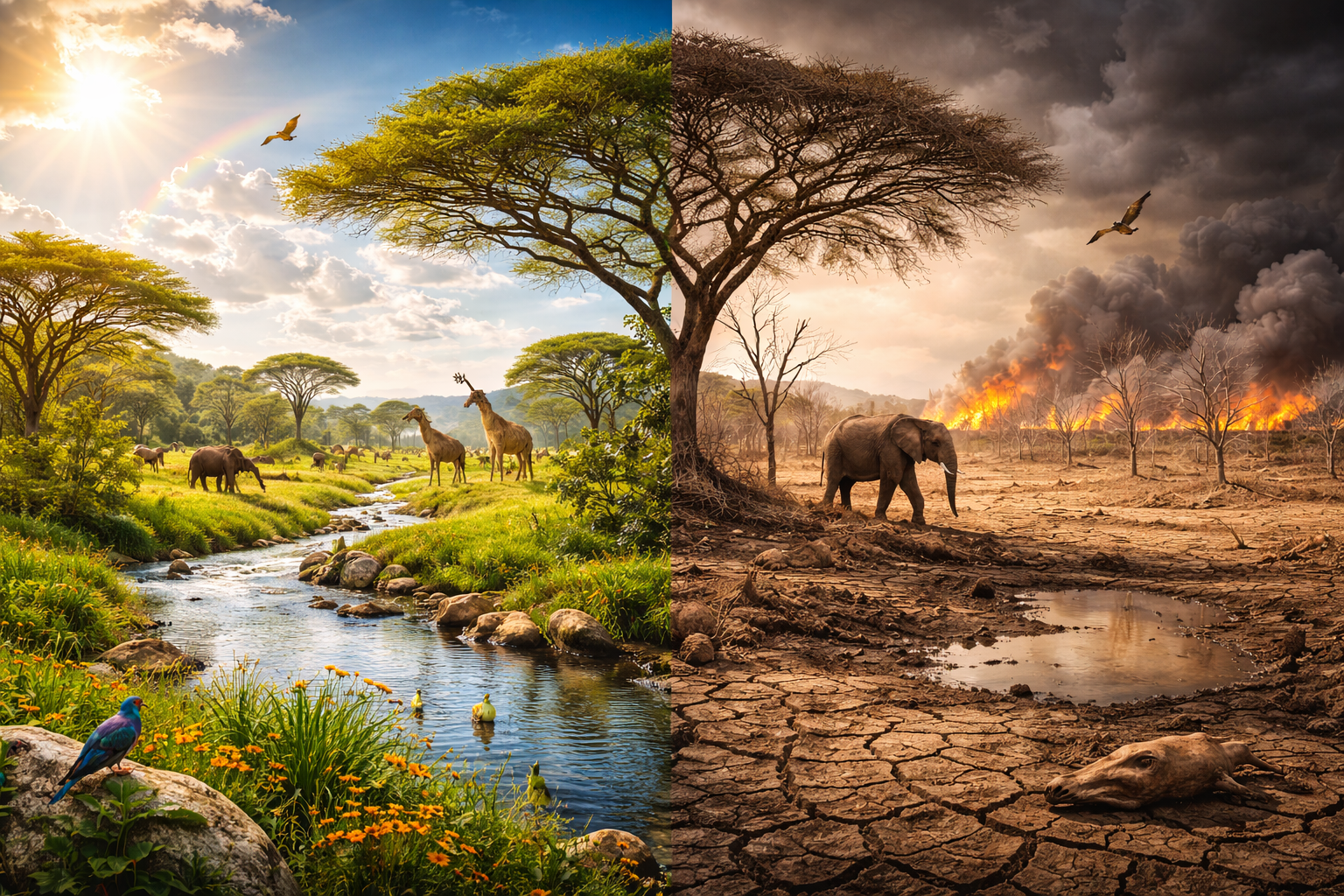
- Heatwaves
- Drought
- Wildfires
These events can have serious consequences for ecosystems and public health.
More Extreme Weather Events
A warming atmosphere can hold more moisture and energy, which can intensify certain types of weather events.
Scientists have observed increases in:
- Heavy rainfall events
- Intense hurricanes
- Prolonged heatwaves
- Severe droughts in some regions
These changes can damage infrastructure, disrupt agriculture, and threaten communities.
Melting Ice and Rising Sea Levels
Glaciers and polar ice sheets are melting at accelerated rates due to rising temperatures.
According to data from the World Meteorological Organization, global sea levels have risen about 20 centimeters since 1900.
Rising sea levels can cause:
- Coastal flooding
- Saltwater intrusion into freshwater systems
- Loss of coastal habitats
Low-lying coastal areas are especially vulnerable.
Impacts on Ecosystems and Wildlife
Plants and animals are highly sensitive to changes in climate.
Shifts in temperature and rainfall patterns can disrupt:
- Migration routes
- Breeding cycles
- Food availability
Some species may struggle to adapt quickly enough, increasing the risk of extinction.
Biodiversity loss can also affect human systems such as agriculture and fisheries.
How Climate Change Affects People
Climate change is not only an environmental issue but also a social and economic challenge.
Its impacts can include:
- Reduced crop yields and food insecurity
- Water shortages
- Increased health risks from heat stress and air pollution
- Damage to infrastructure from extreme weather
Communities with fewer resources often face the greatest risks.
Organizations such as the World Health Organization warn that climate change could significantly affect global health in the coming decades.
What Individuals Can Do to Help
While governments and industries play a major role in addressing climate change, individual actions can still contribute to meaningful reductions in emissions.
Small changes adopted by millions of people can make a measurable difference.
Reduce Energy Consumption
Lowering household energy use can reduce greenhouse gas emissions and save money.
Practical steps include:
- Using energy-efficient appliances
- Switching to LED lighting
- Improving home insulation
- Turning off unused electronics
Energy efficiency is considered one of the fastest and most cost-effective climate solutions.
Choose Sustainable Transportation
Transportation accounts for a large portion of global emissions.
Reducing reliance on personal vehicles can help lower emissions.
Alternatives include:
- Public transportation
- Cycling or walking
- Carpooling
- Electric or hybrid vehicles
Even replacing short car trips with walking can reduce emissions and improve health.
Reduce Food Waste and Support Sustainable Diets
Food production has a significant environmental footprint.
Individuals can help reduce emissions by:
- Minimizing food waste
- Eating more plant-based meals
- Choosing locally produced foods
The United Nations Food and Agriculture Organization estimates that about one-third of all food produced globally is wasted.
Reducing waste can significantly lower environmental impact.
Reduce, Reuse, and Recycle
Waste reduction helps conserve resources and reduce emissions.
The reduce, reuse, recycle approach encourages:
- Reusing containers and bags
- Recycling materials such as paper, plastic, and metals
- Choosing products with minimal packaging
These actions reduce demand for new raw materials and energy.
Stay Informed and Support Climate Solutions
Understanding environmental issues helps individuals make informed decisions and participate in community initiatives.
People can contribute by:
- Supporting environmentally responsible businesses
- Learning about climate policies
- Participating in local sustainability programs
Public awareness plays an important role in driving environmental progress.
Conclusion
Climate change is a complex scientific issue with far-reaching consequences for the planet’s ecosystems, weather systems, and human societies. Evidence from organizations such as the Intergovernmental Panel on Climate Change and National Aeronautics and Space Administration shows that human activities—particularly the burning of fossil fuels, deforestation, agriculture, and industrial processes—are the primary drivers of modern global warming.
The impacts of climate change, including rising temperatures, extreme weather events, and melting ice sheets, are already being observed worldwide. Addressing these challenges requires coordinated efforts from governments, industries, and communities.
At the same time, individual actions—such as reducing energy consumption, choosing sustainable transportation, minimizing waste, and supporting environmentally responsible practices—can contribute to meaningful change.
By understanding the science behind climate change and taking practical steps to reduce environmental impact, individuals can play an important role in building a more sustainable future.