





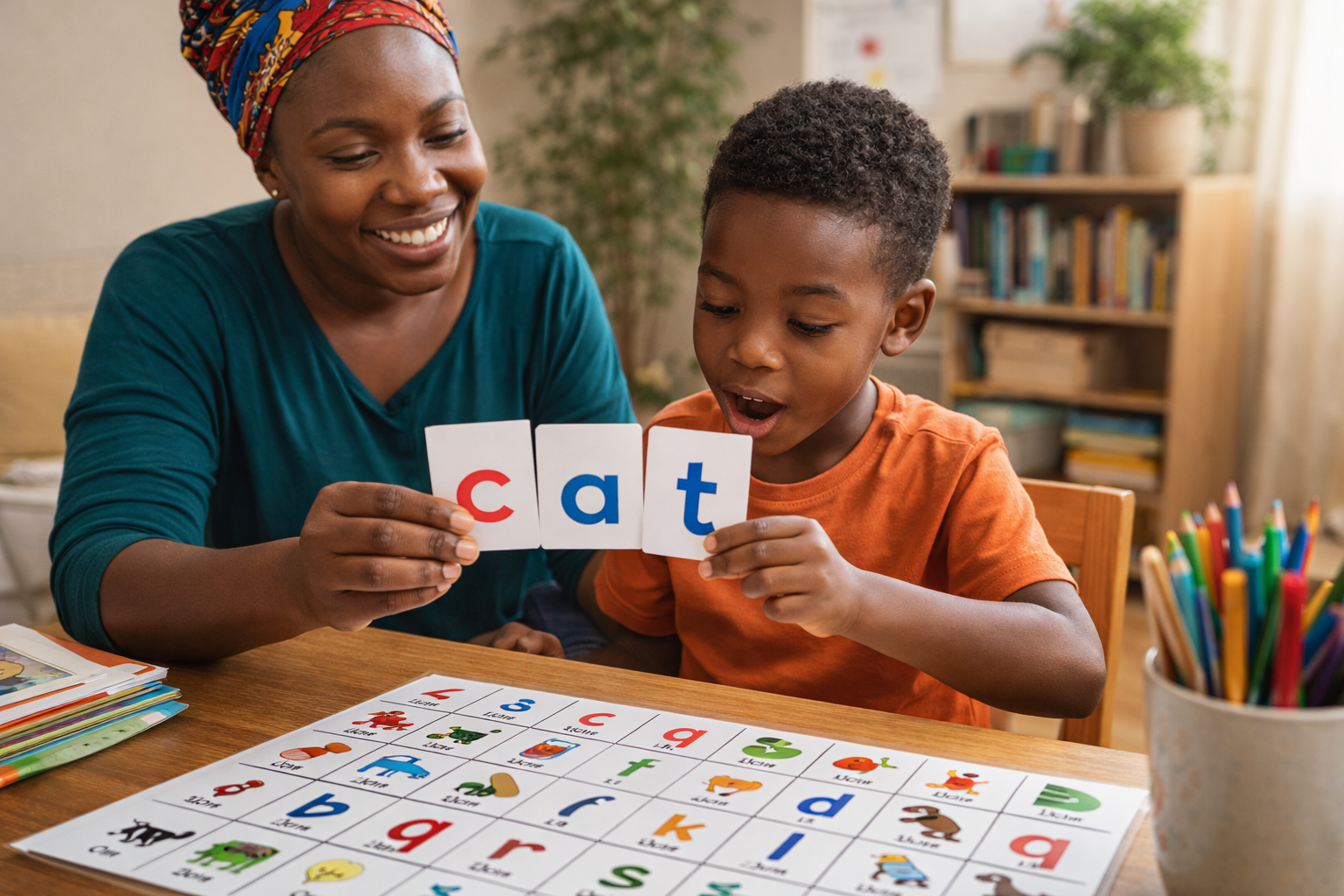




Learning to read is one of the most important milestones in a child’s education. At the heart of early reading instruction is phonics—the method of teaching children how letters and letter patterns represent sounds in spoken language. When phonics is taught effectively, it helps children decode words, build confidence, and develop strong reading skills that last a lifetime.
For teachers and parents, understanding the different approaches to phonics can make a real difference in how children learn. There is no single “perfect” method for every learner, which is why educators often combine strategies. This guide explains the four main types of phonics, how each works, and when they are most effective.
What Is Phonics?
Phonics is a method of reading instruction that focuses on the relationship between letters (graphemes) and sounds (phonemes). Instead of memorizing whole words, children learn how sounds blend together to form words. This skill allows them to read unfamiliar words independently.
Phonics instruction typically helps children to:
- Recognize letter sounds
- Blend sounds to read words
- Break words into smaller sound units
- Improve spelling and pronunciation
- Develop reading fluency and comprehension
Understanding the types of phonics can help adults choose the right approach for a child’s learning stage and needs.
The 4 Types of Phonics Explained
1. Synthetic Phonics
Synthetic phonics is one of the most widely used and research-supported phonics methods. It teaches children to convert letters into sounds and then blend those sounds together to read words.
How Synthetic Phonics Works
Children are taught individual letter sounds first, such as:
- /c/
- /a/
- /t/
They then learn to blend these sounds together to form a word:
/c/ + /a/ + /t/ = cat
This approach starts with the smallest units of sound and builds upward.
Key Features
- Systematic and structured
- Focuses on blending sounds
- Teaches decoding before whole-word reading
- Introduces letter-sound relationships in a planned sequence
Best For
- Early readers and beginners
- Children learning to decode words from scratch
- Classroom settings that follow a structured curriculum
Synthetic phonics is especially effective for young learners because it gives them a clear strategy for reading unfamiliar words.
2. Analytic Phonics
Analytic phonics takes a different route. Instead of starting with individual sounds, it begins with whole words and encourages children to analyze the sound patterns within them.
How Analytic Phonics Works
Children are shown a group of words that share a common sound pattern, such as:
- cat
- cap
- can
The teacher helps the child notice that all the words start with the same /c/ sound, without breaking the word into separate sounds.
Key Features
- Focuses on word patterns
- Less emphasis on blending individual sounds
- Relies on comparison and analysis
- Often uses familiar vocabulary
Best For
- Children who already recognize some words
- Learners who benefit from pattern recognition
- Supplementing other phonics approaches
Analytic phonics can help children develop awareness of sound patterns, but it may be less effective on its own for beginners who need explicit decoding instruction.
3. Analogy Phonics
Analogy phonics teaches children to use known words to read new, unfamiliar words. It is based on recognizing similarities between words.
How Analogy Phonics Works
If a child knows how to read the word “cat”, they can use that knowledge to read:
- bat
- hat
- mat
The child learns to focus on the shared word ending (-at) and apply it to new words.
Key Features
- Builds on known words
- Emphasizes word families
- Encourages flexible thinking
- Strengthens spelling and decoding
Best For
- Children with a basic sight-word vocabulary
- Developing reading fluency
- Reinforcing phonics patterns
Analogy phonics is often used alongside other phonics methods to expand a child’s ability to decode words quickly.
4. Embedded Phonics
Embedded phonics is taught within the context of reading books, stories, or sentences rather than through direct instruction.
How Embedded Phonics Works
As children read a story, the teacher points out phonics elements naturally. For example, while reading a book, the teacher might say:
“Look at this word—ship. Let’s notice the sh sound at the beginning.”
Phonics instruction is woven into reading activities rather than taught as a separate lesson.
Key Features
- Context-based learning
- Less structured and more flexible
- Focuses on meaning and comprehension
- Uses real reading materials
Best For
- Children who already read simple texts
- Supporting comprehension alongside phonics
- Reinforcing previously learned skills
While embedded phonics supports natural reading development, it may not provide enough structure for children who struggle with decoding.
Comparing the Four Types of Phonics
| Type of Phonics | Focus | Structure Level | Best Use |
|---|---|---|---|
| Synthetic Phonics | Sound-by-sound blending | Highly structured | Beginners |
| Analytic Phonics | Sound patterns in words | Moderately structured | Pattern recognition |
| Analogy Phonics | Word families | Flexible | Vocabulary expansion |
| Embedded Phonics | Phonics in context | Least structured | Reinforcement |
Many educators agree that a balanced approach, combining elements of these methods, works best for most learners.
Tips for Parents Supporting Phonics at Home
Parents play a vital role in reinforcing phonics skills outside the classroom. Here are some practical ways to help:
- Read aloud daily and talk about letter sounds
- Play word games that focus on rhymes and word families
- Encourage sounding out new words instead of guessing
- Be patient and keep learning sessions short and positive
- Praise effort, not just accuracy
Consistency and encouragement can significantly boost a child’s confidence and progress.
Common Questions About Phonics
Is phonics the same as sight-word learning?
No. Phonics teaches children how to decode words using sounds, while sight-word learning focuses on memorizing common words by appearance. Both approaches can work together.
At what age should phonics instruction begin?
Phonics instruction often begins in preschool or kindergarten, once children start recognizing letters and sounds.
Can older children benefit from phonics?
Yes. Phonics is helpful for struggling readers of any age who need support with decoding and spelling.
Conclusion
Understanding the four types of phonics—synthetic, analytic, analogy, and embedded phonics—gives teachers and parents valuable tools to support early reading development. Each approach offers unique benefits, and no single method suits every child.
By choosing the right combination of phonics strategies and providing consistent support, adults can help children become confident, independent readers. Strong phonics skills not only improve reading ability but also lay the foundation for lifelong learning and academic success.
With patience, practice, and the right guidance, every child can develop the skills they need to enjoy reading and learning.